Sleep Neurology Tests Explained: PSG, MSLT, and EEG
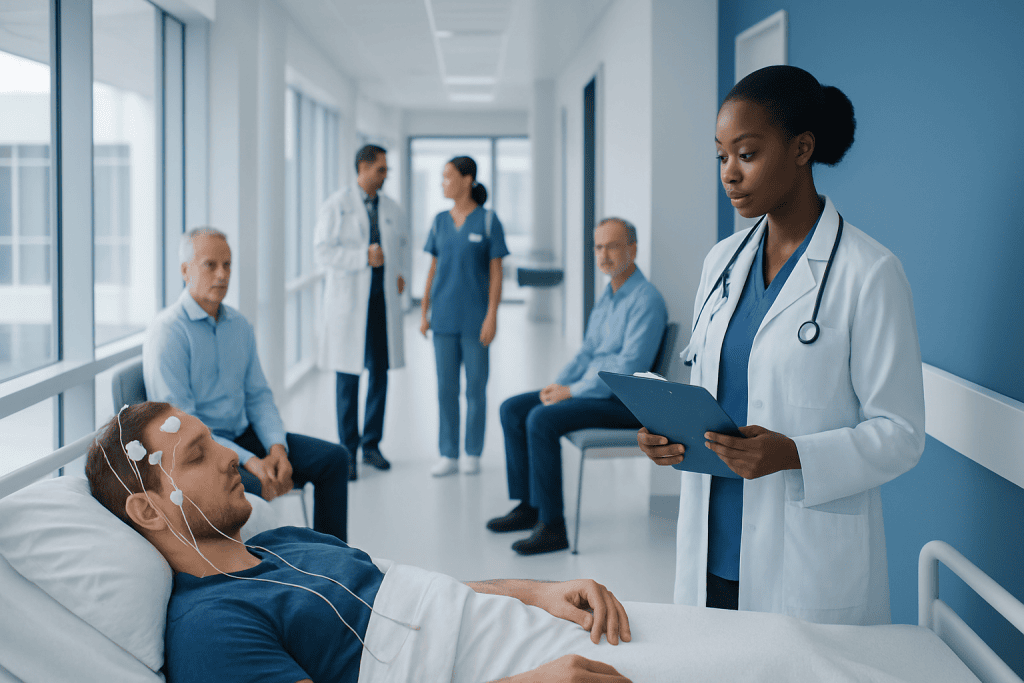
PSG is an overnight sleep study that measures breathing, oxygen, brain waves, heart rhythm, and body movements. MSLT evaluates how quickly a person falls asleep during scheduled daytime naps and helps assess excessive sleepiness.
Key Takeaways
- PSG is an overnight sleep study that measures breathing, oxygen, brain waves, heart rhythm, and body movements.
- MSLT evaluates how quickly a person falls asleep during scheduled daytime naps and helps assess excessive sleepiness.
- EEG records brain electrical activity and can help investigate seizures, unusual nocturnal events, and some sleep disorders.
- These tests are generally noninvasive and are chosen based on symptoms, medical history, and examination findings.
- Results are interpreted together with clinical symptoms to guide diagnosis and treatment.
Sleep neurology tests help doctors understand how the brain and body behave during sleep and wakefulness. Common tests such as polysomnography (PSG), the multiple sleep latency test (MSLT), and electroencephalography (EEG) can clarify the cause of symptoms like snoring, unusual movements, excessive daytime sleepiness, or possible seizures during sleep.
Overview of Sleep Neurology Tests
Sleep neurology tests are specialized studies used to assess sleep, wakefulness, and brain activity. They help doctors investigate symptoms such as loud snoring, witnessed pauses in breathing, severe daytime sleepiness, unusual behaviors during sleep, repeated awakenings, or events that may represent nighttime seizures. Rather than relying on symptoms alone, these tests provide objective information about what happens in the body and brain.
The three tests most often discussed in sleep neurology are polysomnography (PSG), the multiple sleep latency test (MSLT), and electroencephalography (EEG). Each test has a different purpose. PSG is usually the main overnight sleep study, MSLT is a daytime test that measures sleepiness, and EEG focuses on the brain’s electrical activity.
Doctors do not order every test for every patient. The choice depends on the pattern of symptoms, age, medications, sleep habits, and whether there is concern for conditions such as sleep apnea, narcolepsy, parasomnias, or seizure-related events. In many cases, these tests are complementary and may be used together to build a clearer diagnosis.
What Is Polysomnography (PSG)?
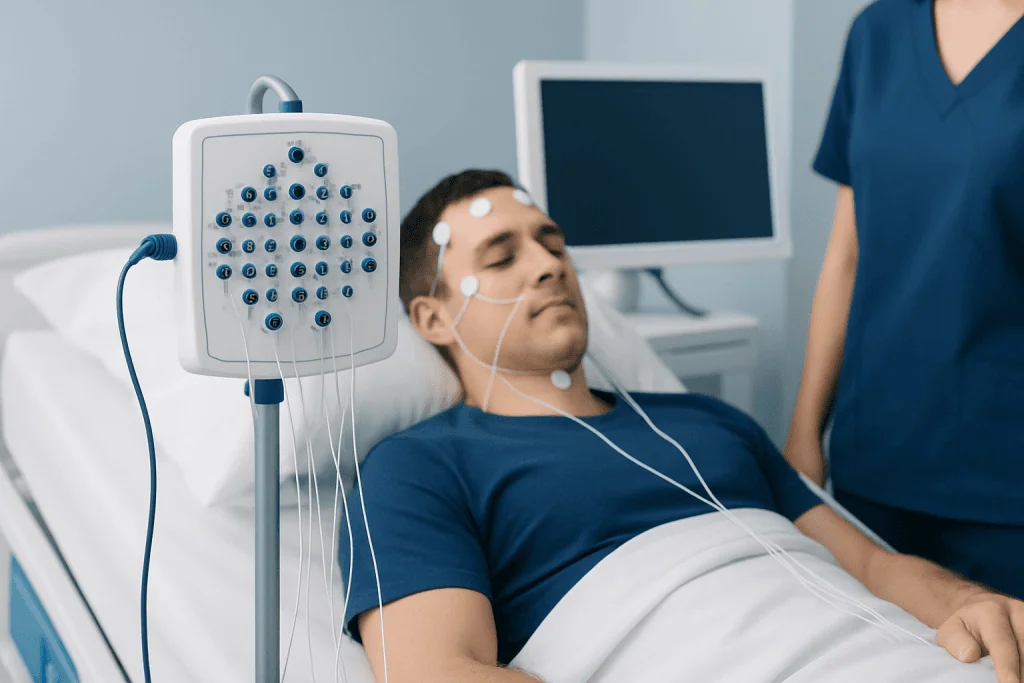
Polysomnography, often called PSG or an overnight sleep study, is the most comprehensive test for evaluating sleep. During PSG, sensors are placed on the scalp, face, chest, limbs, and finger to record brain waves, eye movements, muscle activity, breathing effort, airflow, oxygen levels, heart rhythm, and body position. These recordings show not only whether a person is sleeping, but also how sleep is structured throughout the night.
PSG is commonly used when a doctor suspects obstructive sleep apnea, central sleep apnea, periodic limb movement disorder, certain parasomnias, or complex sleep-related symptoms. It can also help distinguish between sleep disorders and neurological events that occur at night. For example, repeated awakenings may relate to breathing problems, abnormal movements, or arousal disorders, and PSG can help separate these possibilities.
In some cases, PSG is performed as part of treatment planning. If sleep-disordered breathing is found, a patient may later need a study that includes sleep apnea treatment assessment such as positive airway pressure titration. The test itself is painless, and although the sensors can feel unfamiliar at first, most people are still able to sleep enough for the study to provide useful results.
What Is the Multiple Sleep Latency Test (MSLT)?
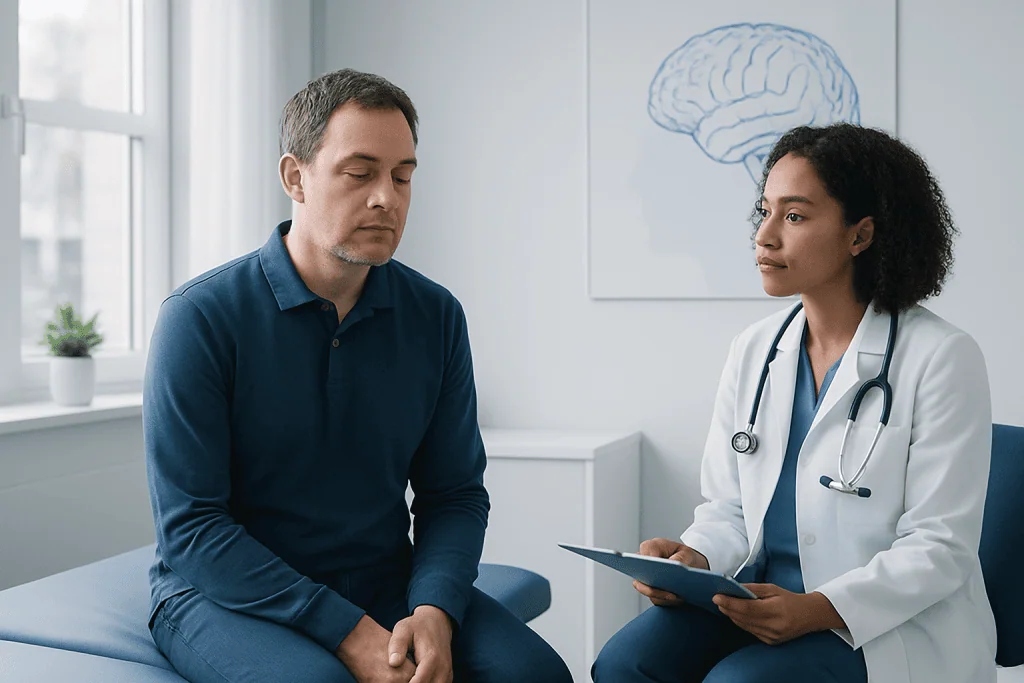
The multiple sleep latency test, or MSLT, measures how quickly a person falls asleep during several scheduled daytime nap opportunities. It is usually performed the day after an overnight PSG, because doctors need to confirm that the person had enough monitored sleep the night before and to rule out other sleep problems that could affect the results.
During MSLT, the patient is asked to try to nap at set times across the day, usually in a quiet, dark room. The test records how long it takes to fall asleep and whether rapid eye movement (REM) sleep appears unusually early. This information can be important when evaluating excessive daytime sleepiness and conditions such as narcolepsy or idiopathic hypersomnia.
MSLT does not simply show whether someone feels tired. Instead, it provides standardized, measurable data about sleep tendency under controlled conditions. Because caffeine, sleep deprivation, irregular sleep schedules, and some medicines can influence the test, patients are often given detailed preparation instructions in advance to improve accuracy.
What Is EEG and When Is It Used in Sleep Evaluation?
Electroencephalography, or EEG, records the brain’s electrical activity through sensors placed on the scalp. EEG is part of a standard PSG, but it can also be performed as a separate test when doctors specifically want a closer look at brain wave patterns. In sleep neurology, EEG is especially helpful when there is concern that nighttime events may be seizures rather than a primary sleep disorder.
People may be referred for EEG if they have episodes of staring, jerking, confusion on waking, unusual movements in sleep, tongue biting, or episodes that others describe as convulsions. Some seizure disorders are more likely to appear during sleep or around transitions between sleep and wakefulness. An EEG can sometimes detect patterns that support a diagnosis of epilepsy, although a normal EEG does not completely rule it out.
Depending on the situation, a doctor may recommend routine EEG, sleep-deprived EEG, prolonged video EEG monitoring, or a combined sleep study with expanded EEG channels. This can help distinguish seizures from parasomnias such as sleepwalking or dream-enactment behaviors, as well as from movement disorders. When symptoms suggest a broader neurological concern, evaluation may also connect with care for epilepsy.
How Doctors Choose the Right Test
The most appropriate test depends on the main symptom and the question the doctor is trying to answer. For loud snoring, witnessed pauses in breathing, morning headaches, or choking during sleep, PSG is usually the starting point. For severe daytime sleepiness, unintended naps, or suspected narcolepsy, overnight PSG followed by MSLT is often the standard approach.
If the main issue is unusual nighttime behavior, doctors look carefully at the details: what the event looks like, how long it lasts, whether the person can be awakened, and whether there is confusion afterward. Events linked to dream-enactment, sleepwalking, rhythmic movements, or abrupt jerking may require PSG, EEG, or both. Sometimes home sleep testing may be considered for selected breathing-related complaints, but it does not replace full neurologic sleep testing in more complex cases.
A detailed history remains essential. Sleep logs, partner observations, medication review, and sometimes actigraphy may be used alongside testing. If symptoms point to a movement or nerve-related issue, doctors may also discuss related evaluations or care pathways, including neurology care when a broader neurological assessment is needed.
What to Expect Before, During, and After Testing
Preparation instructions vary by test, but patients are often asked to keep a regular sleep schedule for several days beforehand and to avoid caffeine, alcohol, or certain medicines if advised by their doctor. For overnight PSG, it is usually helpful to arrive with clean, dry hair and to bring comfortable sleepwear. Patients should not stop prescription medicines on their own unless specifically told to do so.
During PSG or EEG, a technician places sensors on the skin with adhesive or paste. These sensors monitor signals but do not deliver electricity into the body. In a sleep lab, staff can usually watch recordings remotely and assist if the patient needs to use the bathroom or adjust position during the night. For MSLT, the patient remains in the test center between nap sessions and is asked to stay awake between them.
After the test, the recorded data are reviewed by trained specialists. Interpretation can take time because the study includes many hours of detailed information. Results are discussed together with symptoms and physical findings. Depending on what is found, the next step may include lifestyle advice, medication review, behavioral strategies, CPAP therapy, or further neurological evaluation.
What the Results May Show
PSG can show whether breathing repeatedly narrows or stops during sleep, whether oxygen levels drop, how often sleep is interrupted, and whether abnormal limb movements or unusual behaviors occur. It also reveals how much time is spent in different sleep stages. This helps doctors determine whether symptoms are due to fragmented sleep, disordered breathing, movement-related arousals, or another problem.
MSLT results may show abnormally short sleep latency, meaning the person falls asleep faster than expected during daytime nap trials. The pattern of REM sleep during these naps can also be significant and may support a diagnosis such as narcolepsy when interpreted in the right clinical context. However, results must be considered carefully because inadequate sleep, circadian disruption, and medications can affect the findings.
EEG may detect epileptiform activity or other abnormalities in brain wave patterns, but interpretation is not always straightforward. Some patients with seizure disorders have normal interictal EEGs, while some nonspecific findings do not necessarily mean epilepsy. This is why test results are never read in isolation. A clinician combines them with history, examination, and in some cases imaging or longer monitoring to reach the most accurate conclusion.
When to Seek Medical Advice
A medical evaluation is appropriate when sleep symptoms are persistent, disruptive, or potentially unsafe. Warning signs include loud habitual snoring with pauses in breathing, unexplained excessive daytime sleepiness, sudden sleep episodes, unusual violent or repetitive behaviors during sleep, episodes of waking confused, or suspected seizure-like activity. These symptoms do not always indicate a serious condition, but they do deserve proper assessment.
Prompt medical advice is especially important if sleepiness affects driving, work, school performance, or safety at home. Parents should also seek assessment for children who have concerning nighttime events, behavioral changes linked to poor sleep, or unusual daytime tiredness. Early evaluation can help prevent complications and reduce uncertainty for the patient and family.
In a specialist sleep or neurology setting, care is often coordinated across disciplines to match the person’s symptoms and test findings. Near the end of the diagnostic pathway, some patients may benefit from multidisciplinary support; Acibadem International’s specialists in JCI-accredited hospitals diagnose and treat sleep and neurological conditions for international patients when appropriate. The most important step is to discuss symptoms with a qualified doctor, who can recommend the most suitable test and next steps.
Frequently asked questions
Is a PSG the same as a sleep study?
PSG is the most detailed type of sleep study and is often what people mean when they say “sleep study.” It usually takes place overnight and records breathing, oxygen, brain waves, movements, and heart rhythm. Some simpler home studies exist, but they do not measure as many signals as full PSG.
Why is MSLT done after an overnight PSG?
MSLT is typically performed after overnight PSG so the doctor can confirm the patient had monitored sleep the night before. This helps make the daytime sleepiness measurement more reliable. It also allows the team to identify sleep problems, such as untreated sleep apnea, that could affect the MSLT result.
Does EEG diagnose all seizures during sleep?
EEG can be very helpful, but it does not detect every seizure disorder in every patient. Some people with epilepsy may have a normal EEG between events. If suspicion remains high, a doctor may recommend repeat EEG, sleep-deprived EEG, or longer video EEG monitoring.
Are sleep neurology tests painful?
These tests are generally noninvasive and not painful. Sensors are attached to the skin and scalp to record information, but they do not deliver shocks or needles in standard testing. The main discomfort is usually the unfamiliar environment or sleeping with sensors in place.
How should a patient prepare for PSG, MSLT, or EEG?
Preparation depends on the test, but patients are often asked to follow a regular sleep schedule and avoid caffeine or alcohol beforehand. They should tell the doctor about all medicines, supplements, and recent sleep changes. It is important not to stop prescribed medication unless the doctor specifically advises it.
Can these tests diagnose narcolepsy?
Narcolepsy is usually evaluated with a combination of clinical history, overnight PSG, and next-day MSLT. MSLT can show excessive sleepiness and early REM sleep patterns that support the diagnosis. The doctor interprets these findings together with symptoms such as sleep attacks, cataplexy, sleep paralysis, or vivid dream-like experiences.
References
- American Academy of Sleep Medicine
- National Institute of Neurological Disorders and Stroke
- National Heart, Lung, and Blood Institute
- Epilepsy Foundation
- Mayo Clinic
This article is for general information only and is not a substitute for professional medical advice. Please consult a qualified doctor about your individual situation.
Sleep Neurology in Turkey — costs, top hospitals & a free quote
JCI-accredited · board-certified surgeons · reply within 24h
Add us as a Preferred Source to see more of our trusted health content across Google Search, AI Overviews and Discover.