Sleep Paralysis: What Causes It and When to Seek Help

Sleep paralysis happens during transitions between sleep and wakefulness, when the body remains briefly in a dream-related state of muscle relaxation. Episodes may include inability to move, chest pressure, and vivid hallucinations, but they usually pass within seconds to minutes.
Key Takeaways
- Sleep paralysis happens during transitions between sleep and wakefulness, when the body remains briefly in a dream-related state of muscle relaxation.
- Episodes may include inability to move, chest pressure, and vivid hallucinations, but they usually pass within seconds to minutes.
- Common triggers include sleep deprivation, irregular sleep schedules, stress, and sleeping on the back.
- Frequent or distressing episodes should be evaluated by a doctor, especially if there is excessive daytime sleepiness or possible narcolepsy.
Sleep paralysis is a short episode of being awake but unable to move or speak, usually as a person falls asleep or wakes up. It can feel frightening, but it is often harmless and commonly related to sleep disruption, stress, or an underlying sleep disorder.
Overview
Sleep paralysis is a temporary inability to move, speak, or react that occurs as a person is falling asleep or waking up. During an episode, the mind may feel awake, but the body remains briefly in a sleep-related state in which the muscles are relaxed and unable to respond normally. The event usually lasts only a few seconds or minutes and then resolves on its own.
This experience can be unsettling because it may be accompanied by a sense of pressure in the chest, difficulty calling for help, or vivid dream-like sensations. Even so, sleep paralysis itself is not usually dangerous. It is considered a sleep phenomenon that can happen on its own or alongside other sleep conditions.
Sleep paralysis is related to rapid eye movement, or REM, sleep. In REM sleep, the brain is active and dreaming is common, while most muscles are temporarily switched off to prevent acting out dreams. Sleep paralysis happens when this normal REM muscle relaxation overlaps with wakefulness.
For many people, episodes are rare. Others may notice repeated events during times of stress, poor sleep, shift work, or major schedule changes. When episodes become frequent or interfere with well-being, a sleep specialist can help identify triggers and look for underlying conditions such as narcolepsy.
Symptoms
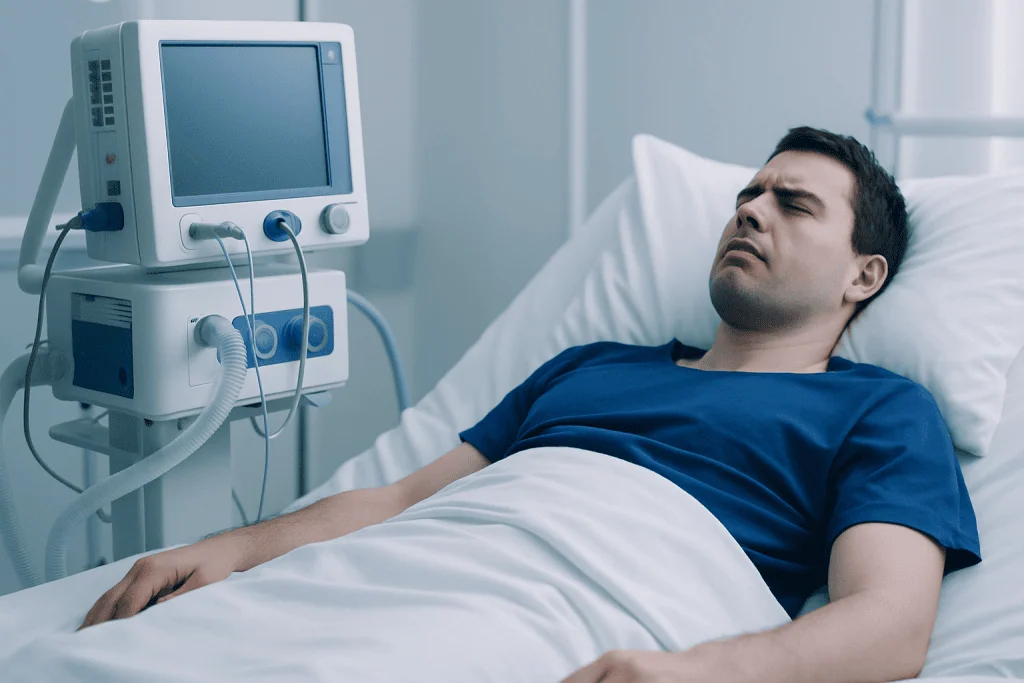
The main symptom of sleep paralysis is being conscious but unable to move or speak for a short time. This can happen just before falling asleep or shortly after waking. Many people remain aware of their surroundings, although the experience may feel dream-like.
Some episodes include hallucinations. These are not signs of psychosis; they are vivid sensory experiences related to the overlap between dreaming and wakefulness. A person may feel that someone is in the room, hear sounds, or sense pressure on the chest. Breathing is still happening, but it may feel uncomfortable because chest muscles are relaxed and anxiety can make the sensation more intense.
Common features include:
- Inability to move the arms, legs, body, or head
- Difficulty speaking during the episode
- A feeling of fear or helplessness
- Chest pressure or a sense of shortness of breath
- Visual, auditory, or tactile hallucinations
- Episodes lasting seconds to a few minutes
After an episode ends, movement returns fully and there are no lasting physical effects. However, some people may feel anxious about going back to sleep, especially if the episode was vivid or happened repeatedly. Ongoing fear of sleep or significant daytime tiredness deserves medical attention.
Causes and Risk Factors

Sleep paralysis occurs when the normal muscle relaxation of REM sleep continues briefly into wakefulness, or begins before full sleep has started. Doctors do not always find a single cause, but several factors are known to make episodes more likely. In many cases, more than one trigger is involved.
Sleep deprivation is one of the most common contributors. Irregular bedtimes, jet lag, shift work, and frequent awakenings can all disturb the normal sleep cycle. Stress, anxiety, and emotional strain may also increase the chance of episodes, likely because they affect sleep quality and REM patterns.
Other recognized risk factors include:
- Sleeping on the back
- Family history of sleep paralysis
- Insomnia or fragmented sleep
- Obstructive sleep apnea or other sleep disorders
- Narcolepsy, which can include sleep paralysis, vivid dreams, and daytime sleepiness
- Certain mental health conditions, especially when sleep is disrupted
Sleep paralysis does not necessarily mean a person has a serious illness. Still, if it appears often, starts suddenly, or occurs with other symptoms such as sudden muscle weakness triggered by emotions, vivid dream intrusions, or severe daytime sleepiness, doctors may look more closely for sleep apnea or other sleep-wake disorders.
How It Is Diagnosed
Diagnosis usually begins with a detailed medical and sleep history. A doctor may ask when the episodes happen, how often they occur, how long they last, and whether there are hallucinations, snoring, pauses in breathing, insomnia, or overwhelming sleepiness during the day. This discussion often provides the most important clues.
Many people with occasional sleep paralysis do not need extensive testing. If episodes are infrequent and there are no signs of another disorder, reassurance and lifestyle changes may be enough. The aim of evaluation is to separate isolated sleep paralysis from symptoms linked to conditions such as narcolepsy or obstructive sleep apnea.
When more assessment is needed, a sleep specialist may recommend keeping a sleep diary or using a questionnaire about daytime sleepiness. In selected cases, an overnight sleep study may be advised to assess breathing, sleep stages, and unusual events during sleep. Some people may also need a multiple sleep latency test, which measures daytime sleepiness and can support the diagnosis of narcolepsy.
A careful diagnosis matters because treatment depends on the cause. If sleep paralysis is part of a broader sleep problem, addressing that underlying issue often reduces episodes and improves overall sleep quality.
Treatment Options
There is no single treatment that everyone with sleep paralysis needs. For isolated episodes, the focus is usually on education, reassurance, and improving sleep habits. Knowing that the event is temporary and linked to a sleep-state overlap can reduce fear and help a person recover more calmly if another episode occurs.
If an underlying sleep disorder is present, treatment is directed at that condition. For example, managing sleep apnea, insomnia, or narcolepsy may reduce the frequency of episodes. A doctor may also review medications, mental health symptoms, and lifestyle factors that could be affecting sleep architecture.
Helpful approaches may include:
- Maintaining a consistent sleep schedule
- Treating sleep deprivation and insomnia
- Reducing stress through relaxation techniques or counseling
- Avoiding sleeping on the back if this is a trigger
- Addressing breathing-related sleep disorders with appropriate care
In some cases, specialist assessment is useful when episodes are frequent, severe, or part of a more complex sleep picture. Depending on the findings, care may involve sleep medicine support and, when relevant, evaluation in a neurology service. Near the end of the care pathway, patients who travel for treatment may also be evaluated by Acibadem International’s multidisciplinary specialists in JCI-accredited hospitals.
Prevention and Self-care
Many people can reduce sleep paralysis episodes by improving sleep regularity. Going to bed and waking up at similar times each day helps stabilize the sleep-wake cycle. Aiming for enough sleep is especially important, since sleep deprivation is a common trigger.
Creating a calm sleep environment can also help. This may include limiting caffeine late in the day, reducing alcohol intake, avoiding heavy meals before bed, and keeping screens out of the bedroom close to bedtime. Relaxation practices such as breathing exercises, meditation, or gentle stretching may lower stress and make sleep more restful.
If episodes tend to happen while lying on the back, changing sleep position may be useful. Some people benefit from side sleeping or from practical measures that discourage rolling onto the back during the night. Keeping a record of episodes can help identify patterns related to sleep loss, travel, stress, or medications.
During an episode, it may help to focus on slow breathing and remember that the event will pass. Some people find that trying to make a small movement, such as moving a finger or toe, helps bring the episode to an end. Self-care is supportive, but persistent or worsening symptoms should still be discussed with a doctor.
When to See a Doctor
Occasional sleep paralysis is common and often does not signal a serious health problem. However, medical advice is important if episodes happen frequently, are highly distressing, or begin to affect sleep quality, mood, or daily functioning. A doctor can help determine whether the episodes are isolated or part of another sleep disorder.
Medical review is especially important when sleep paralysis occurs with strong daytime sleepiness, sudden loss of muscle control triggered by emotions, loud snoring, witnessed pauses in breathing, or repeated awakenings at night. These features may suggest narcolepsy, sleep apnea, or another condition that benefits from treatment.
People should also seek help if they avoid sleep because of fear of episodes, if symptoms start after a medication change, or if there are unusual neurological symptoms. A sleep specialist or neurologist can guide the next steps and decide whether further testing is needed.
Prompt evaluation is not about assuming the worst. It is a practical way to improve sleep, reduce anxiety, and address any treatable cause. With the right support, most people can better understand their episodes and find effective ways to manage them.
Frequently asked questions
Is sleep paralysis dangerous?
Sleep paralysis is usually not dangerous, even though it can feel very frightening. The episode typically ends on its own within seconds or minutes and does not cause physical harm. If it happens often or comes with other sleep symptoms, a doctor should evaluate it.
What causes hallucinations during sleep paralysis?
Hallucinations can happen because dreaming and wakefulness overlap during the episode. The brain may still be producing dream imagery or sensations while the person is becoming aware of the room. These experiences are common in sleep paralysis and do not necessarily mean a psychiatric illness.
Can stress trigger sleep paralysis?
Yes, stress is a common trigger because it can disrupt normal sleep patterns and reduce sleep quality. Emotional strain, anxiety, and irregular sleep schedules often make episodes more likely. Managing stress may help reduce how often sleep paralysis occurs.
Is sleep paralysis a sign of narcolepsy?
It can occur in people with narcolepsy, but many people with sleep paralysis do not have narcolepsy. Doctors become more suspicious of narcolepsy when sleep paralysis happens with severe daytime sleepiness, vivid dream intrusions, or sudden muscle weakness triggered by emotions. A sleep specialist can decide whether testing is needed.
How can someone stop an episode of sleep paralysis?
An episode usually ends on its own, but staying calm and focusing on slow breathing may help. Some people find that trying to move a small body part, such as a finger or toe, is easier than trying to move the whole body. Learning that the episode is temporary can also make it less distressing.
When should someone seek medical help for sleep paralysis?
Medical advice is a good idea if episodes are frequent, very distressing, or interfere with sleep and daytime life. A person should also seek care if there is loud snoring, pauses in breathing, severe daytime sleepiness, or symptoms that suggest narcolepsy. Evaluation can help identify a treatable sleep disorder.
References
- American Academy of Sleep Medicine
- National Institute of Neurological Disorders and Stroke
- National Health Service
- Mayo Clinic
- Sleep Foundation
This article is for general information only and is not a substitute for professional medical advice. Please consult a qualified doctor about your individual situation.
Explore treatments in Turkey — costs, top hospitals & a free quote
JCI-accredited · board-certified surgeons · reply within 24h
Add us as a Preferred Source to see more of our trusted health content across Google Search, AI Overviews and Discover.