Sleep Study and MSLT: How Neurologists Diagnose Sleep Disorders

A sleep study, also called polysomnography, records body functions during sleep. MSLT measures how quickly a person falls asleep during scheduled daytime naps.
Key Takeaways
- A sleep study, also called polysomnography, records body functions during sleep.
- MSLT measures how quickly a person falls asleep during scheduled daytime naps.
- These tests are often used together when excessive daytime sleepiness needs further evaluation.
- Neurologists use the results along with symptoms, history, and exam findings to make a diagnosis.
- Most sleep studies are painless and noninvasive, though preparation is important for accurate results.
A sleep study and MSLT are key tests neurologists use to understand why a person sleeps poorly, feels very sleepy during the day, or has unusual events during sleep. Together, these tests can help diagnose conditions such as sleep apnea, narcolepsy, and other sleep-wake disorders in a structured, reliable way.
Overview: What a Sleep Study and MSLT Show
A sleep study and MSLT are specialized tests used to evaluate sleep problems in a detailed, objective way. A nighttime sleep study is usually called polysomnography. It records brain waves, breathing, oxygen levels, heart rhythm, eye movements, muscle activity, and body movements while a person sleeps. This helps doctors see what happens across the different stages of sleep and whether sleep is being disrupted.
MSLT stands for Multiple Sleep Latency Test. It is usually performed during the day after an overnight sleep study. The test measures how quickly a person falls asleep during several scheduled nap opportunities and whether rapid eye movement (REM) sleep appears unusually early. This information can be especially helpful when severe daytime sleepiness is a major concern.
Neurologists and sleep medicine specialists use these tests because sleep disorders can affect the brain, mood, memory, concentration, and overall health. Some conditions cause fragmented sleep, while others affect how the brain regulates wakefulness and REM sleep. Symptoms can overlap, so testing often provides clarity when symptoms alone do not tell the full story.
Although these tests may sound technical, they are standard, well-established tools in sleep medicine. For many people, they are an important step toward understanding symptoms and finding the most appropriate treatment plan.
Symptoms and Situations That May Lead to Testing
A doctor may recommend a sleep study when a person snores loudly, stops breathing during sleep, wakes up gasping, or feels unrefreshed despite spending enough time in bed. Frequent nighttime awakenings, unusual movements during sleep, and concern about sleep-related behaviors can also lead to evaluation. A sleep study helps determine whether the problem is related to breathing, movement, sleep structure, or another sleep disorder.
MSLT is commonly considered when daytime sleepiness is severe, persistent, or out of proportion to how much sleep a person gets. People may describe falling asleep unintentionally during quiet activities, struggling to stay awake at work or school, or needing frequent naps that do not feel refreshing. In some cases, symptoms raise concern for narcolepsy or idiopathic hypersomnia.
Other clues can help guide testing. These may include vivid dream-like experiences at sleep onset, brief episodes of weakness triggered by emotion, sleep paralysis, or a long history of overwhelming sleepiness. Not everyone with these symptoms has narcolepsy, but they often prompt a more focused neurological sleep assessment.
- Loud snoring or witnessed pauses in breathing
- Excessive daytime sleepiness
- Restless or fragmented sleep
- Unusual movements or behaviors during sleep
- Morning headaches or dry mouth
- Difficulty functioning because of poor sleep quality
How Neurologists Decide Which Test Is Needed

Testing begins with a careful medical history. The neurologist or sleep specialist asks about sleep schedule, nighttime symptoms, daytime function, medications, caffeine and alcohol use, work shifts, and mental health. A partner or family member may provide helpful observations, especially about snoring, breathing pauses, or unusual behaviors during sleep.
The doctor also considers whether another medical issue may be affecting sleep, such as anxiety, depression, chronic pain, neurological disease, or a breathing problem. Some symptoms may point toward sleep apnea, while others suggest disorders of alertness such as narcolepsy. Because different conditions can produce similar daytime fatigue, doctors try to rule out common causes before moving to more specialized testing.
Polysomnography is often the first step when nighttime breathing problems, abnormal movements, or disrupted sleep are suspected. MSLT is usually added when the main question is whether the brain is allowing sleep too quickly during the day or entering REM sleep abnormally early. Importantly, MSLT is generally interpreted only after a properly performed overnight study, because poor or inadequate sleep the night before can affect the results.
In many cases, doctors may also ask the person to keep a sleep diary or wear an actigraphy device for several days to weeks before testing. This helps confirm that the person has had a regular opportunity to sleep and that the results will reflect the underlying disorder rather than short-term sleep deprivation.
What Happens During an Overnight Sleep Study
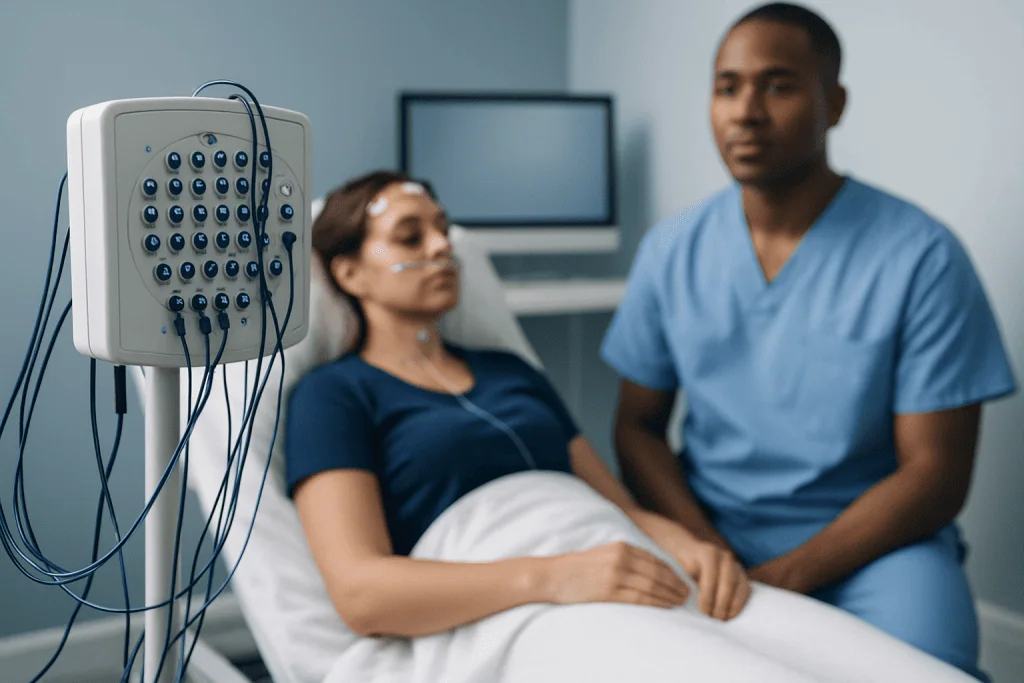
An overnight sleep study usually takes place in a sleep laboratory. Sensors are placed on the scalp, face, chest, limbs, and finger using adhesive patches or gentle wraps. These sensors monitor brain activity, eye movements, muscle tone, airflow, breathing effort, oxygen level, heart rhythm, and leg movements. The setup may feel unfamiliar, but it is not painful, and trained staff monitor the study throughout the night.
Once the person goes to sleep, the test records patterns that can reveal why sleep is disturbed. For example, repeated breathing pauses may suggest obstructive sleep apnea, while repeated limb movements may point to a movement-related sleep disorder. The study can also detect whether sleep stages are reduced, fragmented, or interrupted by arousals.
Some people worry that they will not sleep normally in the lab. It is true that sleeping in a new environment can feel different, but sleep specialists are used to interpreting studies even when sleep is somewhat lighter than usual. The goal is not perfect sleep but enough quality recording to understand what is happening during the night.
If significant breathing-related problems are found, some patients may need further management such as sleep apnea treatment. In selected cases, additional evaluation may be recommended if the study suggests other neurological or respiratory sleep conditions.
What Happens During MSLT and How Results Are Read
MSLT is usually done the day after the overnight sleep study. During the test, the person is given several nap opportunities spaced across the day, typically every two hours. For each nap, the room is kept quiet and dark, and the sensors continue to monitor when sleep begins and which stage of sleep appears first.
The main measurement is sleep latency, which means how long it takes to fall asleep. Short sleep latency suggests a high level of physiological sleepiness. The test also looks for sleep-onset REM periods, meaning REM sleep starts unusually quickly after falling asleep. This pattern can support the diagnosis of narcolepsy in the right clinical setting.
MSLT results are never interpreted in isolation. The doctor reviews symptoms, overnight sleep study findings, medication effects, sleep schedule, and any recent sleep loss. Certain antidepressants, stimulants, sedatives, and irregular sleep patterns can change the results, which is why preparation instructions are important.
If narcolepsy is suspected, the overall evaluation may lead to treatment planning that can include lifestyle strategies and, when appropriate, narcolepsy treatment. In some people, the results do not point to a single diagnosis right away, and follow-up or repeat assessment may be needed.
Preparing for the Tests and Understanding Limitations
Good preparation helps make the results more reliable. Patients are often asked to follow a regular sleep schedule for one to two weeks before testing, avoid unusual sleep loss, and limit substances that interfere with sleep. The medical team may review whether certain medications should be adjusted before the study, but this should only be done under medical guidance.
On the day of testing, people are usually advised to avoid excess caffeine and alcohol. For MSLT, stimulant medications or other drugs that affect sleep and alertness may need special planning well in advance. Because these details can vary by person, the sleep center provides individualized instructions.
Like all medical tests, sleep studies and MSLT have limitations. A single night may not capture every symptom, especially if events happen only occasionally. Results can also be influenced by stress, recent travel, shift work, medication changes, and insufficient sleep before the test. That is why doctors interpret findings in context rather than relying on one number alone.
Sometimes further evaluation is needed, particularly if symptoms continue despite reassuring results. Depending on the problem, this may include repeat testing, home-based testing, or referral for related concerns such as neurology consultation or behavioral sleep assessment.
After Diagnosis: Treatment, Self-care, and Follow-up
Treatment depends on the diagnosis. If the problem is obstructive sleep apnea, improving nighttime breathing can reduce sleep fragmentation and daytime fatigue. If the diagnosis is narcolepsy or another central disorder of hypersomnolence, management often focuses on improving daytime alertness, keeping a regular sleep schedule, and addressing safety, especially around driving or operating machinery.
Self-care remains important even when medical treatment is needed. A consistent bedtime and wake time, limiting alcohol close to bedtime, managing weight when relevant, and creating a quiet sleep environment can all support better sleep quality. For some people, planned naps and careful timing of daily activities are useful parts of treatment.
Follow-up matters because symptoms and treatment needs can change over time. A person may need adjustments if sleepiness persists, if work or school demands change, or if another condition such as depression, chronic pain, or a movement disorder affects sleep. Open communication with the care team helps tailor care to everyday life.
For international patients seeking evaluation, Acibadem International’s multidisciplinary specialists and JCI-accredited hospitals diagnose and treat sleep disorders with coordinated neurological and sleep medicine care. The focus is on identifying the specific cause of symptoms so treatment can be individualized and practical.
When to See a Doctor
A person should seek medical advice if daytime sleepiness is persistent, interferes with work, school, or driving, or happens despite getting enough time in bed. Loud snoring, witnessed pauses in breathing, morning headaches, and waking with choking or gasping also deserve medical attention. These symptoms can point to a treatable sleep disorder.
It is also important to speak with a doctor if unusual events occur during sleep, such as repeated limb movements, dream-enactment behaviors, confusion on waking, or episodes of sudden weakness linked to emotion. While not every event is serious, a professional evaluation can help determine whether testing is needed.
Urgent assessment may be appropriate if sleepiness creates safety risks, especially for people who drive regularly or use machinery. A doctor can advise whether temporary precautions are needed while testing is arranged. Early evaluation often helps shorten the path to diagnosis and relief.
Anyone considering a sleep study or MSLT should bring a list of medications, describe typical sleep habits honestly, and mention any mental health or medical conditions. These details help the specialist choose the right test and interpret the results accurately.
Frequently asked questions
What is the difference between a sleep study and MSLT?
A sleep study, or polysomnography, records what happens during sleep at night, including breathing, brain activity, and movement. MSLT is a daytime test that measures how quickly a person falls asleep during several planned naps. They answer different questions and are often used together.
Does MSLT diagnose narcolepsy by itself?
No. MSLT can provide important evidence, especially when it shows very short sleep latency and early REM sleep, but the diagnosis also depends on symptoms and overnight sleep study findings. Doctors interpret the result in the full clinical context.
Is a sleep study painful or uncomfortable?
A sleep study is not painful. Sensors are attached to the skin and scalp, which can feel unusual at first, but most people tolerate the test well. The environment is designed to be as calm and comfortable as possible.
Can someone have normal results and still feel tired?
Yes. Tiredness and sleepiness are not always caused by the same problem, and some causes may not show clearly on one test. Doctors may look for other sleep disorders, medical conditions, medication effects, or mental health factors if symptoms continue.
How should a person prepare for MSLT?
Preparation usually includes keeping a regular sleep schedule and following instructions about caffeine, alcohol, and medications. The sleep team may ask for a sleep diary or actigraphy before the test. It is important not to stop any prescribed medication unless a doctor specifically advises it.
Why is MSLT usually done after an overnight sleep study?
The overnight study helps confirm that the person had enough opportunity to sleep and checks for other conditions that could explain daytime sleepiness. Without that context, MSLT results can be harder to interpret accurately. Doing both tests together improves reliability.
References
- American Academy of Sleep Medicine
- National Institute of Neurological Disorders and Stroke
- National Heart, Lung, and Blood Institute
- Mayo Clinic
- Cleveland Clinic
This article is for general information only and is not a substitute for professional medical advice. Please consult a qualified doctor about your individual situation.
Explore treatments in Turkey — costs, top hospitals & a free quote
JCI-accredited · board-certified surgeons · reply within 24h
Add us as a Preferred Source to see more of our trusted health content across Google Search, AI Overviews and Discover.