Sleep Study for Suspected Neurological Sleep Disorders: What to Expect
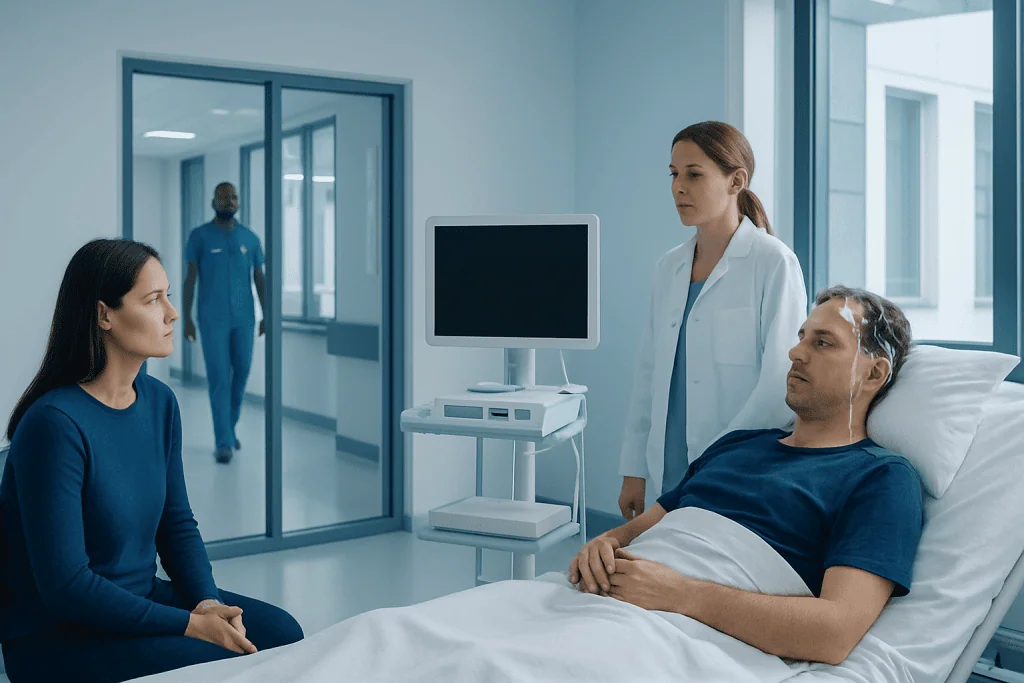
A sleep study, often called polysomnography, monitors several body functions during sleep in a safe and noninvasive way. It can help diagnose neurological sleep disorders as well as breathing-related and movement-related sleep problems.
Key Takeaways
- A sleep study, often called polysomnography, monitors several body functions during sleep in a safe and noninvasive way.
- It can help diagnose neurological sleep disorders as well as breathing-related and movement-related sleep problems.
- Most people sleep sufficiently for useful results, even with sensors attached.
- Preparation is usually simple and includes following normal routines unless a doctor advises otherwise.
- Results are interpreted together with symptoms, medical history, and sometimes additional tests.
A sleep study can help doctors understand unusual sleep symptoms by recording brain waves, breathing, movement, oxygen levels, and heart rhythm overnight. For people with suspected neurological sleep disorders, it is an important step toward an accurate diagnosis and a treatment plan tailored to the cause.
Overview
A sleep study for neurological sleep disorders is a detailed overnight test that records how the body behaves during sleep. It is commonly used when a person has symptoms such as unusual movements, acting out dreams, excessive daytime sleepiness, sudden weakness episodes, repeated awakenings, or events that may look like seizures. The goal is to understand whether the symptoms are related to the brain, nerves, breathing, movement, or a combination of these factors.
The most common type of in-lab sleep study is called polysomnography. During this test, sensors monitor brain waves, eye movements, muscle activity, breathing patterns, oxygen levels, heart rhythm, and leg movements. In some cases, video monitoring is also used so specialists can match physical behaviors with changes in sleep stages and body signals.
Neurological sleep medicine focuses on disorders in which sleep and the nervous system affect each other. A sleep study may help evaluate conditions such as narcolepsy, REM sleep behavior disorder, restless legs syndrome with periodic limb movements, parasomnias, and sleep-related seizures. It may also help distinguish between sleep disorders and other neurological conditions, which is important because symptoms can overlap.
Why a Doctor May Recommend a Sleep Study
A doctor may suggest a sleep study when symptoms are persistent, disruptive, or difficult to explain based on history alone. This is especially true when symptoms happen only during sleep, when bed partners notice unusual behaviors, or when daytime symptoms such as sleepiness, poor concentration, headaches, or memory problems are affecting daily life.
Some people are referred because of suspected neurological sleep conditions, while others need testing to rule out common sleep problems that can mimic them. For example, untreated sleep apnea can cause fragmented sleep, fatigue, mood changes, and concentration problems that overlap with neurological complaints. In contrast, disorders such as sleep apnea may exist alongside a neurological sleep disorder, so a full evaluation can be helpful.
Doctors may also use sleep testing when there are safety concerns, such as injuries during sleep, sudden sleep episodes, or possible nighttime seizures. When necessary, a sleep specialist may combine overnight polysomnography with other tests, such as a daytime nap study called a multiple sleep latency test, prolonged EEG monitoring, or imaging and laboratory studies based on the individual case.
Symptoms and Conditions a Sleep Study Can Help Assess
A sleep study does not diagnose every sleep problem by itself, but it can provide strong objective evidence. It is particularly useful when symptoms suggest a disorder of sleep architecture, abnormal muscle activity, or altered brain function during sleep. The test helps show when events occur, which sleep stage they happen in, and whether they are linked to breathing changes, arousals, or brain-wave patterns.
Symptoms that may lead to testing include:
- Loud snoring, pauses in breathing, or choking during sleep
- Excessive daytime sleepiness or irresistible sleep attacks
- Acting out dreams, shouting, punching, or kicking during sleep
- Unusual jerking, repetitive leg movements, or restlessness at night
- Sleepwalking, confusion after awakening, or other complex nighttime behaviors
- Possible seizures that occur mainly during sleep
- Sudden muscle weakness triggered by emotions, vivid dreamlike experiences at sleep onset, or sleep paralysis
Depending on the pattern, specialists may consider conditions such as narcolepsy, REM sleep behavior disorder, periodic limb movement disorder, parasomnias, insomnia associated with neurological disease, or nocturnal epilepsy. In some cases, additional neurological assessment is needed to distinguish parasomnias from epilepsy or to explore movement disorders that affect sleep.
What Happens During the Sleep Study
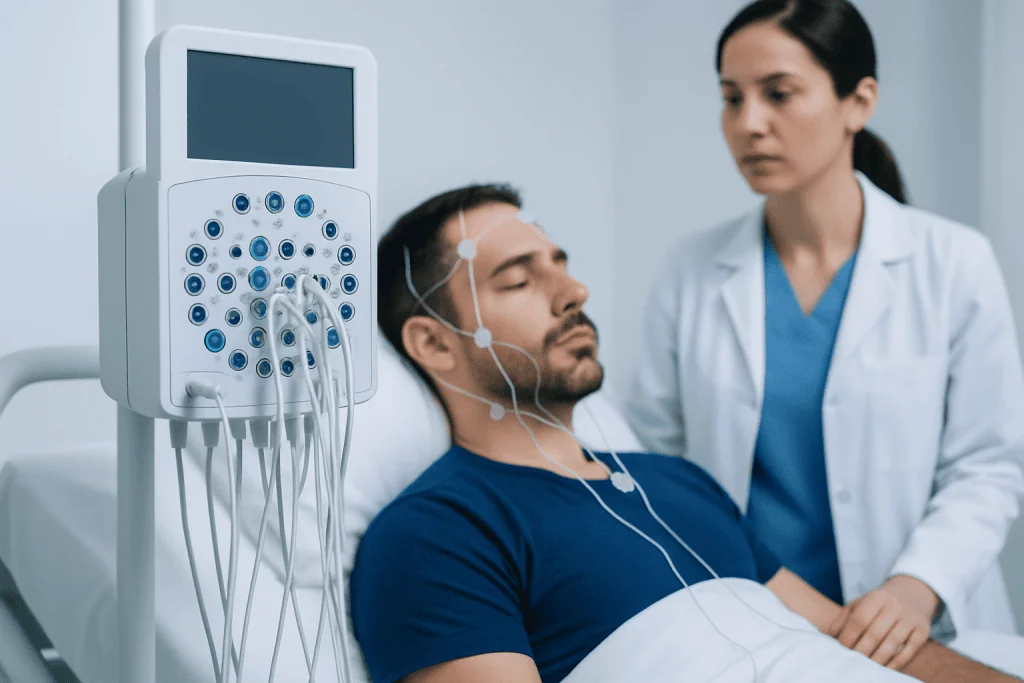
Most sleep studies are performed overnight in a sleep laboratory designed to be quiet and comfortable. A technologist places small sensors on the scalp, face, chest, and legs using adhesive or paste. Elastic belts are placed around the chest and abdomen to track breathing effort, and a small finger probe measures oxygen levels. These sensors do not hurt, although they may feel unfamiliar at first.
After the sensors are applied, the person goes to sleep as normally as possible while the equipment records continuously. The room usually has a camera and microphone so the sleep team can observe behaviors and assist if needed. People can usually change position, turn in bed, and use the bathroom with help disconnecting or managing the wires temporarily.
For suspected neurological sleep disorders, the recordings are reviewed in detail for sleep stages, muscle tone changes, breathing events, body movements, and abnormal behaviors. In selected cases, the doctor may recommend expanded monitoring, such as additional EEG leads or a next-day nap study, to look more closely for narcolepsy or seizure-related events. Tests such as EEG evaluation or brain MRI may be suggested later if the findings point toward a neurological cause outside routine sleep testing.
How to Prepare and What the Night Feels Like
Preparation is usually straightforward. Patients are often advised to keep their usual sleep schedule for several days before the test unless told otherwise. The sleep team may ask about current medicines, caffeine use, alcohol intake, and any products applied to the hair or skin, because these factors can affect the recordings or the ability of sensors to stay in place.
On the day of the test, it is usually helpful to arrive with clean, dry hair and avoid heavy hair products, oils, or lotions. Comfortable sleepwear is recommended, and many people bring familiar items such as a pillow, book, or toiletries. If a doctor has given specific instructions about medications, those instructions should be followed carefully rather than stopped independently.
Many people worry that they will not sleep well enough for the test to work. In practice, even a shorter or less typical night often provides enough information for interpretation. The sensors can feel unusual at first, but most patients adjust after settling into bed. The staff monitor the study throughout the night and can answer questions, making the experience safer and more reassuring than many people expect.
Understanding the Results and Possible Next Steps
After the study, a sleep specialist reviews the data in detail. This includes the timing of different sleep stages, the number of awakenings, breathing pauses, oxygen changes, limb movements, heart rhythm patterns, and any unusual behaviors seen on video. The results are then interpreted alongside the patient’s symptoms, medical history, examination findings, and sometimes bed partner observations.
The report may confirm a diagnosis, suggest one strongly, or show that more testing is needed. For example, if excessive daytime sleepiness remains unexplained after overnight testing, a multiple sleep latency test may be arranged the next day to assess how quickly the person falls asleep and whether REM sleep starts unusually early. If nighttime events suggest a seizure disorder, referral for more specialized neurological testing may follow.
Results can also reveal more than one issue. A person may have a neurological sleep disorder together with sleep-disordered breathing or limb movements. That is why treatment often depends on the full pattern rather than a single number from the study. In some situations, additional assessment through neurology consultation helps connect the sleep findings with broader nervous system symptoms.
Treatment Options After Diagnosis
Treatment depends on the underlying condition found on the sleep study. For some disorders, improving sleep habits and keeping a regular schedule can reduce symptoms. Others may require medication, treatment of a breathing disorder, management of an underlying neurological disease, or steps to make the sleep environment safer.
Examples vary by diagnosis. Sleep apnea may be treated with positive airway pressure or other approaches. REM sleep behavior disorder may call for safety measures such as removing sharp objects and padding the area around the bed, together with medication when appropriate. Narcolepsy treatment often combines lifestyle strategies with medicines to support daytime alertness and control related symptoms. If events are seizure-related, treatment is guided by a neurologist.
When breathing problems are a major part of the picture, care may include sleep apnea treatment. For more complex cases, multidisciplinary evaluation can be valuable. Near the end of the care pathway, some international patients choose centers such as Acibadem International, where multidisciplinary specialists in JCI-accredited hospitals diagnose and treat neurological and sleep-related conditions in a coordinated way.
When to See a Doctor
A doctor should be consulted when sleep symptoms are frequent, worsening, or affecting safety, health, work, school, or quality of life. Excessive daytime sleepiness, injuries during sleep, repeated breathing pauses, or behaviors that disturb a bed partner are all good reasons to seek medical advice. Even symptoms that seem mild can be worth discussing if they continue over time.
Prompt evaluation is especially important if a person has sudden sleep episodes while driving, nighttime events that resemble seizures, or dream-enactment behaviors that could cause harm. In older adults, new dream enactment may deserve careful neurological review because it can sometimes be associated with broader nervous system changes. Children, pregnant individuals, and people with significant heart, lung, or neurological disease may also need tailored assessment.
A sleep study is one tool within a broader evaluation, not a judgment about how well someone sleeps. When symptoms are clearly described and the results are interpreted by qualified specialists, testing can provide a clearer path toward safer sleep and more effective treatment.
Frequently asked questions
Is a sleep study painful?
A sleep study is generally painless and noninvasive. The sensors are attached to the skin and scalp, so they may feel unfamiliar, but they should not cause pain. Some people notice mild temporary skin irritation from adhesive, but this is usually minor.
Will I be able to sleep with all the wires on?
Most people do sleep enough for the test to provide useful information. The equipment can feel unusual at first, but sleep specialists expect this and can still often gather the data needed. It is not necessary to have a perfect night of sleep for the study to be helpful.
Can a sleep study diagnose neurological disorders directly?
A sleep study can strongly support the diagnosis of certain neurological sleep disorders, but it is usually interpreted together with symptoms, examination, and sometimes other tests. It is especially helpful for showing when abnormal events happen and how they relate to sleep stages, breathing, and movement. Some conditions still require follow-up with neurology or additional testing.
What is the difference between a home sleep test and an in-lab sleep study?
A home sleep test usually focuses mainly on breathing and oxygen levels and is often used for suspected sleep apnea in selected patients. An in-lab study records many more signals, including brain waves and muscle activity, which makes it more suitable when neurological sleep disorders are suspected. The best test depends on the symptoms and medical history.
Do I need to stop my medications before the test?
Medications should not be stopped unless the doctor ordering the test specifically advises it. Some medicines can affect sleep stages, alertness, or muscle activity, so the sleep team needs an accurate list of everything being taken. The specialist will explain whether any changes are needed before testing.
How long does it take to get results?
Results are usually not available immediately because a specialist needs to review the recording in detail. The timing varies by center, but patients are commonly contacted after interpretation or seen in follow-up to discuss the findings. That visit is also when next steps and treatment options are explained.
References
- American Academy of Sleep Medicine
- National Institute of Neurological Disorders and Stroke
- National Heart, Lung, and Blood Institute
- National Institute for Health and Care Excellence
- American Academy of Neurology
This article is for general information only and is not a substitute for professional medical advice. Please consult a qualified doctor about your individual situation.
Explore treatments in Turkey — costs, top hospitals & a free quote
JCI-accredited · board-certified surgeons · reply within 24h
Add us as a Preferred Source to see more of our trusted health content across Google Search, AI Overviews and Discover.