Solitary Play: An Evidence-Based Guide for Patients

Solitary play is common at every age, although how it looks changes as children develop. Playing alone does not necessarily mean a child is lonely, unhappy or lacking social skills.
Key Takeaways
- Solitary play is common at every age, although how it looks changes as children develop.
- Playing alone does not necessarily mean a child is lonely, unhappy or lacking social skills.
- Children benefit most when adults provide safe materials, time and gentle support without taking over.
- Independent play and social play complement each other; children need opportunities for both.
- A healthcare professional can help if independent play occurs alongside persistent communication, development or wellbeing concerns.
Solitary play is when a child plays independently, without actively engaging with another child or adult. It is a normal and valuable form of play that can support creativity, emotional regulation, concentration and growing confidence.
Overview: what solitary play means
Solitary play, sometimes called independent play, is play a child chooses or is able to do alone. The child may be deeply absorbed in an activity such as building with blocks, drawing, reading a picture book, arranging toys, completing a puzzle or creating an imaginary story. An adult may be nearby for safety and reassurance, but the child directs the activity rather than relying on the adult to lead it.
It is a normal part of child development, not a sign that a child dislikes people. Young children often begin by exploring objects on their own before they are ready to share ideas, rules and attention with peers. Older children may also seek quiet independent time after busy school days or social activities.
Solitary play is best understood as one part of a broad play pattern. Children can enjoy playing independently and also benefit from interacting with caregivers, siblings and friends. The important question is not whether a child ever plays alone, but whether they are developing, communicating and participating in daily life in ways that feel comfortable and appropriate for them.
Why independent play matters
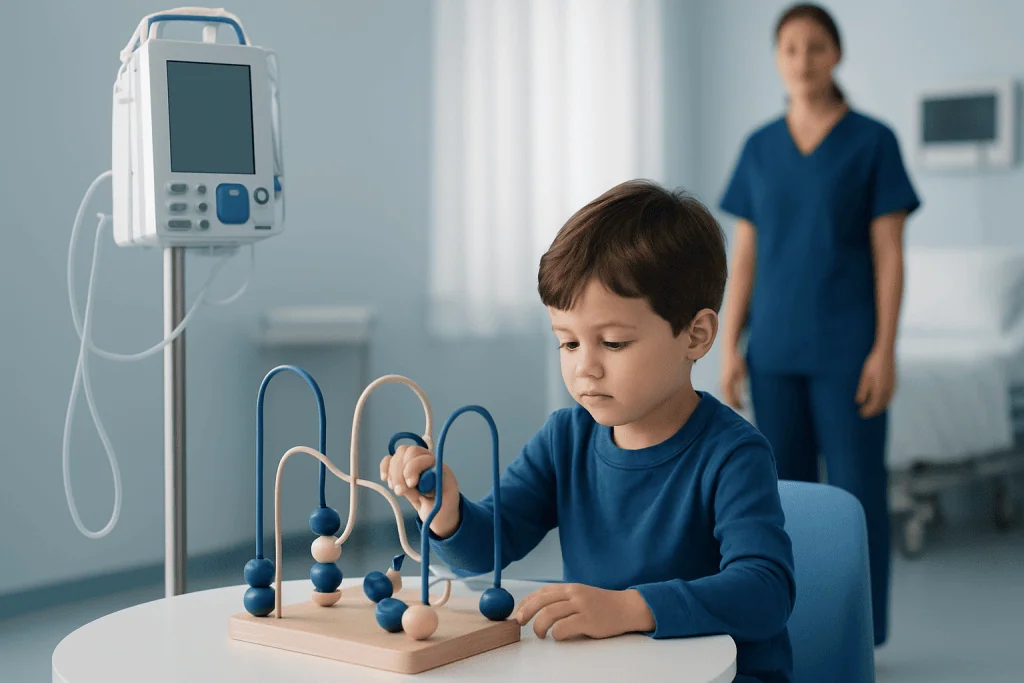
When children play independently, they have opportunities to make choices, follow their interests and experiment without needing an immediate answer from an adult. A child may decide how to use materials, change a plan when something does not work, or repeat an activity until they feel satisfied. These small experiences can strengthen persistence, flexible thinking and a sense of capability.
Solitary play can also support attention and emotional regulation. Quiet activities may give children time to settle after stimulation, process experiences and practise managing mild frustration. For example, a child completing a puzzle may learn to pause, try another piece and continue rather than giving up immediately.
Imaginative independent play is particularly useful for self-expression. Children may use dolls, figures, art materials or pretend scenarios to explore everyday events and feelings. Adults do not need to interpret every story or play theme; simply making space for safe, child-led play is often enough.
- It encourages creativity and curiosity.
- It helps children practise decision-making and problem-solving.
- It can build confidence in trying activities without constant help.
- It provides a healthy balance alongside family time and peer interaction.
How solitary play changes with age

In infancy and toddlerhood, independent play may involve exploring safe objects, touching textures, stacking cups or repeatedly moving toys. Very young children still need close supervision and regular responsive interaction with caregivers. At this stage, playing alone often happens in short periods while a trusted adult remains nearby.
Preschool-aged children may become absorbed in pretend play, construction toys, drawing, simple games or looking at books. They may move back and forth between playing alone and playing near other children without fully sharing an activity. This is often a typical progression as children learn to observe peers, communicate wants and take turns.
School-aged children may use solitary play for hobbies, crafts, reading, music, outdoor exploration or strategy-based games. Some children naturally need more quiet time than others. Temperament, energy level, family routines, culture and the child’s interests can all shape how often they choose independent activities.
There is no single amount of solitary play that is right for every child. A child’s overall development, relationships, mood and ability to take part in everyday routines provide more helpful context than comparing their play style with that of another child.
Solitary play and social development
Independent play does not compete with social development. In fact, children often develop the confidence and skills needed for group play through time spent exploring independently. Knowing how to start an activity, tolerate a small setback or communicate an idea can make shared play easier later.
Social play also has distinct benefits. Playing with others can help children practise sharing, negotiation, empathy, turn-taking and understanding different viewpoints. Children do not need to master these skills all at once. They learn gradually through everyday interactions with supportive adults and peers.
Some children prefer to watch before joining a group, especially in unfamiliar settings. This can be a comfortable way to learn what is happening and decide whether they want to participate. Pressuring a child to join immediately may make play feel less enjoyable; a gentle invitation and time to warm up are often more helpful.
Parents and caregivers can support a healthy balance by offering both quiet activities and opportunities for connection. This may include reading together, visiting a playground, arranging a short playdate, doing a shared household task or allowing the child to return to a preferred solo activity when they need a break.
How caregivers can encourage healthy independent play
Creating the right conditions matters more than entertaining a child continuously. A predictable, safe space with a small selection of age-appropriate materials can make it easier for a child to begin. Open-ended items, such as blocks, crayons, toy animals, dress-up clothes, paper or simple craft supplies, allow children to use their own ideas.
Caregivers can start small. They might remain nearby while the child plays, describe what they notice without directing the activity, and gradually step back when the child is engaged. Comments such as “You are working carefully on that tower” show interest without taking control. It is also helpful to accept that boredom may briefly occur before a child finds something to do.
Screen-based entertainment can be enjoyable in moderation, but it is not a full substitute for hands-on, imaginative or active play. Children generally benefit from regular opportunities to move, create, explore outdoors when possible and interact with people as well as engaging in independent quiet time.
Expectations should be realistic. A child who is tired, hungry, unwell or adjusting to a change in routine may need more adult closeness. Independent play is a skill that develops over time, and children may need different levels of support on different days.
When solitary play may need closer attention
Playing alone by itself is usually not a medical concern. However, it may be helpful to look more closely when a child consistently appears distressed, isolated or unable to engage with familiar caregivers or peers in situations where they would like to do so. Changes from the child’s usual behavior can be especially important to notice.
Parents may wish to discuss concerns with a pediatrician if solitary play occurs together with persistent difficulties in communication, limited response to others, loss of previously learned language or social skills, frequent intense distress, major changes in sleep or appetite, or problems managing daily routines. These signs can have many possible explanations, and a professional assessment considers the child as a whole.
Shyness, a preference for quiet activities or needing time to adjust to new people are not, on their own, diagnoses. A qualified clinician can listen to family observations, review developmental history and advise whether monitoring, developmental screening or referral to another specialist would be useful.
When to seek medical care
Routine medical advice is appropriate when caregivers have ongoing concerns about a child’s development, communication, behavior or emotional wellbeing. A pediatrician can help distinguish normal individual differences from concerns that may benefit from further evaluation. Bringing examples of what caregivers have noticed at home, school or childcare can make the conversation more useful.
More timely assessment is advisable if a child loses skills they previously had, such as words, social engagement or abilities in daily activities. Caregivers should also seek professional support if a child seems persistently unhappy, highly anxious, frequently withdrawn, or if their play and interaction patterns are causing significant difficulty at home, school or with peers.
Acibadem International’s multidisciplinary specialists and JCI-accredited hospitals support international patients who need pediatric developmental, behavioral or mental health assessment. Care should be individualized, respectful of the child’s strengths and based on a full understanding of family concerns.
Frequently asked questions
Is solitary play normal for children?
Yes. Solitary play is a normal form of play and can be seen from infancy through the school years. Many children enjoy independent activities while also developing relationships with family members and peers.
Does playing alone mean that a child is lonely?
Not necessarily. A child may play alone because they are focused, tired, imaginative, comfortable with independent activities or simply interested in what they are doing. Caregivers should consider the child’s overall mood, relationships and daily functioning rather than solitary play alone.
How much independent play should a child have?
There is no universal amount that suits every child. Age, temperament, routines and the child’s needs all affect how long they can or want to play independently. Short, supported periods can gradually increase as the child develops.
Should parents join in when a child is playing alone?
Parents can show interest without taking over. Being available, offering reassurance and commenting positively on the child’s efforts can be helpful. If the child is happily engaged, allowing them to lead the activity supports independence.
What toys are good for solitary play?
Simple, open-ended materials often work well, including blocks, crayons, dolls, toy vehicles, puzzles, books and age-appropriate craft materials. The safest choice depends on the child’s age and abilities, and young children need supervision around small parts or other hazards.
When should a parent worry about a child always playing alone?
Concern is more appropriate when playing alone is accompanied by persistent distress, communication difficulties, loss of skills, marked withdrawal or difficulties in daily life. A pediatrician can discuss the child’s development and recommend further support if needed.
This article is for general information only and is not a substitute for professional medical advice. Please consult a qualified doctor about your individual situation.
Explore treatments in Turkey — costs, top hospitals & a free quote
JCI-accredited · board-certified surgeons · reply within 24h
Add us as a Preferred Source to see more of our trusted health content across Google Search, AI Overviews and Discover.

More from the Health Library

Nf Type I: A Complete Medical Overview

Bacteria B Cereus: What Patients Need to Know

CBC: A Complete Medical Overview

Osteomas: A Complete Medical Overview

Rhodiola Rosea and — Explained by Medical Evidence, Not Myths