Tooth Restoration — Explained by Medical Evidence, Not Myths

Tooth restoration includes fillings, bonding, inlays and onlays, crowns, root canal restoration, bridges, dentures, and dental implants. The least invasive durable option is generally preferred when it can adequately protect the tooth.
Key Takeaways
- Tooth restoration includes fillings, bonding, inlays and onlays, crowns, root canal restoration, bridges, dentures, and dental implants.
- The least invasive durable option is generally preferred when it can adequately protect the tooth.
- A restoration does not remove the need for daily brushing, cleaning between teeth, and regular dental examinations.
- Pain, swelling, a broken tooth, or a lost restoration should be assessed promptly by a dental professional.
- The right treatment depends on the amount of healthy tooth remaining, gum and bone health, bite forces, and personal goals.
Tooth restoration is the repair or replacement of a damaged, decayed, worn, or missing tooth to restore comfortable function, protect oral health, and improve appearance when needed. Evidence-based care aims to preserve healthy natural tooth structure whenever possible, while matching the treatment to the cause and extent of the problem.
Tooth Restoration: What It Means and Why It Is Used
Tooth restoration is dental treatment that rebuilds a tooth affected by decay, fracture, wear, old fillings, infection, or tooth loss. Its purpose is not only cosmetic. A well-chosen restoration can help a person chew comfortably, speak clearly, maintain the shape of the bite, and reduce the risk that damage progresses.
Restoration may involve repairing part of a natural tooth or replacing an entire missing tooth. Common options include fillings, tooth-colored bonding, inlays, onlays, crowns, bridges, removable dentures, and implants. The most appropriate choice depends on how much tooth structure remains, whether the nerve and root are healthy, the condition of the gums and jawbone, and the forces placed on the tooth during biting.
One evidence-based principle guides modern restorative dentistry: preserving sound natural tooth tissue is valuable. For this reason, a dentist will usually consider whether a conservative repair can work before recommending a more extensive restoration. However, a larger restoration may be the safer option when a tooth is weak, extensively cracked, or has lost substantial structure.
Choosing a Restoration: The Clinical Questions That Matter
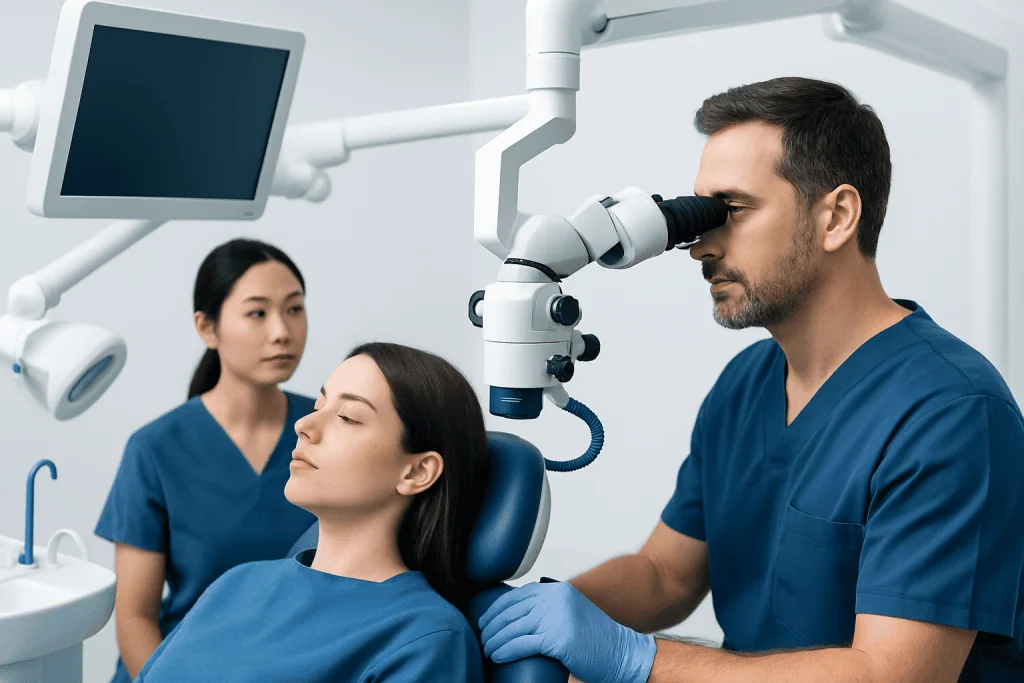
Restorative decisions are based on diagnosis rather than on appearance alone. The dentist examines the tooth, gums, bite, and nearby teeth, and may use X-rays or other imaging to see decay between teeth, assess roots, or evaluate bone around a missing tooth. They also ask about symptoms such as sensitivity, pain on chewing, jaw clenching, and changes in how the teeth meet.
Small areas of decay or minor chips can often be managed with a filling or composite bonding. When damage affects a larger part of the chewing surface but tooth walls remain relatively strong, an inlay or onlay may offer support while preserving more natural tissue than a full crown. A crown covers the visible portion of a tooth and may be recommended when the tooth is severely broken, heavily filled, worn, or treated with root canal therapy.
When a tooth cannot be saved or is already missing, the care plan considers whether replacement is needed and which approach is suitable. A bridge uses neighboring teeth for support, a removable denture replaces one or more teeth, and an implant supports a crown after it integrates with the jawbone. Not every missing tooth requires the same solution; location, bite, bone availability, general health, and oral hygiene all matter.
Good treatment planning also considers long-term maintenance. A durable restoration can still fail if decay develops around its edges, gum disease progresses, or repeated heavy biting causes fracture. A person should feel able to discuss expected benefits, limitations, alternatives, longevity, and follow-up needs before making a decision.
Main Types of Tooth Restoration
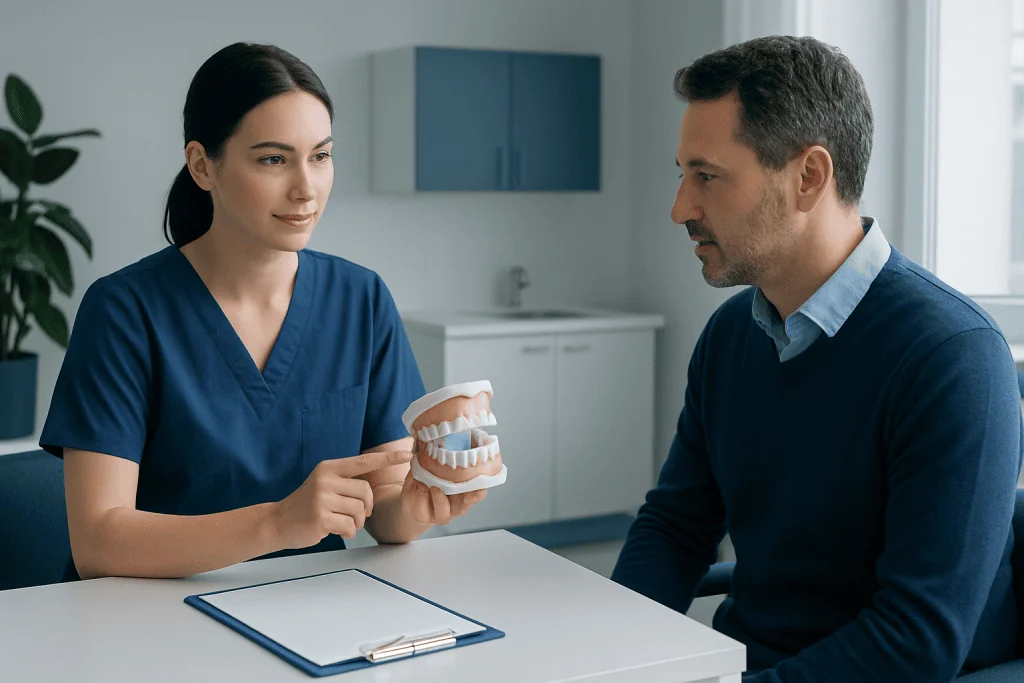
Fillings and bonding replace small to moderate areas of lost tooth structure. Composite resin is commonly used because it can be matched to the tooth color and bonded directly to enamel and dentin. Amalgam remains an option in some settings, particularly for certain back teeth, but suitability should be discussed individually. Fillings do not strengthen a severely weakened tooth and may not be sufficient for extensive damage.
Inlays, onlays, and crowns are fabricated restorations, often made from ceramic, composite, metal, or combinations of materials. Inlays fit within the cusps of a tooth, while onlays extend over one or more cusps. Crowns cover the entire visible tooth. Material choice depends on the tooth location, appearance preferences, bite forces, available space, and the dentist’s clinical assessment.
Root canal restoration may be needed when decay, injury, or a deep crack reaches the pulp, the soft tissue inside the tooth containing nerves and blood vessels. Root canal treatment removes infected or inflamed pulp, cleans and seals the canal system, and is followed by a filling or, in many cases, a crown to protect the remaining tooth. It is intended to retain a natural tooth when clinically appropriate.
Tooth replacement can involve a fixed bridge, a removable partial or complete denture, or an implant-supported restoration. Dental implants are placed in the jawbone and later support a crown, bridge, or denture. They require healthy gums, adequate bone or appropriate bone preparation, and reliable home care; they are not immune to plaque-related inflammation.
Evidence, Expectations, and Common Myths
A frequent myth is that a restoration permanently “fixes” a tooth. In reality, restorations can last for many years, but no material lasts forever. Their lifespan varies with the restoration type, size, tooth location, quality of bonding or fit, dietary habits, oral hygiene, decay risk, and forces from chewing or grinding. Regular reviews help identify wear, cracks, or leakage early.
Another misconception is that a crown makes a tooth indestructible. A crown can protect weakened tooth structure, but the tooth beneath it can still develop decay near the crown margin, and the root can still develop infection or fracture. Similarly, an implant crown is not a natural tooth and does not get cavities, but gum inflammation and bone loss can occur around an implant if bacterial plaque is not controlled.
People may also hear that every sensitive tooth needs a crown or root canal. Sensitivity has many possible causes, including early decay, exposed root surfaces, enamel wear, gum recession, a loose filling, or teeth grinding. The correct treatment follows a proper examination; unnecessary drilling or extensive treatment should be avoided.
A natural-looking result is possible with many modern materials, but appearance should be balanced with function and tissue preservation. Whitening, gum contour, tooth alignment, and the shade of adjacent teeth can affect cosmetic planning. A dentist can explain which changes are realistic and what ongoing care will be required.
What Treatment and Recovery May Involve
Many simple restorations can be completed in one visit using local anesthetic when needed. The dentist removes decay or unsupported tooth tissue, prepares the area conservatively, places the chosen material, and checks the bite. It is common to have brief sensitivity after treatment, particularly to cold foods or pressure, but worsening pain or a bite that feels uneven should be reported.
Laboratory-made inlays, onlays, crowns, bridges, and implant restorations usually require more than one stage. The tooth or implant is assessed and prepared, impressions or digital scans are taken, and a temporary restoration may be used while the final restoration is made. For implants, healing time is often needed after surgical placement before the final tooth is attached, although timing differs between cases.
After root canal treatment, the tooth may feel tender for a short period. The dentist will advise when to return for the final restoration and whether the tooth should be protected with a crown. Completing the planned restoration is important because an untreated or poorly protected tooth may be more vulnerable to fracture or reinfection.
For complex needs, coordinated care may involve a general dentist, endodontist, periodontist, prosthodontist, oral surgeon, or orthodontist. Acibadem International’s multidisciplinary specialists and JCI-accredited hospitals diagnose and treat dental conditions for international patients, with plans based on individual clinical findings.
Protecting Restorations and Supporting Oral Health
Daily plaque control is central to protecting both natural teeth and restorations. Teeth should be brushed twice daily with fluoride toothpaste, using a soft toothbrush and careful technique along the gumline. Cleaning between teeth once daily with floss, interdental brushes, or another dentist-recommended aid helps remove plaque where a toothbrush cannot reach.
Frequent intake of sugary foods, sweetened drinks, and acidic beverages can increase the risk of decay and erosion around restorations. Limiting between-meal sugar exposure, choosing water more often, and avoiding repeated sipping of acidic drinks can help. People with dry mouth, reflux, diabetes, frequent vomiting, or a history of repeated cavities may need additional preventive support from their dental team.
Grinding or clenching can place high forces on teeth, fillings, crowns, and implants. Signs include morning jaw soreness, worn tooth edges, headaches, or repeated chipping. A custom night guard may be recommended after assessment, especially if there is evidence of tooth wear or fracture.
Regular dental examinations and professional cleanings allow the dentist to monitor restorations, gums, bite, and oral cancer warning signs. A restoration should not be replaced simply because it is old; replacement is usually considered when there is decay, fracture, poor fit, unacceptable wear, recurrent symptoms, or another clear clinical reason.
When to Seek Medical Care
A dentist should assess a toothache that lasts more than a day or two, pain when biting, new sensitivity that does not settle, a chipped or broken tooth, a lost filling or crown, or a visible dark spot or hole in a tooth. Early assessment may allow a smaller, simpler restoration and can prevent discomfort from worsening.
Urgent dental care is appropriate for facial or gum swelling, fever with dental pain, pus or a bad taste from the gums, injury that loosens or knocks out a tooth, uncontrolled bleeding, or difficulty opening the mouth. Swelling that affects breathing or swallowing requires emergency medical attention.
People should not place aspirin or other pain-relieving tablets directly onto gums or teeth, as this can burn oral tissues. Temporary dental repair products may sometimes protect a lost filling briefly, but they do not replace professional assessment. A dentist can identify the cause, relieve symptoms safely, and discuss restoration options that fit the condition of the tooth.
Frequently asked questions
What is the difference between a filling and a crown?
A filling repairs a relatively small area of decay or damage within a tooth. A crown covers the visible portion of a tooth and is generally used when there is extensive damage, weakness, wear, or a high risk of fracture. The choice depends on the amount and location of healthy tooth structure that remains.
Can a severely damaged tooth always be restored?
Not always. Some teeth can be repaired with root canal treatment and a crown, but a tooth may need removal if it is fractured below the gumline, has inadequate remaining structure, or has severe infection or bone loss. A dentist evaluates the tooth and surrounding tissues before recommending extraction or restoration.
Is tooth restoration painful?
Most restorative procedures are performed with local anesthetic, so treatment itself should be comfortable. Mild tenderness or temperature sensitivity can occur afterward and often improves over time. Persistent, severe, or worsening pain should be reviewed by the dentist.
How long do dental restorations last?
Longevity varies considerably by the restoration type, size, material, location, oral hygiene, diet, and bite forces. A restoration can function well for many years, but it requires monitoring and may eventually need repair or replacement. Good daily cleaning and regular dental visits support longer-lasting results.
Can decay form under a crown or around a filling?
Yes. The restorative material itself does not decay, but bacteria can cause decay in the natural tooth structure at the edge of a filling or crown. Brushing with fluoride toothpaste, cleaning between teeth, and attending regular dental reviews are important preventive measures.
Is an implant better than a bridge for a missing tooth?
Neither option is automatically best for every person. An implant can avoid preparing adjacent teeth, while a bridge may be suitable when neighboring teeth already need crowns or when implant placement is not appropriate. Gum health, bone volume, medical history, cost considerations, timeline, and personal preferences all help guide the decision.
References
- American Dental Association
- National Institute of Dental and Craniofacial Research
- FDI World Dental Federation
- NHS
- European Federation of Periodontology
This article is for general information only and is not a substitute for professional medical advice. Please consult a qualified doctor about your individual situation.
Explore treatments in Turkey — costs, top hospitals & a free quote
JCI-accredited · board-certified surgeons · reply within 24h
Add us as a Preferred Source to see more of our trusted health content across Google Search, AI Overviews and Discover.

More from the Health Library

Treatment of Torsion Testis: Procedure, Recovery and Results

Grey Color Discharge: What Patients Need to Know

Dehumidifier: What Patients Need to Know

Butterfly Pea Flower: An Evidence-Based Guide for Patients

Supraventricular Tachycardia: A Complete Medical Overview

Edema — Explained by Medical Evidence, Not Myths
Oral & Dental Health Specialists at Acibadem

Dt. Emre Orhon Kuybulu
Oral & Dental Health
Dt. Akif Aydın Şen
Oral & Dental Health
Dt. Alara Güler
Oral & Dental Health
Dt. Alara Naz Kenir Çelik
Oral & Dental Health