Sore Feet Arches: What Patients Need to Know

Sore feet arches are commonly caused by overuse, poor footwear, plantar fascia strain, or foot shape changes. Pain may be felt in the inner arch, heel, midfoot, or ball of the foot and can worsen with standing or walking.
Key Takeaways
- Sore feet arches are commonly caused by overuse, poor footwear, plantar fascia strain, or foot shape changes.
- Pain may be felt in the inner arch, heel, midfoot, or ball of the foot and can worsen with standing or walking.
- Supportive shoes, activity adjustment, stretching, and targeted treatment often help symptoms improve.
- Swelling, bruising, numbness, sudden severe pain, or trouble bearing weight should prompt medical evaluation.
- A clinician may use an exam and, when needed, imaging to identify tendon injury, stress fracture, arthritis, or other causes.
Sore feet arches are a common complaint and are often linked to overuse, unsupportive footwear, tight tissues, or changes in foot mechanics. Most cases improve with rest, supportive shoes, and guided care, but persistent or severe pain should be assessed to rule out injury, inflammation, or nerve-related problems.
Overview: What sore feet arches usually mean
Sore feet arches usually mean that the tissues supporting the curve on the bottom of the foot have become irritated, strained, or overloaded. This may happen after long periods of standing, walking, running, wearing unsupportive shoes, or increasing activity too quickly. In many people, arch pain improves with rest, better footwear, and simple self-care.
At the same time, the arch is a complex area. It contains the plantar fascia, small joints, ligaments, muscles, tendons, nerves, and bones that help absorb impact and support balance. Because several structures meet in a small space, discomfort in the arch can have more than one cause.
Patients often describe sore feet arches as an aching, pulling, burning, or stabbing feeling. Some feel pain first thing in the morning, while others notice it most after long shifts, exercise, or time spent barefoot on hard surfaces. The pattern of pain can offer clues about the underlying problem.
Persistent arch pain should not be ignored, especially if it affects walking or returns repeatedly. A careful medical assessment can help determine whether the issue is simple strain or a condition such as plantar fasciitis, tendon irritation, arthritis, or a stress injury.
Common symptoms and how arch pain can feel
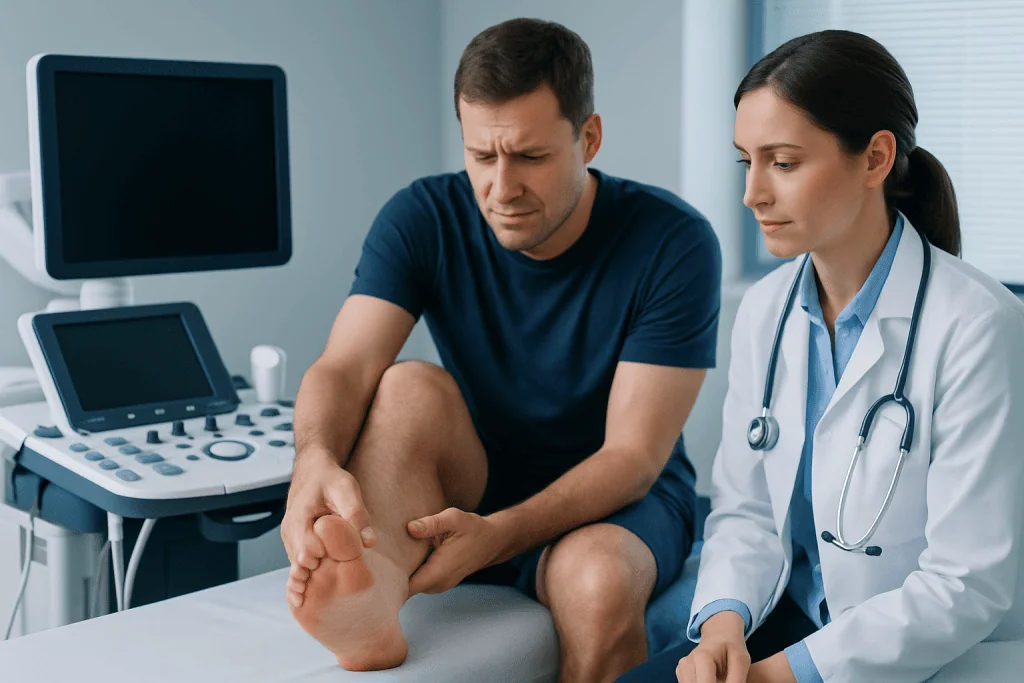
The symptoms of sore feet arches vary depending on the structure involved. Some people have a dull ache through the inside of the foot, while others feel sharp pain under the heel extending into the arch. The discomfort may be mild at first and become more noticeable with activity.
Many patients notice stiffness after rest, especially in the morning or after sitting for a while. Others feel pain after exercise, long walks, or standing for extended periods. In some cases, there is tenderness when pressing along the arch or heel.
Symptoms that can occur with arch pain include:
- Aching or sharp pain in the inner arch or heel
- Pain that worsens with walking, running, or prolonged standing
- Tightness in the sole of the foot or calf
- Swelling or warmth in part of the foot
- Cramping or a feeling of fatigue in the foot
- Burning, tingling, or numbness if a nerve is irritated
If the pain is sudden, severe, or linked to a twisting injury or overtraining, clinicians may consider problems beyond routine strain. Midfoot pain with swelling, for example, can suggest a ligament injury or stress fracture and may require a different treatment plan.
Causes and risk factors

One of the most common causes of sore feet arches is strain of the plantar fascia, the thick band of tissue that runs along the bottom of the foot. Repetitive stress can create small areas of irritation where this tissue helps support the arch. Tight calf muscles and limited ankle flexibility may increase this stress.
Footwear also plays a major role. Shoes that are worn out, too flat, too rigid, or poorly fitted may fail to support normal foot mechanics. Going barefoot on hard floors for long periods can also overload the arch. Occupations that require prolonged standing often contribute to symptoms.
Other possible causes include tendon inflammation, especially involving the posterior tibial tendon, which helps support the inner arch. A stress fracture in the midfoot, arthritis, joint instability, nerve irritation, or changes in foot shape such as flat feet or very high arches may also lead to pain. In children and adolescents, growth-related issues or sports overuse can be factors.
Risk factors include rapid increases in exercise, excess body weight, aging-related tissue changes, diabetes, inflammatory arthritis, and previous foot injuries. People with biomechanical issues such as overpronation may be more likely to develop recurring symptoms and may benefit from structured foot assessment and orthopedic evaluation and treatment.
How doctors diagnose sore feet arches
Diagnosis begins with a detailed history. A clinician will usually ask where the pain is located, when it started, what makes it better or worse, and whether there has been a recent increase in activity or a specific injury. They may also ask about medical conditions such as diabetes, arthritis, or circulation problems.
The physical exam often includes checking the arch shape, gait, ankle motion, calf tightness, and areas of tenderness. The doctor may look for swelling, bruising, changes in alignment, weakness, or signs of nerve involvement. Standing and walking patterns can help show whether the foot rolls inward excessively or if another mechanical issue is present.
Imaging is not needed in every case, but it can be useful if symptoms are severe, prolonged, or atypical. X-rays may help identify arthritis, bone alignment problems, or fractures. Ultrasound or MRI can be considered when tendon injury, plantar fascia damage, or a stress fracture is suspected. In selected cases, blood tests may be ordered if an inflammatory condition is possible.
This evaluation is important because arch pain is a symptom rather than a single diagnosis. Treatment is most effective when it is based on the specific source of pain rather than only the location of discomfort.
Treatment options and pain relief
Treatment for sore feet arches depends on the cause, severity, and duration of symptoms. For many patients, the first step is reducing the activities that trigger pain while avoiding complete inactivity unless advised by a doctor. Relative rest allows irritated tissues to calm down without excessive deconditioning.
Supportive footwear is often one of the most effective measures. Shoes with good arch support, cushioning, and a stable fit can reduce strain on the plantar fascia and tendons. Some patients benefit from inserts or custom orthotics, particularly if flat feet, high arches, or alignment problems are contributing to symptoms.
Other conservative options may include ice, stretching, foot-strengthening exercises, and short-term use of pain-relieving medicines when medically appropriate. A structured rehabilitation plan can be especially helpful when pain is linked to tendon overload, tight calf muscles, or altered walking mechanics. In these cases, physical therapy and rehabilitation may improve flexibility, strength, and foot control.
If pain does not improve, a specialist may consider additional treatments depending on the diagnosis. These can include immobilization for a stress injury, targeted therapy for inflammatory conditions, or more advanced procedures in selected cases. When imaging is needed to clarify the cause, MRI evaluation may help guide the next steps.
Self-care, prevention, and daily habits that help
Preventing recurring sore feet arches often depends on reducing repeated strain. Gradual activity increases are important, especially after a break from exercise or when starting a new sport. Replacing worn shoes on time and choosing footwear suited to the person’s foot type and activity can make a meaningful difference.
Stretching the calves and the bottom of the foot may help reduce tension through the arch. Gentle strengthening for the feet, ankles, and lower legs can improve support and shock absorption. People who stand for long hours may benefit from supportive insoles, cushioned floor mats, and regular movement breaks.
Helpful daily habits include:
- Avoiding prolonged barefoot walking on hard surfaces
- Warming up before exercise and progressing training gradually
- Maintaining a healthy body weight when possible
- Using shoes with enough room in the toe box and stable support
- Paying attention to early signs of foot fatigue rather than pushing through pain
People with chronic medical conditions such as diabetes should also inspect their feet regularly and seek early care for pain, skin changes, or numbness. Ongoing or recurrent arch pain may be linked to broader foot and ankle pain patterns that deserve a more complete assessment.
When to seek medical care
Medical care is recommended if sore feet arches last more than a short period, keep returning, or interfere with daily walking, work, or exercise. Evaluation is also important when home care has not helped after reasonable rest and supportive measures.
Patients should seek prompt assessment for symptoms such as sudden severe pain, inability to bear weight, visible deformity, swelling after injury, bruising, fever, spreading redness, or numbness and weakness. These signs can point to a fracture, significant ligament injury, infection, or nerve problem rather than routine overuse.
People with diabetes, circulation disorders, inflammatory arthritis, or reduced sensation in the feet should be especially cautious. In these situations, even mild foot pain may need earlier evaluation because complications can develop more easily.
For patients who need specialist care, Acibadem International’s multidisciplinary specialists in JCI-accredited hospitals evaluate and treat foot conditions for international patients, including advanced diagnostic support and individualized care planning when needed.
Frequently asked questions
What causes sore feet arches most often?
The most common causes are overuse, poor shoe support, plantar fascia strain, and tight calf muscles. Changes in foot mechanics, tendon irritation, and standing for long periods can also contribute.
Can sore feet arches go away on their own?
Mild cases often improve with rest, supportive shoes, and activity adjustment. If pain persists, returns frequently, or affects walking, a medical evaluation is a good idea.
Is arch pain the same as plantar fasciitis?
Not always. Plantar fasciitis is one common cause of arch pain, but tendons, joints, bones, and nerves in the foot can also create similar symptoms.
Should patients keep exercising with sore feet arches?
It depends on the severity and cause of the pain. High-impact activity may worsen symptoms, so it is usually better to reduce triggering exercise and choose lower-impact options until the foot is assessed or improves.
What type of shoes help with sore feet arches?
Shoes that fit well and provide stable arch support, cushioning, and heel control are often helpful. Worn-out shoes, very flat shoes, or unsupportive sandals may make symptoms worse.
When is arch pain a sign of something more serious?
Arch pain may need urgent attention if it starts suddenly, follows an injury, causes major swelling or bruising, or makes it hard to bear weight. Numbness, weakness, fever, or redness are also reasons to seek prompt medical care.
This article is for general information only and is not a substitute for professional medical advice. Please consult a qualified doctor about your individual situation.
Explore treatments in Turkey — costs, top hospitals & a free quote
JCI-accredited · board-certified surgeons · reply within 24h
Add us as a Preferred Source to see more of our trusted health content across Google Search, AI Overviews and Discover.

More from the Health Library

Crepitus: An Evidence-Based Guide for Patients

Uses of Oolong Tea: A Complete Medical Overview

Under Eye Injection Filler: What Patients Need to Know

Guiche Piercing: What Patients Need to Know

Clang Association: A Complete Medical Overview