Sore Testicle and Lower Back: An Evidence-Based Guide for Patients

Pain in the testicle and lower back may be related, but the source can be in the scrotum, urinary tract, kidneys, groin, spine, or muscles. Testicular torsion is a time-sensitive emergency and should be considered with sudden, severe, one-sided testicular pain.
Key Takeaways
- Pain in the testicle and lower back may be related, but the source can be in the scrotum, urinary tract, kidneys, groin, spine, or muscles.
- Testicular torsion is a time-sensitive emergency and should be considered with sudden, severe, one-sided testicular pain.
- Urinary infections, epididymitis, kidney stones, hernias, and muscle or nerve irritation are other possible causes.
- A clinician may use examination, urine tests, blood tests, and scrotal ultrasound to identify the cause.
- Rest and supportive measures may help minor muscle-related discomfort, but persistent or unexplained testicular pain should not be self-diagnosed.
Sore testicle and lower back pain may occur when pain is referred from the back, urinary tract, kidneys, groin, or nerves, but it can also signal a problem affecting the testicle itself. Sudden severe testicular pain, swelling, nausea, or pain after an injury requires prompt medical assessment because some causes need urgent treatment.
Overview: Why Testicle and Lower Back Pain Can Occur Together
Sore testicle and lower back pain can happen at the same time because the testicles, groin, urinary tract, kidneys, and lower spine share some nerve pathways. The brain may interpret pain from one area as coming from another, which is known as referred pain. For example, a kidney stone or irritation of a nerve in the lower back can cause discomfort that travels toward the groin or testicle.
However, not all combined back and testicle pain is referred pain. Conditions directly affecting the scrotum, such as inflammation of the epididymis, injury, a hernia, or testicular torsion, may cause pain that spreads upward into the groin, lower abdomen, or back. The pattern, speed of onset, associated symptoms, and examination findings help a clinician distinguish among these possibilities.
Most cases are not caused by cancer, but a new lump, persistent swelling, heaviness, or pain should still be evaluated. It is especially important not to assume that pain is simply a back strain when there is sudden or significant testicular pain.
How the Pain Pattern May Help
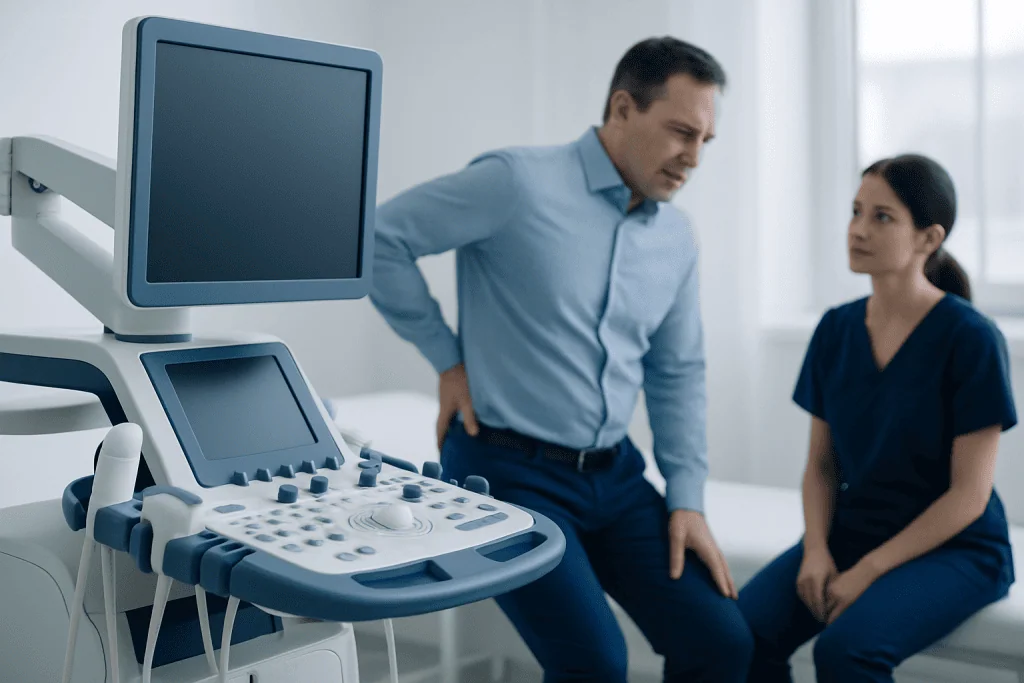
The details of the discomfort can provide useful clues, although they cannot confirm a diagnosis on their own. Pain that begins suddenly and becomes severe within minutes or hours is more concerning for an urgent scrotal problem, including testicular torsion. Torsion occurs when the spermatic cord twists and reduces blood flow to the testicle; it needs emergency care to protect testicular tissue.
A dull ache that worsens after lifting, prolonged sitting, exercise, or awkward movement may be related to muscle strain, hip or pelvic tension, or irritation of nerves in the lower spine. Lumbar nerve irritation can sometimes cause pain, tingling, or altered sensation in the groin, inner thigh, buttock, or leg as well as the lower back.
Cramping pain that comes in waves and travels from the side of the back or flank toward the lower abdomen, groin, or testicle can occur with a kidney stone. Burning with urination, urgency, frequent urination, cloudy urine, fever, or pelvic discomfort can suggest a urinary tract infection or inflammation involving the epididymis or prostate.
Symptoms can overlap, so pain severity alone does not identify the cause. A person should note when symptoms began, whether they are one-sided or both-sided, what makes them better or worse, and whether there are urinary, bowel, sexual health, or neurologic symptoms.
Common Causes and Risk Factors
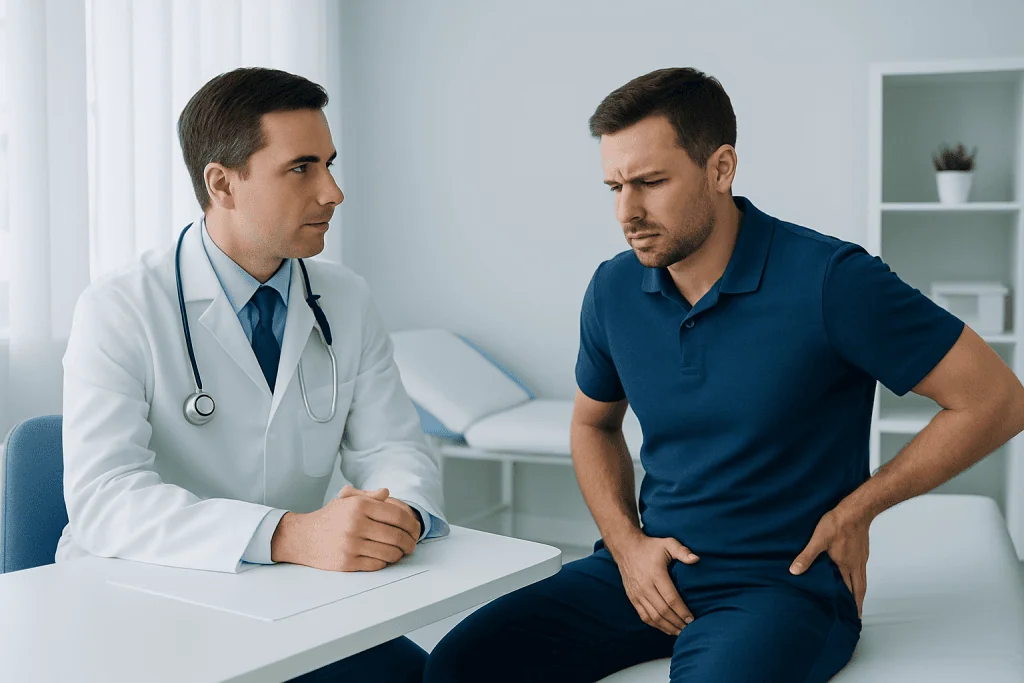
Inflammation of the epididymis, the coiled tube behind the testicle, is a frequent cause of gradual one-sided scrotal pain and swelling. Epididymitis may result from a sexually transmitted infection in some people or from urinary bacteria, particularly in older adults or those with urinary tract problems. Fever, discomfort when urinating, discharge, or tenderness behind the testicle may occur, though symptoms vary.
Kidney stones can cause intense pain in the flank or lower back that radiates into the groin and testicle. Dehydration, a personal or family history of stones, certain dietary patterns, and some medical conditions may increase the likelihood of stones. Blood in the urine, nausea, vomiting, or restlessness may accompany the pain.
An inguinal hernia develops when tissue pushes through a weak area of the lower abdominal wall. It may cause a visible or palpable bulge in the groin, pressure, aching that reaches the scrotum, and discomfort with coughing, straining, standing, or lifting. Constipation, chronic cough, heavy lifting, and previous abdominal surgery can contribute to hernia risk.
Other possibilities include testicular injury, varicocele, hydrocele, prostatitis, musculoskeletal strain, and spinal conditions. Less commonly, a testicular mass may present with a painless lump, enlargement, or feeling of heaviness rather than sharp pain. Any new testicular change deserves medical review.
Urgent Conditions That Should Not Be Missed
Testicular torsion is the most important urgent cause of acute testicular pain. It often causes abrupt, severe pain on one side, swelling, a testicle that appears higher than usual, lower abdominal pain, nausea, or vomiting. It can occur at any age but is more common in adolescents and young adults. Pain may occasionally lessen temporarily if the testicle twists and untwists, but this does not make the situation safe.
A trapped or strangulated hernia is another emergency. This may cause a firm, painful groin or scrotal bulge that does not go back in, together with increasing pain, nausea, vomiting, abdominal swelling, or inability to pass stool or gas. Urgent assessment is needed because the blood supply to trapped tissue can be affected.
Severe infection also needs prompt care. Fever, chills, rapidly increasing redness or swelling of the scrotum, severe tenderness, or feeling generally unwell may indicate an infection requiring timely treatment. People with diabetes, immune suppression, or recent urinary procedures should be particularly cautious about these symptoms.
How Clinicians Diagnose the Cause
A clinician will begin by asking about the pain’s onset, location, intensity, triggers, injuries, exercise, urinary symptoms, sexual history when relevant, bowel symptoms, and previous episodes. They will usually examine the abdomen, groin, scrotum, and lower back. This examination helps identify tenderness, swelling, a hernia, changes in testicle position, or signs that pain may be arising from muscles or nerves.
A urine test can look for blood, bacteria, or signs of inflammation. Depending on the symptoms, testing for sexually transmitted infections, blood tests, or urine culture may be appropriate. These tests help guide treatment when infection or a urinary tract condition is suspected.
Scrotal ultrasound with Doppler blood-flow imaging is commonly used when torsion, epididymitis, a mass, or another scrotal condition is a concern. It is painless and does not use radiation. If kidney stones or another abdominal cause are suspected, an ultrasound or computed tomography scan may be considered based on the individual situation.
It is helpful to seek assessment while symptoms are present when possible. A person should avoid attempting to diagnose torsion, infection, or a hernia at home, since prompt evaluation can be important even when symptoms seem manageable.
Treatment and Supportive Care
Treatment depends entirely on the cause. Testicular torsion requires emergency surgery to untwist the cord and secure the testicle, often with preventive fixation of the other testicle as well. Suspected torsion should be treated as an emergency rather than waiting for pain medicine, imaging at a later date, or symptoms to improve.
Bacterial epididymitis and some urinary infections are treated with clinician-prescribed antibiotics. Completing the prescribed course and following advice about testing, sexual activity, and partner notification when an infection may be sexually transmitted are important parts of care. Pain relief, rest, scrotal support, and cool packs wrapped in cloth may also be recommended for selected cases.
Kidney stone treatment depends on the stone’s size, location, symptoms, and whether infection or blockage is present. Some small stones pass with fluids, symptom control, and medical guidance, while others require a procedure. Hernias may be monitored or surgically repaired according to symptoms and risk; a painful or trapped hernia needs urgent evaluation.
For a diagnosed muscle strain or back-related referred pain, clinicians may recommend temporary activity modification, gentle movement, heat or cold therapy, and appropriate pain relief. Long periods of complete bed rest are usually not helpful for uncomplicated back strain. A tailored rehabilitation plan may be useful when symptoms persist or recur.
Prevention and Practical Self-Care
Not every cause of sore testicle and lower back pain can be prevented, but some habits may reduce risk. Drinking enough fluid for individual health needs can support urinary health and may help lower the chance of certain kidney stones. Regular movement, safe lifting technique, and gradual increases in exercise can reduce the likelihood of back and groin muscle strain.
Supportive underwear may improve comfort during recovery from minor strain or after activities that involve running, jumping, or lifting. Protective athletic equipment can help prevent testicular injury during contact sports. People who develop discomfort after cycling or prolonged sitting may benefit from breaks, ergonomic adjustments, and discussing persistent symptoms with a clinician.
Condom use and regular sexual health screening, when appropriate, can reduce the risk of sexually transmitted infections that may cause epididymitis. New urinary symptoms should be addressed rather than ignored, especially in people with recurrent infections, urinary retention, prostate problems, or a history of stones.
Self-care is not a substitute for assessment when pain is sudden, severe, recurrent, accompanied by swelling, or unexplained. Acibadem International’s multidisciplinary specialists in JCI-accredited hospitals can assess urological, kidney, spinal, and surgical causes for international patients when coordinated care is needed.
When to Seek Medical Care
Emergency medical care is needed for sudden severe testicular pain, especially when it occurs with swelling, nausea, vomiting, lower abdominal pain, a high-riding testicle, or pain after an injury. These symptoms may indicate testicular torsion or another urgent condition. A painful groin bulge with vomiting, abdominal swelling, or inability to pass stool or gas also requires urgent assessment.
Same-day medical advice is appropriate for fever, chills, burning or difficulty urinating, blood in the urine, penile discharge, increasing scrotal redness, swelling, or pain that is worsening. These symptoms can occur with infection, kidney stones, or urinary obstruction and should be assessed without delay.
A routine appointment is still worthwhile for pain that lasts more than a few days, repeatedly returns, affects daily activity, or occurs with a new lump, swelling, change in testicle size, or feeling of heaviness. Early evaluation can clarify the cause and provide a suitable treatment plan.
Frequently asked questions
Can lower back pain cause a sore testicle?
Yes. Nerves serving the lower back, groin, and scrotum can overlap, so irritation from muscles, joints, or spinal nerves may sometimes be felt in the testicle. However, back pain does not rule out a separate testicular or urinary condition, so persistent or new testicular pain should be assessed.
Is sore testicle and lower back pain a sign of kidney stones?
It can be. Kidney stone pain often starts in the side or back and may travel toward the lower abdomen, groin, or testicle. Waves of intense pain, nausea, vomiting, or blood in the urine make a stone more likely, but testing is needed to confirm the cause.
When is testicle pain an emergency?
Sudden, severe, one-sided testicular pain is an emergency because it may be testicular torsion. Emergency care is also needed for severe swelling, nausea or vomiting, a painful trapped groin bulge, or pain following significant injury. It is safer to seek immediate assessment than to wait for symptoms to settle.
Can a hernia cause back and testicle pain?
An inguinal hernia can cause groin pressure or a bulge that extends into the scrotum and may be felt as testicular discomfort. Back pain may occur separately from altered movement or straining, although it is not always directly caused by the hernia. A clinician can examine the groin and determine whether imaging or surgical advice is needed.
What can be done at home for mild testicle and back discomfort?
If a clinician has excluded urgent causes and symptoms are mild, temporary rest from aggravating activities, supportive underwear, and gentle movement may help. Heat or cold may be useful for a muscle-related back problem, while a cloth-wrapped cool pack can ease some scrotal swelling. Pain that is unexplained, worsening, or accompanied by urinary symptoms or swelling needs medical advice rather than continued home care.
Does testicular cancer usually cause back pain and soreness?
Testicular cancer more often presents as a painless lump, swelling, enlargement, firmness, or heaviness in a testicle than as sudden pain. Back pain can occur for many common reasons and does not by itself indicate cancer. Still, any new testicular lump or lasting change should be examined promptly.
This article is for general information only and is not a substitute for professional medical advice. Please consult a qualified doctor about your individual situation.
Persistent digestive symptoms? Get evaluated in Turkey
JCI-accredited · board-certified surgeons · reply within 24h
Add us as a Preferred Source to see more of our trusted health content across Google Search, AI Overviews and Discover.

More from the Health Library
Leg Shaking — Explained by Medical Evidence, Not Myths

Penile Lymphocele: What Patients Need to Know

Vellus Hair: What Patients Need to Know

Booger: A Complete Medical Overview

Boric Acid Suppositories — Explained by Medical Evidence, Not Myths