

Sore Throat in Children: Strep Signs, Testing, and Treatment

Most sore throats in children are caused by viruses, not strep. Strep throat is more likely when a child has fever, throat pain, swollen glands, and no cough.
Key Takeaways
- Most sore throats in children are caused by viruses, not strep.
- Strep throat is more likely when a child has fever, throat pain, swollen glands, and no cough.
- A doctor may confirm strep with a rapid test or throat culture before prescribing antibiotics.
- Supportive care such as fluids, pain relief, and rest helps most children feel better.
- Urgent medical care is needed for trouble breathing, trouble swallowing, dehydration, or worsening symptoms.
Sore throat in children is very common and is usually caused by a viral infection that improves with rest and fluids. Sometimes it is due to strep throat, a bacterial infection that may require testing and antibiotic treatment.
Overview of Sore Throat in Children
Sore throat in children is a frequent reason for pediatric visits, especially during the school year when common infections spread easily. A child may describe pain, scratchiness, burning, or discomfort when swallowing. In many cases, the cause is a viral upper respiratory infection, and the sore throat improves within a few days with supportive care.
Parents often worry about strep throat, which is caused by a type of bacteria called group A Streptococcus. Strep is important to recognize because it can benefit from antibiotic treatment. However, not every sore throat needs antibiotics, and using antibiotics when they are not needed does not help viral illness.
A sore throat can also happen with allergies, dry air, mouth breathing, irritants such as smoke, or less commonly other infections. Looking at the whole pattern of symptoms helps doctors decide whether testing is needed and what treatment is most appropriate.
Symptoms and Strep Signs to Watch For
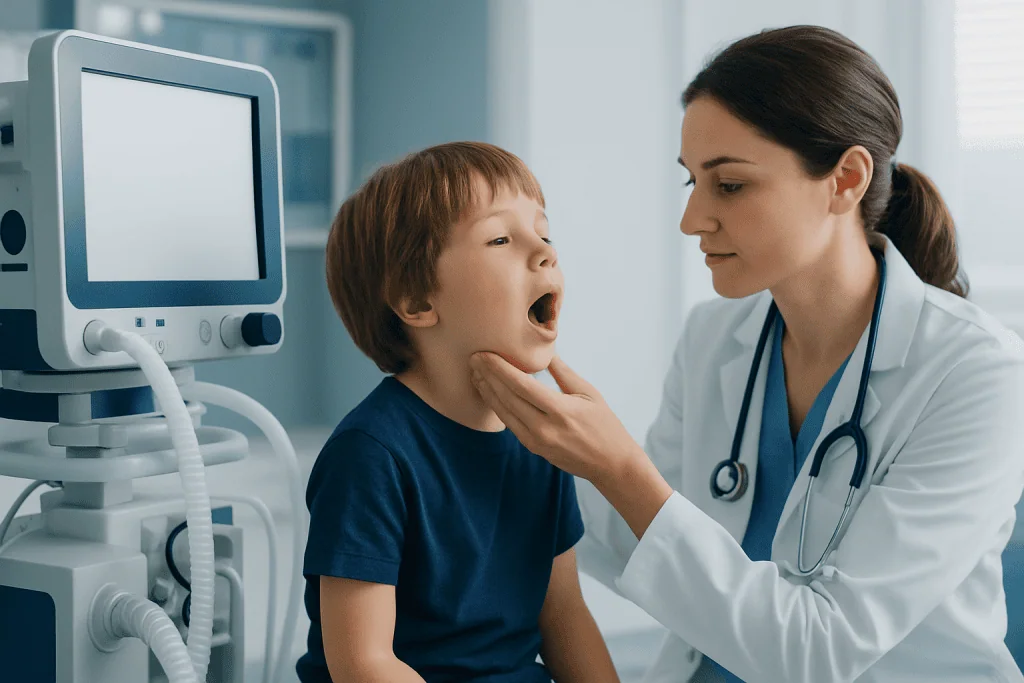
The symptoms of a sore throat depend partly on the cause. Viral sore throats often come with a runny nose, cough, hoarseness, red eyes, or mild fever. Children may also feel tired, eat less than usual, or complain of headache and body aches.
Strep throat can look different. It often starts suddenly and may cause significant throat pain, pain with swallowing, fever, swollen lymph nodes in the neck, and red or swollen tonsils. Some children have white patches or streaks of pus on the tonsils, tiny red spots on the roof of the mouth, stomach pain, nausea, or headache.
Doctors do not diagnose strep by appearance alone, but some signs make it more likely. Strep is usually less likely when a child has a cough, runny nose, hoarseness, or mouth sores, because those symptoms are more typical of a viral infection.
- Common viral clues: cough, runny nose, hoarse voice, congestion
- Possible strep clues: sudden sore throat, fever, swollen neck glands, red tonsils, pain swallowing
- Symptoms needing urgent attention: trouble breathing, drooling, severe dehydration, unusual sleepiness
Causes and Risk Factors

Viruses are the most common cause of sore throat in children. These include the viruses that cause colds, flu, and other common respiratory infections. Because these illnesses spread through droplets and close contact, children in schools, daycare settings, and busy households are exposed often.
Strep throat is caused by group A Streptococcus bacteria. It is most common in school-age children and is less common in children younger than 3 years. Exposure to someone with a confirmed strep infection increases the chance that a child may also have it.
Not all sore throats are infectious. Dry indoor air, seasonal allergies, postnasal drip, shouting, reflux, and irritants such as cigarette smoke can all irritate the throat. In some children, repeated throat infections or enlarged tonsils may lead families to discuss ongoing ENT evaluation, especially if symptoms keep returning.
How Doctors Diagnose a Child's Sore Throat
Diagnosis begins with a careful history and physical examination. A doctor will ask when symptoms began, whether there is fever, cough, congestion, rash, stomach pain, known exposure to strep, and whether the child is drinking and urinating normally. The throat, tonsils, neck glands, ears, and breathing are usually checked during the exam.
If strep throat is suspected, the child may need a throat swab. A rapid strep test can provide results quickly. If the rapid test is negative but suspicion remains high, some children need a throat culture, which is more sensitive and helps confirm whether group A Streptococcus is present.
Testing is not always needed. When symptoms strongly suggest a viral infection, doctors may recommend supportive care without strep testing. In a child with repeated throat infections, complicated symptoms, or concerns about the tonsils and adenoids, an ENT specialist may evaluate the child further, including for related issues such as tonsillitis.
Treatment Options
Treatment depends on the cause. For most viral sore throats, supportive care is the main treatment. This includes plenty of fluids, rest, soft foods, and age-appropriate pain relief recommended by a doctor. Warm soups, cool liquids, and a humidified room can help soothe throat discomfort.
If testing confirms strep throat, a doctor may prescribe antibiotics. Antibiotics can shorten symptoms somewhat, reduce contagiousness after appropriate treatment begins, and help prevent certain complications. It is important for families to use antibiotics exactly as prescribed and to complete the full course unless a doctor advises otherwise.
Children with repeated severe infections, breathing problems during sleep, or enlarged tonsils may need specialist assessment. In selected cases, a doctor may discuss tonsillectomy if the benefits outweigh the risks. If sleep-disordered breathing is a concern, evaluation may also include treatment planning for sleep apnea treatment.
Most children recover well with the right care. Families should avoid giving leftover antibiotics or using over-the-counter remedies that are not appropriate for the child’s age. If swallowing is very painful or the diagnosis is uncertain, a pediatric or ENT review can help guide the safest next steps.
Prevention and Self-Care at Home
Good hand hygiene is one of the best ways to reduce sore throat infections. Children should be encouraged to wash their hands regularly, especially after coughing or sneezing and before eating. Avoiding shared cups, utensils, and water bottles can also limit spread.
At home, comfort measures matter. Offer frequent sips of water, oral rehydration fluids if needed, and soft foods such as yogurt, soup, or mashed vegetables. Older children may find relief from warm salt-water gargles if they can gargle safely without swallowing.
Parents can also reduce throat irritation by keeping the home smoke-free and using a humidifier in dry environments if recommended. Resting at home when a child has fever or feels unwell helps recovery and protects others. If a child has confirmed strep throat, the doctor can advise when it is reasonable to return to school.
When to See a Doctor
A child should see a doctor if a sore throat is severe, lasts more than a few days, or comes with high fever, swollen glands, rash, ear pain, or known exposure to strep throat. Medical review is also important if the child is not drinking well, is urinating less than usual, or seems unusually tired or irritable.
Urgent medical care is needed if the child has trouble breathing, noisy breathing, drooling, inability to swallow, signs of dehydration, neck swelling, or a muffled voice. These symptoms can suggest a more serious problem and should not be managed at home without prompt medical assessment.
For children with repeated throat infections or ongoing tonsil problems, specialist input may be useful. Acibadem International’s multidisciplinary specialists in JCI-accredited hospitals diagnose and treat pediatric ENT conditions for international patients, including assessment when recurrent infections or enlarged tonsils need further evaluation.
Frequently asked questions
How can parents tell if a sore throat is strep?
Parents cannot know for sure by looking alone. Strep throat is more likely with sudden throat pain, fever, swollen neck glands, and no cough, but a throat swab is usually needed to confirm it.
Do all children with sore throat need antibiotics?
No. Most sore throats in children are caused by viruses, and antibiotics do not treat viral infections. Antibiotics are used when a doctor confirms or strongly suspects a bacterial infection such as strep throat.
When should a child be tested for strep throat?
Testing is usually considered when symptoms suggest strep, such as fever, painful swallowing, swollen glands, and red tonsils without typical cold symptoms. If a child mainly has a cough, runny nose, or hoarseness, testing may be less likely to help.
What helps relieve a child's sore throat at home?
Fluids, rest, soft foods, and age-appropriate pain relief can help most children feel better. Warm drinks, cool liquids, and a humidified room may also soothe throat discomfort.
Is strep throat contagious?
Yes. Strep throat can spread through respiratory droplets and close contact. Good handwashing, not sharing utensils, and following a doctor's advice about staying home can help reduce spread.
Can sore throats lead to tonsil surgery?
Sometimes, but only in selected situations. A doctor may discuss surgery if a child has frequent severe throat infections, enlarged tonsils that affect breathing or sleep, or ongoing problems that do not improve with usual care.
References
- American Academy of Pediatrics
- Centers for Disease Control and Prevention
- National Health Service
- Mayo Clinic
- World Health Organization
This article is for general information only and is not a substitute for professional medical advice. Please consult a qualified doctor about your individual situation.
Explore treatments in Turkey — costs, top hospitals & a free quote
JCI-accredited · board-certified surgeons · reply within 24h
Add us as a Preferred Source to see more of our trusted health content across Google Search, AI Overviews and Discover.

More from the Health Library



Related Specialists

Assoc. Prof. Dr. Mehmet Sağır
Aesthetic Plastic & Reconstructive Surgery
Prof. Dr. Burcu Yavuz
Psychiatry
Dr. Enes Kanay
Orthopedic Surgery & Traumatology
Dr. Tekin Münür Ormancioğlu
Ophthalmology