Soreness in thigh above knee: Common Causes, Warning Signs, and When to Worry

Muscle overuse and minor strains are among the most common reasons for soreness in thigh above knee. The exact location, timing, and triggers of pain can help point to muscle, tendon, nerve, joint, or vascular causes.
Key Takeaways
- Muscle overuse and minor strains are among the most common reasons for soreness in thigh above knee.
- The exact location, timing, and triggers of pain can help point to muscle, tendon, nerve, joint, or vascular causes.
- Swelling, redness, fever, numbness, weakness, or inability to bear weight are important warning signs.
- Evaluation may include a physical exam and, when needed, imaging or blood flow testing.
- Early rest, activity modification, and guided rehabilitation often help recovery and reduce recurrence.
Soreness in thigh above knee is commonly linked to muscle strain, overuse, tendon irritation, or referred pain from the hip or lower back. Most cases improve with rest and simple self-care, but sudden severe pain, swelling, weakness, numbness, or trouble walking should be checked by a doctor.
Overview: what soreness in thigh above knee may mean
Soreness in thigh above knee usually comes from structures that work hard during walking, climbing stairs, sports, and standing up from a chair. The discomfort may begin in the quadriceps muscles at the front of the thigh, the hamstrings at the back, the inner thigh muscles, the tendons near the knee, or tissues around the hip. In some people, pain felt above the knee is not only a local muscle problem but also a referred symptom from the hip, lower back, or nerves.
The symptom can feel dull, tight, cramp-like, aching, bruised, or sharp with movement. It may appear after exercise, after a long day of standing, or without a clear injury. Mild soreness often settles with rest and time, but the pattern matters. Pain that gets worse with activity, causes limping, or is paired with swelling or weakness deserves more attention.
Rather than assuming every case is a simple pulled muscle, it helps to look at the full picture: where the soreness is, what triggered it, whether the knee itself is involved, and whether there are warning signs such as redness, warmth, numbness, or loss of function. This broader approach can help people decide when self-care is reasonable and when a medical assessment is the safer choice.
Common patterns and symptoms to notice
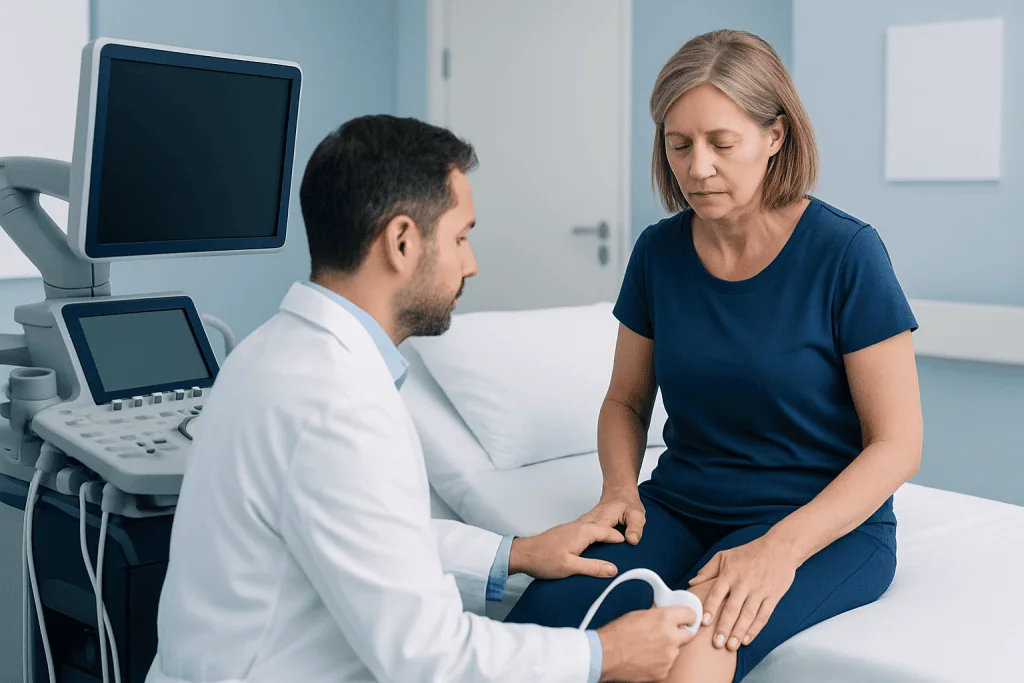
The location of soreness can provide useful clues. Front thigh discomfort above the knee often points to quadriceps strain, tendon irritation, or overuse from running, squatting, or climbing stairs. Inner thigh soreness may involve adductor muscles, especially after quick changes of direction. Pain at the back of the thigh near the knee may suggest hamstring strain or tightness. Some people also notice tenderness when pressing on the area, stiffness after rest, or pain when straightening or bending the knee.
Symptoms can vary from mild soreness only after exercise to pain that interferes with walking or sleep. Along with aching, there may be tight muscles, cramping, reduced range of motion, a feeling of weakness when rising from a chair, or difficulty going up and down stairs. When tendon irritation is involved, the pain is often worse with repeated movement and better with relative rest.
Certain associated symptoms are more concerning and should not be ignored. These include visible swelling, a rapidly growing bruise, the knee giving way, sudden inability to bear weight, fever, skin warmth or redness, numbness, tingling, or symptoms in the calf such as one-sided swelling. If the soreness follows a direct injury, a pop, or a fall, the chance of a more significant muscle, tendon, or bone problem is higher.
- Dull ache after activity often suggests overuse.
- Sharp pain during sprinting or jumping may suggest a muscle strain.
- Burning, tingling, or radiating pain may suggest nerve involvement.
- Swelling and warmth may suggest inflammation, bleeding, or a circulation problem.
Common causes and risk factors

The most common cause of soreness in thigh above knee is a muscle strain or overuse injury. This can happen after a sudden increase in exercise, an unaccustomed workout, repeated squatting, running downhill, cycling, or sports that involve sprinting and kicking. Tight muscles, poor warm-up habits, fatigue, and returning to activity too quickly after a previous injury all increase risk.
Tendon-related problems are also common. The quadriceps tendon, which connects the front thigh muscles to the kneecap, can become irritated from repetitive stress. Pain may also come from the iliotibial band, the adductors, or soft tissues around the hip and pelvis. In some people, soreness above the knee is part of a broader joint or alignment issue, including kneecap tracking problems, weakness around the hip, or osteoarthritis. Related joint conditions may overlap with knee pain or arthritis.
Not all thigh soreness is muscular. Nerve irritation from the lower back can send pain into the thigh, and hip problems can refer pain toward the knee. Less commonly, circulation issues such as a blood clot in the leg can cause pain with swelling and tenderness, while infection or inflammatory disease may lead to redness, fever, and marked discomfort. Bone stress injuries are another possibility in people with repetitive impact, low bone density, or persistent focal pain.
Risk factors include sudden training changes, deconditioning, older age, poor flexibility, previous injury, obesity, prolonged sitting, physically demanding work, and some medical conditions affecting nerves, joints, or blood flow. Because different causes can feel similar at first, persistent or unexplained pain should be assessed in context rather than self-diagnosed.
How doctors evaluate thigh soreness above the knee
Diagnosis usually begins with a detailed history and physical examination. A doctor will ask where the pain is felt, how long it has been present, whether there was a sports injury or overuse, and what movements make it better or worse. It is also important to mention swelling, bruising, numbness, back pain, fever, recent travel, immobility, or a history of clotting problems.
During the exam, the clinician may check walking pattern, muscle strength, flexibility, tenderness, swelling, skin changes, sensation, pulses, and the range of motion of the knee and hip. Because thigh soreness can reflect a problem outside the thigh itself, the hip, lower back, and circulation may also be examined. This helps separate a local muscle injury from a tendon, joint, nerve, or vascular cause.
Tests are not always needed for mild, improving soreness. If symptoms are severe, persistent, or unclear, imaging may help. X-rays can assess bone and joint issues, while MRI can evaluate muscles, tendons, cartilage, and stress injuries in more detail. If a blood clot is suspected, urgent vascular imaging may be required. Blood tests may be used if infection, inflammation, or another medical condition is possible.
The goal of evaluation is not only to identify the source of pain but also to rule out the uncommon causes that need prompt treatment. This is especially important when symptoms do not fit a simple overuse pattern or when they interfere with normal walking and daily function.
Treatment options and recovery
Treatment depends on the cause. For mild muscle strain or overuse, the first steps are usually relative rest, reducing activities that trigger pain, and gradual return to movement as symptoms settle. Short-term use of cold packs may help in the early phase after a strain, while some people find warmth more comfortable later when stiffness is the main issue. Gentle stretching and light activity can be helpful when they do not worsen pain.
If the source is tendon irritation or a biomechanical problem, recovery often requires more than simple rest. A clinician or therapist may recommend strengthening of the quadriceps, hamstrings, gluteal muscles, and core, along with flexibility work and adjustments in training or footwear. When pain is linked to the knee joint, targeted care for knee pain may also be part of the plan. Structured physical therapy and rehabilitation is often useful when symptoms persist, keep returning, or affect walking and sports.
More specific treatment may be needed for other causes. Nerve-related pain may improve with treatment aimed at the back or nerve compression. Significant tendon tears, muscle injuries with major loss of function, or some structural knee problems can require orthopedic review and occasionally orthopedic surgery. If inflammation inside the knee joint contributes to symptoms, some patients are assessed with tools such as arthroscopy as part of specialist care, depending on the diagnosis.
Recovery time varies widely. Minor overuse soreness may improve within days to a couple of weeks, while strains, tendon problems, or referred pain can take longer. Returning too quickly to full activity can delay healing. A gradual increase in exercise, guided by symptoms and professional advice, is usually the safest path.
Self-care and prevention strategies
Simple self-care is often appropriate for mild soreness that follows activity and improves with rest. Helpful steps include temporarily reducing aggravating exercise, staying gently mobile, and avoiding prolonged bed rest unless a clinician advises otherwise. Many people benefit from pacing their activities instead of pushing through pain. Supportive shoes and avoiding sudden changes in training load can also reduce stress on the thigh and knee.
Prevention focuses on conditioning and movement habits. Warming up before exercise, building strength gradually, and including flexibility and balance work can lower the chance of strain. Runners and athletes may benefit from reviewing training intensity, terrain, and technique. People who sit for long periods can help their muscles by standing, stretching, and walking regularly through the day.
Body mechanics matter as well. Weak hip and core muscles can increase stress on the thigh and knee, so strengthening these areas may help prevent recurrence. Adequate hydration, balanced nutrition, and sufficient recovery between intense sessions support muscle function. If soreness keeps returning, a medical or rehabilitation assessment can identify factors such as alignment issues, previous injury effects, or hidden joint disease.
For international patients who need further assessment, Acibadem International’s multidisciplinary specialists and JCI-accredited hospitals diagnose and treat musculoskeletal and related conditions with coordinated care.
When to seek medical care
Medical advice is appropriate if soreness in thigh above knee lasts more than a few days without improvement, keeps returning, or makes normal walking, climbing stairs, or exercise difficult. A doctor should also assess pain that follows a direct injury, a twist, a fall, or a sudden pop. Persistent focal tenderness, especially if there is night pain or pain at rest, also deserves evaluation.
Urgent medical care is important when pain is severe or accompanied by one-sided leg swelling, redness, warmth, fever, shortness of breath, numbness, significant weakness, a cold or pale foot, or inability to bear weight. These signs may point to problems that need prompt treatment, such as a major tear, infection, nerve compromise, fracture, or a circulation problem.
When symptoms are unclear, worsening, or not following the expected pattern of simple muscle soreness, it is safest not to rely only on home care. A qualified clinician can identify the cause, recommend appropriate tests if needed, and guide treatment to support recovery while reducing the risk of complications.
Frequently asked questions
Is soreness in thigh above knee usually serious?
Most cases are not serious and are related to muscle strain, overuse, or tendon irritation. It is more concerning if the pain is severe, does not improve, or comes with swelling, weakness, numbness, fever, or trouble walking.
Can pain above the knee come from the hip or back?
Yes. Pain felt in the lower thigh can sometimes be referred from the hip joint or from nerves in the lower back. This is one reason a doctor may examine more than just the knee or thigh.
How can someone tell if it is a muscle strain or something else?
A muscle strain often starts after exercise, sprinting, lifting, or a sudden movement and may cause tenderness and pain when the muscle is used or stretched. If there is major swelling, a popping sensation, numbness, inability to bear weight, or symptoms that do not improve, another cause may be more likely.
Should someone exercise with soreness in thigh above knee?
Gentle movement is often fine if it does not clearly worsen the pain, but intense or painful activity should usually be reduced for a short time. A gradual return to exercise is safer than pushing through symptoms, especially after an injury.
When should a blood clot be considered?
A blood clot is less common than muscle-related causes, but it should be considered when thigh or leg pain is paired with one-sided swelling, warmth, redness, tenderness, or unexplained shortness of breath. These symptoms need prompt medical attention.
What tests might be needed for persistent pain above the knee?
A doctor may start with a physical exam and only order tests if symptoms are severe, persistent, or unclear. Depending on the suspected cause, tests can include X-rays, MRI, ultrasound, or blood flow studies.
References
- American Academy of Orthopaedic Surgeons
- National Institute of Arthritis and Musculoskeletal and Skin Diseases
- American College of Sports Medicine
- Centers for Disease Control and Prevention
- National Health Service
This article is for general information only and is not a substitute for professional medical advice. Please consult a qualified doctor about your individual situation.
Joint and spine care in Turkey — expert assessment & treatment
JCI-accredited · board-certified surgeons · reply within 24h
Add us as a Preferred Source to see more of our trusted health content across Google Search, AI Overviews and Discover.

More from the Health Library



Related Specialists

Dr. Abdurrahman Gölbaşı
Radiology
Prof. Dr. Bülent Tıraş
Gynecology & Obstetrics
Dr. Münür Selçuk Kendir
Aesthetic Plastic & Reconstructive Surgery
Assoc. Prof. Dr. Ebru Sevinç Ok
Nephrology