Species of Neem: What Patients Need to Know

The main species of neem used in traditional health practices is Azadirachta indica. Different plants may be sold as “neem,” but they do not always have the same compounds or effects.
Key Takeaways
- The main species of neem used in traditional health practices is Azadirachta indica.
- Different plants may be sold as “neem,” but they do not always have the same compounds or effects.
- Neem is used traditionally for skin, oral, and household purposes, but evidence for many medical claims is limited.
- Neem oil and concentrated extracts can cause side effects and may be unsafe for children, pregnant people, and some adults.
- Patients should tell a doctor about neem supplements, especially before surgery or when taking medicines for blood sugar or immune conditions.
Species of neem usually refers to Azadirachta indica, the best-known neem tree, along with closely related trees in the mahogany family that may be called neem in different regions. For patients, the key point is that neem products vary widely in plant source, preparation, and safety, so they should not be treated as interchangeable medicines.
Overview: what “species of neem” means
The phrase species of neem most often points to Azadirachta indica, an evergreen tree native to the Indian subcontinent and widely grown in tropical and subtropical regions. In everyday language, however, people may also use “neem” for closely related trees or for products made from leaves, bark, seeds, and oil. This can create confusion for patients who are trying to understand health claims, product labels, or traditional remedies.
From a medical point of view, the most important issue is not only the tree name but also the exact part of the plant and the form being used. Neem leaf powder, neem oil, neem bark extracts, soaps, toothpastes, and capsules are not the same. Their chemical composition can differ, and so can their benefits and risks.
Patients may see neem promoted for skin care, dental hygiene, scalp concerns, insect repellent use, and general wellness. Some traditional uses are long established, but that does not automatically mean a product is proven, safe for everyone, or suitable as a replacement for medical care. Clear identification of the plant source is the first step in using neem more safely and realistically.
Main neem species and related trees patients may encounter

The best-known and most widely used neem species is Azadirachta indica. This is the tree most scientific articles, herbal references, and consumer products mean when they refer to neem. It belongs to the Meliaceae family, also called the mahogany family, and contains naturally occurring compounds such as limonoids, including azadirachtin, which is often discussed in agricultural and household pest-control contexts.
Another tree sometimes mentioned in discussions of neem is Melia azedarach, often called chinaberry, Persian lilac, or bead tree. It is related to neem but is not the same species. Because names vary by country and language, some people mistakenly assume these plants are interchangeable. They are not, and products from one should not be substituted for the other without expert guidance.
Patients may also come across terms such as “Indian neem,” “true neem,” or “wild neem.” These names are not always standardized. When reading labels or online advice, it is wise to look for the botanical name, the plant part used, and whether the product is intended for skin use, oral use, or environmental use. This helps reduce the risk of confusion and inappropriate use.
- Azadirachta indica: the primary and best-studied neem species
- Melia azedarach: a related tree, not true neem
- Regional common names: may vary and can be misleading
- Product form matters: leaf, bark, seed, oil, extract, and topical preparations differ
How neem is used in health and daily life
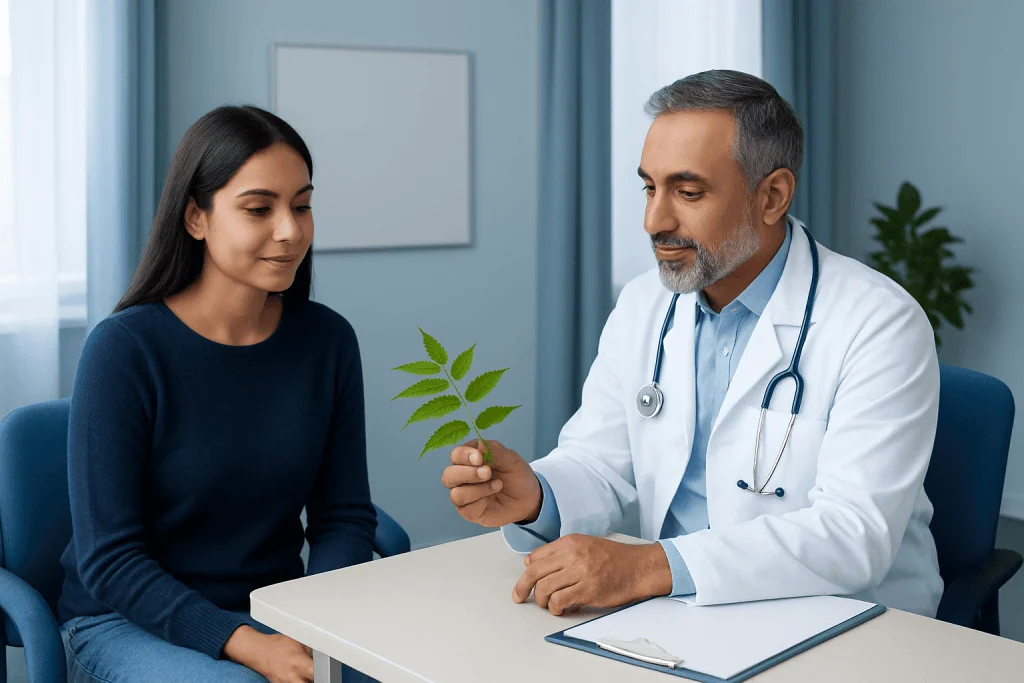
Neem has a long history in traditional practices, especially in South Asia. Patients may encounter it in soaps, shampoos, mouth rinses, creams, toothpastes, and herbal supplements. Traditional use commonly relates to skin hygiene, scalp care, oral care, and general plant-based wellness. In homes and agriculture, neem-derived substances are also used for insect control.
In medical and consumer settings, topical neem products are often discussed more than internal products. For example, neem may appear in products marketed for dry or irritated skin, acne-prone skin, or scalp flaking. Someone with persistent skin symptoms should keep in mind that problems such as eczema, fungal infections, or psoriasis can look similar but require different treatment approaches.
For oral care, neem twigs and neem-containing tooth products have been used traditionally in some communities. While this cultural practice is well known, it should complement—not replace—modern dental hygiene and professional care. Gum bleeding, tooth pain, or mouth sores deserve proper evaluation.
Internal use of neem in teas, capsules, tinctures, or concentrated extracts is more medically sensitive. Herbal products sold for “detox,” blood sugar support, or immune balance may contain neem, but the quality and strength can vary widely. Patients should avoid assuming that a natural product is automatically mild or harmless.
Potential benefits and what the evidence can realistically support
Laboratory studies and traditional use suggest neem contains biologically active compounds with antimicrobial, anti-inflammatory, and insect-repelling properties. That helps explain why neem appears in skin cleansers, scalp products, and oral hygiene items. However, promising laboratory findings are not the same as proven clinical benefit in people.
For mild skin or scalp care, some patients find neem-based products soothing, especially when used in gentle, diluted, commercially prepared forms. But symptoms such as an itchy rash, scaling, or redness can have several causes, including allergy, eczema, bacterial infection, or fungal infection. In these situations, accurate diagnosis matters more than trying multiple herbal products. If needed, specialists may evaluate whether a concern relates to skin cancer or another skin condition, although most everyday rashes are not cancer.
Evidence for neem as a treatment for major medical conditions remains limited. There is not enough high-quality evidence to recommend neem as a primary treatment for diabetes, cancer, serious infections, or autoimmune disease. Neem should not delay evidence-based care, testing, or prescribed treatment.
Patients interested in complementary approaches can discuss neem with a doctor or pharmacist, especially if they are already using prescription medications. A clinician can help place herbal products in context and identify when standard treatment is more appropriate.
Safety, side effects, and who should be cautious
Neem is not risk-free. Side effects depend on the product type, dose, concentration, and route of use. Topical products may cause irritation, dryness, redness, or allergic contact dermatitis in sensitive individuals. Neem oil is especially strong and should not be applied to broken skin, eyes, or large areas unless specifically directed by a qualified clinician.
Oral neem products deserve extra caution. Concentrated oils and extracts may cause nausea, vomiting, diarrhea, or other toxic effects, especially if used incorrectly. Children are particularly vulnerable, and neem oil should be kept out of their reach. Pregnant people should avoid neem products unless a doctor specifically advises otherwise, because of safety concerns related to reproductive effects.
People with chronic illness should be especially careful. Neem may affect blood sugar, which could matter for those taking diabetes medicines. It may also interact with immune-related conditions or treatments. Before any operation, procedure, or anesthesia, it is sensible to tell the care team about all herbs and supplements being used; this is as important as disclosing vitamins or over-the-counter medicines.
If a patient develops swelling, severe rash, breathing difficulty, persistent vomiting, confusion, or signs of poisoning after using neem, urgent medical evaluation is appropriate. For ongoing skin problems, referral to dermatology may help identify the real cause and guide safer treatment.
How doctors evaluate symptoms linked to neem use
Doctors do not usually need special tests just because someone has used neem. Instead, they assess the symptoms involved. If a patient reports a rash, irritation, or scalp problem after a neem product, the clinician will ask which product was used, how often it was applied, and whether other cosmetics, herbs, or medicines were started at the same time.
For skin symptoms, examination may be enough, but some cases need more evaluation. A dermatologist may consider eczema, allergy, bacterial infection, fungal infection, seborrheic dermatitis, or other inflammatory conditions. If a lesion is unusual or not healing, further assessment can rule out less common but important causes.
If neem was swallowed and the person feels unwell, doctors may assess hydration, blood sugar, liver function, or other basic measures depending on symptoms. The goal is supportive care and identifying complications early. Patients should bring the product container if possible, because ingredient lists can help clarify what was actually taken.
When symptoms are severe, persistent, or difficult to diagnose, broader testing may be needed. In selected situations, clinicians may use MRI scan or other imaging to investigate unrelated symptoms that should not be automatically blamed on a supplement or herbal product.
Prevention and safer self-care
Patients who choose to use neem can reduce risk by selecting reputable products with clear labeling. The label should list the botanical name, plant part, intended use, and ingredients. A patch test may help before using a topical product more widely, although patch testing at home does not prevent all reactions.
It is safest to avoid homemade or highly concentrated preparations for oral use. Undiluted oils, powders of uncertain source, and imported products without clear quality information may be more risky. A product intended for plants, agriculture, or environmental pest control should never be used as a health product unless specifically formulated and labeled for that purpose.
General self-care still matters more than any single herbal product. For skin concerns, this means gentle cleansing, fragrance-free moisturizers, sun protection, and avoiding irritants. For oral health, it means brushing with fluoride toothpaste, cleaning between teeth, and having regular dental care. For scalp symptoms, excessive scratching and harsh treatments should be avoided.
If symptoms continue despite careful self-care, a proper diagnosis is the next step. In some cases, targeted treatment such as phototherapy or prescription medication may be more effective than repeatedly trying over-the-counter herbal options.
When to seek medical care
Medical care is appropriate if symptoms appear after using neem and do not improve quickly, or if they are moderate to severe from the start. Examples include spreading rash, facial swelling, blistering, severe itching, eye exposure, persistent vomiting, abdominal pain, dizziness, or unusual sleepiness. Children, pregnant people, and older adults should be assessed sooner if there is any concern about ingestion or side effects.
Patients should also seek medical advice if they are considering oral neem while living with diabetes, immune disorders, liver disease, kidney disease, or while taking regular medication. A clinician can help weigh uncertain benefits against possible interactions and can recommend safer alternatives if needed.
Neem should never replace assessment for persistent symptoms such as a non-healing skin lesion, ongoing mouth problems, fever, or unexplained weight loss. These issues need proper diagnosis. At Acibadem International, multidisciplinary specialists in JCI-accredited hospitals evaluate skin, medical, and related symptoms for international patients when herbal use or another concern may be part of the picture.
Frequently asked questions
What is the main species of neem?
The main species of neem is Azadirachta indica. This is the tree most people mean when they discuss neem in traditional remedies, personal care products, or herbal supplements.
Are all plants called neem the same?
No. Common names can be misleading, and related trees may be sold or described as neem in different regions. That is why patients should check the botanical name and not assume all “neem” products have the same effects or safety profile.
Is neem safe to take by mouth?
Not always. Oral neem products can vary widely in strength and purity, and concentrated preparations may cause side effects or toxicity. It is best to speak with a doctor or pharmacist before taking neem internally, especially for children, during pregnancy, or when using prescription medicines.
Can neem treat skin problems?
Neem may be included in products used for mild skin cleansing or soothing, but it is not a proven treatment for every rash or skin disease. Skin symptoms can have many causes, so persistent, painful, or spreading problems should be examined by a clinician.
Can neem replace standard medical treatment?
No. Neem should not replace evidence-based treatment for infections, diabetes, inflammatory disease, or cancer. Herbal products may sometimes be used alongside medical care, but only with professional guidance.
Who should avoid neem products?
Children, pregnant people, and anyone with significant chronic illness should be especially cautious. People taking diabetes medicines, immune-related treatments, or multiple supplements should ask a healthcare professional before use.
References
- World Health Organization
- National Center for Complementary and Integrative Health
- MedlinePlus
- U.S. Food and Drug Administration
- American Academy of Dermatology
This article is for general information only and is not a substitute for professional medical advice. Please consult a qualified doctor about your individual situation.
Explore treatments in Turkey — costs, top hospitals & a free quote
JCI-accredited · board-certified surgeons · reply within 24h
Add us as a Preferred Source to see more of our trusted health content across Google Search, AI Overviews and Discover.

More from the Health Library

Aspiration: What Patients Need to Know

Underarm Ingrown: An Evidence-Based Guide for Patients

Chokeberry: What Patients Need to Know

Mandible: What Patients Need to Know

Life Expectancy After Prostate Removal: A Complete Medical Overview