Speech Therapy Month: How It Works, Results and What to Expect

Speech-language therapy is tailored to a person's communication, voice, speech, language or swallowing needs. Assessment identifies strengths, daily challenges and the goals that matter most to the patient and family.
Key Takeaways
- Speech-language therapy is tailored to a person's communication, voice, speech, language or swallowing needs.
- Assessment identifies strengths, daily challenges and the goals that matter most to the patient and family.
- Results may be noticed within weeks for some goals, while complex needs often require longer-term support.
- Short sessions can be effective when they are focused, regular and supported by practice between appointments.
- Speech-language therapists contribute to autism assessment but do not usually make an autism diagnosis independently.
Speech Therapy Month is an opportunity to understand how speech-language therapy can help children and adults communicate more clearly, use language more effectively, improve voice or manage swallowing difficulties. Progress is individual, but structured sessions and everyday practice can produce meaningful functional improvements over time.
Speech Therapy Month: How Speech-Language Therapy Helps
Speech Therapy Month draws attention to the role of speech-language therapy in helping people communicate, eat and drink safely, and take part more fully in school, work and everyday relationships. A speech-language therapist, also called a speech and language therapist (SLT), assesses the specific difficulty and creates practical goals that are meaningful for the individual.
Therapy may support children with delayed speech or language development, speech sound differences, stuttering, social communication needs, or feeding concerns. It can also help adults after stroke, traumatic brain injury, head and neck cancer treatment, neurological illness or voice changes. Some people need help producing sounds clearly; others need support understanding language, finding words, using a stronger voice or swallowing safely.
Speech-language therapy is not a single procedure with one expected outcome. It is a collaborative rehabilitation process that combines professional guidance, repeated practice, home strategies and review of progress. The care plan should be adapted as the person develops skills, encounters new demands or reaches their goals.
Who May Benefit From Speech-Language Therapy?
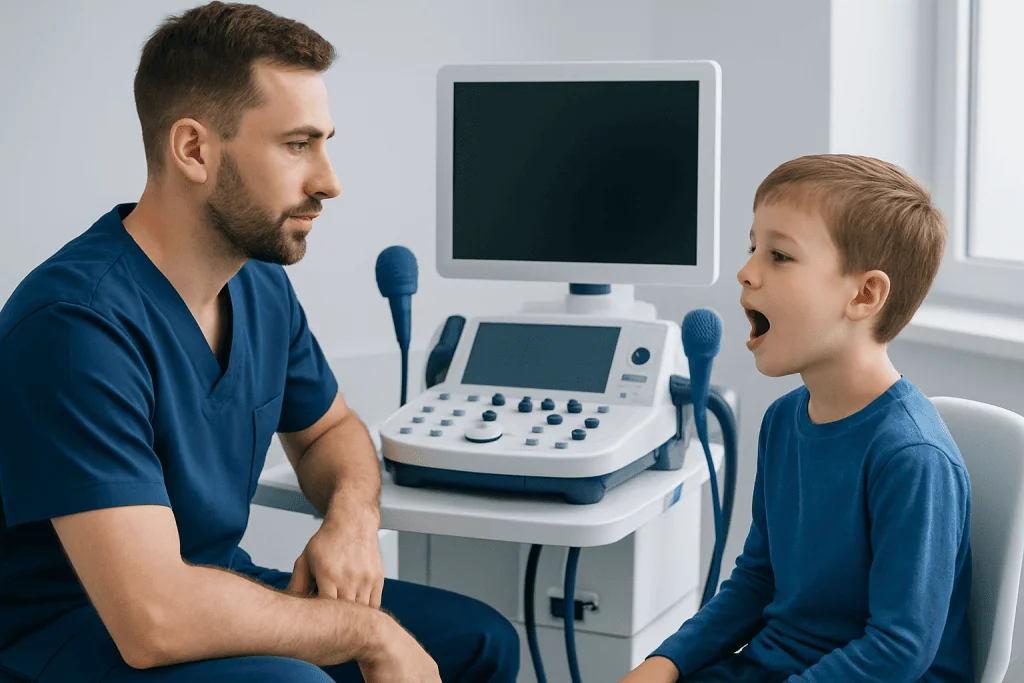
A referral is not always required, but an assessment is useful when communication or swallowing difficulties affect daily life. Parents may notice that a child is hard to understand, has trouble following age-appropriate instructions, uses few words, stutters, avoids speaking, or struggles to interact with peers. Teachers, paediatricians and family doctors may also recommend evaluation.
Adults may benefit when speech becomes unclear, language changes after a neurological event, the voice is persistently hoarse or weak, swallowing causes coughing or choking, or a condition affects communication. Rehabilitation after stroke may include speech-language therapy alongside medical, neurological and physical rehabilitation care.
Appropriate goals differ widely. For one person, therapy may focus on pronouncing certain sounds. For another, the priority may be communicating needs after illness, using strategies for word-finding, returning to work, improving vocal stamina or reducing the risk associated with swallowing problems.
- Children with speech, language, fluency or social communication concerns
- People with voice difficulties related to vocal strain, illness or treatment
- Adults with aphasia, dysarthria or cognitive-communication changes after neurological injury
- People with swallowing difficulties, known medically as dysphagia
- Individuals with developmental, neurological or hearing-related communication needs
How Speech Therapy Works: Assessment and Goal Setting

Speech-language therapy begins with a detailed discussion of symptoms, medical history, developmental history where relevant, and the impact on everyday activities. The therapist listens to speech, observes communication, and may use structured assessments to explore speech sounds, vocabulary, understanding, reading, writing, voice, fluency, memory, attention or swallowing.
For swallowing concerns, the therapist may ask about coughing with meals, food sticking, weight changes, chest infections or dietary restrictions. They may observe a meal or recommend further assessment with the wider clinical team. Instrumental swallowing tests may be considered when clinically appropriate, but they are not needed for every person.
After assessment, the therapist explains the findings in understandable language and agrees on measurable, realistic goals. Goals may include being understood in conversation, using longer sentences, participating in school discussions, managing phone calls, speaking with less effort or eating and drinking more safely. A personalised speech therapy programme may include clinic sessions, caregiver coaching, assistive communication tools and home practice.
What Happens During a Speech Therapy Session?
Speech therapy is usually active and goal-focused. The therapist selects exercises, conversation tasks, play-based activities, visual supports, technology or compensatory techniques that match the person’s age, abilities and priorities. Children often learn through motivating games and routines, while adult therapy may use real-life tasks such as ordering food, speaking at work or practising communication with family members.
A typical appointment starts with a brief review of changes since the last session and any home practice. The therapist then works on targeted activities, provides feedback and adjusts the level of difficulty. The session usually ends with a clear plan for practice or strategies to use in everyday life. Family involvement is particularly valuable for children and for adults who need support applying techniques at home.
Therapy may address speech production, language, fluency, voice, cognitive communication, alternative and augmentative communication, or swallowing. For example, a person with voice strain may learn vocal hygiene and efficient voice use, while someone with aphasia may practise words, phrases and alternative ways to communicate. If concerns relate to neurological conditions, coordinated neurological rehabilitation can help align communication goals with mobility, independence and daily functioning.
Frequency and duration are individual. Some people benefit from a brief block of therapy, while others need ongoing input with periodic review. The best schedule depends on the diagnosis, severity, stamina, age, goals, access to practice opportunities and response to therapy.
How Long Does It Take to See Results From Speech Therapy?
Some people notice early changes within a few weeks, especially when goals are focused and practice is consistent. Early improvements may include greater confidence, better awareness of speech patterns, more successful use of communication strategies or reduced effort when speaking. More complex speech, language, neurological or swallowing needs may require months of therapy and longer-term support.
Progress is rarely a straight line. Illness, fatigue, hearing changes, emotional wellbeing, developmental stage and the amount of practice available can all influence results. A skilled therapist regularly reviews outcomes and modifies the plan if progress is slower than expected or goals have changed.
The most meaningful measure is often functional improvement rather than perfect performance during an exercise. Examples include a child being understood more easily by others, an adult joining conversations more comfortably, or a person with swallowing difficulties following safer mealtime strategies. The therapist should discuss realistic timeframes at the initial assessment and throughout care.
What Is the 8 Minute Rule in Speech Therapy?
The term “8 minute rule” commonly refers to a United States billing principle used for some timed rehabilitation services, rather than a clinical rule that determines whether speech therapy works. In that context, it may be used to calculate billable treatment units when a clinician provides direct, timed care. Billing rules vary by country, insurer, service setting and professional regulations.
It does not mean that every speech therapy exercise should last eight minutes, or that eight minutes is enough treatment for every person. Clinical session length and frequency should be based on the assessment findings, the person’s tolerance and the treatment goals.
Patients and families can ask the clinic how appointments are scheduled, what is included in direct therapy time and how progress will be monitored. Clear communication helps ensure that the plan remains focused on clinical needs rather than an assumed standard duration.
Can SLT Diagnose Autism, and Is 30 Minutes Enough?
An SLT can assess communication skills that may be associated with autism, including language development, social communication, conversational skills and use of non-verbal communication. However, an autism diagnosis is usually made through a comprehensive multidisciplinary assessment that considers developmental history, behaviour and functioning across settings. Depending on local practice, this may involve paediatricians, child psychiatrists, psychologists, developmental specialists and SLTs.
A 30-minute speech therapy appointment can be enough when it is appropriately structured for the person’s needs. Shorter sessions may suit young children, people with fatigue, or those who can practise regularly with family support. Other goals may require longer appointments, more frequent sessions or a different service model.
Quality, consistency and carryover into daily life often matter more than a single fixed appointment length. The therapist should explain why a particular duration is recommended, what home practice is safe and helpful, and how the programme will be reviewed. If autism is diagnosed or strongly suspected, communication support can be part of a broader individual care plan.
Benefits, Limits, Self-Care and When to Seek Medical Care
Potential benefits of speech-language therapy include clearer speech, better understanding and expression of language, improved confidence, more effective social participation, improved voice use and safer swallowing strategies. Therapy is generally low risk, but it can feel tiring or frustrating, especially when skills are difficult or changes are gradual. The therapist should adjust activities if the person experiences pain, marked fatigue, distress or worsening symptoms.
Between appointments, patients can support progress by completing the agreed practice, using strategies in real conversations and keeping a brief record of what helps or remains difficult. Families can model communication without pressure, allow extra time for responses and celebrate effort rather than demanding perfect speech. For swallowing issues, dietary changes or swallowing exercises should only be followed with professional guidance.
Medical care should be sought urgently for sudden speech or language difficulty, facial weakness, one-sided weakness, severe confusion, sudden swallowing difficulty or other possible signs of stroke. A new persistent hoarse voice, unexplained swallowing problems, repeated choking, weight loss, recurrent chest infections, or a communication change that is affecting daily life also deserves timely medical assessment.
Acibadem International’s multidisciplinary specialists and JCI-accredited hospitals provide assessment and rehabilitation support for international patients with communication and swallowing needs. Care can involve speech-language therapists alongside ENT, neurology, paediatrics, rehabilitation and other relevant specialists.
Frequently asked questions
What is Speech Therapy Month?
Speech Therapy Month is a time to raise awareness of speech-language therapy and the people it supports. It highlights communication, voice, language, fluency and swallowing needs in children and adults, as well as the value of timely assessment.
How long does it take to see results from speech therapy?
Some people see early functional changes within weeks, while others need months or longer depending on their goals and underlying condition. Progress is influenced by the type and severity of the difficulty, regular attendance, home practice and opportunities to use skills in daily life.
What is the 8 minute rule in speech therapy?
The 8 minute rule generally refers to a billing approach for certain timed rehabilitation services in the United States. It is not a clinical standard for therapy duration or a measure of whether treatment is effective. Scheduling and billing policies differ between healthcare systems and providers.
Can an SLT diagnose autism?
An SLT can assess speech, language and social communication skills that may be relevant to autism. Autism is usually diagnosed through a broader multidisciplinary evaluation, which considers developmental history and behaviour in addition to communication.
Is 30 minutes of speech therapy enough?
Thirty minutes can be effective when it matches the person’s attention, stamina and treatment goals. Some people benefit from short, frequent sessions and regular home practice, while others need longer or more intensive appointments. The appropriate plan should be decided after assessment.
Do adults benefit from speech therapy?
Yes. Adults may benefit from speech-language therapy after stroke, brain injury, neurological illness, cancer treatment or voice changes, and for swallowing difficulties. Therapy can focus on communication strategies that support independence, relationships and work.
References
- American Speech-Language-Hearing Association
- Royal College of Speech and Language Therapists
- World Health Organization
- National Institute on Deafness and Other Communication Disorders
- National Institute for Health and Care Excellence
This article is for general information only and is not a substitute for professional medical advice. Please consult a qualified doctor about your individual situation.
Explore treatments in Turkey — costs, top hospitals & a free quote
JCI-accredited · board-certified surgeons · reply within 24h
Add us as a Preferred Source to see more of our trusted health content across Google Search, AI Overviews and Discover.