Spinal fusion in Turkey: Hospitals, Safety & What to Expect

Spinal fusion joins two or more vertebrae to improve stability and may reduce pain caused by specific spinal conditions. It is usually considered after non-surgical treatment has not provided adequate relief or when there is progressive instability, deformity, or nerve damage.
Key Takeaways
- Spinal fusion joins two or more vertebrae to improve stability and may reduce pain caused by specific spinal conditions.
- It is usually considered after non-surgical treatment has not provided adequate relief or when there is progressive instability, deformity, or nerve damage.
- Pre-operative imaging, medical assessment, surgical planning, and rehabilitation are essential parts of safe care.
- Recovery is gradual and varies by the spinal level treated, number of vertebrae fused, surgical approach, and overall health.
- Patients travelling abroad should plan for sufficient local recovery time, accessible records, and follow-up with a clinician at home.
Spinal fusion in Turkey may be considered by international patients who need surgical treatment for spinal instability, deformity, or persistent nerve compression after appropriate assessment. Safe care depends on the indication for surgery, the experience of the spine team, hospital standards, and a well-organized plan for rehabilitation and follow-up after travel.
Overview: spinal fusion in Turkey
Spinal fusion in Turkey is a surgical option for selected people with spinal instability, certain deformities, fractures, or persistent nerve compression that has not improved with appropriate non-surgical care. The operation permanently joins two or more spinal bones (vertebrae) so that they heal into one stable unit. Whether it is suitable depends on the underlying condition rather than the location where surgery is performed.
For international patients, safe planning involves more than choosing a hospital. It includes a detailed review of symptoms and scans, discussion of realistic goals and alternatives, assessment of general health, clear communication in a language the patient understands, and a practical plan for recovery before returning home. Learn more about spinal fusion treatment and the clinical decisions involved.
Turkey has hospitals that serve international patients, including JCI-accredited facilities. Accreditation can indicate that an organization follows recognized quality and patient-safety standards, but patients should still ask who will perform the operation, how their specific case will be reviewed, what care will be available after surgery, and how complications or follow-up needs would be handled.
How spinal fusion works and who may be a candidate
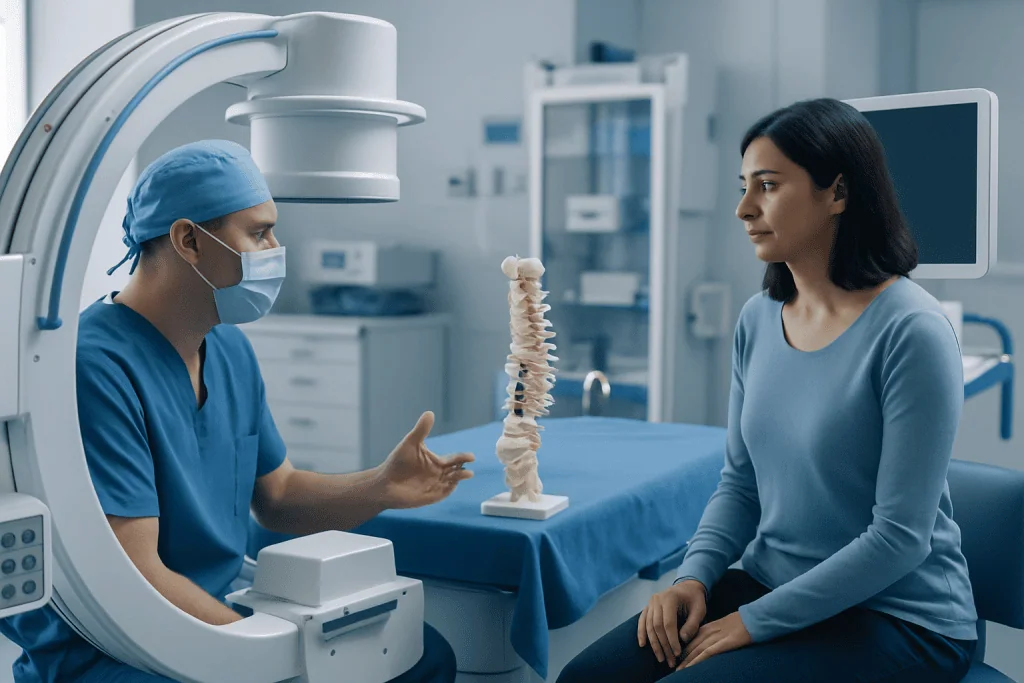
During spinal fusion, a surgeon places bone graft material between or around selected vertebrae. Over time, the graft is intended to unite with the surrounding bone. Screws, rods, plates, cages, or other implants may be used to hold the area steady while healing occurs. Fusion may be performed in the neck, middle back, or lower back, depending on the source of the problem.
It may be recommended for conditions such as spondylolisthesis, spinal instability, some spinal fractures, scoliosis or other deformities, recurrent disc problems, or narrowing of the spinal canal when decompression alone would leave the spine unstable. In some cases, fusion accompanies surgery to relieve pressure on spinal nerves. Conditions such as spinal stenosis may require individualized assessment because not everyone with narrowing needs fusion.
Good candidacy is based on a careful match between symptoms, physical examination findings, imaging, and the proposed surgery. The spine specialist may consider the location and duration of pain, weakness or numbness, prior treatments, bone health, smoking status, weight, diabetes, medications, and heart or lung conditions. Fusion is not generally advised simply because a scan shows age-related changes, as these are common and may not be the cause of symptoms.
- Non-surgical options may include guided exercise, physiotherapy, activity modification, medicines, and selected injections.
- Urgent surgery may be considered when there is worsening weakness, spinal instability, or signs of serious nerve compression.
- Patients should understand that surgery is intended to address a defined spinal problem; it cannot guarantee complete relief of every type of back or neck pain.
Assessment and planning before travelling
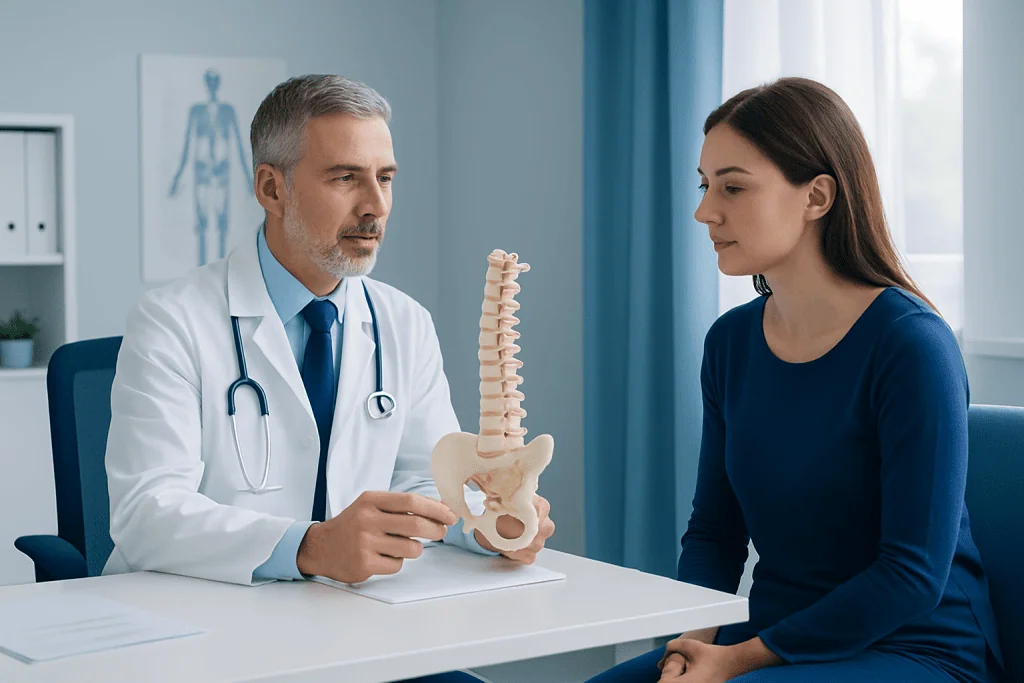
Pre-operative assessment commonly begins with a review of medical records, recent X-rays, magnetic resonance imaging (MRI), computed tomography (CT) scans, and reports from previous treatments. The surgical team may request updated imaging or an in-person examination before confirming the final surgical plan. This is important because the appropriate type and extent of fusion can change when a clinician examines the patient directly.
Patients should provide a complete list of medicines, allergies, prior operations, medical conditions, and relevant test results. Blood tests, heart assessment, anaesthetic evaluation, and screening for infection may be arranged when appropriate. Smoking and nicotine exposure can impair bone healing, so a clinician may recommend stopping well before surgery and throughout recovery.
International travel planning should include arrival early enough for final consultations and tests, accommodation for the patient and accompanying person, and arrangements for transport after discharge. Patients should avoid making non-refundable travel plans until the care team has reviewed the case. It is also useful to ask for an itemized clinical plan, discharge summary, imaging copies, implant details, medication list, and written recommendations for clinicians at home.
What happens during the procedure
Spinal fusion is performed under general anaesthesia. The surgical approach may be from the front, back, side, or a combination of approaches. The choice depends on the spinal level, the condition being treated, anatomy, previous surgery, and the surgeon’s assessment. Some procedures may use minimally invasive techniques, although these are not suitable for every person or every type of fusion.
In a typical procedure, the surgeon accesses the affected part of the spine, relieves pressure on nerves if needed, prepares the bone surfaces, places graft material, and inserts stabilization implants when indicated. Bone graft may come from the patient, a donor source, or a synthetic or biologic graft substitute. The team may use imaging during surgery to help guide implant placement.
After the operation, patients are monitored in a recovery area and then transferred to a hospital room. Pain relief, prevention of blood clots when appropriate, early movement, wound care, and neurological checks are part of routine postoperative care. The length of hospital stay varies according to the procedure and the person’s recovery. The surgeon will explain restrictions on bending, lifting, twisting, driving, and work before discharge.
Benefits, limitations and possible risks
The main potential benefit of fusion is improved spinal stability. For the right condition, this can help reduce movement-related pain, support correction of a deformity, protect nerves after decompression, or help a fracture heal in a stable position. Many people also aim to improve walking, daily activity, sleep, and quality of life, but the degree of improvement varies.
Fusion also has limitations. The treated vertebrae no longer move independently, and recovery takes time because bone healing is gradual. Some people continue to have pain, stiffness, numbness, or weakness after surgery, particularly when nerves were irritated or damaged before treatment. A successful bone fusion does not always mean all symptoms resolve.
Potential risks include bleeding, infection, blood clots, reactions to anaesthesia, injury to nerves or surrounding structures, leakage of spinal fluid, poor wound healing, and complications related to implants. The bones may not fully unite, known as non-union or pseudarthrosis, and implants can occasionally loosen or break. Over time, segments next to a fusion can develop increased wear, although this does not happen to everyone.
The surgeon should explain risks in relation to the planned approach and the patient’s individual health. Asking about expected benefits, alternatives, likelihood of further surgery, and the warning signs to report after discharge helps patients make an informed decision.
Recovery timeline, rehabilitation and return travel
Recovery after spinal fusion is individual. In the first days and weeks, the focus is on safe walking, pain control, wound care, sleep, bowel function, and gradually increasing activity. A physiotherapist may teach safe ways to move, get in and out of bed, climb stairs, and protect the operated area. Some patients may be advised to wear a brace for a period of time.
Many people can increase light daily activities over several weeks, but return to desk work, physical work, driving, sports, and lifting should follow the surgeon’s advice. Bone fusion commonly continues for months. Follow-up appointments and imaging may be used to assess healing, alignment, implants, and symptoms. Keeping follow-up visits is important even when recovery seems to be progressing well.
For patients who have travelled for surgery, the timing of air travel should be determined by the treating surgeon. It may depend on wound healing, mobility, clotting risk, the complexity of the operation, and the length of the journey. During approved travel, patients may be advised to move regularly, stay hydrated, follow medication guidance, and keep records readily available. Travel insurance should be reviewed carefully, including coverage for postoperative care and unexpected changes to travel plans.
Acibadem International’s multidisciplinary spine specialists and JCI-accredited hospitals can assess and treat international patients requiring spinal fusion, with care coordination that can include pre-travel planning, hospital care, and discharge documentation for follow-up.
When to seek medical care
People with persistent back or neck pain should arrange a medical assessment if symptoms do not improve with reasonable self-care, interfere with sleep or daily activities, or are associated with pain spreading into an arm or leg, numbness, tingling, or weakness. A qualified clinician can determine whether symptoms may benefit from conservative care, further testing, or referral to a spine specialist.
Urgent medical care is needed for new or rapidly worsening weakness, loss of coordination, numbness around the groin or buttocks, or new difficulty controlling bladder or bowel function. Severe pain after a significant fall, collision, or other trauma also needs prompt evaluation.
After spinal surgery, patients should contact their surgical team promptly for fever, worsening redness or drainage from the wound, pain that is increasing rather than gradually improving, new weakness or numbness, chest pain, shortness of breath, or calf swelling. These symptoms do not always indicate a serious complication, but timely assessment is important.
Frequently asked questions
Is spinal fusion in Turkey safe?
Spinal fusion can be performed safely in Turkey when it is medically appropriate and delivered by an experienced spine team in a hospital with robust safety standards. Patients should review the surgeon’s plan, hospital accreditation, anaesthesia assessment, infection-prevention practices, rehabilitation support, and follow-up arrangements. Travelling abroad also requires a realistic plan for recovery before flying home.
How long should a patient stay in Turkey after spinal fusion?
The appropriate stay depends on the type of fusion, the spinal area treated, the person’s mobility, wound healing, and any medical conditions. The treating surgeon should decide when air travel is safe after reviewing the patient in person. It is sensible to allow time for early postoperative checks rather than scheduling an immediate return flight.
Will spinal fusion completely remove back pain?
Spinal fusion may reduce pain caused by a specific source of instability, deformity, fracture, or nerve compression. However, it cannot guarantee that all pain will disappear, especially when pain has more than one cause or nerve symptoms have been present for a long time. A specialist can explain which symptoms the operation is most likely to address.
What is the recovery time after spinal fusion?
Early recovery usually involves several weeks of gradually increasing walking and daily activity, while bone healing continues for months. The timeline depends on the number of vertebrae fused, surgical approach, general health, bone quality, and adherence to rehabilitation guidance. The surgeon will provide individualized advice about work, driving, exercise, and lifting.
Can a person fly after spinal fusion surgery?
Flying may be possible after spinal fusion, but only when the surgical team confirms that it is appropriate. The decision considers mobility, clot risk, wound status, pain control, and the length of the flight. Patients should follow the team’s instructions for movement, hydration, medicines, and any compression measures during travel.
What questions should international patients ask before spinal fusion?
Patients should ask why fusion is recommended, which vertebrae will be treated, what alternatives exist, and what improvement is realistically expected. They should also ask about the surgeon’s specialty, hospital safety processes, likely hospital stay, rehabilitation, timing of travel, and how follow-up or complications will be managed after returning home.
References
- World Health Organization
- U.S. National Institute of Arthritis and Musculoskeletal and Skin Diseases
- American Academy of Orthopaedic Surgeons
- National Institute for Health and Care Excellence
- International Society for the Study of the Lumbar Spine
This article is for general information only and is not a substitute for professional medical advice. Please consult a qualified doctor about your individual situation.
Spinal Fusion in Turkey — costs, top hospitals & a free quote
JCI-accredited · board-certified surgeons · reply within 24h
Add us as a Preferred Source to see more of our trusted health content across Google Search, AI Overviews and Discover.