Sports Injury — Explained by Medical Evidence, Not Myths
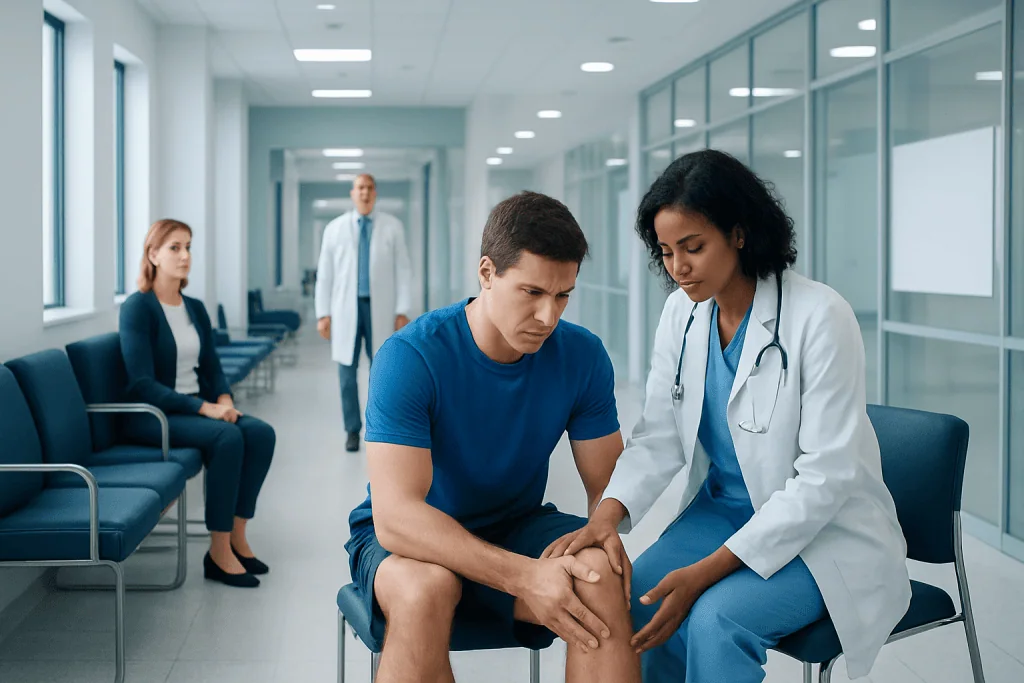
Sports injuries may result from a single event or from repeated stress over time. Pain is important information, but its severity alone does not always show how serious an injury is.
Key Takeaways
- Sports injuries may result from a single event or from repeated stress over time.
- Pain is important information, but its severity alone does not always show how serious an injury is.
- Early movement and rehabilitation are often helpful when guided appropriately; complete rest is not always best.
- A gradual, criteria-based return to sport can reduce the risk of reinjury.
- Sudden deformity, inability to bear weight, severe swelling or neurological symptoms need prompt medical attention.
A sports injury is damage to muscles, tendons, ligaments, bones or other tissues that occurs during exercise or sport. Most injuries improve with timely assessment, relative rest and structured rehabilitation, while severe symptoms require urgent medical evaluation.
Sports Injury: What It Means and What the Evidence Shows
A sports injury is harm to a body structure caused by physical activity, training or competition. It can affect muscles, tendons, ligaments, joints, bones, skin or nerves. Some injuries happen suddenly, such as an ankle sprain after a misstep or a muscle strain during a sprint. Others develop gradually when repeated loading exceeds the tissue’s ability to recover, such as tendinopathy or a stress-related bone injury.
Evidence-based care does not mean that every injury needs a scan, medication or surgery. It means matching the assessment and treatment plan to the person’s symptoms, sport, training demands and goals. Many sports injuries respond well to activity modification, symptom-guided movement and progressive exercise. A clinician can identify injuries that need protection, imaging, specialist care or a different rehabilitation approach.
Common myths can complicate recovery. “No pain, no gain” is not a reliable rule after an injury, because pushing through worsening pain can delay healing or lead to compensation elsewhere in the body. Conversely, avoiding all movement for a long time can reduce strength, joint mobility and confidence. The aim is usually to find a safe level of activity that maintains function without repeatedly aggravating the injured area.
Common Types and Symptoms of Sports Injuries
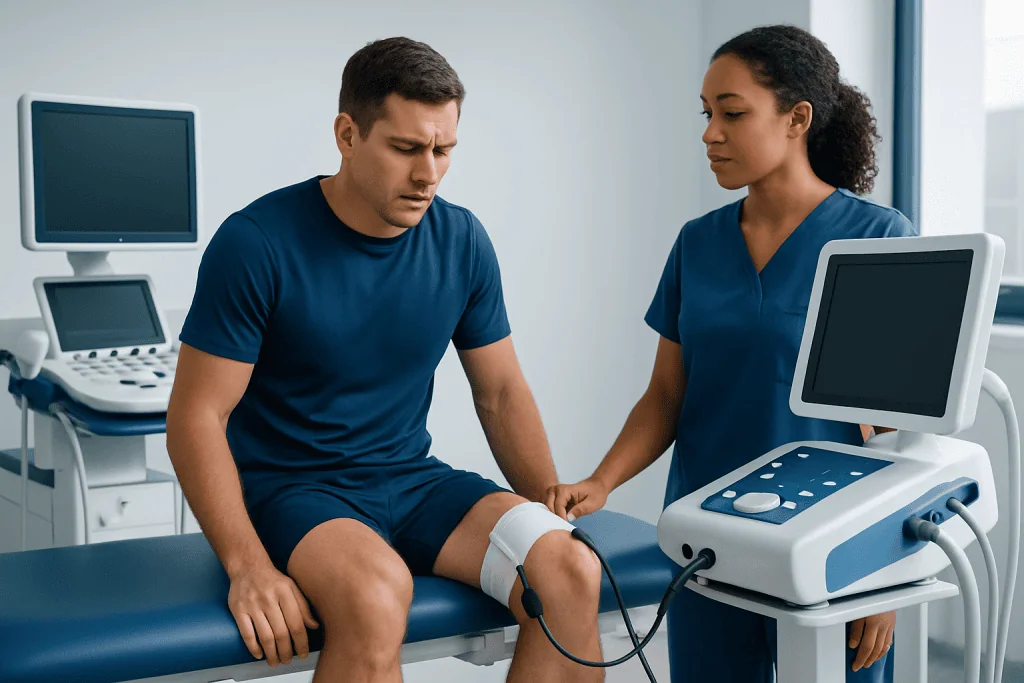
Acute injuries often involve a clear incident: a twist, fall, collision, awkward landing or sudden acceleration. Examples include sprains, which affect ligaments; strains, which affect muscles or tendons; bruises; dislocations; fractures; and tendon ruptures. The affected area may hurt immediately and can become swollen, bruised, weak or difficult to move.
Overuse injuries tend to begin more subtly. Pain may appear toward the end of training, settle with rest, and then return earlier or become more persistent as loading continues. Examples include tendon pain around the shoulder, knee, elbow or heel; shin pain; runner’s knee; and stress injuries of bone. A gradual onset does not make an injury less important, particularly when pain changes a person’s walking, running technique or ability to perform daily tasks.
Symptoms vary by body part and injury type, but may include:
- Localized pain, tenderness or stiffness
- Swelling, bruising, warmth or reduced range of motion
- Weakness, instability, locking or a sensation that a joint may give way
- Pain with impact, jumping, gripping, throwing or a particular movement
- Numbness, tingling, altered sensation or pain that travels down an arm or leg
A popping sensation at the time of injury may occur with some ligament, tendon or joint injuries, but it does not establish a diagnosis on its own. Similarly, swelling can occur with minor injuries as well as more significant ones. A physical examination is the best starting point for determining what may be affected.
Why Sports Injuries Happen: Load, Recovery and Risk Factors

Sports injuries are rarely explained by one factor alone. They often develop when training load increases faster than the body can adapt. A sudden rise in distance, intensity, frequency, hills, speed work or competitive activity can raise risk, especially when recovery time is limited. This applies to beginners and experienced athletes alike.
Previous injury is an important risk factor because strength, balance, coordination or confidence may not fully return even after symptoms improve. Poorly managed fatigue, inadequate sleep, illness, dehydration and insufficient energy intake can also affect performance and recovery. In younger athletes, periods of rapid growth can temporarily change flexibility, coordination and tissue tolerance.
Technique, equipment and environment matter, but they should not be viewed as the only cause. Footwear, playing surface, protective equipment, training plan, coaching and sport-specific demands may all influence injury risk. Individual factors such as joint mobility, muscle capacity, bone health, medical conditions and some medications can also be relevant. A clinician or physiotherapist can help identify modifiable contributors without assuming that there is one simple explanation.
How a Sports Injury Is Assessed and Diagnosed
Diagnosis begins with a careful history. A clinician will ask how the problem started, whether there was direct contact or a twist, where the pain is felt, what movements trigger it, and how it affects walking, work, sleep and sport. They will also ask about previous injuries, training changes, general health and any symptoms such as numbness or locking.
The physical examination may include observing posture and movement, checking swelling and tenderness, testing joint motion, muscle strength, balance and stability, and comparing both sides of the body. Functional tests, such as a squat, hop or controlled change of direction, may be used when appropriate. These findings help distinguish between conditions that can have similar symptoms but need different management.
Imaging is not routinely necessary for every sports injury. X-rays can help assess suspected fractures or some joint problems. Ultrasound may evaluate certain muscles, tendons and soft tissues, while magnetic resonance imaging may be useful when a significant ligament, cartilage, bone stress or deep soft-tissue injury is suspected. Imaging results should always be interpreted alongside symptoms and examination findings, since some changes can be present without causing pain.
Treatment and Rehabilitation: A Gradual, Individual Plan
Early care usually focuses on protecting the area from further harm while maintaining as much comfortable movement as possible. Relative rest means temporarily reducing or changing the activities that provoke symptoms rather than necessarily stopping all activity. For example, a runner with pain may be advised to reduce running while continuing a suitable low-impact activity if it is comfortable and medically appropriate.
Cold packs may provide short-term pain relief for some people, particularly in the first days after an acute injury. They should be wrapped in cloth and used for brief intervals to protect the skin. Compression and elevation can also help manage swelling in some situations. Pain medicines may be appropriate for selected individuals, but the choice depends on medical history, other medicines and the type of injury; a pharmacist or clinician can advise safely.
Rehabilitation commonly includes progressive exercises to restore joint motion, muscle strength, tendon capacity, balance, coordination and sport-specific skills. The plan should be adjusted according to symptoms and function. For many injuries, the target is not simply pain reduction but restored capacity for the demands of daily life, training and competition.
Surgery is needed for only some sports injuries, such as certain displaced fractures, complete tendon ruptures, unstable joint injuries or injuries that do not respond to appropriate non-surgical management. When surgery is considered, the decision should account for injury pattern, activity goals, timing, expected rehabilitation and the person’s overall health. Acibadem International’s multidisciplinary specialists and JCI-accredited hospitals diagnose and treat sports injuries for international patients.
Preventing Injury and Returning to Sport Safely
Although no prevention plan can eliminate every injury, consistent preparation can reduce avoidable risk. Training should progress in a manageable way, with recovery built in after demanding sessions. A balanced programme usually includes sport-specific practice alongside strength, mobility and conditioning work tailored to the individual’s needs.
Warm-ups should prepare the body for the activity ahead rather than simply fill time. Dynamic movements, progressive practice drills and exercises that challenge balance, landing mechanics or change of direction can be useful in many sports. For contact or high-impact activities, properly fitted protective equipment and following safety rules are also important.
Return to sport should be gradual and based on function, not only on the calendar. Before full participation, a person should generally be able to complete relevant movements, such as running, jumping, cutting, throwing or lifting, with adequate strength, control and confidence and without a meaningful increase in symptoms afterward. A physiotherapist, sports medicine clinician or treating doctor can help set practical milestones, especially after a significant injury.
Good recovery habits support training adaptation. These include sufficient sleep, regular meals that meet energy needs, hydration appropriate to the activity and avoiding abrupt increases in workload. Athletes should also communicate early about recurring pain or unusual fatigue, rather than waiting until a minor problem becomes more limiting.
When to Seek Medical Care
Prompt medical assessment is recommended after a major fall, collision or twist when there is severe pain, obvious deformity, rapid swelling, inability to bear weight or use the limb, or a joint that appears dislocated. Urgent evaluation is also important for numbness, weakness, a cold or pale limb, an open wound, severe headache after a head impact, repeated vomiting, confusion or loss of consciousness.
A non-urgent appointment is sensible when pain persists beyond a few days, repeatedly returns with activity, causes limping or changes in technique, interrupts sleep, or does not improve despite reducing aggravating activity. Medical advice is particularly valuable for suspected stress injuries, recurrent joint instability, persistent swelling, locking, or pain in a child or adolescent athlete. Early assessment can clarify the diagnosis and provide a safer route back to activity.
Frequently asked questions
What is the most common sports injury?
Sprains and strains are among the most common sports injuries. A sprain affects a ligament, while a strain affects a muscle or tendon. The correct diagnosis matters because recovery plans can differ depending on the structure and severity involved.
Should a person rest completely after a sports injury?
Complete rest may be necessary briefly for some injuries, but prolonged inactivity is not usually ideal for uncomplicated soft-tissue injuries. Relative rest and carefully selected movement often help preserve mobility and strength. A clinician can advise which activities are safe for the specific injury.
How long does a sports injury take to heal?
Recovery time depends on the tissue involved, injury severity, treatment, overall health and the physical demands of the sport. Mild injuries may improve within days to weeks, while significant ligament, tendon, bone or joint injuries can take longer. Returning too early can increase the chance of reinjury.
Can a person play through sports injury pain?
Continuing activity may be reasonable for mild discomfort that does not worsen and does not alter movement, but pain should not be ignored. Sharp pain, increasing pain, swelling, instability, limping or loss of function are reasons to stop and seek advice. Pain-relieving medication should not be used to mask symptoms in order to continue unsafe activity.
Do all sports injuries need an MRI scan?
No. Many injuries can be assessed through history and physical examination without imaging. An MRI may be useful when the diagnosis remains uncertain or when there is concern about a significant soft-tissue, cartilage or bone stress injury. The treating clinician determines whether imaging is likely to change management.
When can someone return to sport after an injury?
Return should be based on recovery of function rather than time alone. The person should be able to perform the movements required for their sport with appropriate strength, control and confidence, without significant symptoms during or after activity. A stepwise plan supervised by a healthcare professional is especially helpful after moderate or severe injuries.
References
- American Academy of Orthopaedic Surgeons
- American College of Sports Medicine
- National Institute of Arthritis and Musculoskeletal and Skin Diseases
- National Health Service
- International Olympic Committee
This article is for general information only and is not a substitute for professional medical advice. Please consult a qualified doctor about your individual situation.
Joint and spine care in Turkey — expert assessment & treatment
JCI-accredited · board-certified surgeons · reply within 24h
Add us as a Preferred Source to see more of our trusted health content across Google Search, AI Overviews and Discover.