Sprain Treatment: How It Works, Results and What to Expect

Most mild to moderate sprains improve with non-surgical care, including protection, movement exercises and gradual strengthening. A clinical assessment may be needed to rule out a fracture or a complete ligament tear, particularly after a severe injury.
Key Takeaways
- Most mild to moderate sprains improve with non-surgical care, including protection, movement exercises and gradual strengthening.
- A clinical assessment may be needed to rule out a fracture or a complete ligament tear, particularly after a severe injury.
- Early, guided movement is often helpful once serious injury has been excluded; prolonged complete rest can delay recovery.
- Recovery may take days to weeks for a mild sprain and longer for severe or recurrent injuries.
- Return to sport or demanding work should be based on strength, balance, motion and function rather than pain alone.
Sprain treatment usually combines protection, early symptom control and progressive rehabilitation to help an injured ligament heal and restore safe movement. The right plan depends on the joint involved, the severity of the injury and whether there is an associated fracture, tendon injury or joint instability.
Overview: How Sprain Treatment Works
Sprain treatment helps an injured ligament heal while protecting the joint from further damage and gradually restoring normal movement, strength and balance. Most sprains can be managed without surgery, using activity modification, support such as a brace or tape, symptom relief and a structured rehabilitation plan.
A sprain occurs when a ligament, the strong band of tissue connecting bones at a joint, is stretched or torn. Ankles are affected most often, but sprains can also involve the wrist, knee, thumb, shoulder or other joints. Treatment is individualized because a minor ligament stretch and a complete tear do not have the same recovery needs.
The main goals are to control pain and swelling, maintain safe movement, rebuild joint control and reduce the chance of another sprain. A clinician may recommend assessment through an orthopedic or sports medicine service when symptoms are severe, persistent or linked with a high-energy injury.
Who May Need Evaluation and What to Expect
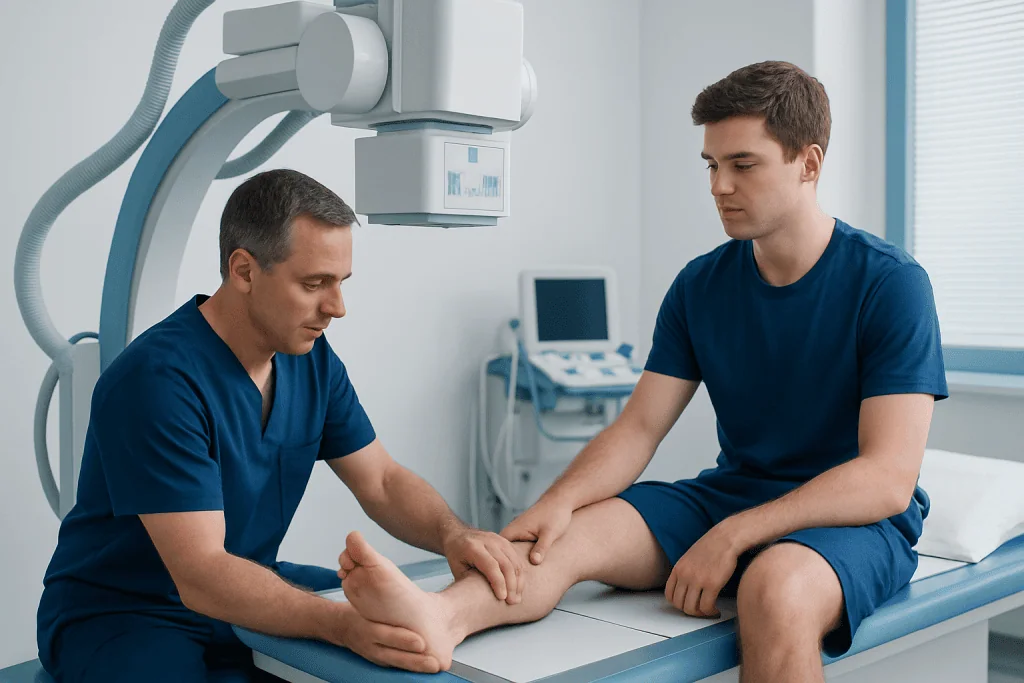
Anyone can sustain a sprain after twisting, falling, landing awkwardly or receiving a direct impact. People who play sports, work on uneven surfaces, have reduced balance, wear unsuitable footwear or have had a previous sprain may be at greater risk. Previous injury is important because a joint that has not regained strength and balance can be more likely to sprain again.
Mild sprains may cause tenderness and limited swelling but still allow some weight-bearing or use of the joint. More serious injuries may cause marked swelling, bruising, instability, difficulty walking or using the limb, and a feeling or sound of a pop at the time of injury. These features do not confirm the diagnosis on their own, but they support timely medical assessment.
Non-surgical sprain treatment is appropriate for many partial ligament injuries. Surgery is considered only in selected situations, such as persistent instability despite rehabilitation, certain complete tears, combined injuries or injuries in which a fracture or other structural problem is present. Orthopedic assessment and treatment can help clarify the most suitable pathway.
Assessment and Diagnosis
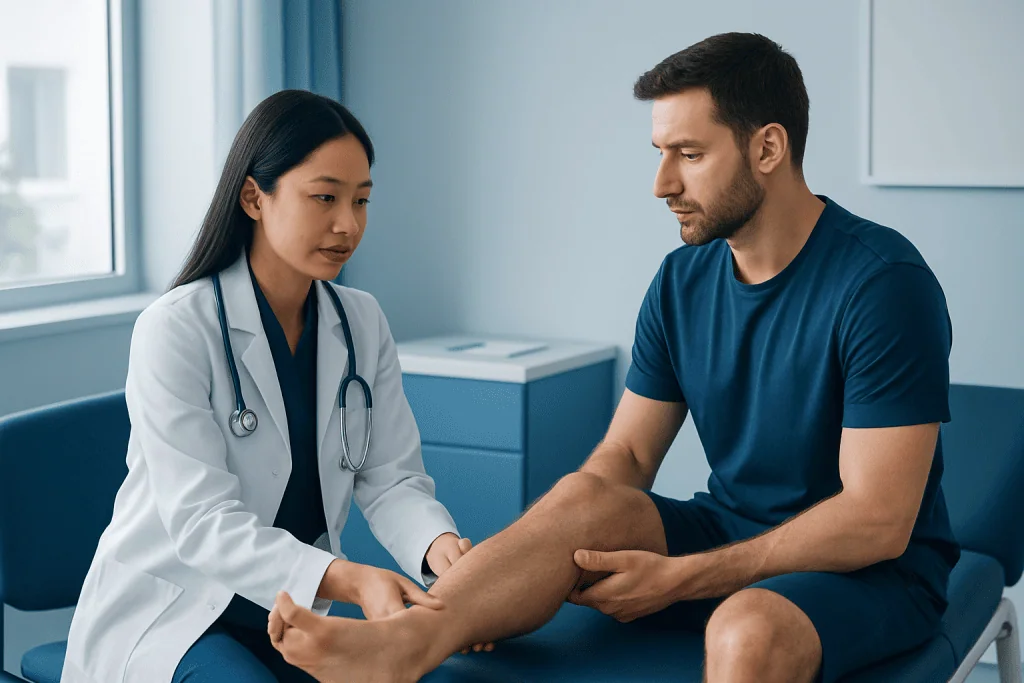
Diagnosis begins with a discussion about how the injury happened, symptoms, previous injuries and usual activities. The clinician examines swelling, bruising, tenderness, range of motion, circulation and sensation. They may also perform gentle stability tests when appropriate and compare the injured joint with the other side.
Not every sprain requires imaging. X-rays may be recommended when a fracture is possible, particularly if there is point tenderness over a bone, inability to bear weight after an ankle injury, obvious deformity or severe pain. Ultrasound or magnetic resonance imaging may be useful when a significant ligament tear, tendon injury, cartilage injury or another condition is suspected.
Prompt diagnosis matters because fractures, dislocations and tendon injuries can resemble a sprain at first. For example, a twisting knee injury may involve ligaments or menisci, while a painful swollen ankle may have a fracture as well as ligament damage. A careful examination guides treatment and avoids returning to activity before the joint is ready.
Sprain Treatment Step by Step
In the first stage, treatment focuses on protection and comfort. This may include reducing activities that worsen pain, using a supportive brace, elastic wrap, splint or walking aid when advised, and elevating the injured area to help manage swelling. Cold packs may provide short-term pain relief for some people when wrapped in a cloth and applied briefly; they should not be placed directly on the skin.
Medication is not always necessary, but a clinician or pharmacist can advise on suitable pain-relief options based on a person’s health conditions and other medicines. Compression should feel supportive rather than tight. New numbness, tingling, worsening pain, coolness or color changes beyond a wrap or brace should be assessed urgently.
As pain and swelling settle, treatment shifts toward restoring motion. A physiotherapist may prescribe controlled exercises that match the joint and injury severity. This may include range-of-motion work, gradual weight-bearing, muscle strengthening, balance training and exercises that improve coordination. Physical therapy and rehabilitation can be especially useful after a severe sprain, recurrent injury or difficulty returning to work or sport.
The final stage is functional retraining. Exercises become more similar to daily, occupational or sporting demands, such as stepping, changing direction, landing or gripping. Bracing or taping may be used temporarily during higher-risk activities, but it does not replace rehabilitation of strength, balance and technique.
Benefits, Limits and Possible Risks
Appropriate sprain treatment can reduce pain and swelling, improve confidence in using the joint and support a safe return to normal activities. Rehabilitation is also intended to reduce ongoing stiffness, weakness and recurrent instability. Improvement is usually gradual rather than immediate, and occasional mild discomfort during recovery can occur as activity is increased.
There are limits to self-care. Continuing sport or strenuous activity through significant pain, swelling or joint instability can prolong recovery and may contribute to repeat injury. Conversely, keeping a joint completely still for too long can lead to stiffness, loss of muscle strength and poorer balance.
Risks from non-surgical care are generally low when advice is followed, although braces or tape can irritate the skin or feel uncomfortable. Surgery, when needed, has its own potential risks, including infection, blood clots, stiffness, nerve irritation and a longer rehabilitation period. These risks and expected benefits should be discussed individually with the treating surgeon.
Recovery Timeline and Return to Activity
Recovery depends on the joint, the extent of ligament damage, age, health, previous injuries and how closely the rehabilitation plan can be followed. A mild sprain may improve substantially within one to three weeks. Moderate injuries commonly need several weeks, while severe sprains, complete tears or injuries requiring surgery may require months of recovery and supervised rehabilitation.
Swelling or tenderness may last longer than expected even when function is improving. This does not always mean that healing has stopped, but persistent or worsening symptoms should be reviewed. The treating clinician may adjust activity, support or exercise progression based on symptoms and examination findings.
Return to sport, exercise or physically demanding work should be guided by function rather than a calendar date alone. The person should have near-normal movement, adequate strength, good balance and the ability to complete activity-specific tasks without significant pain, swelling or a sense that the joint will give way. Ankle sprain information may be helpful for people recovering from this common injury.
Prevention, Self-Care and When to Seek Medical Care
After the initial injury has been assessed, regular rehabilitation is one of the best ways to prevent another sprain. Helpful measures may include strengthening the muscles around the joint, practicing balance exercises, warming up before sport, increasing training gradually and choosing footwear appropriate for the activity and surface. A brace may be advised temporarily for some sports or after recurrent ankle sprains.
Medical care should be sought promptly if there is an obvious deformity, inability to bear weight or use the limb, severe or rapidly worsening pain, extensive swelling, numbness, a cold or pale limb, an open wound, or concern that the joint is dislocated. Urgent assessment is also appropriate after a high-energy injury or if symptoms suggest a fracture.
A non-urgent appointment is appropriate when pain, swelling, instability or reduced movement does not improve as expected, when sprains happen repeatedly, or when returning to usual activities remains difficult. Acibadem International’s multidisciplinary specialists and JCI-accredited hospitals support diagnosis and treatment for international patients with joint and sports-related injuries.
Frequently asked questions
What is the fastest way to heal a sprain?
The safest approach is to protect the joint early, manage symptoms and begin appropriate movement and strengthening when advised. Trying to return to full activity too quickly may delay recovery. A clinician or physiotherapist can tailor progression to the injury.
Should a sprain be kept completely still?
Brief protection may be needed after an injury, especially with significant pain or instability. However, prolonged complete immobilization is not suitable for many sprains because it can cause stiffness and weakness. The right amount of movement depends on the injured joint and severity.
How can someone tell whether a sprain is severe?
Severe swelling, bruising, inability to bear weight, a feeling of instability, marked loss of function or a pop at the time of injury may indicate a more significant injury. These signs can also occur with fractures or tendon injuries. A medical examination is the best way to determine severity.
Is walking on a sprained ankle safe?
It may be safe for some mild ankle sprains if walking can be done with tolerable discomfort and without worsening symptoms. Others may need a brace, crutches or a period of reduced weight-bearing. Severe pain or inability to take steps should be medically assessed.
Do all sprains need an X-ray or MRI?
No. Many sprains can be diagnosed through the history and physical examination. Imaging is used when a fracture, complete tear, tendon injury or another structural problem is suspected, or when recovery is not progressing as expected.
Can a sprain cause long-term problems?
Most sprains recover well with appropriate treatment. Some people develop ongoing pain, stiffness or a sense of instability, particularly after a severe injury or incomplete rehabilitation. Follow-up is advisable if the joint repeatedly gives way or symptoms persist.
References
- American Academy of Orthopaedic Surgeons
- National Institute of Arthritis and Musculoskeletal and Skin Diseases
- American College of Sports Medicine
- National Health Service
This article is for general information only and is not a substitute for professional medical advice. Please consult a qualified doctor about your individual situation.
Joint and spine care in Turkey — expert assessment & treatment
JCI-accredited · board-certified surgeons · reply within 24h
Add us as a Preferred Source to see more of our trusted health content across Google Search, AI Overviews and Discover.