Stairmaster Benefits: An Evidence-Based Guide for Patients

A Stairmaster can improve heart and lung fitness while strengthening the legs and gluteal muscles. It may support weight management because it combines aerobic exercise with muscular effort.
Key Takeaways
- A Stairmaster can improve heart and lung fitness while strengthening the legs and gluteal muscles.
- It may support weight management because it combines aerobic exercise with muscular effort.
- Compared with running, it is often lower impact, but it can still strain knees, hips, or the lower back if technique is poor.
- Beginners usually do best with short, steady sessions and gradual increases in time or resistance.
- People with chest pain, severe shortness of breath, balance problems, or significant joint pain should seek medical advice before or during training.
Stairmaster benefits include effective cardiovascular exercise, stronger lower-body muscles, improved stamina, and support for weight management when used regularly and safely. For many adults, it offers a practical form of low-impact cardio, though the right intensity and technique depend on personal fitness level, joint health, and medical history.
Overview: What are the main Stairmaster benefits?
Stairmaster benefits center on efficient cardiovascular exercise and lower-body strengthening. In simple terms, climbing against resistance raises the heart rate, challenges the lungs, and works major muscles in the hips, thighs, calves, and core. This combination can make the machine a time-efficient option for people who want one workout that supports both fitness and daily function.
For many adults, a Stairmaster is also easier on the joints than high-impact activities such as jogging on hard surfaces. Although it is not impact-free, the stepping motion usually produces less repeated pounding than running. That can make it a useful option for people who tolerate walking and climbing better than jumping or sprinting.
Another important point is that benefits depend more on consistency and proper form than on intensity alone. A moderate routine performed regularly often provides meaningful improvements in endurance, leg strength, and energy levels. As with any exercise plan, results vary with age, health status, sleep, nutrition, and overall activity level.
How a Stairmaster supports heart health and endurance
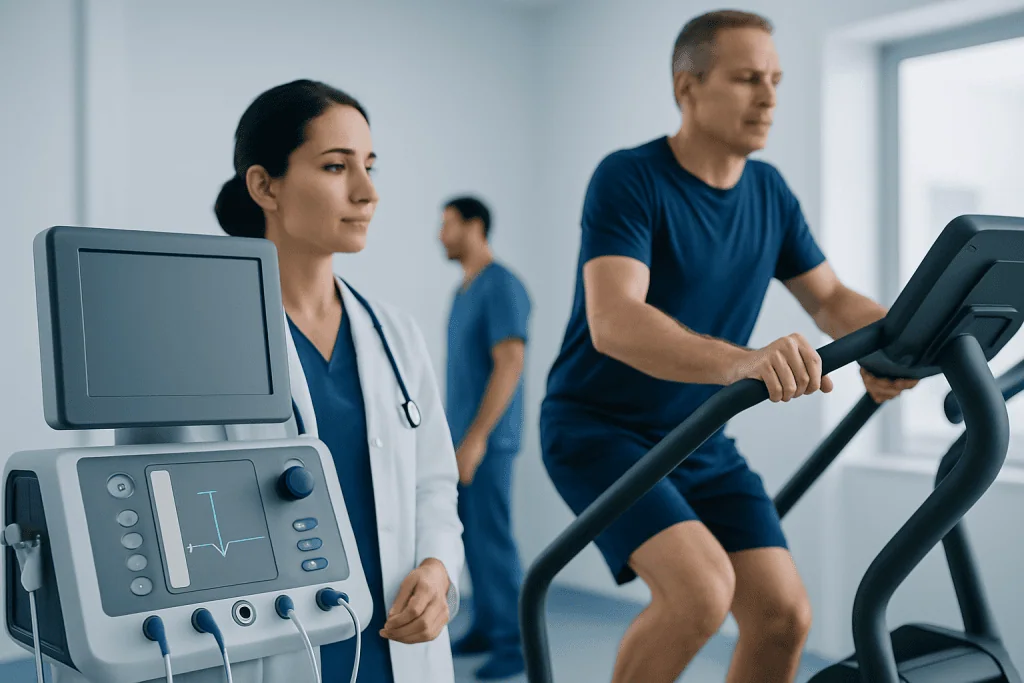
One of the best-established Stairmaster benefits is improved cardiorespiratory fitness. When the body repeatedly climbs steps, the heart must pump more blood and the lungs must deliver more oxygen to working muscles. Over time, this can improve exercise tolerance, making everyday tasks such as walking uphill or taking stairs less tiring.
Regular aerobic exercise is linked with better blood pressure control, improved circulation, and healthier metabolic function. A Stairmaster can contribute to these goals when used as part of a broader lifestyle that includes balanced nutrition, adequate sleep, and routine medical care. People who are unable to do some other cardio activities may find the stepping pattern more comfortable and sustainable.
Intensity can be adjusted by changing pace, resistance, or session length. This flexibility allows many users to begin gently and progress gradually. For patients managing heart risk factors, supervised exercise and professional advice may be helpful, especially if there is a history of heart disease or symptoms during exertion.
Muscle strength, calorie use, and weight management

The Stairmaster primarily works the quadriceps, hamstrings, gluteal muscles, and calves. It also activates the core muscles that help maintain posture and balance. Because these large muscle groups are engaged repeatedly, the machine can build lower-body muscular endurance and support better functional strength for activities such as climbing stairs, standing from a chair, or walking longer distances.
Many people ask whether a StairMaster helps with weight loss. It can support weight management by increasing energy expenditure and encouraging regular movement, but no single machine causes weight loss on its own. Sustainable results usually come from a combination of physical activity, eating habits, stress management, and medical guidance when needed.
The machine may be especially useful for people who want a challenging workout in a short period of time. However, it should not be used as a reason to ignore resistance training or flexibility work. A balanced plan may include aerobic exercise, strength training, and in some cases structured support such as obesity treatment for selected patients with medically significant excess weight.
Is it low impact? Joint comfort, posture, and safe technique
A Stairmaster is often described as low impact because both feet usually stay in contact with the pedals, reducing the repeated landing forces seen in running. For some people, this means less discomfort in the ankles and lower legs. Still, the exercise can place meaningful load on the knees, hips, and lower back, especially if resistance is high or the stepping pattern is rushed.
Good technique matters. The user should stand upright, keep the core gently engaged, and avoid leaning heavily on the handrails. Gripping the rails too much may reduce workout intensity and place the body in an awkward position. Steps should be controlled rather than bouncing or pushing through the toes only.
People with osteoarthritis, prior knee injury, hip pain, balance problems, or chronic back symptoms may need individualized advice. In some cases, an assessment by a physician or physical therapy team is appropriate before starting a new program, especially if there is known knee pain or a recent flare of joint symptoms.
- Start with a pace that allows conversation.
- Use supportive footwear with stable soles.
- Keep shoulders relaxed and eyes forward.
- Stop if pain becomes sharp, unstable, or progressively worse.
Who may benefit most and how to get started
The Stairmaster can suit many groups, including adults who want indoor cardio, people returning to exercise after a sedentary period, and those looking to improve lower-body endurance. It may also help individuals who prefer structured workouts with adjustable difficulty. Because the movement pattern is familiar, many users find it easier to learn than more technical gym equipment.
Beginners often do best with short sessions, such as 10 to 15 minutes at a comfortable pace, two to four times per week. As tolerance improves, time, pace, or resistance can be increased gradually. Sudden jumps in workload can lead to excessive soreness, fatigue, or overuse symptoms, especially in the knees and calves.
It is reasonable to warm up before exercise and cool down afterward. A simple warm-up may include easy walking, gentle ankle and hip movement, and the first few minutes on the machine at low intensity. Patients in recovery from injury or surgery may benefit from a tailored plan through physical therapy and rehabilitation if they are unsure how to restart exercise safely.
Limitations, common mistakes, and when it may not be ideal
Although Stairmaster benefits are real, the machine is not the best fit for everyone. Some users develop knee irritation, forefoot discomfort, or low-back strain if they climb too fast, use poor posture, or train through pain. Others may find that the repetitive stepping motion aggravates arthritis or tendon problems.
Another common mistake is relying on the handrails for body weight support. This can reduce the cardiovascular challenge and may place the spine and shoulders in less natural positions. Very intense interval sessions are also not appropriate for every person, particularly beginners, older adults with frailty, or anyone with uncontrolled medical conditions.
For people who become dizzy with exertion, have significant shortness of breath, or are recovering from a major heart or lung event, a formal evaluation may be safer than self-directed exercise. In selected cases, supervised programs such as cardiac rehabilitation can help patients rebuild fitness in a monitored way.
When to seek medical care
Medical advice is important if symptoms appear during or after Stairmaster exercise. A person should stop exercising and seek prompt care for chest pain, pressure, fainting, severe shortness of breath, a racing or irregular heartbeat, or sudden weakness. These symptoms are not typical workout discomfort and should not be ignored.
Non-urgent medical assessment is also sensible for persistent knee, hip, foot, or back pain that lasts beyond a few days, worsens with each session, or limits normal walking. Swelling, joint instability, numbness, or pain after a recent injury also deserves attention. A clinician can help identify whether the issue relates to technique, footwear, overuse, or an underlying condition.
People with chronic conditions such as cardiovascular disease, uncontrolled high blood pressure, diabetes with nerve symptoms, severe obesity, or balance disorders may wish to speak with a doctor before starting a new exercise routine. Near the end of the care pathway, multidisciplinary specialists at Acibadem International and its JCI-accredited hospitals diagnose and treat related heart, orthopedic, and rehabilitation needs for international patients.
Frequently asked questions
Is the Stairmaster good for weight loss?
It can support weight loss because it increases physical activity and energy use while also challenging large leg muscles. However, weight change usually depends on the overall pattern of exercise, eating habits, sleep, stress, and medical factors rather than one machine alone.
Is a Stairmaster better than walking?
Not necessarily better, but often more intense in less time. Walking may be easier to sustain for beginners or people with joint symptoms, while a Stairmaster can provide a stronger cardiovascular and lower-body challenge for those who tolerate it well.
Does the Stairmaster hurt the knees?
It can cause knee discomfort in some people, especially with poor form, high resistance, or pre-existing joint problems. Many others use it comfortably, particularly when they start gradually, keep good posture, and stop if pain becomes sharp or persistent.
How long should a beginner use a Stairmaster?
A beginner often starts with about 10 to 15 minutes at an easy to moderate pace. The session length can then increase gradually as stamina and joint comfort improve.
Can older adults use a Stairmaster safely?
Many older adults can use it safely if balance, strength, and cardiovascular health are adequate. Because the machine requires stepping control and endurance, it is wise to begin cautiously and seek medical advice if there is dizziness, heart disease, or significant arthritis.
What muscles does a Stairmaster work most?
It mainly works the gluteal muscles, quadriceps, hamstrings, and calves. The core also helps stabilize the body during stepping, especially when posture is upright and the handrails are not heavily used.
References
- World Health Organization
- American Heart Association
- American College of Sports Medicine
- Centers for Disease Control and Prevention
- National Institute on Aging
This article is for general information only and is not a substitute for professional medical advice. Please consult a qualified doctor about your individual situation.
Joint and spine care in Turkey — expert assessment & treatment
JCI-accredited · board-certified surgeons · reply within 24h
Add us as a Preferred Source to see more of our trusted health content across Google Search, AI Overviews and Discover.
Check your numbers in seconds
BMI, calories, due date, blood pressure and 30+ more clinical calculators — free, instant, doctor-reviewed ranges.