How to Sterilize a Needle? A Doctor-Reviewed Answer

A brand-new, single-use sterile needle is the safest option for any skin puncture. Boiling, alcohol, or flame may reduce some germs but do not reliably sterilize a needle for medical use.
Key Takeaways
- A brand-new, single-use sterile needle is the safest option for any skin puncture.
- Boiling, alcohol, or flame may reduce some germs but do not reliably sterilize a needle for medical use.
- Redness that spreads, swelling, pus, fever, severe pain, or numbness after a puncture should be medically assessed.
- Doctors evaluate puncture wounds by asking how the injury happened, examining the area, and checking tetanus needs.
- Needles should never be shared, reused for injections, or used at home for procedures beyond basic first aid guidance.
In many everyday situations, a minor skin puncture from a clean object causes no lasting harm. Still, when someone asks how to sterilize a needle, the safest doctor-reviewed answer is that home cleaning methods do not reliably create a truly sterile needle, so a new single-use sterile needle is preferred whenever the skin will be punctured.
Overview: the safest answer first
For most people, the safest answer to how to sterilize a needle is simple: do not rely on home sterilization if the needle will break the skin. A new, sealed, single-use sterile needle is the preferred option because true sterilization requires controlled medical or industrial processes, not just cleaning.
Many small skin punctures from household objects are harmless and heal without problems, especially if the skin is washed promptly and the object was visibly clean. However, a used, dirty, shared, or improperly handled needle can introduce bacteria, viruses, or debris into the skin and deeper tissues.
People often ask whether boiling, rubbing alcohol, or holding a needle in a flame is “good enough.” These methods may lower the number of germs on a surface, but they do not reliably make a needle sterile in the medical sense. They also do not remove all residues, may damage the metal, and can still leave a risk of infection or tissue injury.
If a person has already used a nonsterile needle and feels well, this does not always mean something serious will happen. Reassuringly, many minor punctures settle with simple wound care. The key is to watch for warning signs and seek medical advice when there is increasing pain, redness, swelling, discharge, fever, or concern about tetanus or exposure to another person’s blood.
What sterilization really means
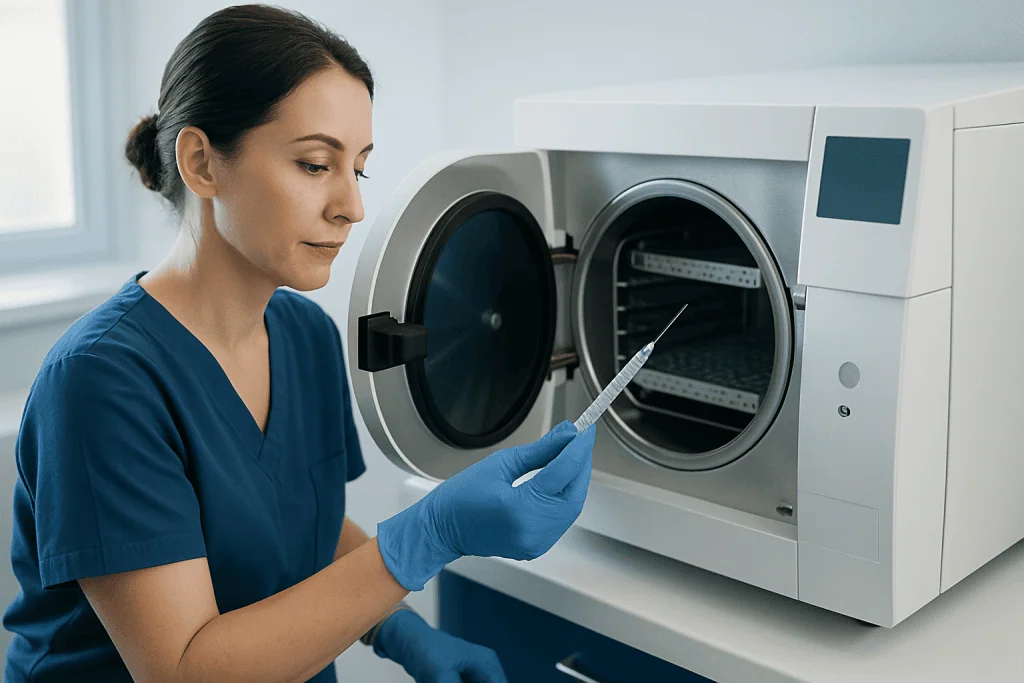
In healthcare, sterilization means destroying all forms of microbial life, including resistant bacterial spores. This is different from cleaning, disinfecting, or sanitizing. Cleaning removes dirt and some germs; disinfection reduces many germs; sterilization is the highest level and is required for instruments that enter sterile tissues or puncture the skin.
Hospitals and clinics achieve sterilization with validated methods such as steam under pressure in an autoclave, gas sterilization, or other tightly controlled systems. These processes depend on exact temperature, pressure, exposure time, packaging, and handling. Without that control, there is no reliable way to confirm that a needle is truly sterile.
This distinction matters because the skin is an important barrier. Once a needle passes through it, even a very small number of microorganisms can sometimes lead to local infection, abscess formation, or inflammation. In some situations, blood-borne infections are also a concern, particularly if a needle has been shared or its history is unknown.
For that reason, doctors generally advise against trying to sterilize needles at home for injections, draining a lesion, removing tissue, piercing, or any other procedure. If someone needs a medical procedure involving a needle, it should be done with a sealed sterile device and appropriate technique. If the concern relates to a skin infection such as an abscess, a clinician may evaluate it rather than attempting home drainage; related information may be helpful in skin infections.
Common home methods and their limits

People most often ask about boiling water, alcohol, or flame. Boiling may kill many bacteria and viruses, but it does not reliably destroy all spores and does not ensure the needle remains sterile while cooling or being handled. In addition, tap water itself may contain microorganisms or minerals that contaminate the surface again.
Alcohol can disinfect some surfaces, but it does not reliably sterilize a needle, especially if there is dried blood, oil, or other material present. It also evaporates quickly and may not reach all areas evenly. Flame is also unreliable because it can leave soot or other residues, create uneven heating, dull or weaken the needle, and increase the risk of burns.
Another practical concern is that a “clean-looking” needle may still carry microscopic contamination. If a needle has been dropped, touched, reused, shared, or stored loosely, it should not be considered sterile. Sharpening, wiping, or rinsing does not correct that risk.
If a sterile needle is not available, it is safer to postpone a nonurgent task than to improvise. For example, it is better not to lance a blister, cyst, or boil at home with a household needle. A doctor can decide whether treatment is needed, and if so, use the correct sterile equipment. In some cases this may include a minor procedure or a more formal surgical treatment approach in a suitable clinical setting.
What to do after an accidental puncture or nonsterile needle use
If someone has already been pricked by a needle or used one that may not have been sterile, the first step is basic wound care. The area should be washed gently with soap and running water. It is usually not necessary to scrub aggressively, squeeze the wound, or use harsh chemicals on the skin, as these can irritate tissue without improving safety.
After washing, the area can be dried and covered with a clean dressing if needed. The person should monitor the site over the next few days for increasing redness, warmth, swelling, throbbing pain, pus, or streaking. Mild tenderness for a short time may occur, but worsening symptoms deserve medical review.
If the needle was shared, previously used by someone else, found in the environment, or contaminated with blood, medical advice should be sought promptly because tetanus review and assessment for blood-borne infection exposure may be needed. A doctor may advise testing or time-sensitive preventive treatment depending on the situation.
When a puncture occurs in a high-risk area such as the hand, foot, face, near a joint, or over a tendon, extra caution is sensible. These areas can be more prone to complications because structures are tightly packed and infection can spread in deeper tissues. If swelling or severe pain develops, clinicians may use tests such as MRI or other imaging when deeper injury is suspected.
Red flags and when to seek medical care
Many minor puncture wounds improve with simple care, but some symptoms should not be ignored. Medical assessment is important if the area becomes increasingly red, swollen, hot, or painful, if pus develops, or if there are red streaks moving away from the site. Fever, chills, feeling unwell, or swollen lymph nodes can suggest a spreading infection.
Urgent care is also appropriate if there is numbness, weakness, trouble moving a finger or limb, persistent bleeding, a broken needle fragment, or a puncture near the eye, genitals, or a joint. People with diabetes, poor circulation, weakened immunity, or chronic skin conditions should have a lower threshold for getting checked because infections may progress more easily.
Tetanus protection is another reason to speak with a clinician. A person may need a booster depending on the type of wound and how long it has been since the last vaccination. If there is any possibility that the needle was used by another person or exposed to blood, this should be mentioned clearly so the doctor can decide whether testing or preventive treatment is appropriate.
Severe, rapidly worsening pain or swelling can occasionally point to a deeper problem such as a trapped foreign body or a significant soft-tissue infection. While this is uncommon, it is one of the reasons doctors prefer prompt review rather than repeated home attempts to manipulate the area.
How doctors assess a needle injury or possible infection
A medical evaluation usually begins with a clear history. The doctor will ask what kind of needle or sharp object was involved, when the puncture happened, whether the skin was broken, whether the object was shared or visibly contaminated, and what symptoms have developed since then. Tetanus vaccination status and any medical conditions that affect healing are also relevant.
The physical examination focuses on the puncture site and nearby tissues. A doctor checks for redness, warmth, swelling, drainage, tenderness, reduced movement, nerve symptoms, or signs that a foreign body may remain under the skin. They also look for clues that infection has spread more deeply or more broadly through the body.
Not everyone needs tests. If the puncture is superficial and there are no warning signs, a doctor may recommend observation and wound care only. When deeper infection, a retained fragment, or abscess is suspected, ultrasound, X-ray, or other imaging may be considered. Blood tests may occasionally be used if the person seems systemically unwell.
Treatment depends on what is found. It may include cleaning the wound, updating tetanus protection, prescribing antibiotics when there is evidence of bacterial infection, or arranging drainage if pus has collected. If the concern involves a more serious soft-tissue problem, care may overlap with evaluation for cellulitis.
Safer alternatives and practical self-care
The most practical prevention step is to use only sealed, single-use sterile needles for any legitimate medical need and to follow the product instructions carefully. Needles should never be shared, and they should be disposed of in an approved sharps container rather than recapped loosely or thrown into general waste.
For home situations, it helps to pause before using a needle at all. Many tasks people try to do themselves, such as draining a painful bump, removing an ingrown hair deeply, or opening a blister, can make a problem worse. Warm compresses, gentle cleansing, and medical review are often safer than puncturing the skin.
General self-care after a simple puncture includes keeping the area clean, avoiding repeated touching, and changing dressings as needed. Over-the-counter pain relief may be appropriate for some people, but medication choices should follow a clinician’s or pharmacist’s advice, especially in children, pregnancy, or chronic illness.
For people who travel or seek specialist care abroad, it is reasonable to ask whether instruments are single-use or sterilized according to clinical standards. Near the end of the care pathway, patients may also wish to know that Acibadem International’s multidisciplinary specialists in JCI-accredited hospitals diagnose and treat wound infections, soft-tissue complications, and related concerns for international patients, with access to services such as check-up evaluation when clinically appropriate.
Bottom line
If the question is how to sterilize a needle at home, the doctor-reviewed answer is that home methods are not reliable enough for puncturing the skin. Boiling, alcohol, and flame may reduce contamination but do not guarantee true sterility or safety.
In many cases, a minor puncture heals uneventfully with washing and observation, which is reassuring. The more important issue is recognizing the situations that deserve prompt medical care: increasing redness, swelling, pus, fever, severe pain, numbness, a deep puncture, uncertain tetanus status, or any possible exposure to someone else’s blood.
When in doubt, it is safer to avoid using the needle and ask a qualified healthcare professional. A clinician can assess the wound, check vaccination needs, and decide whether tests, antibiotics, or a procedure are necessary.
Frequently asked questions
Can a needle be sterilized at home?
Home methods can sometimes reduce germs, but they do not reliably make a needle truly sterile for medical use. If the needle will puncture the skin, a new sealed single-use sterile needle is the safest choice.
Is boiling a needle enough to sterilize it?
Boiling may kill many microorganisms, but it does not reliably destroy all resistant spores or keep the needle sterile during handling afterward. It should not be considered a dependable substitute for a sterile medical needle.
Does rubbing alcohol sterilize a needle?
Alcohol can disinfect some surfaces, but it does not reliably sterilize a needle, especially if there is dried material or contamination present. It also does not address safe packaging and handling after cleaning.
What should someone do if they used a needle that may not have been sterile?
The area should be washed gently with soap and running water, then observed for worsening redness, swelling, pain, pus, or fever. Medical advice is important if the needle was shared, contaminated with blood, or if tetanus status is uncertain.
When is a needle puncture an emergency?
Urgent assessment is needed for severe pain, rapidly spreading redness, heavy bleeding, numbness, weakness, a possible retained fragment, or a puncture near the eye or a joint. It is also important to seek prompt care if there may have been exposure to another person’s blood.
Can a person use a household needle to drain a cyst, boil, or blister?
This is generally not recommended because it can introduce infection, worsen inflammation, or push material deeper. A doctor can decide whether the area should be left alone, treated with medicines, or drained using sterile technique.
This article is for general information only and is not a substitute for professional medical advice. Please consult a qualified doctor about your individual situation.
Explore treatments in Turkey — costs, top hospitals & a free quote
JCI-accredited · board-certified surgeons · reply within 24h
Add us as a Preferred Source to see more of our trusted health content across Google Search, AI Overviews and Discover.

More from the Health Library

Anxiety Symptoms: What to Tell Your Doctor and When to Seek Help

Why Do People Sleepwalk? Causes, Explanations, and Next Steps

What Is Dha? Causes, Explanations, and Next Steps

Swollen Testicle: Possible Causes and When to Seek Care
Sonogram vs Ultrasound: Key Differences and How Doctors Tell Them Apart