Steroid Acne: An Evidence-Based Guide for Patients

Steroid acne is commonly caused by corticosteroid medicines taken by mouth, injected, inhaled, or applied to the skin. The rash often appears quickly and looks more uniform than typical acne.
Key Takeaways
- Steroid acne is commonly caused by corticosteroid medicines taken by mouth, injected, inhaled, or applied to the skin.
- The rash often appears quickly and looks more uniform than typical acne.
- It should not be confused with bacterial infection, fungal folliculitis, or ordinary acne vulgaris.
- Treatment may include adjusting the steroid plan when medically safe, along with topical or oral acne therapies.
- Patients should not stop prescribed steroids suddenly without speaking to their doctor.
Steroid acne is an acne-like skin eruption linked to corticosteroid medicines. It often appears as a sudden crop of similar-looking pimples on the chest, back, shoulders, or face, and it usually improves when the trigger is identified and managed with medical guidance.
Overview: what steroid acne is
Steroid acne is an acneiform eruption caused or worsened by corticosteroid medicines. In simple terms, it is a breakout pattern that develops after exposure to steroids used to treat inflammation, asthma, autoimmune disease, allergies, skin conditions, or other medical problems. The bumps often appear suddenly and tend to look very similar to one another, which can help distinguish steroid acne from common teenage or adult acne.
This condition is not a sign that a person has done something wrong with skin care. It is a medication-related skin reaction that may occur even when steroids are medically necessary and appropriately prescribed. Although the word “steroid” can also refer to anabolic steroids used for muscle building, patients and clinicians often use “steroid acne” most commonly for eruptions linked to corticosteroids such as prednisone, dexamethasone, or topical steroid creams.
For many patients, steroid acne is uncomfortable mainly because of its appearance, itch, or tenderness rather than because it is dangerous. The outlook is usually good. Once the trigger is recognized, a doctor can assess whether the steroid can be reduced, changed, or continued with supportive skin treatment. If another acne-related disorder is suspected, such as acne, a dermatologist may help confirm the diagnosis and guide care.
How steroid acne looks and feels
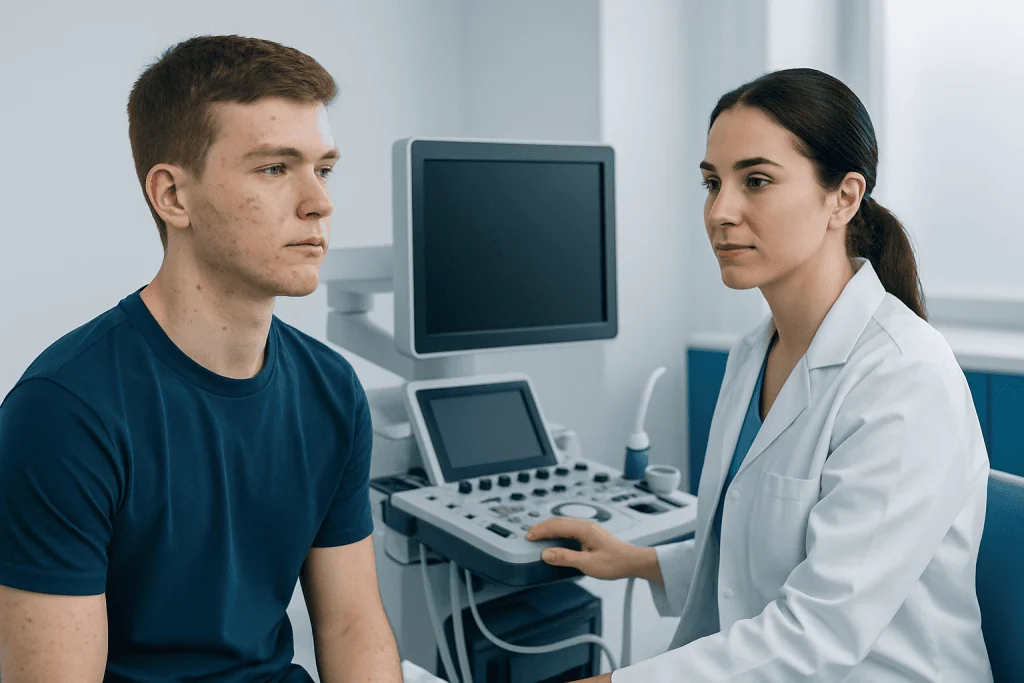
Steroid acne often shows up as many small red bumps and pustules that appear in a fairly uniform pattern. This “same-size, same-stage” look is one of its clues. Unlike ordinary acne, where blackheads, whiteheads, deep cysts, and mixed lesions are common, steroid acne may feature fewer comedones and more monomorphic inflammatory bumps.
The chest, upper back, shoulders, and upper arms are commonly affected, although the face can also be involved. In some people the bumps itch as much as they hurt, which may suggest a related follicular eruption rather than classic acne. Symptoms can begin days to weeks after starting a steroid or after an increase in dose, but timing varies by the type of steroid and the individual response.
Patients may notice:
- Sudden onset of many similar papules or pustules
- Breakouts on the chest, back, shoulders, or face
- Itching, tenderness, or irritation
- Worsening after starting oral, injected, inhaled, or topical corticosteroids
- Fewer blackheads than in typical acne
Because several skin conditions can resemble one another, appearance alone does not always provide a final answer. This is one reason persistent or severe breakouts should be assessed by a qualified clinician.
Why it happens: causes and risk factors

Corticosteroids can affect the skin and hair follicles in ways that promote acneiform eruptions. The exact mechanism is not always the same in every patient, but steroids may change inflammation patterns, alter follicular turnover, and create conditions in which pores or follicles become irritated. Some patients also develop eruptions related to yeast overgrowth in the follicles, which can closely mimic steroid acne.
The risk may be higher with systemic steroids, such as oral tablets or injections, especially at higher doses or with longer use. However, inhaled steroids, topical steroid creams, and other formulations can also contribute in some cases. Occlusive skin products, heat, sweating, and friction from clothing or sports gear may make a follicular eruption feel worse.
Important risk factors include:
- Recent use of oral or injected corticosteroids
- Higher-dose or prolonged steroid treatment
- Use of potent topical steroids on large skin areas
- Past history of acne or acne-prone skin
- Warm, humid conditions and heavy sweating
- Use of oily or pore-clogging skin products
Anabolic steroids can also trigger severe acne, but this is a somewhat different discussion from corticosteroid-related steroid acne. If there is any uncertainty about which medicine is involved, patients should bring all prescriptions, inhalers, creams, supplements, and over-the-counter products to the appointment.
How doctors diagnose steroid acne
Diagnosis is usually based on the medical history, timing of the eruption, and a close skin examination. A doctor will ask when the rash began, what medicines were started or changed, where the lesions are located, and whether they itch, burn, or scar. This timeline is often very helpful because steroid acne commonly appears after a new steroid treatment or dose increase.
The main task is to distinguish steroid acne from ordinary acne, bacterial folliculitis, fungal folliculitis, rosacea-like eruptions, and contact reactions. If the bumps are very itchy and concentrated on the trunk, a clinician may consider Malassezia folliculitis. If the eruption is unusual, severe, or not improving with standard treatment, a dermatologist may recommend further evaluation.
Tests are not always needed, but they may be used in selected cases. A clinician might perform a skin swab, scraping, culture, or rarely a biopsy when the diagnosis is uncertain. In more complex cases, assessment in dermatology care can help identify the exact cause and tailor treatment to the person’s medical condition and medication needs.
Treatment options and what to expect
The best treatment depends on how severe the breakout is and whether the steroid is medically essential. If possible, the prescribing doctor may lower the dose, switch to another medicine, or shorten the treatment course. However, patients should never stop systemic steroids abruptly on their own, because sudden withdrawal can be unsafe and may worsen the underlying illness being treated.
Skin-directed treatment may include gentle acne therapies such as benzoyl peroxide washes, topical retinoids, or topical antibiotics when appropriate. In some cases, doctors prescribe oral antibiotics for inflammatory lesions. If the eruption is actually yeast-related folliculitis rather than acne, antifungal treatment may be more effective than standard acne medicines, which is why proper diagnosis matters.
For stubborn, scarring, or widespread cases, a dermatologist may consider additional prescription options and monitor response over time. If the skin problem is severe or linked to a broader hormonal or inflammatory picture, doctors may coordinate with other specialists. Patients who need evaluation of persistent or complex breakouts may also be assessed through acne treatment services when suitable.
Most patients improve after the trigger is addressed, but the skin may take several weeks to settle. Trying many harsh products at once often causes extra irritation and does not speed recovery. A simple, consistent plan usually works better than aggressive scrubbing or frequent product changes.
Self-care and prevention during steroid use
Good skin habits can reduce irritation and support treatment, although self-care alone may not fully prevent steroid acne. A gentle cleanser used once or twice daily is usually enough. Heavy scrubs, abrasive brushes, alcohol-based toners, and picking at lesions can worsen inflammation and increase the risk of marks or scars.
Patients may benefit from choosing non-comedogenic moisturizers, sunscreens, and body products. Showering after sweating, wearing loose breathable clothing, and avoiding oily cosmetics on acne-prone areas may also help. For inhaled steroids, correct inhaler technique and routine mouth care are important for overall medication hygiene, though they may not directly prevent all skin effects.
Helpful habits include:
- Use fragrance-free, non-comedogenic skin products
- Avoid squeezing or scratching bumps
- Shower after exercise or heavy sweating
- Wash sports clothing and tight garments regularly
- Tell doctors early if a new steroid seems to trigger breakouts
If a person frequently needs steroid treatment for another condition, prevention may involve planning ahead with the prescribing doctor. In some cases, early skin treatment can be started at the same time as the steroid course to reduce the chance of a significant flare.
When to seek medical care
Medical review is a good idea if a breakout starts soon after beginning a steroid medicine, if it spreads quickly, or if over-the-counter acne products are not helping. A doctor can confirm whether the rash is truly steroid acne or another condition that needs different treatment. This is especially important when lesions are very itchy, painful, or concentrated on the trunk, because folliculitis may be involved.
Prompt medical advice is also important if the skin is scarring, leaving dark marks, or causing significant distress. Patients should seek care urgently if they have signs of infection such as increasing warmth, swelling, pus, fever, or rapidly worsening redness. Any person taking steroids for a serious underlying illness should speak with the prescribing clinician before making medication changes.
For international patients who need coordinated assessment, Acibadem International’s multidisciplinary specialists in JCI-accredited hospitals diagnose and treat skin conditions and medication-related eruptions. When a broader evaluation is needed, clinicians may also coordinate with related services such as medical dermatology or review whether another skin disorder, including rosacea, is contributing to the symptoms.
Frequently asked questions
Is steroid acne the same as regular acne?
Not exactly. Steroid acne is a medication-related acneiform eruption that often appears suddenly and looks more uniform than ordinary acne. Regular acne more often includes a mix of blackheads, whiteheads, and deeper lesions.
How long does steroid acne take to go away?
It often improves over several weeks after the trigger is reduced or treated appropriately, but the timing varies. Some cases settle quickly, while others need prescription treatment and closer follow-up.
Should someone stop taking steroids if acne appears?
No one should stop prescribed steroids suddenly without medical advice. Some steroid medicines need to be tapered carefully, and stopping them abruptly can be harmful. The safest step is to contact the prescribing doctor and discuss options.
Can inhaled or topical steroids cause steroid acne?
Yes, they can in some people, although the risk is often higher with oral or injected steroids. The chance depends on the product, dose, duration, and a person's skin sensitivity.
What is the difference between steroid acne and folliculitis?
They can look very similar, especially when the bumps are small, uniform, and itchy. Folliculitis may be caused by bacteria or yeast and may need different treatment, which is why a medical exam is useful if the diagnosis is uncertain.
Can over-the-counter acne products help steroid acne?
They may help mild cases, especially gentle benzoyl peroxide cleansers or non-irritating acne products. However, some patients need prescription treatment or a different diagnosis, so medical advice is sensible if the rash is severe, widespread, itchy, or persistent.
References
- American Academy of Dermatology
- National Institute of Arthritis and Musculoskeletal and Skin Diseases
- Merck Manual Professional Edition
- Mayo Clinic
- DermNet
This article is for general information only and is not a substitute for professional medical advice. Please consult a qualified doctor about your individual situation.
Acne in Turkey — costs, top hospitals & a free quote
JCI-accredited · board-certified surgeons · reply within 24h
Add us as a Preferred Source to see more of our trusted health content across Google Search, AI Overviews and Discover.

More from the Health Library



Related Specialists

Busenur Ceylan
Treatment of Respiratory
Dt. Ridvan Bayri
Oral & Dental Health
Prof. Dr. Ufuk Aydınlı
Orthopedic Surgery & Traumatology
Prof. Dr. Bülent Değertekin
Gastroenterology