

Stoma: Symptoms, Causes, and Treatment Options

A stoma is an opening made during surgery to divert stool or urine into an external pouch. Common types include colostomy, ileostomy, and urostomy, and each has different care needs.
Key Takeaways
- A stoma is an opening made during surgery to divert stool or urine into an external pouch.
- Common types include colostomy, ileostomy, and urostomy, and each has different care needs.
- Stomas may be temporary or permanent depending on the underlying condition and the surgery performed.
- Early symptoms after surgery can include swelling and skin sensitivity, but severe pain, discoloration, or reduced output need medical review.
- Good stoma care focuses on skin protection, proper pouch fit, hydration, nutrition, and follow-up with a healthcare team.
A stoma is a surgically created opening in the abdomen that lets stool or urine leave the body when part of the bowel or urinary system needs to be bypassed or removed. It is not a disease itself, but a medical solution used for several conditions, and most people can adapt well with the right treatment, education, and follow-up care.
Overview
A stoma is a surgically created opening on the surface of the abdomen. It connects either the intestine or the urinary tract to the outside of the body so that stool or urine can be collected in a pouch. Doctors create a stoma when the normal route for waste needs to be bypassed, protected while healing, or replaced after disease or injury.
There are several types of stoma. A colostomy brings part of the large intestine to the abdominal wall. An ileostomy uses the small intestine. A urostomy diverts urine, usually after bladder surgery. Some stomas are temporary and are later reversed once healing is complete. Others are permanent if the bowel, rectum, bladder, or anus has been removed or can no longer function safely.
A stoma itself is usually pink or red, moist, and slightly raised. It does not have the same pain sensation as normal skin, but the surrounding skin can become irritated if the pouch does not fit properly. Learning what is normal after stoma surgery helps people recognize expected changes and seek care early if a problem develops.
How a Stoma May Feel and What Symptoms to Notice
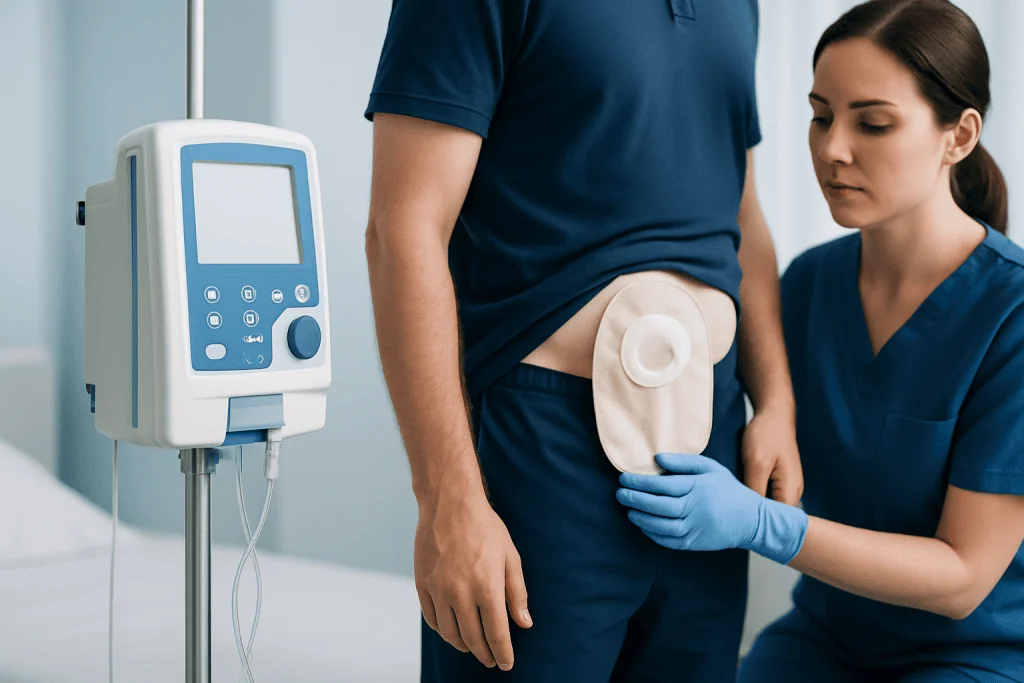
Many people ask about “stoma symptoms,” but the stoma is a surgical opening rather than an illness with one set of symptoms. What someone notices depends on the type of stoma, the stage of recovery, and the condition that led to surgery. In the first weeks after surgery, mild swelling, increased output variation, and sensitivity of the surrounding skin are common.
A healthy stoma is usually warm, moist, and pink to red in color. Stool or urine output will vary depending on whether the person has a colostomy, ileostomy, or urostomy. Gas, occasional noise from the intestine, and changes in pouch filling are also common. The skin around the stoma should ideally remain intact, without persistent redness, burning, or open areas.
Symptoms that may point to a stoma-related problem include leakage under the pouch, repeated skin irritation, bleeding that does not stop, change in stoma color to dark red, purple, gray, or black, severe swelling, or little to no output when output is expected. Some people may also develop a bulge around the stoma, which can suggest a hernia, or narrowing that makes output difficult.
- Common expected features: pink/red color, moisture, regular output, mild early swelling
- Possible warning signs: strong pain, persistent skin breakdown, severe bleeding, major color change, retraction, prolapse, or blockage symptoms
- Digestive symptoms such as nausea, cramping, vomiting, or abdominal swelling may suggest obstruction and need prompt medical assessment
Causes and Risk Factors
A stoma is created to treat or manage another medical problem. Common reasons include colorectal cancer, inflammatory bowel disease, bowel obstruction, bowel injury, diverticular disease, congenital conditions, and severe infection. In urinary surgery, a urostomy may be needed after bladder removal or when urine can no longer pass safely through the usual route. Some people have surgery related to colon cancer or rectal cancer, while others need a stoma because of trauma or emergency bowel surgery.
Inflammatory conditions such as Crohn’s disease and ulcerative colitis can also make a stoma necessary, especially when the bowel is very inflamed, perforated, obstructed, or needs time to heal after surgery. In some cases, a temporary ileostomy or colostomy protects a new bowel connection until recovery is more secure. A person’s overall health, nutrition, and prior operations can influence the type of stoma used and whether it can later be reversed.
Risk factors for stoma complications do not always relate to why the stoma was created. Complications are more likely if there is obesity, poor wound healing, diabetes, smoking, malnutrition, chronic coughing, heavy lifting, or abdominal wall weakness. Emergency surgery can also increase the chance of early issues because there is less time for detailed preoperative planning and stoma site marking.
Diagnosis, Planning, and Follow-Up
Doctors diagnose the need for a stoma by first identifying the underlying condition. This may involve a physical exam, blood tests, endoscopy, biopsy, or imaging such as CT or MRI. The goal is to understand what part of the bowel or urinary tract is affected, whether surgery is urgent, and what type of diversion will give the safest result.
Before planned surgery, the healthcare team usually discusses the expected type of stoma, whether it may be temporary or permanent, and where it should sit on the abdomen for comfort and pouch fit. A stoma care nurse often marks the site in advance, taking into account body shape, scars, waistline, and daily movement. This step can significantly improve comfort and reduce leakage and skin problems later.
After surgery, follow-up includes checking the color and size of the stoma, monitoring output, reviewing hydration and nutrition, and examining the skin around the stoma. If output suddenly changes, or if there are signs of narrowing, prolapse, retraction, or hernia, doctors may use blood tests or imaging to assess the problem. Ongoing review is an important part of living well with a stoma, especially in the first months.
Treatment Options and Stoma Management
The main treatment related to a stoma is good stoma management and treatment of the condition that required it. Care usually includes a well-fitted pouching system, skin barrier products when needed, education on emptying and changing the pouch, and support from a stoma nurse. If the stoma was created during major bowel surgery, treatment also includes recovery from that operation and monitoring for complications.
Some people need medicines to manage stool consistency, fluid balance, or the underlying bowel disease. Others may need nutritional support, especially after an ileostomy, because fluid and electrolyte loss can be higher. If the stoma was created because of cancer or another serious bowel condition, treatment may also involve surgery, oncology care, or specialist digestive care. Depending on the diagnosis, this may include colon cancer treatment or rectal cancer treatment as part of the wider care plan.
When complications occur, treatment depends on the specific problem. Skin irritation may improve with a better-fitting pouch and protective products. Blockage may require urgent assessment, dietary adjustment, or hospital care. A prolapsed, retracted, or narrowed stoma may sometimes be managed conservatively, but some cases need revision surgery. If the original condition improves and the anatomy allows it, doctors may discuss colorectal surgery to reverse a temporary stoma.
Near the end of treatment planning, some patients also seek coordinated international care. Acibadem International’s multidisciplinary specialists and JCI-accredited hospitals diagnose and treat stoma-related conditions for international patients, with input from colorectal surgeons, gastroenterologists, oncologists, radiologists, and stoma care nurses when appropriate.
Daily Life, Prevention of Complications, and Self-Care
Living with a stoma often becomes easier with practice and structured guidance. Most people can return to daily activities, work, travel, and social routines after recovery. Building confidence usually starts with simple skills: learning how often to empty the pouch, how to recognize a secure seal, and what the stoma normally looks like.
Protecting the skin around the stoma is one of the most important self-care goals. The pouch opening should match the size and shape of the stoma as closely as possible. Skin should be gently cleaned and thoroughly dried before applying a new pouch. If itching, burning, or weeping skin develops, it is helpful to seek professional advice early rather than repeatedly changing products without guidance.
Hydration and nutrition matter, especially for people with an ileostomy. Some foods may affect gas, odor, or stool consistency, but diets should be individualized rather than overly restrictive. Chewing food well, introducing new foods gradually, and drinking enough fluids can help reduce problems. People with a high-output stoma may need closer dietary and medical monitoring.
- Empty the pouch regularly before it becomes too full
- Check the skin with each pouch change
- Stay hydrated, especially in hot weather or with diarrhea-like output
- Ask about support belts or lifting advice if there is concern about hernia
- Keep routine follow-up appointments with the stoma care team
When to Seek Medical Care
Medical review is important if there is persistent pain, fever, vomiting, abdominal swelling, or a sudden stop in output from a bowel stoma, particularly if nausea or cramping is also present. These symptoms can suggest a blockage or another complication that should not be managed at home alone. Prompt assessment is also needed if urine output from a urostomy falls sharply or becomes accompanied by fever or flank pain.
A person should contact a doctor or stoma nurse if the stoma changes color, bleeds heavily, pulls inward, protrudes much more than usual, or if the skin around it becomes very sore or broken. Recurrent leaks, poor pouch fit, and a new bulge around the stoma are also reasons for review, as they may indicate a hernia or sizing problem that can often be improved with expert help.
It is also sensible to seek medical advice if the person is losing weight unintentionally, becoming dehydrated, or struggling emotionally to adapt. Stoma care is not only about the surgical opening itself; it is part of overall health, recovery, and quality of life. Early support often prevents small problems from becoming more disruptive.
Frequently asked questions
Is a stoma permanent?
Not always. Some stomas are temporary and are created to allow part of the bowel to heal after surgery. Others are permanent when the rectum, anus, bladder, or a large part of the bowel has been removed or cannot function safely.
What does a healthy stoma look like?
A healthy stoma is usually pink or red, moist, and slightly raised above the skin. It may look swollen in the early period after surgery, but marked darkening, blackening, or severe dryness is not normal and should be assessed.
Can a person eat normally with a stoma?
Many people can return to a varied diet after recovery, but food tolerance differs from person to person. Doctors or dietitians may recommend gradual food reintroduction, good hydration, and specific adjustments if output is very loose, high-volume, or difficult to manage.
Is it normal for a stoma to make noise or pass gas?
Yes. Because a stoma is connected to the bowel, gas and occasional sounds are common, especially after eating. These are usually expected and can often be managed with diet awareness, pouch choice, and routine emptying.
What are the most common stoma complications?
Common issues include skin irritation, leakage, dehydration in some ileostomy patients, narrowing, prolapse, retraction, and hernia around the stoma. Many complications can be improved with early review by a stoma nurse or surgeon.
Can a person exercise and travel with a stoma?
In many cases, yes. Once recovery is complete and a doctor has given approval, most people can resume walking, work, travel, and many forms of exercise. It helps to plan ahead with extra supplies, hydration, and advice about lifting or abdominal support if needed.
References
- National Institute of Diabetes and Digestive and Kidney Diseases
- American Society of Colon and Rectal Surgeons
- United Ostomy Associations of America
- National Health Service
- Mayo Clinic
This article is for general information only and is not a substitute for professional medical advice. Please consult a qualified doctor about your individual situation.
Persistent digestive symptoms? Get evaluated in Turkey
JCI-accredited · board-certified surgeons · reply within 24h
Add us as a Preferred Source to see more of our trusted health content across Google Search, AI Overviews and Discover.

More from the Health Library


Related Specialists
Dr. Semavi Ulusoy
Gynecology & Obstetrics
Dr. Sena Arıcı
Internal Medicine
Prof. Dr. Sinan Zeren
Urology
Dr. Kadir Yavaşoğlu
Orthopedic Surgery & Traumatology