Strabismus: Eye Misalignment, Double Vision, and Treatment Choices

Strabismus may be constant or intermittent and can affect one or both eyes. In children, untreated eye misalignment can lead to amblyopia, often called lazy eye.
Key Takeaways
- Strabismus may be constant or intermittent and can affect one or both eyes.
- In children, untreated eye misalignment can lead to amblyopia, often called lazy eye.
- In adults, new or sudden strabismus may cause double vision and needs prompt medical evaluation.
- Treatment choices may include glasses, patching, vision therapy in selected cases, prisms, botulinum toxin, or eye muscle surgery.
- The best treatment plan depends on the type of strabismus, age, vision in each eye, eye movement findings, and overall health.
Strabismus is a condition in which the eyes do not point in the same direction at the same time. Early assessment is important because treatment can improve eye alignment, support visual development in children, and reduce double vision in adults.
Overview
Strabismus is the medical term for eye misalignment. In a person with strabismus, the eyes do not work together to look at the same target. One eye may look straight ahead while the other turns inward, outward, upward, or downward. The misalignment may be present all the time, or it may appear only when a person is tired, ill, focusing at a certain distance, or using the eyes for close work.
Strabismus can occur in babies, children, or adults. In childhood, the brain may ignore the image from the misaligned eye to avoid double vision. Over time, this can reduce vision in that eye, a condition called amblyopia or lazy eye. In adults, the brain is less able to suppress one image, so strabismus often causes double vision, eye strain, or problems with depth perception.
There are several types of strabismus. Esotropia means an eye turns inward, exotropia means an eye turns outward, hypertropia means an eye turns upward, and hypotropia means an eye turns downward. The condition may be related to focusing problems, eye muscle imbalance, nerve control, previous eye disease, trauma, or general medical conditions. A detailed eye examination helps identify the cause and guide treatment.
Symptoms and Signs
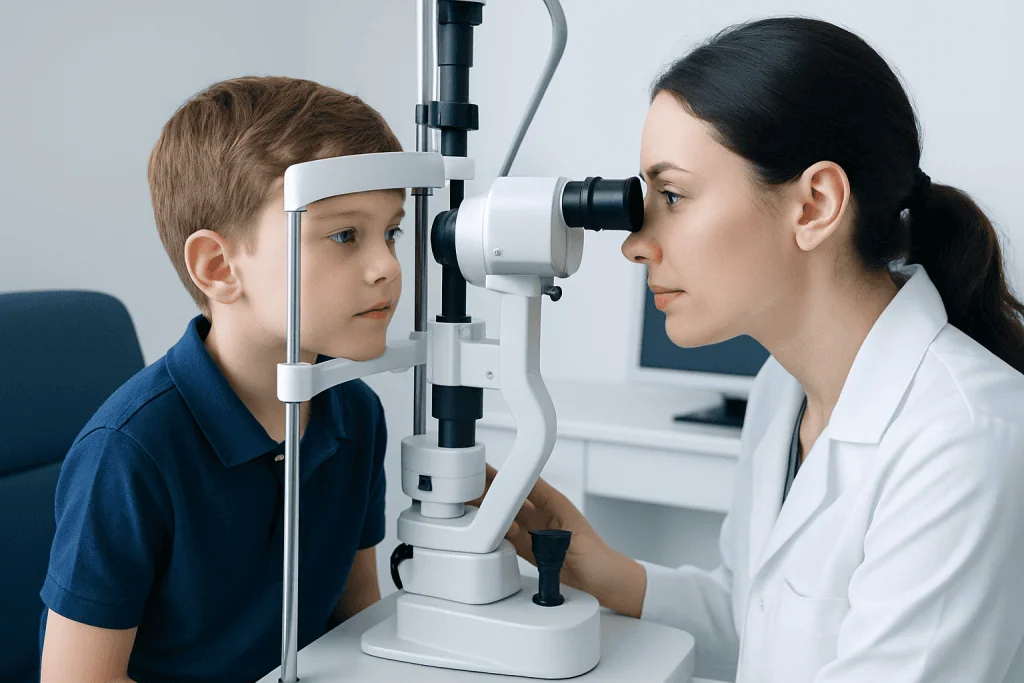
The most visible sign of strabismus is that the eyes appear to point in different directions. Sometimes this is obvious in everyday interactions or photographs. In other cases, the misalignment is subtle and may be noticed only during an eye examination. Parents may observe that a child closes one eye in bright light, tilts the head, squints, or seems to have difficulty judging distance.
Common symptoms and signs can include:
- One eye turning inward, outward, upward, or downward
- Double vision, especially in adults or older children
- Reduced depth perception or clumsiness when reaching for objects
- Eye strain, headaches, or fatigue during reading or screen use
- Head tilt or face turn to compensate for eye position
- Poor vision in one eye due to amblyopia
In infants, brief and occasional eye crossing can happen during the first few months as visual coordination develops. However, persistent eye turning, a large misalignment, or eye misalignment after early infancy should be checked by an eye specialist. A child does not need to be old enough to read letters for an ophthalmologist to assess alignment and vision development.
Causes and Risk Factors
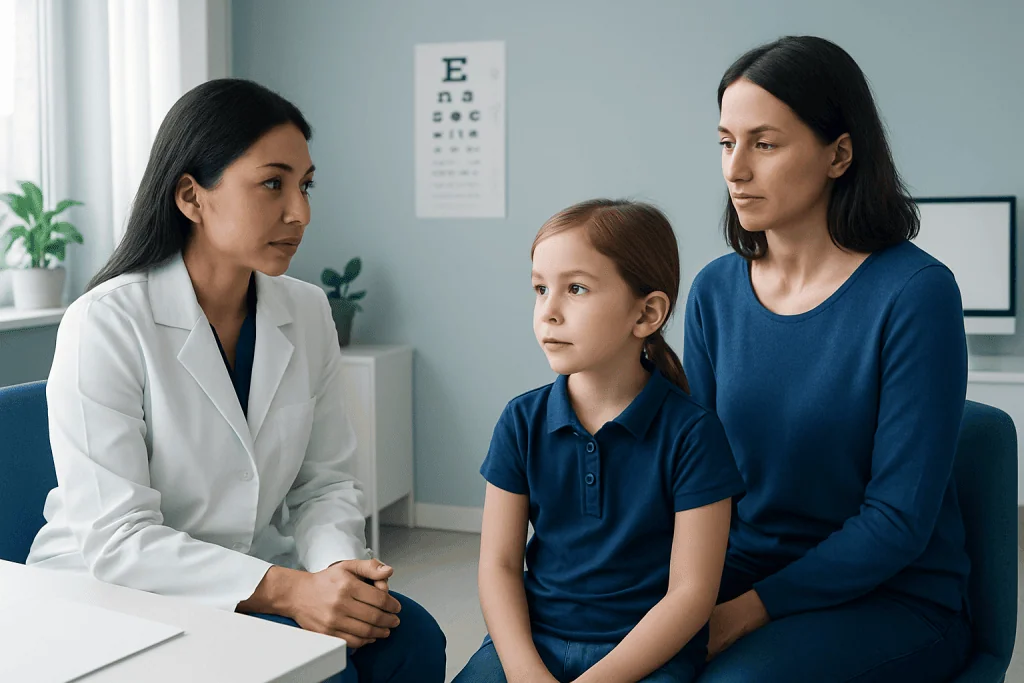
Eye alignment depends on coordinated action between the brain, nerves, and six muscles around each eye. Strabismus can develop when the muscles do not pull evenly, when nerve signals are disrupted, or when the eyes have difficulty focusing together. In children, a common pattern is accommodative esotropia, in which significant farsightedness causes extra focusing effort and the eyes turn inward. In other children, the cause may not be a single identifiable problem.
Risk factors for childhood strabismus include family history, premature birth, low birth weight, certain genetic or developmental conditions, and neurological disorders. Eye conditions that reduce vision in one eye, such as cataract, retinal disease, or significant difference in prescription between the eyes, can also increase the risk because the brain receives unequal visual information.
In adults, strabismus may be long-standing from childhood or may develop later in life. Adult-onset eye misalignment can be associated with thyroid eye disease, diabetes-related nerve problems, stroke, head injury, tumors, myasthenia gravis, or complications after eye surgery. Sometimes it results from decompensation, meaning a previously controlled tendency for the eyes to drift becomes harder to manage with age or visual stress.
Because the range of causes is broad, the timing and pattern of symptoms matter. Sudden double vision, drooping eyelid, unequal pupils, severe headache, weakness, difficulty speaking, or loss of balance should be treated as urgent symptoms and assessed promptly by a doctor or emergency service.
Diagnosis
Diagnosis begins with a careful history. The doctor asks when the eye turning was first noticed, whether it is constant or intermittent, which eye is affected, whether there is double vision, and whether there are associated symptoms such as headaches, trauma, or neurological signs. In children, information from parents and photographs can be helpful because the misalignment may come and go.
An eye examination usually includes measurement of visual acuity in each eye, assessment of eye movement, cover testing to identify the direction and size of the deviation, and evaluation of how well the eyes work together. The doctor may also check depth perception, pupil responses, eyelid position, and the health of the front and back of the eye. Refraction testing helps determine whether glasses are needed; in children, drops may be used to relax focusing and measure the true prescription.
Some people need additional testing. If adult strabismus appears suddenly or is linked with neurological symptoms, the ophthalmologist may recommend blood tests, neurological evaluation, or imaging such as MRI or CT, depending on the suspected cause. The goal is not only to measure the eye turn, but also to understand why it is happening and whether any underlying condition needs treatment.
Treatment Options
Treatment for strabismus is individualized. The main goals are to improve alignment, protect or improve vision, support binocular vision when possible, and reduce symptoms such as double vision or eye strain. In children, treatment often focuses first on ensuring that each eye develops the best possible vision. In adults, treatment may also aim to restore single vision, improve comfort, and support daily activities such as reading, driving, or working.
Glasses or contact lenses may correct refractive errors that contribute to the misalignment. In accommodative esotropia, the right prescription can sometimes significantly reduce or fully control an inward turn. Bifocal lenses may be used in selected children whose eyes turn more at near than at distance. If amblyopia is present, patching the stronger eye or using prescribed blurring drops may encourage the brain to use the weaker eye; this is usually most effective in childhood, but the plan depends on age and visual potential.
Other non-surgical approaches may be helpful in selected cases. Prism lenses can shift images to reduce double vision, particularly for small or stable deviations. Orthoptic or vision therapy exercises may help certain coordination problems, such as convergence insufficiency, but they are not a cure for all types of strabismus. Botulinum toxin injections may temporarily weaken an overacting eye muscle in some situations and can be considered as part of specialist care.
Strabismus surgery adjusts the position or tension of one or more eye muscles to improve alignment. The surgeon may weaken, strengthen, or reposition muscles depending on the measured deviation. Surgery is performed on the muscles outside the eye and does not remove the eye from its socket. Some patients need more than one procedure over time, especially if the angle changes with growth, healing, or underlying disease. The decision for surgery is made after a full evaluation and discussion of benefits, limitations, and recovery expectations.
Prevention and Self-care
Many forms of strabismus cannot be prevented, especially when they are related to genetics, early visual development, or neurological conditions. However, early detection can prevent complications such as amblyopia and can make treatment more effective. Routine vision screening in infancy and childhood, followed by a full eye examination when concerns arise, is an important part of preventive eye care.
Parents can support eye health by watching for eye turning, abnormal head posture, frequent squinting, or a child favoring one eye. It is also helpful to follow treatment plans consistently. Glasses should be worn as prescribed, patching should follow the ophthalmologist’s schedule, and follow-up visits should not be skipped because the plan may need adjustment as the child grows.
Adults with double vision can reduce fall risk and visual confusion while waiting for assessment by avoiding driving if vision is not single or clear. Temporary measures, such as covering one eye, may relieve double vision for short periods, but they do not treat the cause. People with diabetes, thyroid disease, high blood pressure, or neurological conditions should keep these conditions well managed and report new vision changes promptly.
When to See a Doctor
A child should be examined by an eye specialist if one eye appears to turn after the first few months of life, if misalignment is frequent or constant, or if parents notice closing one eye, head tilting, poor tracking, or unusual visual behavior. Early evaluation is especially important when there is a family history of strabismus or amblyopia, premature birth, developmental delay, or known eye disease.
Adults should seek medical care for any new eye misalignment or double vision. Prompt assessment is particularly important if symptoms develop suddenly, follow a head injury, or occur with headache, dizziness, weakness, trouble speaking, drooping eyelid, unequal pupils, or loss of coordination. These signs do not always mean a serious condition is present, but they should be evaluated without delay.
Patients who already have strabismus should also return for review if the eye turn changes, glasses no longer help, double vision develops, or daily activities become difficult. Acibadem International’s multidisciplinary specialists and JCI-accredited hospitals diagnose and treat eye alignment problems for international patients, including children and adults who need coordinated ophthalmology care. A qualified ophthalmologist can explain the most appropriate options for each individual case.
Frequently asked questions
Is strabismus the same as lazy eye?
No. Strabismus means the eyes are misaligned, while lazy eye, or amblyopia, means vision is reduced in one eye because the brain has not developed clear vision from that eye. Strabismus can cause amblyopia in children, but a person can have one condition without the other.
Can a baby outgrow crossed eyes?
Occasional eye crossing can be seen in very young infants as eye coordination develops. Persistent, frequent, or obvious misalignment should not be ignored, especially after the early months of life. An ophthalmologist can determine whether the finding is normal development or true strabismus.
Does strabismus always need surgery?
No. Some types are treated with glasses, patching for amblyopia, prisms, or other non-surgical measures. Surgery may be recommended when these options are not enough, when the angle of misalignment is significant, or when alignment is needed to improve function and comfort.
Can adults be treated for strabismus?
Yes. Adults can benefit from treatment, even if the eye misalignment has been present since childhood. Depending on the cause and measurements, options may include prisms, treatment of an underlying condition, botulinum toxin, or eye muscle surgery.
Is double vision from strabismus dangerous?
Double vision itself is a symptom, not a diagnosis. It may be caused by a relatively stable eye muscle imbalance, but sudden double vision can also be related to nerve, thyroid, vascular, or neurological conditions. New double vision should be assessed promptly by a qualified doctor.
What is recovery like after strabismus surgery?
Recovery varies by age, procedure, and overall health. Many patients have temporary redness, soreness, tearing, or light sensitivity, and the doctor will give instructions about eye drops, activity, and follow-up visits. Alignment may continue to settle during healing, and some patients may need further treatment later.
References
- American Academy of Ophthalmology
- American Association for Pediatric Ophthalmology and Strabismus
- National Eye Institute
- Mayo Clinic
- Royal College of Ophthalmologists
This article is for general information only and is not a substitute for professional medical advice. Please consult a qualified doctor about your individual situation.
Explore treatments in Turkey — costs, top hospitals & a free quote
JCI-accredited · board-certified surgeons · reply within 24h
Add us as a Preferred Source to see more of our trusted health content across Google Search, AI Overviews and Discover.