Sudden Severe Headache: When Interventional Neurology May Be Urgently Needed

A sudden severe headache is often described as the worst headache of a person’s life and needs prompt medical evaluation. Dangerous causes can include subarachnoid hemorrhage, brain aneurysm rupture, stroke, artery dissection, or clotting problems.
Key Takeaways
- A sudden severe headache is often described as the worst headache of a person’s life and needs prompt medical evaluation.
- Dangerous causes can include subarachnoid hemorrhage, brain aneurysm rupture, stroke, artery dissection, or clotting problems.
- Interventional neurology may be urgently needed when imaging shows a blood vessel blockage, bleeding source, or aneurysm that needs minimally invasive treatment.
- Emergency diagnosis often involves brain CT, vascular imaging, blood tests, and sometimes lumbar puncture.
- New headache with weakness, confusion, fainting, seizures, vision changes, or neck stiffness should be treated as an emergency.
A sudden severe headache, especially one that reaches maximum intensity within seconds to minutes, can be a medical emergency. While some headaches are not dangerous, this pattern may point to bleeding around the brain, a blood vessel problem, or stroke and should be assessed urgently.
Overview
A sudden severe headache is a headache that starts abruptly and becomes very intense within moments or a few minutes. Doctors often call this a thunderclap headache. It is different from a typical tension headache or a familiar migraine because of its speed, severity, and sometimes the symptoms that come with it.
This type of headache does not always mean a life-threatening condition, but it should never be ignored. One of the most important concerns is bleeding around the brain, known as a subarachnoid hemorrhage, often related to a ruptured brain aneurysm. Other causes include stroke, tears in blood vessel walls, severe blood pressure changes, infections, and rare reversible blood vessel spasm disorders.
Interventional neurology becomes especially important when imaging shows a problem in the brain’s blood vessels that can be treated from inside the vessels. Using catheters guided through the bloodstream, specialists may stop bleeding, close an aneurysm, remove a clot, or treat vessel narrowing. These treatments are time-sensitive, so early recognition matters.
Symptoms and Warning Signs
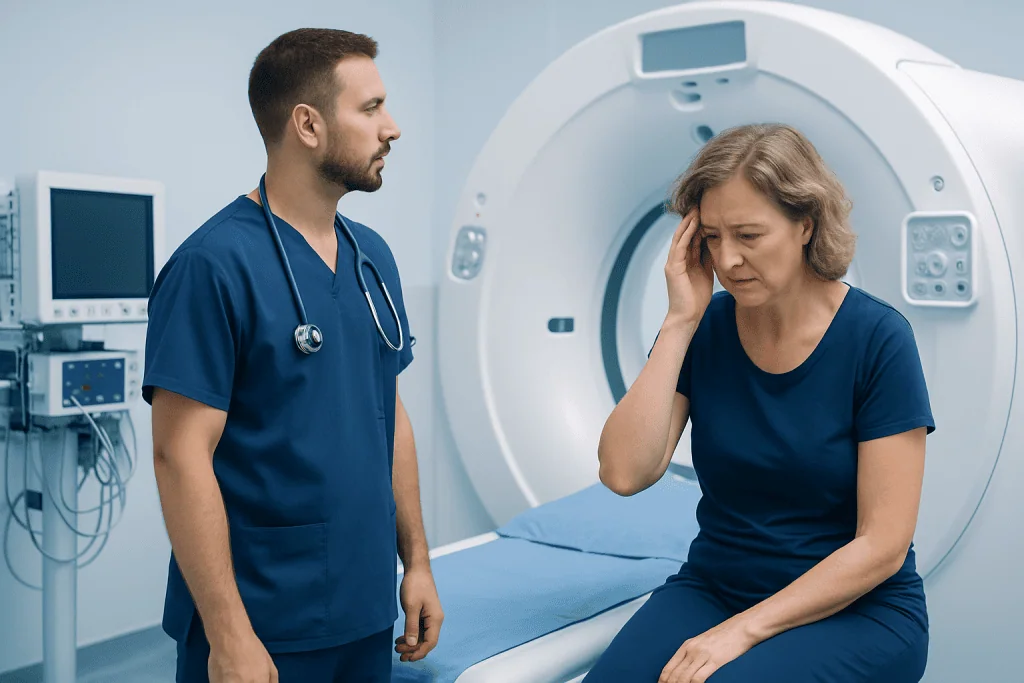
The hallmark symptom is a headache that reaches maximum intensity very quickly. People often describe it as explosive, shocking, or the worst headache they have ever had. The pain may be felt across the whole head or more strongly at the back of the head, behind the eyes, or on one side.
Some symptoms increase concern that the headache is caused by a serious brain or blood vessel problem. These include nausea and vomiting, neck stiffness, sensitivity to light, fainting, confusion, seizure, sudden weakness, numbness, trouble speaking, loss of balance, or vision changes. A severe headache that starts during exercise, heavy lifting, sexual activity, or strong emotional strain also needs urgent evaluation.
Not every dangerous headache comes with all of these features. In some people, the only symptom at first is the sudden severe pain itself. Because early scans and treatment may be most effective soon after symptoms begin, it is safest to seek emergency care rather than wait to see if the pain improves.
- Headache peaking within seconds to minutes
- New severe headache unlike prior headaches
- Weakness, facial droop, or speech difficulty
- Loss of consciousness or seizure
- Neck stiffness or fever
- Severe headache after head injury
Possible Causes and Risk Factors

The most urgent causes involve the brain and its blood vessels. These include rupture of an aneurysm with bleeding into the space around the brain, bleeding within the brain itself, blocked blood flow from ischemic stroke, a tear in an artery called dissection, and blood clots in the veins of the brain. Some sudden severe headaches are linked to reversible cerebral vasoconstriction syndrome, in which brain arteries temporarily narrow.
Other causes can also be serious, such as meningitis, severe spikes in blood pressure, and complications related to pregnancy or the postpartum period. Less dangerous explanations do exist, including a first severe migraine or exertional headache, but these can only be considered after urgent causes have been assessed. A person should not assume a sudden severe headache is “just a migraine,” especially if it feels different from previous headaches.
Risk factors vary by cause. They may include smoking, uncontrolled high blood pressure, a personal or family history of aneurysm, certain connective tissue disorders, recent trauma, clotting disorders, stimulant drug use, pregnancy-related conditions, and older age. However, sudden severe headache can also happen in people without clear risk factors, which is why the pattern of symptoms is so important.
How Doctors Diagnose the Cause
Emergency evaluation begins with a careful history and neurological examination. Doctors ask when the headache started, how quickly it became severe, whether there was trauma or exertion, and whether symptoms such as weakness or confusion are present. This information helps guide which tests are needed first.
A non-contrast CT scan of the brain is usually one of the earliest tests because it can quickly detect many types of bleeding. Depending on the findings and the timing, doctors may also use CT angiography, MR imaging, MR angiography, or other vascular studies to look at the arteries and veins in detail. If initial imaging does not fully explain the headache, a lumbar puncture may be recommended to check for blood or signs of infection in the cerebrospinal fluid.
Blood tests may help identify clotting problems, infection, inflammation, or pregnancy-related issues. If a blood vessel problem is strongly suspected, catheter angiography may be used because it provides highly detailed images and can sometimes move directly into treatment. This is often the point where interventional neurology teams become urgently involved.
When Interventional Neurology May Be Urgently Needed
Interventional neurology is a specialty focused on diagnosing and treating brain and spinal blood vessel conditions using minimally invasive, image-guided techniques. Through a small catheter, usually inserted from the wrist or groin, specialists can reach the blood vessels supplying the brain without open surgery. This can be crucial when time-sensitive treatment is needed.
One common emergency is a ruptured aneurysm. In selected patients, the aneurysm may be sealed from inside the vessel using aneurysm coiling or related endovascular techniques to reduce the risk of further bleeding. Another urgent situation is an ischemic stroke caused by a large vessel blockage, where mechanical thrombectomy may help restore blood flow in appropriate cases.
Interventional specialists may also treat vessel narrowing, arteriovenous malformations, or certain types of active bleeding. In some patients, diagnostic cerebral angiography is performed first to define the anatomy clearly before treatment decisions are made. The exact approach depends on the cause of the headache, the person’s overall condition, how long symptoms have been present, and what imaging shows.
Care is usually coordinated by a multidisciplinary team that may include emergency physicians, neurologists, neuroradiologists, neurosurgeons, intensive care specialists, and stroke experts. This team-based approach helps ensure that both immediate treatment and follow-up planning are addressed promptly and safely.
Treatment Options After Emergency Assessment
Treatment depends entirely on the cause. If bleeding around or within the brain is found, the priority is stabilizing the patient, controlling blood pressure when appropriate, preventing complications, and treating the source of bleeding. If an aneurysm is responsible, endovascular or neurosurgical treatment may be considered to secure it.
If the headache is related to an ischemic stroke, treatment may include clot-dissolving medicine for eligible patients, endovascular clot removal, and close monitoring in a specialized stroke setting. If the problem is an arterial dissection, venous clot, infection, severe hypertension, or reversible vasoconstriction syndrome, treatment is directed at that specific diagnosis. Supportive care such as pain relief, fluids, anti-nausea medication, and monitoring is often part of the plan.
Some people are relieved to learn that no dangerous cause is found, but even then, follow-up can still matter. A clinician may recommend additional headache evaluation if symptoms recur, remain unexplained, or fit a primary headache disorder such as migraine. The main goal is to make sure a serious cause has been excluded before moving on to longer-term headache management.
Prevention, Self-care, and When to See a Doctor
There is no safe home treatment for a first sudden severe headache. The most important self-care step is to seek immediate medical help rather than drive oneself if symptoms are severe or neurological changes are present. Resting in a dark room or taking routine headache medicine should not delay emergency evaluation.
Longer-term prevention depends on the cause. Managing blood pressure, avoiding smoking, controlling vascular risk factors, and following treatment advice for known aneurysms or stroke risk can lower the chance of some serious events. People with a history of clotting disorders, artery disease, or prior stroke should keep regular follow-up appointments and ask their clinician which warning signs need emergency attention.
Medical care is urgently needed for any headache that is sudden, extreme, and different from usual headaches. Immediate assessment is also important for severe headache with fever, stiff neck, weakness, confusion, fainting, seizure, chest pain, pregnancy-related complications, or recent head injury. If diagnosis or advanced treatment is needed, centers such as Acibadem International have multidisciplinary specialists and JCI-accredited hospitals that evaluate and treat complex neurovascular emergencies for international patients.
Frequently asked questions
What is considered a sudden severe headache?
It is a headache that starts abruptly and becomes very intense within seconds or a few minutes. Doctors often describe this pattern as a thunderclap headache, and it deserves urgent medical assessment.
Does a sudden severe headache always mean a brain aneurysm?
No, but a ruptured aneurysm is one important cause that must be ruled out quickly. Other causes include stroke, bleeding in the brain, artery dissection, infection, blood pressure emergencies, or some primary headache disorders.
When should someone call emergency services for a severe headache?
Emergency help is appropriate if the headache is sudden and extreme, especially if it is the first of its kind or is different from previous headaches. Call immediately if it comes with weakness, confusion, fainting, seizure, trouble speaking, vision loss, neck stiffness, or severe vomiting.
What tests are usually done in the emergency department?
Doctors often begin with a neurological examination and an urgent CT scan of the brain. Depending on the situation, they may also order CT or MR angiography, blood tests, and sometimes a lumbar puncture to look for bleeding or infection.
What does interventional neurology do for this problem?
Interventional neurology uses minimally invasive catheter-based techniques to diagnose and treat blood vessel problems in the brain. In emergencies, this may include closing an aneurysm, stopping active bleeding, or removing a clot causing stroke.
Can someone go home if the pain improves quickly?
Improvement in pain does not reliably rule out a serious cause. A sudden severe headache still needs medical evaluation, because some dangerous conditions can briefly improve before worsening again.
References
- World Health Organization
- American Stroke Association
- National Institute of Neurological Disorders and Stroke
- American College of Radiology
- Society of NeuroInterventional Surgery
This article is for general information only and is not a substitute for professional medical advice. Please consult a qualified doctor about your individual situation.
Interventional Neurology in Turkey — costs, top hospitals & a free quote
JCI-accredited · board-certified surgeons · reply within 24h
Add us as a Preferred Source to see more of our trusted health content across Google Search, AI Overviews and Discover.
Check your numbers in seconds
BMI, calories, due date, blood pressure and 30+ more clinical calculators — free, instant, doctor-reviewed ranges.