Sumo Squat: An Evidence-Based Guide for Patients

The sumo squat uses a wider stance than a standard squat and often places more emphasis on the inner thighs and gluteal muscles. Good technique matters more than depth, speed, or added weight.
Key Takeaways
- The sumo squat uses a wider stance than a standard squat and often places more emphasis on the inner thighs and gluteal muscles.
- Good technique matters more than depth, speed, or added weight.
- People with knee, hip, back, or balance concerns may need exercise modifications or medical advice before starting.
- Mild muscle fatigue can be normal, but sharp, persistent, or joint-focused pain is not.
- A gradual approach with warm-up, mobility work, and recovery helps lower injury risk.
A sumo squat is a wide-stance squat variation that mainly works the thighs, gluteal muscles, and core while also challenging hip mobility and balance. For many people, it can be a useful lower-body exercise when performed with controlled technique, an appropriate range of motion, and attention to pain or existing joint problems.
Overview: What Is a Sumo Squat?
A sumo squat is a squat variation performed with the feet placed wider than shoulder width and the toes turned slightly outward. This position changes how the lower body shares the work, often making the exercise feel different from a standard squat. Many people use it to build strength in the hips, thighs, and buttocks while also improving body awareness during daily movements such as sitting, standing, and lifting.
From a health and movement perspective, the sumo squat is not only a fitness exercise. It can also be part of a broader plan to support lower-body strength, stability, and function when chosen appropriately. Its usefulness depends on the person’s mobility, balance, pain history, and training goals. There is no single squat style that is best for everyone, and a wide-stance squat may feel comfortable for one person but awkward for another.
For patients and beginners, the most important point is that the sumo squat should be performed in a controlled, pain-free range. The goal is not to force the body into an unusually deep position. Instead, it is to move with alignment, keep the torso stable, and avoid joint strain. When needed, a clinician or physical therapist can help determine whether this exercise is suitable, especially for people with knee pain or ongoing lower-limb symptoms.
Muscles Worked and Potential Benefits
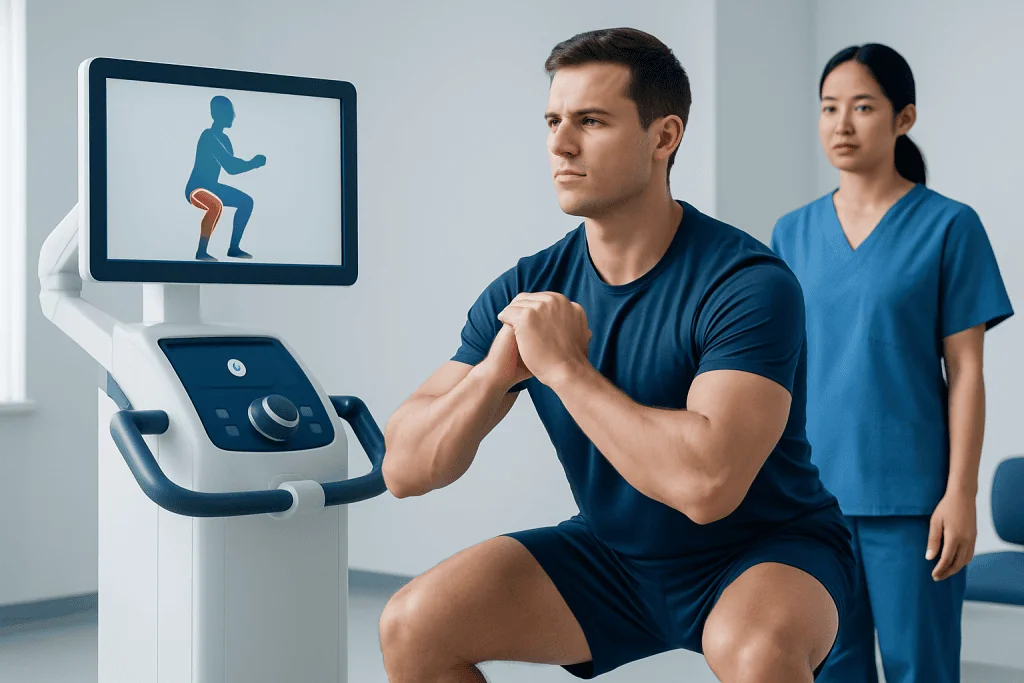
The sumo squat primarily targets the quadriceps at the front of the thighs, the gluteal muscles of the hips and buttocks, and the adductor muscles along the inner thigh. The core and lower back muscles also help stabilize the trunk during the movement. Because the stance is wider and the hips are externally rotated, many people notice more work in the inner thighs compared with a conventional squat.
Potential benefits include improved lower-body strength, better control during standing and lifting movements, and increased awareness of hip and knee alignment. In some exercise programs, the sumo squat may also support balance and functional fitness, particularly when it is paired with other lower-body exercises and performed consistently over time. However, benefits depend on correct form, sensible progression, and an exercise plan that matches the individual’s needs.
It is also helpful to set realistic expectations. A sumo squat is not a cure for joint pain, and it does not “spot reduce” fat from the inner thighs or hips. Its main role is to challenge muscles and movement patterns. For some people recovering from injury or managing chronic discomfort, supportive approaches such as physical therapy and rehabilitation may be more appropriate than starting an unsupervised strengthening routine right away.
How to Do a Sumo Squat Safely

To begin, stand with the feet wider than shoulder width apart. Turn the toes outward slightly, in a way that feels natural rather than forced. Brace the abdominal muscles gently, keep the chest open, and allow the arms to extend in front or rest at the sides for balance. The movement starts by bending at the hips and knees at the same time, as if sitting down between the legs.
As the body lowers, the knees should generally track in the same direction as the toes. The heels stay grounded, and the back remains neutral rather than rounded. Depth can vary. Some people may lower only part of the way, while others can squat deeper without discomfort. It is safer to stop at a level where alignment and control are maintained. To return to standing, press through the feet and straighten the hips and knees in a smooth, steady motion.
Several cues can improve safety and comfort:
- Keep the movement slow and controlled rather than bouncing.
- Avoid letting the knees collapse inward.
- Do not force the feet into an excessively wide stance.
- Stop if there is sharp pain in the knee, hip, groin, or lower back.
- Use a chair, wall, or sturdy support if balance is limited.
Beginners may start with body weight only. A goblet-style hold with a light weight can be added later if form remains stable. If a person is unsure about technique, a supervised assessment can help identify whether mobility limits, muscle weakness, or poor movement patterns are affecting the exercise.
Common Mistakes, Modifications, and Who Should Be Cautious
One common mistake is taking too wide a stance. A very wide position may make it difficult to keep the knees aligned and can place extra stress on the hips or groin. Another frequent issue is allowing the torso to fold forward excessively, which may shift strain toward the lower back. Rushing through repetitions, using more weight than can be controlled, or trying to match someone else’s squat depth can also increase the risk of discomfort.
Modifications can make the sumo squat more accessible. A chair squat, where the person lowers toward a chair and stands back up, can help with confidence and balance. A reduced range of motion is also reasonable, especially for older adults, beginners, or those returning to exercise. Some people do better with a narrower squat or a different lower-body movement altogether if the wide stance does not feel natural.
Caution is especially important for people with prior knee injuries, hip impingement, arthritis, low back pain, pelvic floor symptoms, poor balance, or recent surgery. In these cases, the exercise may need adjustment or temporary avoidance. People who have persistent pain, swelling, or instability may benefit from evaluation for meniscus tear or other joint-related problems before continuing. When pain is related to joint wear, tailored orthopedic care may be more helpful than pushing through symptoms.
Warm-Up, Progression, and Recovery
A short warm-up can prepare the body for squatting and may improve comfort. Useful options include five to ten minutes of light walking or cycling, followed by gentle hip, ankle, and lower-back mobility exercises. Body-weight practice repetitions before adding resistance can help the nervous system learn the movement and reveal any restrictions that should be addressed first.
Progression should be gradual. It is usually best to increase only one variable at a time, such as the number of repetitions, the number of sets, or the amount of weight. For general strength and conditioning, quality matters more than volume. If form begins to break down, the session should be adjusted. Recovery also matters. Muscles need time to adapt, so rest days and sleep are part of a balanced program.
Some muscle soreness after unfamiliar exercise can be normal, especially in the glutes or inner thighs. However, soreness should improve within a few days and should not feel like sharp joint pain. Persistent swelling, limping, numbness, or worsening back pain suggests that the body is not tolerating the exercise well. In those situations, medical review and targeted diagnostic imaging may sometimes be needed to clarify the cause.
When to Seek Medical Care
Most people who try a sumo squat do not need medical evaluation, especially if they are healthy, start gently, and remain symptom-free. However, medical advice is appropriate if pain develops during or after the exercise and does not settle with rest, activity modification, and time. This is particularly true when pain is focused in one joint rather than the muscles.
A clinician should assess symptoms such as repeated knee giving way, significant swelling, locking, catching, severe groin pain, numbness, weakness, or pain that interferes with walking, sleep, or daily activity. Urgent medical attention is more important if symptoms follow a fall, twist, or other clear injury, or if a person cannot bear weight comfortably.
People with known arthritis, osteoporosis, spinal problems, recent childbirth-related pelvic symptoms, or a history of surgery should ask a qualified professional how to adapt lower-body exercise safely. Near the end of a care pathway, some patients may also need specialist review to guide return to activity. Acibadem International’s multidisciplinary specialists and JCI-accredited hospitals diagnose and treat musculoskeletal conditions for international patients when expert assessment is needed.
Practical Self-Care Tips for Patients and Beginners
For many people, the safest way to begin is with low expectations and steady practice. Starting with one or two brief sessions per week can be enough to learn the pattern. Supportive footwear, a non-slip surface, and enough space to move comfortably can make practice easier. Some people also find it helpful to perform the exercise in front of a mirror or under supervision to improve alignment awareness.
If a sumo squat does not feel right, that does not mean lower-body exercise should be avoided. Alternatives such as sit-to-stand practice, standard body-weight squats, step-ups, glute bridges, or guided rehabilitation exercises may be better choices depending on the person’s mobility and diagnosis. Exercise should fit the individual, not the other way around.
Hydration, sensible pacing, and recovery habits also support musculoskeletal health. People with chronic pain or medical conditions should consider an individualized plan rather than copying general fitness advice online. A patient-centered approach is usually the most effective way to gain strength while protecting the joints and reducing the chance of overuse problems.
Frequently asked questions
What is the main difference between a sumo squat and a regular squat?
A sumo squat uses a wider stance and slightly turned-out feet, while a regular squat is usually done with the feet closer together. This wider position may place relatively more emphasis on the inner thighs and hips, although both exercises work the legs and gluteal muscles.
Are sumo squats safe for beginners?
Yes, sumo squats can be safe for beginners when they are done slowly, without added weight, and within a comfortable range of motion. People with balance issues, joint pain, or prior injuries may need a modification or professional guidance before starting.
Why do sumo squats hurt the knees in some people?
Knee discomfort can happen if the stance is too wide, the knees collapse inward, the movement is forced too deep, or an underlying joint problem is present. Pain is a sign to stop, reassess technique, and seek medical advice if symptoms continue.
Do sumo squats help with inner thigh toning?
Sumo squats do work the inner thigh muscles, known as the adductors, along with other lower-body muscles. They can support muscle strengthening, but they do not selectively remove fat from one area of the body.
How often should a person do sumo squats?
Frequency depends on overall fitness, recovery, and goals, but many people begin with one to three sessions per week as part of a balanced program. Rest between sessions is important so the muscles and joints can recover.
Should a person stop sumo squats if there is muscle soreness afterward?
Mild muscle soreness after a new exercise can be normal and often improves within a few days. Ongoing pain, swelling, limping, or sharp discomfort in the joints is different and should prompt a break from the exercise and, if needed, medical assessment.
This article is for general information only and is not a substitute for professional medical advice. Please consult a qualified doctor about your individual situation.
Explore treatments in Turkey — costs, top hospitals & a free quote
JCI-accredited · board-certified surgeons · reply within 24h
Add us as a Preferred Source to see more of our trusted health content across Google Search, AI Overviews and Discover.

More from the Health Library

Best Dht Blocker: How to Choose Safely

Moro Reflex: What Patients Need to Know

Tamsulosin: A Complete Medical Overview

Membrane Sweep — Explained by Medical Evidence, Not Myths

Fo Ti Shou Wu: An Evidence-Based Guide for Patients