Surgery for Tarsal Coalition: Procedure, Recovery and Results

Tarsal coalition surgery is usually considered after activity changes, supportive footwear, physiotherapy, medication, or immobilization have not adequately controlled symptoms. Resection removes the abnormal bridge between bones and is most often used when nearby joints remain healthy and mobile.
Key Takeaways
- Tarsal coalition surgery is usually considered after activity changes, supportive footwear, physiotherapy, medication, or immobilization have not adequately controlled symptoms.
- Resection removes the abnormal bridge between bones and is most often used when nearby joints remain healthy and mobile.
- Fusion may be recommended when there is substantial joint arthritis, a large coalition, or significant hindfoot deformity.
- Initial healing commonly takes several weeks, while full return to higher-impact activity may take months.
- Outcomes depend on the coalition type and size, joint health, foot alignment, age, rehabilitation, and following postoperative instructions.
Surgery for tarsal coalition may be considered when an abnormal connection between foot bones causes persistent pain, repeated ankle sprains, or limited movement despite non-surgical treatment. The operation may remove the coalition or, in more advanced cases, fuse selected joints to create a more stable and comfortable foot.
Overview: what surgery for tarsal coalition involves
Surgery for tarsal coalition is designed to treat a congenital abnormal connection between two or more bones in the hindfoot or midfoot. This connection may be made of fibrous tissue, cartilage, or bone. It can restrict normal foot motion and lead to activity-related pain, stiffness, recurrent ankle sprains, and a rigid flatfoot shape in some people.
The operation is usually considered only when appropriate non-surgical measures have not provided sufficient relief. Depending on the location of the coalition, the condition of the surrounding joints, and foot alignment, a surgeon may remove the abnormal connection (resection) or fuse one or more painful joints (arthrodesis). The aim is to reduce pain, improve function, and support a return to suitable daily and recreational activities.
The two most common locations are a calcaneonavicular coalition, between the heel bone and navicular bone, and a talocalcaneal coalition, between the talus and calcaneus. Care is individualized because the same diagnosis can affect each person’s foot mechanics and daily activities differently.
Who may be a candidate for surgery?
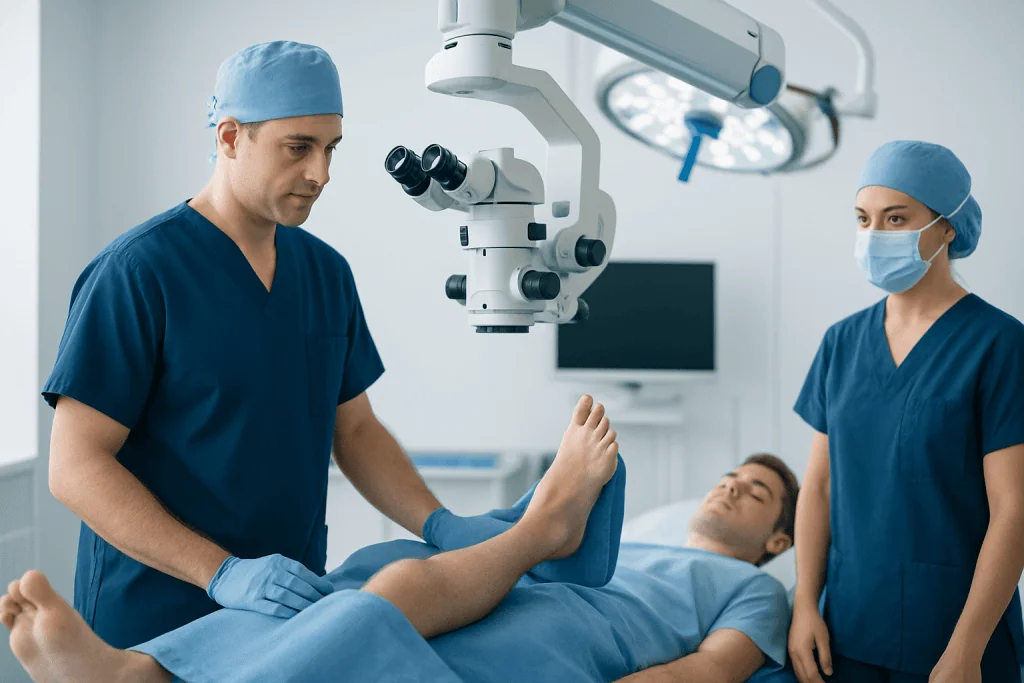
Many people with a tarsal coalition do not need an operation. A clinician may first recommend rest from aggravating activities, supportive shoes or orthotics, physiotherapy, a period of immobilization, and medicines for short-term pain or inflammation when appropriate. These approaches can reduce symptoms, especially when pain is intermittent or began recently.
Surgery may be discussed when pain remains limiting, ankle sprains recur, walking or sport is difficult, or the foot remains stiff despite a well-planned course of conservative care. It may also be considered when imaging shows a coalition likely to continue disrupting joint movement and foot alignment.
Resection is often more suitable when the coalition is limited and the nearby joints show little or no arthritis. Fusion may be more appropriate when there is degenerative joint change, severe stiffness, a large coalition, or deformity that cannot be adequately addressed by removal alone. A foot and ankle orthopedic specialist considers symptoms, examination findings, imaging, growth and activity needs, and the person’s goals before recommending a procedure.
How the procedure is planned and performed

Before surgery, the specialist typically reviews standing foot X-rays and may request computed tomography (CT) to define the coalition’s exact size and position. Magnetic resonance imaging (MRI) can be useful when the connection is fibrous or cartilaginous, or when soft-tissue problems are suspected. These images also help assess cartilage wear, joint shape, and alignment.
For a resection, the surgeon makes an incision in the appropriate area of the foot, identifies the abnormal bridge, and carefully removes it while protecting nearby tendons, nerves, and blood vessels. A small amount of local tissue or another material may be placed in the gap to help reduce the chance of the coalition reforming. If flatfoot alignment is contributing to symptoms, an additional alignment procedure may occasionally be recommended.
For fusion, the surgeon prepares the affected joint surfaces and stabilizes them in a corrected position with implants such as screws or plates. Over time, the bones are intended to heal together. Fusion sacrifices motion at the treated joint, but it can provide reliable pain relief when movement at that joint is already painful or arthritic.
The operation is generally performed under anesthesia. The exact approach, length of surgery, use of a cast or boot, and whether an overnight stay is needed vary according to the procedure and the individual’s health needs.
How long does it take to recover from tarsal coalition surgery?
Recovery from tarsal coalition surgery occurs in stages. After a simple resection, many patients use a splint, cast, or walking boot for the early healing period. Weight-bearing instructions vary: some people may begin protected weight bearing relatively soon, while others need a short period without putting weight on the foot. A fusion usually requires a longer period of protection because the bones must unite securely.
In the first several weeks, swelling control, wound care, elevation, and safe mobility are the main priorities. Follow-up appointments allow the surgical team to assess healing and adjust the boot, cast, or activity plan. Physiotherapy may begin once it is safe, focusing on range of motion where appropriate, strength, balance, gait, and gradual return to function.
Many people can resume comfortable everyday walking over several weeks to a few months, but recovery is not identical for everyone. Higher-impact sports, running, jumping, and demanding work often require several months and should be restarted only with the surgeon’s guidance. Swelling can persist after activity for some time even when healing is progressing well.
Following restrictions closely is important. Early overloading may increase pain, delay healing, or compromise a fusion. Conversely, appropriate rehabilitation helps restore strength and confidence in using the foot.
Benefits, limitations, and possible risks
The potential benefits of surgery include less pain, improved ability to walk or participate in activities, fewer recurrent sprains, and better foot function. Resection can preserve joint movement when the coalition and surrounding joints are suitable. Fusion can reduce pain from an arthritic or severely affected joint by eliminating painful motion.
No procedure can guarantee complete symptom relief or a return to every previous activity. Some stiffness may remain, particularly after fusion, and people with established arthritis or significant deformity may have more complex recovery needs. Long-term care can include supportive footwear, custom orthotics, activity adjustments, and maintaining strength and flexibility.
Possible surgical risks include infection, bleeding, wound-healing problems, blood clots, nerve irritation or numbness, persistent swelling, ongoing pain, stiffness, scar sensitivity, and reactions to anesthesia. A coalition can occasionally recur after resection. With fusion, delayed union or nonunion can occur, and hardware may sometimes cause irritation. The treating surgeon explains the risks most relevant to the planned operation and how they are reduced.
- Contact the surgical team promptly for fever, worsening redness, drainage, severe uncontrolled pain, new calf swelling, chest pain, or shortness of breath.
- Do not adjust weight-bearing, remove immobilization, or drive after surgery without specific medical advice.
How successful is tarsal coalition surgery?
Tarsal coalition surgery is often effective at improving pain and function in carefully selected patients, particularly when surgery is performed before substantial arthritis develops. Resection tends to have favorable results when the coalition is limited, nearby joints are healthy, and foot alignment is manageable. It is commonly used in children, adolescents, and younger adults, although suitability is based on anatomy rather than age alone.
Fusion can be a helpful option for people with painful arthritic changes or a coalition that is not well suited to removal. While it reduces motion at the fused joint, it may provide a more stable and less painful foot. The expected trade-off between pain relief and motion should be discussed clearly before surgery.
Results are influenced by the type and extent of coalition, degree of arthritis, flatfoot or hindfoot alignment, body demands, rehabilitation, and adherence to recovery instructions. A realistic discussion with the foot and ankle team can clarify which improvements are most likely and whether ongoing shoe support or activity modification may still be useful.
How bad is tarsal coalition pain?
Tarsal coalition pain varies widely. Some people have no symptoms and learn about the condition incidentally. Others feel an aching or sharp pain on the outside, inside, or back of the foot and ankle, often after prolonged standing, walking on uneven ground, running, or sport. Pain may develop during childhood or adolescence as the coalition becomes more rigid, but symptoms can also begin later.
The foot may feel stiff, tire easily, or have reduced side-to-side hindfoot movement. Recurrent ankle sprains, a rigid flatfoot appearance, and muscle spasms around the outer lower leg can occur. Pain severity does not always match imaging findings, which is why a clinical examination and a discussion of activity limitations are important.
New or persistent foot pain should not be self-diagnosed as a coalition. Similar symptoms may result from tendon disorders, stress injuries, inflammatory conditions, arthritis, or ligament problems. Accurate assessment helps ensure that treatment addresses the true source of pain.
What are the worst days after foot surgery?
For many people, discomfort and swelling are most noticeable during the first few days after foot surgery, particularly as the initial anesthesia wears off and the foot remains dependent during movement. Pain control plans, prescribed or recommended medicines, rest, and keeping the foot elevated as instructed can make this period more manageable.
The first one to two weeks can also be challenging because mobility is limited and the person may need crutches, a scooter, or assistance with daily tasks. Swelling may temporarily increase when the foot is lowered, and sleep can be disrupted. Preparing the home environment and arranging help in advance can reduce stress during this stage.
Symptoms should gradually improve rather than steadily worsen. Severe pain not relieved by the agreed plan, increasing tightness in a cast or splint, numbness, blue or cold toes, significant drainage, fever, or new calf pain require prompt medical advice. The postoperative team should provide individualized instructions and an emergency contact pathway.
When to seek medical care
A person should arrange medical assessment for persistent foot or ankle pain, recurrent ankle sprains, a stiff or rigid flatfoot, or pain that limits school, work, walking, or sport. Evaluation is particularly important when symptoms continue despite rest, supportive footwear, and simple self-care. Early assessment can identify whether a tarsal coalition or another treatable condition is responsible.
Urgent care is needed after an injury if there is an obvious deformity, inability to bear weight, rapidly increasing swelling, severe pain, loss of sensation, or changes in toe color or temperature. Following surgery, the operating team should be contacted for warning signs such as fever, worsening wound redness, pus-like drainage, or symptoms suggestive of a blood clot.
Acibadem International’s multidisciplinary specialists and JCI-accredited hospitals support international patients requiring assessment and treatment for complex foot and ankle conditions. A qualified orthopedic foot and ankle surgeon can explain whether continued non-surgical care, coalition resection, fusion, or another approach is appropriate.
Frequently asked questions
Is tarsal coalition surgery painful?
Pain is expected after surgery, especially during the first several days, but it is managed with an individualized postoperative plan. Elevation, protecting the foot, and taking medicines as directed can help. Pain should gradually improve; worsening or uncontrolled pain should be reported to the surgical team.
Can a tarsal coalition come back after surgery?
A coalition can occasionally reform after resection, although surgeons may use techniques intended to lower this risk. Persistent symptoms may also occur for reasons such as joint arthritis, foot alignment issues, or another source of pain. Follow-up helps identify and manage these concerns early.
Will a person need a cast after tarsal coalition surgery?
Many patients use a splint, cast, or walking boot after surgery to protect the foot while tissues heal. The type and duration depend on whether resection or fusion was performed, as well as the individual’s healing progress. The surgeon provides specific weight-bearing and immobilization instructions.
Can a person walk after tarsal coalition surgery?
Walking is usually reintroduced gradually and may initially require crutches, a walker, or a knee scooter. Some procedures allow earlier protected weight bearing, while fusion commonly requires a longer period without weight on the foot. Walking should only progress according to the surgeon’s plan.
Does tarsal coalition surgery leave the foot stiff?
Resection is intended to preserve or improve movement when the joint is suitable. Fusion intentionally limits movement at the treated joint to relieve painful motion, although other joints can often compensate during everyday activities. The expected effect on mobility should be discussed before surgery.
Can adults have surgery for tarsal coalition?
Yes. Adults can be candidates when symptoms are significant and imaging supports surgery. However, arthritis and longstanding alignment changes are more common in some adults, so fusion or additional corrective procedures may be considered instead of simple resection.
References
- American Academy of Orthopaedic Surgeons
- American Orthopaedic Foot & Ankle Society
- OrthoInfo
- National Institute of Arthritis and Musculoskeletal and Skin Diseases
This article is for general information only and is not a substitute for professional medical advice. Please consult a qualified doctor about your individual situation.
Joint and spine care in Turkey — expert assessment & treatment
JCI-accredited · board-certified surgeons · reply within 24h
Add us as a Preferred Source to see more of our trusted health content across Google Search, AI Overviews and Discover.