Surgical Repair of the Eardrum Medical Term: Procedure, Recovery and Results

Tympanoplasty is the medical term most often used for surgical repair of a perforated eardrum. Some small eardrum perforations heal without surgery, but persistent holes may need specialist assessment.
Key Takeaways
- Tympanoplasty is the medical term most often used for surgical repair of a perforated eardrum.
- Some small eardrum perforations heal without surgery, but persistent holes may need specialist assessment.
- Most procedures are planned operations performed under anesthesia, often as day surgery.
- Healing takes weeks to months, and keeping the ear dry is important during recovery.
- Success depends on the size and location of the perforation, ear health, infection control, and middle-ear function.
The surgical repair of the eardrum medical term is tympanoplasty. It is an operation used to close a persistent hole in the eardrum, called a perforation, and may also repair related middle-ear structures when needed.
Overview: What Is the Surgical Repair of the Eardrum Medical Term?
The surgical repair of the eardrum medical term is tympanoplasty. Tympanoplasty is a procedure that closes a hole in the tympanic membrane, commonly called the eardrum. When the operation is limited to patching the eardrum without addressing the middle ear, it may also be called myringoplasty.
The eardrum is a thin membrane that separates the ear canal from the middle ear. It vibrates in response to sound and helps protect the middle ear from water, bacteria, and debris. A tear or hole may result from infection, injury, sudden pressure changes, or previous ear surgery.
Many perforations heal naturally, especially when they are small and recent. However, a hole that remains open can contribute to repeated ear discharge, water sensitivity, hearing difficulties, or infections. An ear, nose, and throat specialist can determine whether observation, medical care, or tympanoplasty is the most appropriate next step.
How Eardrum Repair Works and Who May Be a Candidate

During tympanoplasty, the surgeon places a small graft over or under the perforation so that the eardrum can heal as one continuous membrane. The graft may be made from the patient’s own tissue, often fascia from near the ear or cartilage. Over time, the body incorporates the graft and forms a repaired eardrum.
A person may be considered for surgery when a perforation has not healed after an appropriate period of observation, causes repeated infections or drainage, limits daily activities such as swimming, or is associated with hearing loss. Surgery may also be considered when the ear needs to be made safe before other treatment or when there is damage to the hearing bones, known as ossicles.
Before recommending surgery, the specialist will consider the perforation’s size and location, whether the ear is dry or actively infected, hearing test findings, previous operations, smoking status, and overall health. Children and adults may both undergo tympanoplasty, although the timing is individualized. Active infection is usually treated first when possible.
- Small, stable perforations without symptoms may be monitored.
- Persistent drainage or recurrent infections may strengthen the case for repair.
- Hearing loss may require assessment of both the eardrum and middle-ear bones.
- Chronic middle-ear disease may need a broader surgical plan than a simple graft.
Step by Step: What Happens During Tympanoplasty?
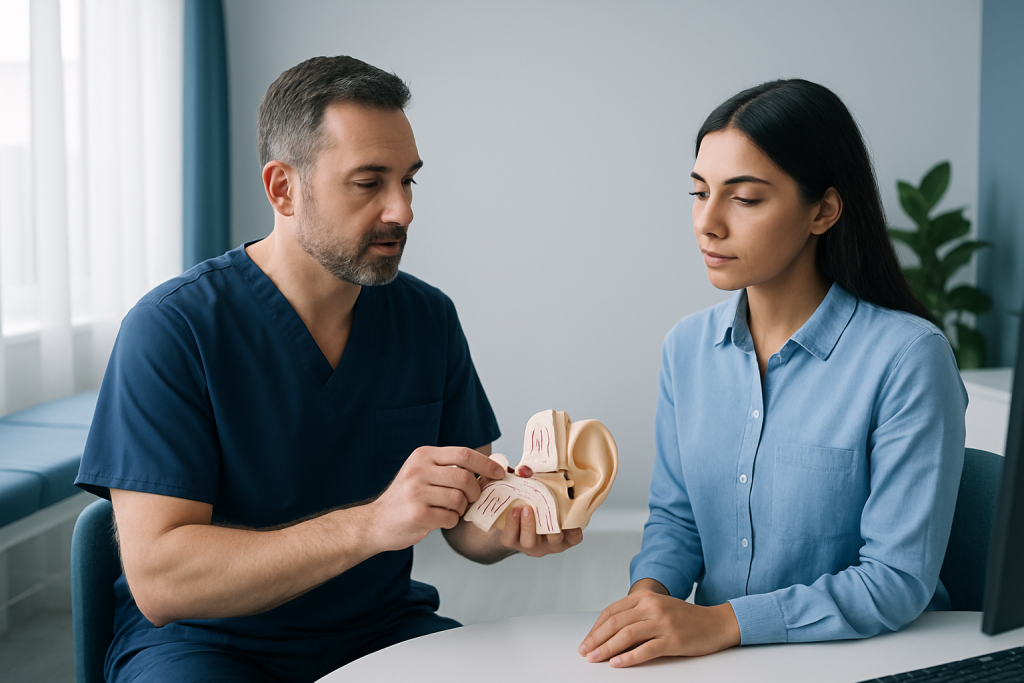
Tympanoplasty is commonly performed under general anesthesia, meaning the patient is asleep. In selected cases, local anesthesia with sedation may be appropriate. The operation may be performed through the ear canal, through a small incision behind the ear, or occasionally above the ear, depending on the anatomy and the type of repair required.
The surgeon examines the ear canal, removes unhealthy tissue if present, and prepares the edges of the perforation to encourage healing. A graft is then positioned carefully to support closure of the hole. Absorbable packing may be placed in the ear canal and middle ear to hold the graft in position while it heals.
If the hearing bones are damaged or fixed by inflammation, the operation may include reconstruction of these structures. This is called ossiculoplasty and can be performed as part of tympanoplasty when clinically necessary. The procedure length varies with the complexity of the repair, but uncomplicated surgery is often completed within a few hours.
Patients are typically monitored after anesthesia and may go home the same day, although some people need a short hospital stay based on their health needs or the extent of surgery. The surgical team provides individualized instructions about pain relief, ear drops, activity, and follow-up appointments.
Recovery Timeline After Eardrum Repair Surgery
Recovery begins immediately after surgery, but the repaired eardrum needs time to heal. Mild discomfort, a blocked or full sensation in the ear, temporary reduced hearing, and small amounts of blood-stained drainage can occur during the early days. Packing in the ear can make hearing seem muffled until it is removed or dissolves.
How long does it take to recover from eardrum repair surgery? Many people return to desk-based work, school, and light daily activities within about one to two weeks, depending on their comfort and the nature of their work. Complete eardrum healing and a reliable assessment of hearing often take several weeks to a few months. Follow-up examinations are important because the surgeon needs to confirm that the graft has healed properly.
Patients are commonly advised to keep the ear dry, avoid swimming until cleared, and avoid forceful nose blowing. Travel, heavy lifting, strenuous exercise, and activities that create pressure changes may need to be postponed for a period recommended by the surgeon. If sneezing cannot be avoided, it is generally safer to sneeze with the mouth open to reduce pressure in the middle ear.
Hearing may not improve immediately and can fluctuate while swelling and packing resolve. In some cases, hearing improvement is gradual. A hearing test may be arranged after sufficient healing time to compare results with the preoperative assessment.
Benefits, Risks, and Expected Results
The main benefits of tympanoplasty are closing the eardrum perforation, reducing the chance of water entering the middle ear, and helping prevent recurrent drainage or infection. Hearing may improve if the perforation was affecting sound transmission and the middle ear is otherwise healthy. The procedure can also make it easier to manage chronic ear conditions over time.
How successful is eardrum surgery? Tympanoplasty is generally a well-established procedure with a good likelihood of graft healing in appropriately selected patients. However, no operation can guarantee closure or hearing improvement. Results are influenced by the perforation’s characteristics, ongoing infection or inflammation, Eustachian tube function, smoking, previous ear surgery, and whether the hearing bones are affected.
Possible risks include failure of the graft to heal, persistent or recurrent perforation, infection, bleeding, scarring, temporary dizziness, altered taste, ringing in the ear, or little improvement in hearing. Less commonly, hearing may worsen. Facial nerve injury is rare but is a recognized risk of middle-ear surgery; the surgeon discusses relevant risks in relation to the individual procedure.
Is fixing a hole in the ear drum big surgery? For many people, straightforward eardrum repair is a planned, relatively contained ear operation and may be performed as day surgery. It is still a delicate procedure involving hearing structures and anesthesia, so it should be approached as a meaningful operation that requires careful preparation and follow-up.
Pain, Self-Care, and Protecting the Healing Ear
Is eardrum repair surgery painful? The procedure itself is not felt under anesthesia. Afterward, discomfort is usually mild to moderate and often manageable with the pain-relief plan recommended by the surgical team. Pressure, fullness, mild aching, or tenderness around an incision behind the ear can occur during the first days.
Following aftercare instructions supports healing. Patients should use prescribed medicines exactly as directed, avoid inserting cotton buds or other objects into the ear, and protect the ear from water during washing. If a dressing or packing is present, it should not be removed unless the surgeon has advised this.
Smoking and nicotine use can interfere with wound healing, so stopping before and after surgery is beneficial. Good control of allergies, nasal congestion, and respiratory infections may also support middle-ear function, although patients should ask their clinician before taking new medicines around the time of surgery.
Acibadem International’s multidisciplinary specialists and JCI-accredited hospitals support international patients requiring assessment and treatment for eardrum and middle-ear conditions. Care plans are individualized after ear examination, hearing testing, and discussion of the person’s symptoms and goals.
When to Seek Medical Care
Medical assessment is advisable for ear discharge that persists or recurs, hearing loss, ear pain, a suspected eardrum injury, or symptoms following an ear infection, trauma, diving, flying, or an object placed in the ear. An examination can identify whether there is a perforation and whether infection or another middle-ear condition needs treatment.
After surgery, patients should contact their surgical team promptly if they develop worsening pain, fever, increasing redness or swelling around the ear, foul-smelling or heavy discharge, new severe dizziness, facial weakness, or a sudden significant change in hearing. These symptoms do not always indicate a serious problem, but they need timely clinical advice.
Urgent medical care is appropriate for severe vertigo, confusion, severe headache, a high fever, or symptoms after a significant head injury. People should not attempt to patch an eardrum at home or place drops in the ear unless a clinician has confirmed they are suitable for a perforated eardrum.
An ENT specialist may use ear examination, microscopy, and hearing tests to guide care. If long-standing drainage or more extensive middle-ear disease is present, additional imaging or specialist evaluation may be recommended before surgery.
Frequently asked questions
What is the difference between myringoplasty and tympanoplasty?
Myringoplasty usually refers to repairing the eardrum alone. Tympanoplasty is a broader term that may include eardrum repair and treatment of structures in the middle ear. In everyday clinical use, the terms can sometimes overlap.
Can a perforated eardrum heal without surgery?
Yes. Many small and recent eardrum perforations heal on their own over weeks. A clinician may monitor the ear, treat infection if present, and advise keeping the ear dry. Surgery may be considered if the hole persists or causes ongoing symptoms.
Will hearing improve after tympanoplasty?
Hearing may improve when the perforation is a major cause of conductive hearing loss and the middle ear is otherwise functioning well. Improvement is not immediate for everyone because swelling and packing can temporarily reduce hearing. A follow-up hearing test helps assess the result after healing.
Can someone fly after eardrum repair surgery?
Flying may need to be delayed because cabin pressure changes can affect the healing middle ear and graft. The safe timing depends on the type of surgery and the person’s recovery. The operating surgeon should provide individualized travel advice.
What should be avoided after eardrum repair surgery?
Patients are commonly advised to avoid getting water in the ear, swimming, forceful nose blowing, heavy straining, and inserting anything into the ear canal. The exact restrictions and duration vary. Following the surgeon’s written instructions is important because they reflect the specific operation performed.
Can an eardrum perforation come back after surgery?
A repaired eardrum can develop another perforation if the graft does not fully heal or if there is a later infection, injury, pressure-related event, or ongoing middle-ear dysfunction. Regular follow-up helps identify healing concerns early. Protecting the ear from water and avoiding trauma can reduce preventable risks.
References
- American Academy of Otolaryngology–Head and Neck Surgery
- National Institute on Deafness and Other Communication Disorders
- NHS
- Merck Manual Consumer Version
This article is for general information only and is not a substitute for professional medical advice. Please consult a qualified doctor about your individual situation.
Explore treatments in Turkey — costs, top hospitals & a free quote
JCI-accredited · board-certified surgeons · reply within 24h
Add us as a Preferred Source to see more of our trusted health content across Google Search, AI Overviews and Discover.

More from the Health Library



Related Specialists

Dr. Hüseyin Çelik
Nephrology
Dr. Gansukh Bataa
Anesthesiology
Assoc. Prof. Dr. Serkan Sürücü
Orthopedic Surgery & Traumatology
Assoc. Prof. Dr. Aylin Önder Dirican
Gynecology & Obstetrics