Surgical Robots for Joint Replacement: What Happens Before, During, and After
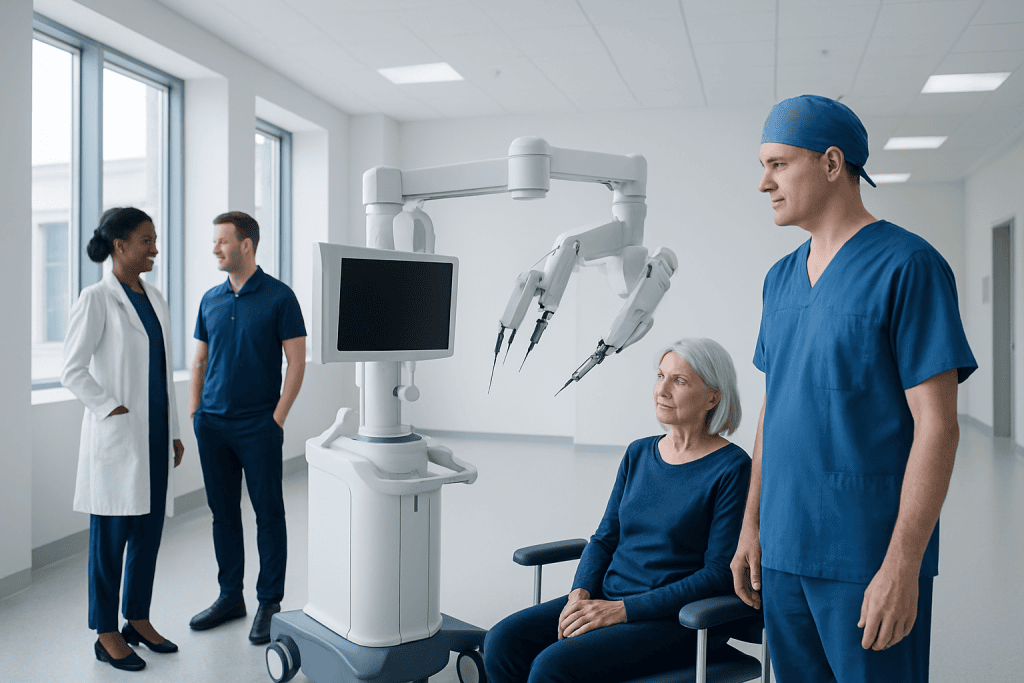
Surgical robots do not operate alone; the surgeon stays in control throughout the procedure. Robotic systems can support more precise planning and implant positioning in hip and knee replacement.
Key Takeaways
- Surgical robots do not operate alone; the surgeon stays in control throughout the procedure.
- Robotic systems can support more precise planning and implant positioning in hip and knee replacement.
- Preparation includes imaging, medical assessment, medication review, and planning for recovery at home.
- Recovery still depends on rehabilitation, pain control, wound care, and following the surgeon’s advice.
- Not every patient needs robotic joint replacement, and suitability depends on anatomy, arthritis severity, and overall health.
Surgical robots for joint replacement are advanced tools that help surgeons plan and perform hip or knee replacement with greater accuracy. Understanding what happens before, during, and after surgery can help patients feel informed, prepared, and more confident about recovery.
Overview: What robotic joint replacement means
Surgical robots for joint replacement are specialized computer-assisted systems used to support hip and knee replacement surgery. They help the surgical team create a detailed plan, guide bone preparation, and improve the accuracy of implant placement. These systems are designed to assist the surgeon, not replace them. The surgeon remains responsible for every step and makes all key decisions during the operation.
In joint replacement, accuracy matters because the new implant needs to fit well, align properly, and work smoothly with surrounding muscles, ligaments, and bone. Robotic technology can help the surgeon tailor the operation to the patient’s anatomy. This may be especially helpful in people with unusual joint structure, deformity, or previous surgery, though it is not necessary in every case.
Most commonly, robotic assistance is used in knee replacement and hip replacement. Some systems rely on preoperative CT scans, while others use mapping done during surgery. The exact process varies between hospitals and devices, but the overall goal is similar: careful planning, controlled execution, and more personalized surgery.
For many patients, the main questions are practical ones: what will happen before surgery, what takes place in the operating room, and what recovery will be like afterward. Understanding each stage can make the experience feel less unfamiliar and help patients take an active role in their treatment.
Before surgery: evaluation, imaging, and planning
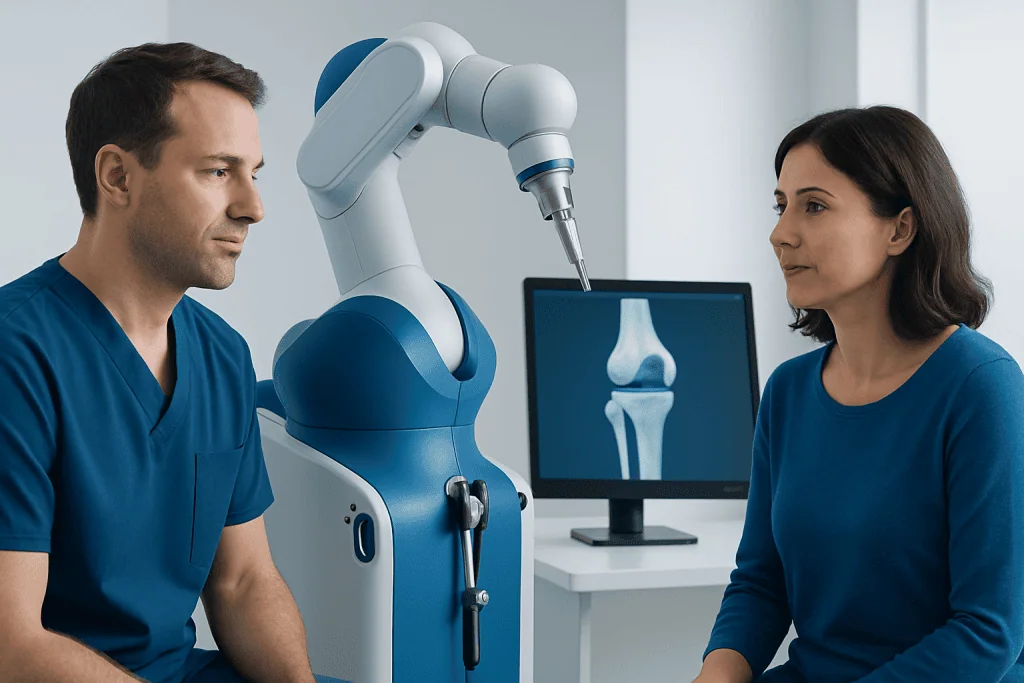
Preparation for robotic joint replacement begins with a standard orthopedic assessment. The surgeon reviews symptoms, medical history, activity level, and prior treatments such as exercise therapy, injections, pain medication, or walking aids. A physical examination helps assess movement, joint stability, strength, and alignment. If symptoms are due to advanced osteoarthritis, joint replacement may be recommended when non-surgical treatments no longer provide enough relief.
Imaging is a major part of the planning process. X-rays are usually the first step and show the degree of joint damage, alignment, and bone quality. Depending on the robotic system, the team may also order a CT scan to create a three-dimensional model of the joint. This model helps the surgeon study the patient’s anatomy in detail and choose implant size, position, and angles before the operation begins.
Patients also have a general preoperative review to make surgery safer. This often includes blood tests, heart or lung assessment when needed, and a medication review. Some medicines, such as blood thinners, may need to be adjusted under medical supervision. The care team may also discuss smoking cessation, blood sugar control, dental health, and weight management, since these factors can affect healing and infection risk.
Just as important is planning for recovery. Patients are often advised to prepare their home, arrange help for the first days after surgery, and begin exercises to strengthen the muscles around the joint. Many hospitals also offer education sessions that explain mobility aids, pain management, wound care, and what to expect from rehabilitation after robotic surgery.
Who may benefit from robotic-assisted joint replacement

Robotic-assisted joint replacement may benefit patients who need a hip or knee replacement and would like a highly individualized surgical plan. People with worn joint surfaces, pain that limits walking or sleep, reduced mobility, and failure of conservative treatment may be candidates. The technology can be useful when accurate implant alignment and soft-tissue balance are especially important.
That said, robotic surgery is not automatically the best choice for everyone. The benefits depend on the surgeon’s experience, the patient’s anatomy, the condition being treated, and the type of implant used. Some patients can achieve excellent results with conventional joint replacement techniques, particularly when performed by an experienced orthopedic surgeon.
Suitability is also influenced by general health. The surgeon may consider bone quality, previous fractures or implants, body habitus, infection history, and whether the patient has severe stiffness or deformity. In some cases, additional conditions such as rheumatoid arthritis or complex joint changes may affect the surgical plan.
A balanced discussion with the orthopedic team is the best way to decide. Patients can ask what type of robotic system is used, why it is recommended, whether alternatives are available, and what recovery goals are realistic. A good surgical decision is based not only on technology, but also on careful patient selection and shared planning.
During surgery: what the robot and surgeon each do
On the day of surgery, patients are admitted, prepared, and given anesthesia according to the procedure and their health needs. The surgeon and anesthesia team review the plan, confirm the joint being treated, and answer any last questions. Robotic assistance does not usually change the basic patient experience before entering the operating room, but it does influence how the operation is performed once surgery begins.
During the procedure, the robotic system helps the surgeon register the patient’s anatomy and match it to the preoperative plan or live intraoperative mapping. The system can then provide real-time information about bone shape, implant position, alignment, and joint movement. In many platforms, the surgeon uses robotic guidance or a robotic arm to prepare bone within carefully defined boundaries. This may help reduce unnecessary bone removal and improve consistency.
It is important to understand that the robot does not make independent decisions. The surgeon controls the instruments, adjusts the plan when needed, and checks the joint balance and stability throughout the operation. If something unexpected is found, the surgeon responds based on training and judgment. The robotic platform is a tool that adds data and precision, not an autonomous operator.
Once the damaged bone and cartilage are removed, the implant components are placed and checked for fit, stability, and motion. The incision is then closed, and the patient is moved to recovery. In suitable cases, robotic technology may support a more refined operation, but outcomes still depend on many factors, including surgical skill, implant choice, rehabilitation, and the patient’s overall health.
After surgery: hospital stay, pain control, and rehabilitation
Recovery after robotic joint replacement is similar in many ways to recovery after conventional joint replacement. Patients are monitored as the anesthesia wears off, and the team checks pain control, circulation, breathing, and the surgical wound. Many people begin standing or walking with assistance on the same day or the next day, depending on the joint replaced and their general condition.
Pain management usually involves a combination of approaches rather than a single medicine. The care team may use local anesthetic techniques, oral pain relievers, ice, elevation, and early movement. The goal is to keep pain manageable enough for safe mobility and participation in therapy. Some swelling, stiffness, and fatigue are common in the early period and usually improve gradually.
Physical therapy is one of the most important parts of recovery. After knee replacement, therapy often focuses on walking, knee bending and straightening, and strengthening the thigh muscles. After hip replacement, the emphasis may include safe movement patterns, walking, balance, and rebuilding strength. Progress varies, but regular exercise and adherence to instructions are key.
Discharge timing depends on the individual and the hospital protocol. Some patients go home quickly, while others benefit from a longer stay or a rehabilitation facility. In selected cases, orthopedic specialists may combine robotic surgery planning with broader recovery support that includes physical therapy and rehabilitation.
Potential advantages, limits, and possible risks
The main potential advantages of robotic joint replacement relate to precision and personalization. By using detailed imaging or intraoperative mapping, the system can help the surgeon plan implant size and position more accurately. This may support better alignment, more balanced movement, and a closer match to the patient’s natural anatomy. For some patients, these factors may contribute to a smoother functional recovery and satisfaction with the new joint.
However, it is important to keep expectations realistic. Robotic assistance does not eliminate the normal risks of surgery, and it does not guarantee a perfect result. Joint replacement still carries potential complications such as infection, blood clots, bleeding, implant loosening, nerve or blood vessel injury, stiffness, dislocation in some hip procedures, or persistent pain. These risks are discussed as part of the consent process.
There are also practical limits. Not every hospital has the same robotic system, and not every surgeon uses one. The technology may increase planning requirements and, in some settings, operating time while the team completes registration and setup. In addition, long-term results depend on well-established surgical principles, postoperative care, and rehabilitation, not on equipment alone.
For patients, the most helpful approach is to ask balanced questions: why robotic assistance is being recommended, what evidence supports its use for their case, and whether the expected benefits are meaningful for their needs. Clear communication helps patients make a confident, informed decision without assuming that newer technology is always superior for every person.
Self-care, recovery tips, and when to seek medical advice
After returning home, patients should follow the surgeon’s instructions closely. This usually includes taking prescribed medicines as directed, doing daily exercises, protecting the incision, and using walking aids safely until balance and strength improve. Keeping follow-up appointments is important so the team can monitor healing, mobility, and implant function.
Simple home measures can make recovery easier. These may include raising the leg when advised, using ice packs to reduce swelling, wearing supportive footwear, removing trip hazards, and setting up a sleeping and bathroom area that limits unnecessary strain. Good nutrition, hydration, and avoiding smoking also support healing. Recovery is gradual, and it is normal to have better and more difficult days along the way.
Patients should contact a doctor promptly if they develop fever, increasing wound redness, drainage, worsening pain that is not improving, chest pain, shortness of breath, or sudden swelling in the leg. These symptoms do not always mean a serious problem, but they need medical assessment. A sudden inability to bear weight or a new deformity also requires urgent advice.
When care is needed, experienced orthopedic teams can guide patients from evaluation through rehabilitation. Acibadem International’s multidisciplinary specialists and JCI-accredited hospitals diagnose and treat joint conditions for international patients, including advanced surgical options when appropriate.
Frequently asked questions
Are surgical robots replacing orthopedic surgeons?
No. In robotic joint replacement, the surgeon remains in control at all times. The robotic system provides planning support, measurements, and guided assistance, but it does not perform the operation independently.
Is robotic joint replacement only used for knee surgery?
No. Robotic systems are commonly used for both knee and hip replacement, although availability and techniques vary by hospital. The orthopedic surgeon can explain whether robotic assistance is suitable for the specific joint problem.
Does robotic surgery mean a smaller incision?
Not necessarily. The size of the incision depends on the procedure, the joint, the patient’s anatomy, and the surgeon’s approach. Robotic assistance mainly aims to improve planning and precision rather than guarantee a smaller cut.
Will recovery be faster with robotic joint replacement?
Some patients may feel that recovery is smoother, but recovery speed varies widely from person to person. Age, fitness, pain control, rehabilitation, and overall health often influence recovery as much as the surgical technology itself.
Is robotic joint replacement safer than conventional surgery?
Robotic assistance may help improve accuracy, but no surgery is risk-free. Safety depends on many factors, including patient selection, surgical experience, infection prevention, anesthesia care, and follow-up rehabilitation.
How should a patient prepare for robotic joint replacement?
Preparation usually includes imaging, medical assessment, medication review, and planning for home recovery. Patients are often encouraged to stay as active as possible, stop smoking if applicable, and discuss any chronic conditions with their doctor before surgery.
References
- American Academy of Orthopaedic Surgeons
- National Institute for Health and Care Excellence
- National Institute of Arthritis and Musculoskeletal and Skin Diseases
- U.S. Food and Drug Administration
- British Orthopaedic Association
This article is for general information only and is not a substitute for professional medical advice. Please consult a qualified doctor about your individual situation.
Joint Replacement in Turkey — costs, top hospitals & a free quote
JCI-accredited · board-certified surgeons · reply within 24h
Add us as a Preferred Source to see more of our trusted health content across Google Search, AI Overviews and Discover.

Orthopedics & Spine
Care for bones, joints and the musculoskeletal system, including joint replacement, sports injuries and trauma.
125 specialists in this unitMore from the Health Library



Related Specialists

Fzt. Serkan Başkurt
Physical Medicine & Rehabilitation
Dr. Civan Kalafat
Gynecology & Obstetrics
Dt. Ece Yetiş Eroğlu
Oral & Dental Health
Dyt. Petek Ari Turaci
Nutrition & Diet