Swayback: An Evidence-Based Guide for Patients

Swayback refers to an increased inward curve in the lumbar spine, often with the abdomen and buttocks appearing more prominent. Some people have a noticeable lower-back curve without pain or functional problems.
Key Takeaways
- Swayback refers to an increased inward curve in the lumbar spine, often with the abdomen and buttocks appearing more prominent.
- Some people have a noticeable lower-back curve without pain or functional problems.
- Muscle imbalance, prolonged posture habits, pregnancy, excess abdominal weight, and some medical conditions may contribute.
- A clinical assessment can identify whether symptoms are related to posture, the spine, hips, nerves, or another cause.
- Targeted exercise and physiotherapy are commonly used; treatment depends on symptoms and the underlying cause.
- New weakness, numbness, bowel or bladder changes, severe pain, or symptoms after injury require prompt medical evaluation.
Swayback commonly describes an exaggerated inward curve of the lower back, also called increased lumbar lordosis or hyperlordosis. It is often a posture pattern rather than a serious condition, but persistent pain, weakness, or changes in balance should be assessed by a healthcare professional.
What is swayback?
Swayback is a non-medical term commonly used to describe an exaggerated inward curve of the lower back. Clinicians may call this increased lumbar lordosis, or hyperlordosis. From the side, the pelvis may appear to tilt forward, the abdomen may project forward, and the buttocks may look more prominent. Swayback is not always a disease and does not automatically mean that the spine is damaged.
The lower spine naturally has an inward curve that helps distribute forces during standing and movement. The amount of curvature varies between individuals and can change with age, body shape, pregnancy, activity level, and habitual posture. A visible curve alone is not a reliable measure of health; pain, movement limitations, neurological symptoms, and the person’s overall function are more important.
The word “swayback” is also sometimes used loosely for a relaxed standing posture in which the hips shift forward and the upper body leans slightly backward. This posture pattern is different from a structural increase in lumbar lordosis, although both can occur together. A healthcare professional can help distinguish normal variation from a problem that needs treatment.
How swayback may feel and look
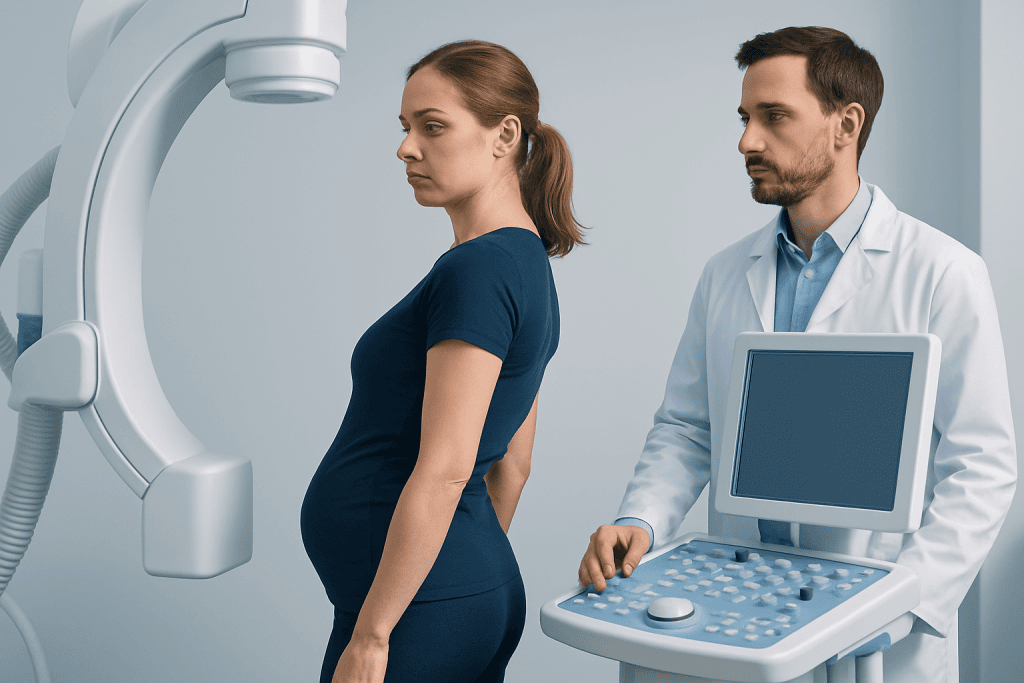
Many people with a pronounced lower-back curve have no symptoms. Others notice aching or stiffness in the lower back, particularly after prolonged standing, walking, or sitting. Discomfort may be related to muscle fatigue, reduced movement variety, joint irritation, or another condition affecting the back or hips rather than the curve itself.
Possible features can include a visible inward curve above the buttocks, a forward-tilted pelvis, tightness at the front of the hips, or tension in the lower back. Some people feel that standing upright takes effort or that their posture worsens when they are tired. These signs do not confirm a diagnosis on their own.
Symptoms such as pain traveling down a leg, tingling, numbness, weakness, or difficulty walking are not typical consequences of simple posture variation. They may indicate nerve involvement or another spinal condition and deserve medical assessment. Similarly, sudden severe back pain should not be assumed to be caused by swayback alone.
Why swayback can develop
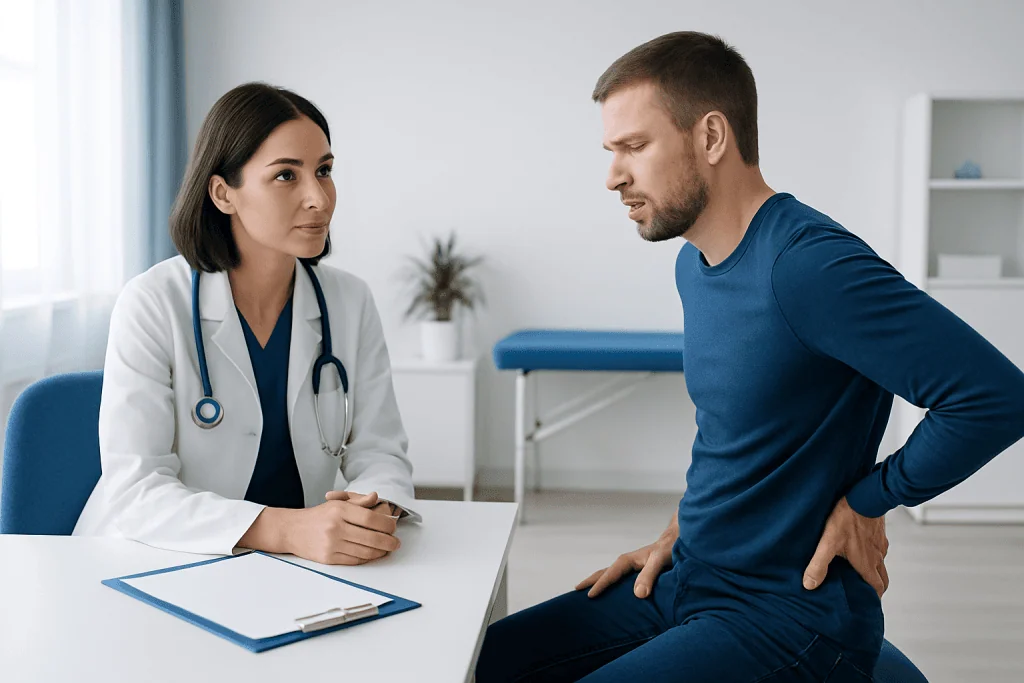
Swayback can result from a combination of anatomy, movement habits, muscle strength, flexibility, and health factors. Spending long periods in one position, limited physical activity, and repeatedly standing with the pelvis pushed forward may contribute to altered posture. However, posture is not simply a matter of willpower, and there is no single “perfect” posture that prevents all back pain.
Muscle imbalance may play a role for some people. Tight hip-flexor muscles, reduced abdominal and trunk endurance, or weakness in the hip and buttock muscles can affect pelvic position and comfort during movement. Pregnancy can temporarily increase the load on the lower back and alter posture. Weight gain around the abdomen may also shift the body’s center of mass and increase strain in some individuals.
Less commonly, increased lordosis may be associated with conditions affecting bone growth, the hips, muscles, or nerves. Examples include certain congenital spinal differences, hip problems, neuromuscular disorders, and vertebral conditions such as spondylolisthesis, where one spinal bone slips forward relative to another. Identifying these causes is especially important when the curve is marked, develops rapidly, starts in childhood, or is accompanied by pain or weakness.
- Postural habits and reduced movement variety
- Hip-flexor tightness or reduced core and hip muscle endurance
- Pregnancy or changes in body weight
- Spinal, hip, muscle, or neurological conditions
- Growth-related changes in children and adolescents
How healthcare professionals assess swayback
Assessment usually begins with a conversation about symptoms, daily activities, work demands, exercise, previous injuries, medical history, and when the posture change was first noticed. The clinician may ask whether pain affects sleep, walking, work, or routine tasks. In children and adolescents, they may also ask about growth, development, and family history.
A physical examination may include observing standing posture and walking, checking the range of motion in the back and hips, and assessing muscle strength, sensation, reflexes, and leg length when appropriate. The goal is not to force the spine into a particular shape; it is to understand whether the curve is flexible, whether it is linked to symptoms, and whether there are signs of another condition.
Imaging is not needed for every person with swayback. X-rays may be considered when there is persistent pain, a significant or progressive curve, concern about a structural spinal problem, or a history of trauma. MRI may be used if there are signs of nerve compression or another problem involving soft tissues. Tests are selected individually to avoid unnecessary imaging while ensuring important causes are not missed.
Treatment options and practical management
Treatment is guided by symptoms and the underlying cause, not by appearance alone. If there is no pain or limitation, reassurance, regular activity, and attention to general fitness may be all that is required. For people with discomfort, a clinician or physiotherapist can create a plan that considers mobility, strength, daily movement patterns, and any contributing hip or spinal conditions.
Physiotherapy often focuses on gradual strengthening of the trunk, abdominal, hip, and buttock muscles alongside flexibility work for areas that feel restricted, such as the hip flexors. Exercise should be individualized: movements that are helpful for one person may aggravate symptoms in another. Low-impact activities such as walking, swimming, cycling, or appropriately supervised strength training can support overall spinal health and confidence with movement.
Heat, brief use of pain-relief medicines when medically suitable, and adjustments to work or home activities may help during flare-ups. A clinician can advise on safe options for people who are pregnant or who have kidney, stomach, heart, or medication-related considerations. Braces and surgery are not routine treatments for ordinary swayback posture; they are reserved for selected structural conditions after specialist evaluation.
If assessment identifies a specific cause, treatment addresses that condition. For example, management may differ when pain comes from a hip disorder, a vertebral slip, inflammatory disease, or nerve compression. The most useful aim is usually improved comfort, strength, and function rather than trying to achieve a particular body shape.
Self-care, movement, and prevention
There is no guaranteed way to prevent a more pronounced lumbar curve, because spinal shape is influenced by many factors. Still, regular movement and gradual conditioning can reduce stiffness and improve the body’s tolerance for everyday activity. Avoiding long, uninterrupted periods in one position is often more helpful than trying to hold a rigid “correct” posture all day.
Simple strategies include taking short movement breaks, alternating between sitting and standing when possible, and building activity levels gradually after a period of inactivity. A physiotherapist can teach exercises that suit the individual’s symptoms, fitness level, pregnancy status, and any existing joint or spinal diagnosis. Exercises should be stopped and reviewed if they cause sharp pain, spreading symptoms, or worsening weakness.
Supportive footwear, an ergonomically appropriate work setup, and comfortable sleeping positions may improve comfort for some people, although no single chair, mattress, or shoe type corrects swayback. Maintaining a healthy lifestyle, including balanced nutrition, adequate sleep, and regular physical activity, supports muscle and bone health. It is also important to avoid self-prescribed intensive stretching or strengthening programs based only on appearance.
When to seek medical care
A non-urgent medical appointment is appropriate for back pain that lasts several weeks, keeps returning, limits work or daily activity, or is associated with a visibly increasing spinal curve. Children and adolescents should be assessed if a parent or caregiver notices a new or worsening curve, uneven posture, pain, or difficulty participating in usual activities.
Prompt medical care is needed after a significant fall, accident, or other injury, especially if pain is severe. A person should also seek urgent assessment for leg weakness, numbness around the groin or buttocks, loss of bladder or bowel control, fever with back pain, unexplained weight loss, or pain that is severe at night. These symptoms can have causes unrelated to simple swayback posture and should be evaluated without delay.
Acibadem International’s multidisciplinary specialists and JCI-accredited hospitals can assess back and posture concerns for international patients, including evaluation by appropriate rehabilitation, orthopedic, or spine-care teams when needed. A qualified clinician can recommend a plan based on the person’s symptoms, examination findings, and health history.
Frequently asked questions
Is swayback the same as lordosis?
Swayback commonly refers to an exaggerated inward curve of the lower back, which may be called increased lumbar lordosis or hyperlordosis. The term is also sometimes used for a relaxed standing posture with the hips shifted forward. A clinician can determine whether there is a structural spinal curve, a posture pattern, or both.
Can swayback cause lower back pain?
It can be associated with lower-back discomfort, stiffness, or muscle fatigue, but a curved lower back does not always cause pain. Back pain has many possible causes, including muscle strain, hip problems, disc conditions, and nerve irritation. Persistent or worsening symptoms should be assessed rather than attributed to posture alone.
Can exercises correct swayback?
Exercises may improve strength, flexibility, movement control, and symptoms for many people. They may not change an individual’s natural spinal shape completely, and changing appearance is not always necessary for better function. A personalized physiotherapy program is generally safer and more useful than a one-size-fits-all routine.
Is swayback serious?
In many cases, swayback is a harmless variation in posture or spinal shape and does not require medical treatment. It should be evaluated if it is painful, progressive, develops after injury, or occurs with numbness, weakness, or difficulty walking. Serious causes are less common but should be ruled out when warning signs are present.
Can pregnancy cause swayback?
Pregnancy can change the body’s center of mass and place additional demand on the lower back, which may make the lumbar curve appear more pronounced. Gentle activity, pregnancy-appropriate exercise, and advice from an obstetric clinician or physiotherapist can help manage discomfort. Severe pain, neurological symptoms, or symptoms after a fall need medical review.
Should a child with swayback see a doctor?
A child with a mild curve and no symptoms may simply have normal variation, but a healthcare professional can provide reassurance if there are concerns. Assessment is particularly important if the curve seems to progress, the child has pain, weakness, gait changes, or difficulty with everyday activities. Early evaluation can identify uncommon growth-related, hip, or neuromuscular causes.
This article is for general information only and is not a substitute for professional medical advice. Please consult a qualified doctor about your individual situation.
Joint and spine care in Turkey — expert assessment & treatment
JCI-accredited · board-certified surgeons · reply within 24h
Add us as a Preferred Source to see more of our trusted health content across Google Search, AI Overviews and Discover.

More from the Health Library

Amino Energy: What Patients Need to Know

Vortioxetine: What Patients Need to Know
Fiber Powder — Explained by Medical Evidence, Not Myths

Psoriasis: An Evidence-Based Guide for Patients
Cat Cow Stretch — Explained by Medical Evidence, Not Myths