Swollen Gums Around Tooth Explained: Common Triggers and Red Flags

Swelling around one tooth is often linked to local irritation, trapped debris, gingivitis, or a tooth or gum infection. Redness, tenderness, bleeding, bad taste, pus, or pain with chewing can help point to the cause.
Key Takeaways
- Swelling around one tooth is often linked to local irritation, trapped debris, gingivitis, or a tooth or gum infection.
- Redness, tenderness, bleeding, bad taste, pus, or pain with chewing can help point to the cause.
- Good oral hygiene and early dental treatment can prevent many cases from becoming more serious.
- A swollen gum with fever, facial swelling, trouble opening the mouth, or severe pain should be evaluated urgently.
- Home care may soothe mild irritation, but it does not replace a dental exam when symptoms persist.
Swollen gums around tooth most often happen because the gum tissue is irritated, inflamed, or infected near that area. Common triggers include plaque buildup, trapped food, injury, erupting teeth, and gum disease, while severe pain, pus, fever, or facial swelling are warning signs that need prompt dental assessment.
Overview: What Swollen Gums Around a Tooth Usually Mean
Swollen gums around tooth usually mean that the gum tissue in that area has become inflamed. This can happen for simple reasons, such as plaque buildup or food trapped near the gumline, but it can also be related to infection, gum disease, a damaged tooth, or pressure from a tooth coming in. The symptom itself is common, yet the cause can vary depending on whether the swelling is mild, painful, localized to one spot, or part of a broader gum problem.
Gums are living tissue with a rich blood supply, so they tend to react quickly when irritated. Inflammation can make the area look puffy, red, shiny, or tender. Some people notice bleeding during brushing or flossing, while others feel pain when chewing or see a small bump near the tooth. These details matter because they help distinguish routine irritation from a condition that needs faster care.
Although mild gum swelling may improve with careful cleaning and removal of the trigger, symptoms should not be ignored if they persist. Ongoing swelling can be an early sign of gum disease or a deeper dental problem. Early assessment is often simpler and more effective than waiting for the area to become more painful.
How It Can Look and Feel

Gum swelling around one tooth may appear as a small raised area next to the tooth or as a broader puffy margin around the gumline. The tissue may look redder than the surrounding gum, feel soft or tender, and bleed more easily. Sometimes the swelling is obvious only when floss catches in the area or when the person notices discomfort while eating.
Associated symptoms can offer clues. A dull ache may suggest irritation or inflammation, while sharp pain with biting can point to a tooth problem such as a crack or infection. A bad taste, unpleasant breath, or pus draining from the gum may signal an abscess. Sensitivity to hot or cold may happen if the tooth itself is involved.
Not all swollen gums are painful. Early gingivitis can cause puffiness and bleeding without much discomfort, which is one reason people may delay care. On the other hand, sudden swelling that develops over hours, especially with throbbing pain, can be a sign of acute infection and should be checked more quickly.
- Redness or puffiness around one tooth
- Bleeding when brushing or flossing
- Tenderness, aching, or pain with chewing
- Bad taste or bad breath
- A visible bump, pimple-like spot, or pus
- Tooth sensitivity or looseness
Common Triggers and Why They Cause Swelling
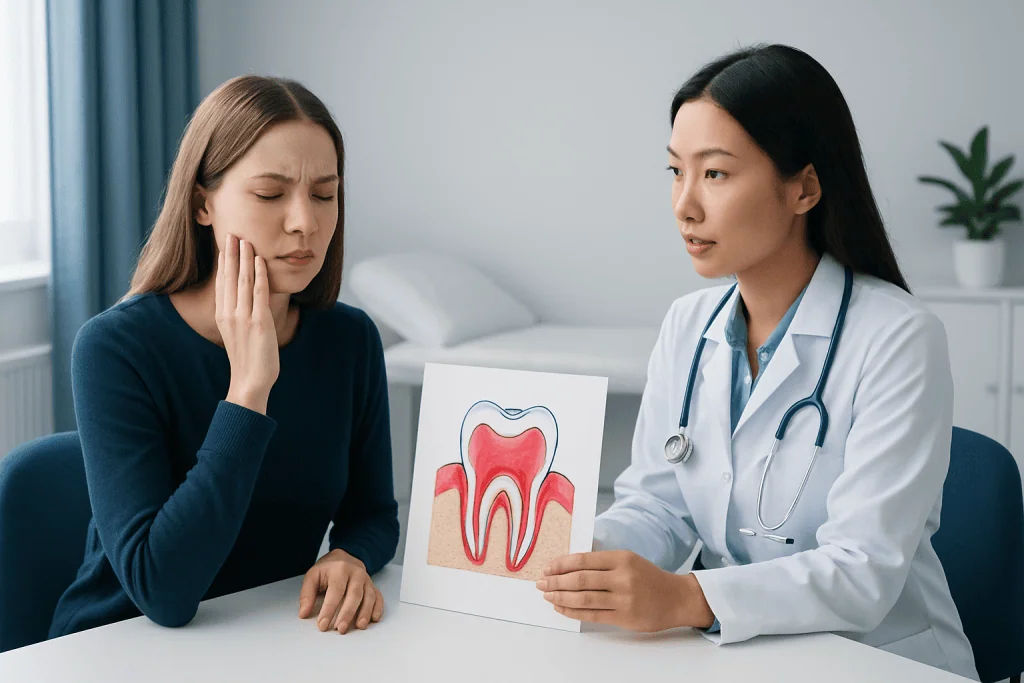
The most frequent cause of localized gum swelling is plaque buildup. Plaque is a sticky film of bacteria that collects along the gumline. If it is not removed well, it irritates the gum and causes inflammation. Over time, plaque can harden into tartar, which makes cleaning harder and increases the risk of gingivitis and more advanced periodontal disease.
Food trapped between teeth is another common trigger, especially when flossing is irregular or a filling shape encourages debris to lodge in one spot. The gum responds by becoming swollen and sore. Brushing too hard, using a toothpick aggressively, or injuring the gum with sharp foods can also produce short-term swelling.
In some cases, the source is the tooth rather than the gum alone. A cracked tooth, untreated cavity, or deep infection inside the tooth can spread to the surrounding tissues and create swelling near the root. Wisdom teeth or other erupting teeth may cause a flap of gum to become inflamed, a condition that can trap bacteria and become painful. People with dry mouth, diabetes, smoking exposure, hormonal changes, or braces may be more prone to gum irritation and infection because oral tissues become easier to inflame or harder to keep clean.
Less commonly, a swollen gum around one tooth can be related to a canker sore, medication-related gum enlargement, an allergic reaction to oral products, or a growth that needs examination. When swelling does not improve or seems unusual in appearance, a dentist should assess it rather than assuming it is simple irritation.
Red Flags That May Suggest Infection or a More Serious Problem
Some features suggest that the swelling is more than minor irritation. One of the most important red flags is pus or a pimple-like bump on the gum, which may indicate a dental abscess. An abscess is an infection that can start in the tooth or the surrounding gum and may require drainage, treatment of the tooth, and sometimes antibiotics depending on the situation.
Other warning signs include swelling that spreads into the cheek or jaw, fever, a feeling of pressure, swollen lymph nodes, trouble swallowing, or difficulty opening the mouth. These symptoms may mean the infection is extending beyond the gum tissue. Severe throbbing pain or pain that keeps a person awake can also suggest a deeper tooth infection.
A tooth that feels loose, changes color, or becomes very sensitive may point to significant disease in the supporting structures or inside the tooth. Persistent bleeding, gum recession, or repeated swelling in the same spot can be linked to periodontal disease and should be checked. In some situations, the dentist may recommend imaging and, if the tooth is affected, treatments such as root canal treatment or tooth extraction to remove the source of infection and protect surrounding tissues.
How Dentists Find the Cause
Diagnosis begins with a close look at the gums, teeth, and bite. The dentist asks when the swelling started, whether it is painful, whether bleeding or a bad taste is present, and if the person has had recent dental work, trauma, or problems with that tooth before. These details help narrow the cause quickly.
During the oral exam, the dentist checks for plaque, tartar, trapped food, gum pockets, tooth mobility, cavities, fractures, and signs of abscess. A gentle periodontal probe may be used to measure the space between the tooth and gum. This helps identify gum disease and areas where bacteria may collect below the gumline.
Dental X-rays are often useful when the cause is not obvious from the surface. They can show bone loss, decay, root problems, impacted teeth, or infection around the tooth root. If the swelling seems linked to a broader periodontal problem, the dentist may discuss periodontal treatment and a plan to control inflammation and prevent recurrence. The goal is not only to reduce the swelling but also to find and treat the reason it developed.
Treatment Options and What Usually Helps
Treatment depends on the cause. If plaque, tartar, or trapped debris is responsible, professional cleaning and improved daily oral hygiene may be enough. The dentist or dental hygienist may remove buildup around the tooth and show techniques for brushing and flossing more effectively, especially in hard-to-reach areas.
If the area is infected, treatment focuses on eliminating the source. A gum abscess may need cleaning or drainage. A tooth abscess may require treating the inside of the tooth, and sometimes the tooth cannot be saved. When gum disease is present, deeper cleaning below the gumline may be recommended. In selected situations, especially if tissue overgrowth or shape contributes to repeated inflammation, procedures such as gingivectomy may be discussed.
Home measures can provide comfort while waiting for care, but they are supportive rather than curative. Gentle brushing with a soft toothbrush, careful flossing, and warm salt-water rinses may help soothe mild irritation. Very hot, spicy, or hard foods may aggravate the area temporarily. People should avoid placing aspirin directly on the gum or using sharp objects to remove debris, as these can injure the tissue further.
Because treatment differs so much from one cause to another, self-diagnosis has limits. Swelling caused by a stuck popcorn hull is managed very differently from swelling caused by an abscess or periodontal pocket. A dental exam is the safest way to know which approach is appropriate.
Prevention and Everyday Self-Care
Preventing swollen gums usually comes down to reducing irritation and controlling plaque every day. Brushing twice daily with a soft-bristled toothbrush and cleaning between the teeth once a day help remove bacteria before inflammation develops. Good technique matters as much as frequency; brushing too hard can damage the gums instead of protecting them.
Regular dental checkups and professional cleanings are also important, because tartar cannot be removed by routine brushing at home. A dentist can identify areas where food tends to trap, fillings that need adjustment, early gum disease, or crowded teeth that make cleaning difficult. For people with braces, dry mouth, diabetes, or a history of periodontal disease, personalized advice is especially helpful.
Lifestyle factors can make a difference as well. Avoiding tobacco products, staying hydrated, and managing chronic conditions can support gum health. Choosing a balanced diet and limiting frequent sugary snacks may also help protect both teeth and gums. Near the end of a treatment journey, some patients may seek care in centers where dental and medical teams work together; Acibadem International’s multidisciplinary specialists in JCI-accredited hospitals diagnose and treat dental and gum conditions for international patients.
When to Seek Medical Care
A swollen gum around a tooth should be evaluated by a dentist if it lasts more than a few days, keeps coming back, or is accompanied by bleeding, pain, or a bad taste. Even if the discomfort seems mild, persistent swelling can mean plaque has collected below the gumline or a tooth problem is developing underneath the surface.
Prompt care is more important if there is pus, fever, facial swelling, severe throbbing pain, swelling that spreads, or difficulty swallowing or opening the mouth. These symptoms can indicate infection that needs urgent treatment. People with weakened immune systems, uncontrolled diabetes, or recent dental procedures should be especially cautious and seek advice sooner.
If symptoms start suddenly after trauma, a broken tooth, or recent dental work, early review is sensible. Fast assessment helps preserve the tooth when possible and lowers the chance of complications. When in doubt, a qualified dentist or doctor can decide whether the problem is a simple irritation or something requiring urgent attention.
Frequently asked questions
Why is my gum swollen around just one tooth?
Swelling around one tooth often happens because something local is irritating that specific area. Common reasons include trapped food, plaque buildup, a gum pocket, a cavity, a cracked tooth, or an abscess near the root.
Can swollen gums around a tooth go away on their own?
Mild swelling from temporary irritation may settle if the trigger is removed and oral hygiene improves. However, swelling caused by infection, tartar, or tooth disease usually does not fully resolve without dental treatment.
Is swollen gum around a tooth always a sign of infection?
No. It can happen from brushing too hard, food impaction, teething, or early gum inflammation without a true abscess. Still, pus, fever, severe pain, or a bad taste make infection more likely and should prompt an exam.
What can someone do at home for temporary relief?
Gentle brushing, careful flossing, and warm salt-water rinses may help soothe the area while waiting for dental advice. It is best to avoid smoking, very hard foods, and picking at the gum with sharp objects.
When is swollen gum around a tooth an emergency?
Urgent care is needed if swelling is accompanied by fever, facial swelling, severe throbbing pain, trouble swallowing, or difficulty opening the mouth. These can be signs that infection is spreading beyond the gum.
Can gum disease cause swelling around one tooth only?
Yes. Gum disease may affect one area first, especially where plaque collects easily or a deep gum pocket has formed. Localized swelling can be an early sign that the tissues around that tooth need attention.
References
- American Dental Association
- National Institute of Dental and Craniofacial Research
- Centers for Disease Control and Prevention
- American Academy of Periodontology
This article is for general information only and is not a substitute for professional medical advice. Please consult a qualified doctor about your individual situation.
Explore treatments in Turkey — costs, top hospitals & a free quote
JCI-accredited · board-certified surgeons · reply within 24h
Add us as a Preferred Source to see more of our trusted health content across Google Search, AI Overviews and Discover.

More from the Health Library



Related Specialists

Assoc. Prof. Dr. Muharrem Koçyiğit
Anesthesiology
Assoc. Prof. Dr. Zuhal Atan Uçar
Internal Medicine
Prof. Dr. Bora Peynircioğlu
Interventional Radiology
Dr. Ali Muslu
Pediatrics