Swollen Lymph Nodes Armpit: Possible Causes and When to Seek Care

Swollen lymph nodes armpit commonly happen when the immune system reacts to infection or inflammation nearby. Shaving irritation, skin infections, colds, vaccines, and arm or breast-area inflammation can all contribute.
Key Takeaways
- Swollen lymph nodes armpit commonly happen when the immune system reacts to infection or inflammation nearby.
- Shaving irritation, skin infections, colds, vaccines, and arm or breast-area inflammation can all contribute.
- A doctor may recommend an exam, blood tests, ultrasound, or sometimes a biopsy if swelling does not improve.
- Seek medical care sooner if the lump is hard, growing, lasts several weeks, or comes with fever, weight loss, or breast changes.
- Treatment depends on the cause and may range from observation to antibiotics or specialist care.
Swollen lymph nodes in the armpit are often a sign that the body is responding to infection, skin inflammation, or another immune trigger. Most causes are not serious, but persistent, painful, enlarging, or unexplained swelling should be assessed by a doctor.
Overview: what swollen lymph nodes in the armpit can mean
Swollen lymph nodes armpit usually mean that lymph nodes in the underarm area are reacting to something nearby or elsewhere in the body. Lymph nodes are small immune-system structures that help filter fluid and respond to infections, inflammation, and other changes. When they become active, they can enlarge and sometimes feel tender.
In many people, armpit lymph node swelling is linked to a minor and temporary problem such as a skin infection, shaving irritation, a recent viral illness, or a vaccine response. The swelling may affect one armpit or both, and the size can range from barely noticeable to a clearly felt lump.
At the same time, not every underarm lump is a lymph node. Cysts, inflamed sweat glands, lipomas, and breast-related conditions can also cause a lump in the armpit. Because the armpit contains lymph nodes, fatty tissue, sweat glands, nerves, and blood vessels, a medical evaluation may be helpful if the cause is not clear.
Most swollen lymph nodes settle once the trigger improves. However, if a node keeps growing, feels hard or fixed, or does not improve over time, doctors may look more closely to rule out conditions such as breast cancer or lymphoma.
Common symptoms and what they feel like
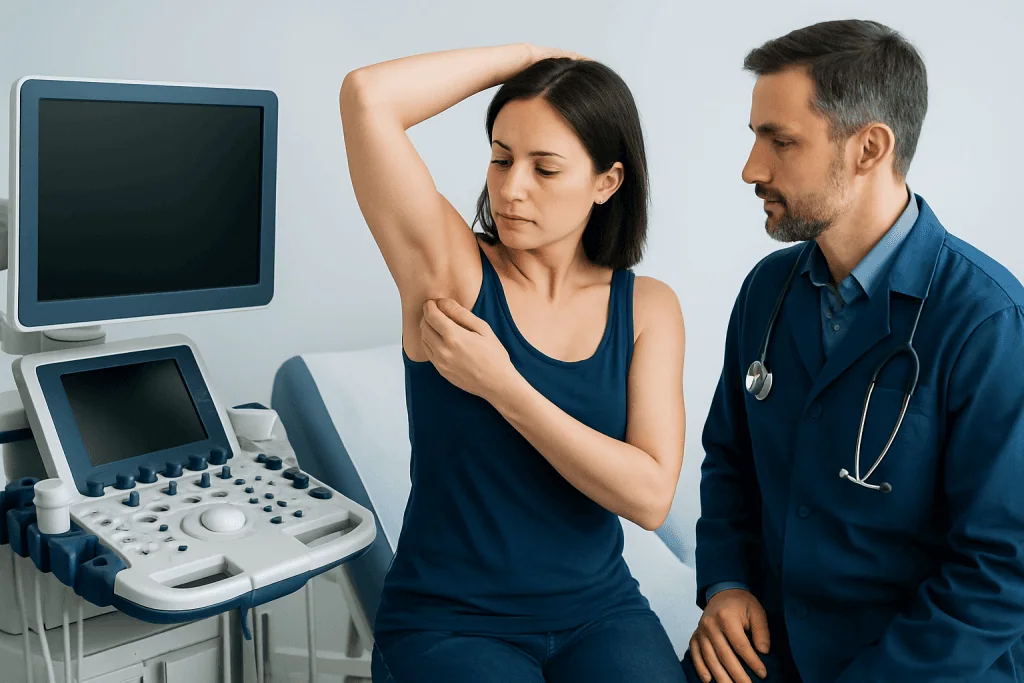
The most common symptom is a lump or fullness in the armpit. Some people notice it only when washing, applying deodorant, or raising the arm. Others may feel tenderness, soreness, or a pulling sensation in the underarm area.
Swollen lymph nodes can feel soft and movable, especially when they are reacting to infection. In some cases they may feel firmer. The skin over the area may appear normal, or there may be redness and warmth if a nearby skin infection or inflamed hair follicle is present.
Other symptoms depend on the underlying cause. If swelling is due to a viral illness, there may also be fever, fatigue, sore throat, or general body aches. If it is related to the skin, there may be a rash, a cut, an ingrown hair, or irritation from shaving or deodorant.
- A small or moderate lump in one or both armpits
- Tenderness or pain when touching the area
- Redness, warmth, or skin irritation nearby
- Symptoms of infection such as fever or sore throat
- Less commonly, breast discomfort or a breast lump
Possible causes and risk factors

Infections are among the most frequent reasons for swollen lymph nodes armpit. A bacterial skin infection, an infected cut on the arm or hand, or inflamed hair follicles can all make nearby axillary lymph nodes enlarge. Viral infections such as colds, flu, mononucleosis, or other systemic infections may also lead to temporary swelling.
Inflammation without infection can also play a role. Shaving, waxing, antiperspirants, and skin conditions such as eczema may irritate the underarm skin. Some people develop painful lumps from blocked or inflamed sweat glands, including hidradenitis suppurativa, which can be confused with lymph node swelling.
Vaccinations can occasionally cause temporary enlargement of lymph nodes, especially on the side where the injection was given. This is a sign of immune activation and often improves on its own. Autoimmune conditions such as rheumatoid arthritis or lupus may also cause enlarged lymph nodes.
Less commonly, swollen nodes in the armpit may be associated with breast conditions, blood cancers, or spread from another cancer. Risk factors that make medical assessment more important include older age, a personal history of cancer, persistent enlargement, unexplained weight loss, night sweats, or associated breast changes.
How doctors evaluate an armpit lump
Diagnosis begins with a careful medical history and physical examination. The doctor will ask when the swelling started, whether it is painful, whether there was a recent illness or vaccine, and whether there are symptoms involving the breast, skin, arm, or general health. They will also check whether the lump is mobile, soft, hard, or fixed to surrounding tissue.
If the cause appears temporary and harmless, a doctor may advise short-term observation. If the swelling is unexplained, persistent, or concerning on examination, further tests may be recommended. Blood tests can help look for infection or inflammation.
Imaging is often useful when the diagnosis is uncertain. An ultrasound can help show whether a lump is likely to be a lymph node, cyst, or another type of mass. If there are breast symptoms or risk factors, doctors may also recommend mammography or breast ultrasound as part of the evaluation.
In selected cases, a sample of tissue may be needed. This may involve a needle biopsy or a surgical biopsy if imaging and examination do not clearly explain the swelling. The goal is to identify the cause accurately so treatment can be tailored appropriately.
Treatment options depend on the cause
There is no single treatment for swollen lymph nodes armpit because the best approach depends on why the nodes are enlarged. If the cause is a mild viral illness or a recent vaccine, doctors often recommend watchful waiting. The swelling may gradually decrease over days to a few weeks.
If a bacterial infection is suspected, treatment may include antibiotics. When skin irritation or shaving-related inflammation is involved, avoiding the trigger and keeping the area clean and dry may help. For painful swelling, a doctor may suggest general comfort measures such as rest or warm compresses, provided there is no sign of a deeper abscess.
If the lump is due to a cyst, hidradenitis, or another non-lymph-node condition, treatment focuses on that specific problem. If a suspicious lymph node or a breast-related cause is found, referral to the appropriate specialist is important. In some cases, doctors may arrange biopsy to clarify the diagnosis.
When cancer or a hematologic condition is identified, treatment is guided by the exact diagnosis and stage. This may involve coordinated care between breast specialists, surgeons, hematologists, oncologists, and radiologists. The aim is to treat the underlying condition, not just the swollen node itself.
Self-care and monitoring at home
Self-care can be appropriate when the swelling is mild, recent, and clearly linked to a short-term issue such as a cold, a recent vaccine, or minor skin irritation. In these situations, it can help to avoid repeatedly pressing or checking the lump, as this may increase tenderness and make the area seem more inflamed.
Simple measures may include gentle hygiene, avoiding shaving until irritation settles, wearing loose clothing, and using warm compresses if recommended by a doctor. Hydration, rest, and allowing the body to recover from a viral illness can also be useful. It is best not to start antibiotics or other medications without medical advice.
Keeping track of the lump can be more useful than frequent touching. A person may note whether it is getting smaller, staying the same, or becoming larger over one to three weeks. Any new symptoms such as fever, worsening pain, redness, drainage, or breast changes should prompt reevaluation.
Self-care should not replace medical assessment if the cause is unclear. A persistent underarm lump deserves attention, especially if it has no obvious explanation or if there are risk factors for more serious disease.
When to seek medical care
Medical care is recommended if swollen lymph nodes armpit last longer than about two to four weeks, continue to enlarge, or return repeatedly. Evaluation is also important if the lump feels hard, irregular, or fixed in place rather than soft and movable.
A doctor should assess the area sooner if there are signs of infection that may need treatment, such as significant redness, warmth, worsening pain, pus, or fever. Care should also be sought if there is an associated breast lump, nipple discharge, skin dimpling, or swelling in the arm.
Prompt medical attention is especially important when the swelling comes with unexplained weight loss, drenching night sweats, persistent fatigue, or several enlarged lymph nodes in different parts of the body. These symptoms do not always mean a serious illness, but they do need proper evaluation.
For international patients who need specialist assessment, Acibadem International’s multidisciplinary teams and JCI-accredited hospitals diagnose and treat underarm lumps and related conditions, including breast and lymphatic disorders, with coordinated imaging and specialist care.
Frequently asked questions
Are swollen lymph nodes in the armpit usually serious?
Often, no. Many cases are related to temporary infections, skin irritation, or immune responses such as after vaccination. However, persistent or unexplained swelling should be checked by a doctor.
How long should a swollen armpit lymph node last?
It depends on the cause, but many reactive lymph nodes improve over days to a few weeks. If swelling lasts longer than two to four weeks, gets larger, or keeps returning, medical assessment is a good idea.
Can shaving cause swollen lymph nodes in the armpit?
Yes, it can contribute indirectly. Shaving may irritate the skin, cause small cuts, or lead to inflamed hair follicles, and nearby lymph nodes may react to that inflammation or infection.
Can a vaccine cause swollen lymph nodes in the armpit?
Yes. Some vaccines can temporarily enlarge lymph nodes, especially on the same side as the injection. This usually reflects normal immune activation and often settles with time.
What is the difference between an armpit cyst and a swollen lymph node?
A cyst usually forms from blocked skin structures and may feel more superficial, while a swollen lymph node is part of the immune system. Because the two can feel similar, a doctor or ultrasound may be needed to tell them apart.
Should someone worry about breast cancer if there is a lump in the armpit?
Not every armpit lump is related to breast cancer, and many are benign. Still, if the lump is persistent or there are breast symptoms such as a breast mass, nipple changes, or skin dimpling, prompt medical evaluation is important.
References
- Mayo Clinic
- National Health Service
- American Cancer Society
- Centers for Disease Control and Prevention
- Merck Manual Consumer Version
This article is for general information only and is not a substitute for professional medical advice. Please consult a qualified doctor about your individual situation.
Explore treatments in Turkey — costs, top hospitals & a free quote
JCI-accredited · board-certified surgeons · reply within 24h
Add us as a Preferred Source to see more of our trusted health content across Google Search, AI Overviews and Discover.