Symptoms That May Lead to Clinical Neurophysiology Testing

Clinical neurophysiology testing measures electrical activity in nerves, muscles, and the brain. Common reasons for testing include numbness, tingling, weakness, seizures, fainting-like events, and unexplained muscle symptoms.
Key Takeaways
- Clinical neurophysiology testing measures electrical activity in nerves, muscles, and the brain.
- Common reasons for testing include numbness, tingling, weakness, seizures, fainting-like events, and unexplained muscle symptoms.
- Tests may include EEG, EMG, nerve conduction studies, evoked potentials, or sleep-related neurophysiological assessments.
- These tests support diagnosis but are usually interpreted together with symptoms, examination, and imaging or blood tests.
- Many neurophysiology tests are outpatient procedures and are generally well tolerated.
Clinical neurophysiology testing helps doctors evaluate how the brain, spinal cord, nerves, and muscles are working. It may be recommended when symptoms such as numbness, weakness, seizures, tingling, muscle twitching, or certain sleep-related problems need closer assessment.
Overview
Clinical neurophysiology testing is a group of diagnostic tests used to assess how the nervous system functions. Rather than only showing structure, these tests help measure electrical activity in the brain, spinal pathways, peripheral nerves, and muscles. This information can be useful when symptoms suggest that a nerve, muscle, or brain signal may not be working as expected.
Doctors may recommend clinical neurophysiology testing when a person has symptoms that are difficult to explain with a routine examination alone. Examples include persistent tingling, unexplained muscle weakness, involuntary movements, episodes that may be seizures, or symptoms that raise concern about a sleep-related neurological disorder. The goal is not simply to name a condition, but to understand where the problem may be arising and how severe it may be.
Common neurophysiology tests include electroencephalography (EEG), electromyography (EMG), nerve conduction studies, evoked potentials, and some specialized sleep-related assessments. Each test looks at a different part of nervous system function. A clinician chooses the most appropriate test based on the person’s symptoms, medical history, and neurological examination.
Symptoms That May Lead to Testing
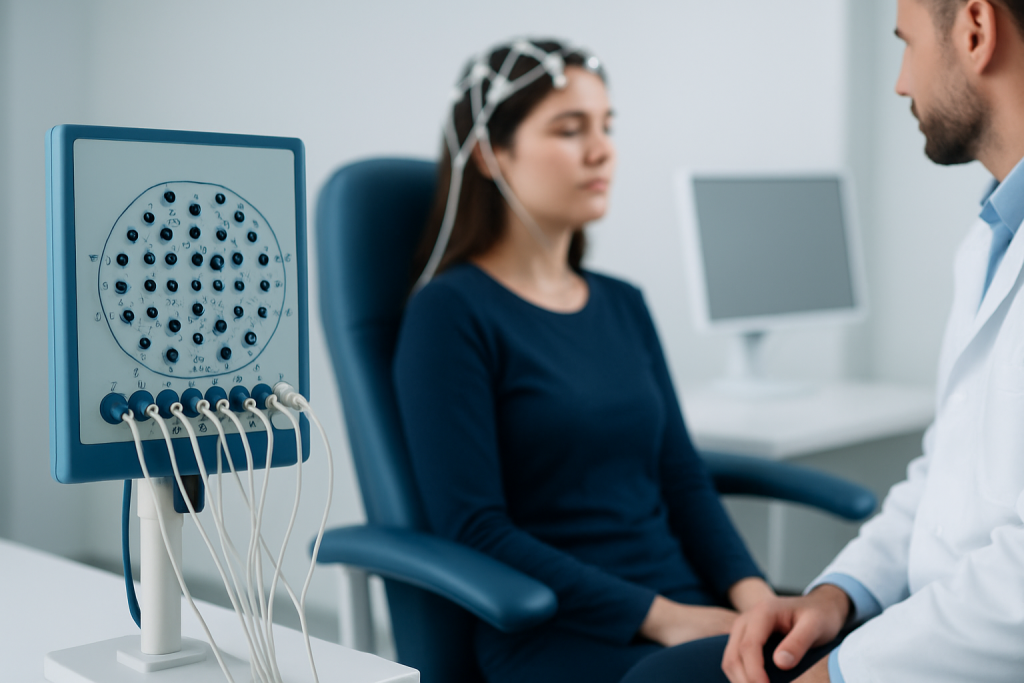
Symptoms that often lead to clinical neurophysiology testing usually involve changes in sensation, movement, awareness, or sleep. Persistent numbness, burning, tingling, electric shock-like sensations, or reduced feeling in the hands or feet may suggest a peripheral nerve problem. Weakness in one limb, difficulty lifting the foot, hand clumsiness, or trouble rising from a chair may point to a nerve or muscle disorder.
Muscle-related symptoms are another common reason for evaluation. These may include cramping, twitching, muscle wasting, stiffness, involuntary jerking, tremor, or unusual fatigue during activity. While these symptoms do not always mean a serious neurological problem, they may prompt tests such as EMG or nerve conduction studies to help identify the cause.
Brain-related symptoms may also lead to testing. Episodes of staring, blackouts, unexplained falls, periods of confusion, sudden jerking movements, or suspected seizures often prompt an EEG. Recurrent fainting-like events may need careful assessment to help distinguish neurological causes from other medical causes.
Some people are referred because of symptoms during sleep, such as unusual movements in sleep, pauses in breathing, excessive daytime sleepiness, or behaviors that suggest a neurological sleep disorder. In these situations, neurophysiological assessment may be part of a broader evaluation to understand what is happening during sleep and wakefulness.
- Numbness, tingling, or burning sensations
- Muscle weakness or loss of coordination
- Muscle twitching, cramps, or involuntary movements
- Suspected seizures or unexplained episodes of altered awareness
- Visual, sensory, or balance symptoms linked to nerve pathway dysfunction
- Sleep-related movement or neurological symptoms
Possible Causes and Risk Factors

Symptoms that lead to clinical neurophysiology testing can have many possible causes. Peripheral nerves may be affected by compression, injury, diabetes, vitamin deficiencies, autoimmune conditions, infections, or inherited disorders. For example, tingling and weakness in the hand may be related to nerve compression, while burning pain in the feet may suggest a more generalized nerve condition.
Muscle symptoms may arise from primary muscle disorders, problems at the junction between nerve and muscle, or diseases affecting the nerves that control the muscles. Brain-related symptoms such as seizures or unexplained episodes may be linked to epilepsy, prior head injury, stroke, infection, inflammation, metabolic problems, or other neurological conditions. Some symptoms can also overlap with non-neurological conditions, which is why testing is often only one part of the assessment.
Certain factors can increase the chance that neurophysiological testing will be helpful. These include a history of diabetes, thyroid disease, autoimmune illness, spine problems, repetitive strain, previous neurological disease, family history of neuromuscular disorders, or exposure to medications or substances that may affect nerves. Age, overall health, and the exact pattern of symptoms also guide decisions about testing.
In some cases, clinical neurophysiology is used to help evaluate known neurological disorders or to monitor changes over time. It may support the assessment of conditions such as epilepsy or other nerve and muscle problems when a clinician needs more detailed functional information.
How Doctors Diagnose the Problem
Before ordering clinical neurophysiology testing, the doctor usually begins with a detailed history and neurological examination. They may ask when symptoms started, whether they come and go, what makes them better or worse, and whether there are related symptoms such as pain, imbalance, speech changes, headache, or sleep disturbances. This first step is important because it helps determine which test, if any, is most suitable.
Different tests answer different questions. EEG records electrical activity in the brain and is often used when seizures or other episodes of altered awareness are suspected. EMG and nerve conduction studies examine how nerves send signals and how muscles respond, which can help in cases of numbness, weakness, or muscle symptoms. Evoked potentials measure how the brain responds to sensory stimulation and may be helpful when certain pathways need to be assessed.
Neurophysiology results are usually interpreted together with other information. A person may also need blood tests, imaging such as MRI, sleep studies, or referral to a specialist depending on the pattern of symptoms. A normal test can still be useful, because it may help narrow the range of possible causes.
Patients often wonder whether the test itself gives a final diagnosis. In many cases, the answer is no. Clinical neurophysiology provides valuable evidence about nervous system function, but the most accurate diagnosis usually comes from combining test findings with the clinical picture.
Common Types of Clinical Neurophysiology Tests
Electroencephalography, or EEG, records electrical activity from the scalp. It is commonly used to investigate suspected seizures, unusual episodes, and some sleep-related neurological concerns. The test is painless, though the setup takes time because small sensors are placed on the scalp. In selected situations, doctors may recommend longer monitoring or a more detailed video EEG monitoring assessment.
Electromyography and nerve conduction studies are often performed together. Nerve conduction studies use small electrical impulses to see how well nerves carry signals, while EMG evaluates muscle activity using a fine recording needle. These tests can help assess symptoms such as hand numbness, foot drop, leg pain, weakness, or muscle twitching. They are often used when there is concern about compression neuropathy, generalized nerve disease, or a neuromuscular condition, and may be part of a broader EMG evaluation.
Evoked potential tests measure how the nervous system responds to sensory input such as visual, auditory, or touch-related stimulation. These tests may help assess pathways that are not easily examined in other ways. They can be useful when symptoms involve vision, sensation, or coordination and a doctor wants to see how quickly and effectively signals travel through specific neural pathways.
Some patients may need sleep-related testing when symptoms mainly occur overnight or involve excessive daytime sleepiness. In these cases, neurophysiological assessment may be coordinated with sleep laboratory testing to better understand brain activity, breathing, and body movements during sleep.
Treatment Options After Testing
Treatment depends on the underlying cause found or suspected after the evaluation. Clinical neurophysiology testing does not treat symptoms directly, but it can guide the next steps. For example, treatment may involve managing diabetes-related nerve damage, relieving a compressed nerve, addressing a seizure disorder, correcting a vitamin deficiency, or planning rehabilitation for weakness or coordination problems.
In some cases, the results help confirm a diagnosis and allow treatment to begin sooner. In others, they help rule out certain conditions and prevent unnecessary treatments. Management may include medication, physical therapy, occupational therapy, lifestyle changes, further imaging, or referral to a neurologist, neurosurgeon, sleep specialist, or another clinician depending on the findings.
Some people need follow-up testing over time, especially if symptoms change or if the doctor wants to monitor response to treatment. This can be helpful in selected neuromuscular or seizure-related conditions. Clear communication with the care team is important so that the person understands what the test results mean and what the next steps are.
Near the end of the diagnostic pathway, some patients seek care at specialized centers. Acibadem International’s multidisciplinary specialists and JCI-accredited hospitals evaluate and treat neurological conditions for international patients when advanced neurophysiology expertise is needed.
Preparation, Self-care, and What to Expect
Preparation depends on the test being performed. For EEG, patients are often asked to arrive with clean hair and no styling products. For EMG or nerve conduction studies, it may help to avoid lotions or creams on the skin. The healthcare team may also ask about medications, implanted devices, pregnancy, bleeding disorders, or skin conditions so the test can be planned safely.
Most neurophysiology tests are outpatient procedures. EEG is painless, while nerve conduction studies may cause brief, mild discomfort from electrical stimulation, and EMG may cause temporary discomfort when the recording needle is placed in the muscle. These sensations are usually short-lived. Patients can often return to normal activities soon afterward unless the doctor gives other instructions.
While waiting for testing or results, simple self-care measures may still be helpful. Good sleep, regular meals, hydration, management of blood sugar if relevant, and avoiding excessive alcohol can support general neurological health. It is also useful to keep a symptom diary, especially if episodes are intermittent. Recording when symptoms happen, how long they last, and what seems to trigger them can help the medical team interpret findings more accurately.
When to See a Doctor
It is sensible to seek medical advice if neurological symptoms are new, persistent, worsening, or affecting daily life. Numbness that does not improve, repeated episodes of unexplained confusion, increasing weakness, loss of balance, or abnormal movements should be discussed with a doctor. Even when symptoms seem mild, a proper evaluation can help clarify whether testing is needed.
Urgent medical attention is important for sudden weakness, sudden speech difficulty, new facial drooping, a first seizure, prolonged loss of consciousness, severe head injury, or symptoms that may suggest stroke or another emergency. These situations need prompt assessment rather than routine outpatient testing.
For non-emergency concerns, a primary care doctor, neurologist, or neurophysiology specialist can advise whether clinical neurophysiology testing is appropriate. Early evaluation can help direct care more efficiently and provide reassurance when serious causes are not found.
Frequently asked questions
What is clinical neurophysiology testing?
Clinical neurophysiology testing refers to tests that measure electrical function in the brain, nerves, and muscles. These tests help doctors understand how the nervous system is working and can support the diagnosis of neurological or neuromuscular conditions.
Which symptoms commonly lead to neurophysiology tests?
Common symptoms include numbness, tingling, burning pain, muscle weakness, twitching, cramps, suspected seizures, unexplained blackouts, and some sleep-related symptoms. The exact test depends on which part of the nervous system the doctor needs to assess.
Are EEG and EMG the same test?
No. EEG records electrical activity in the brain and is often used for seizures or unusual episodes. EMG evaluates muscle activity, usually alongside nerve conduction studies, and is commonly used for weakness, numbness, or muscle symptoms.
Is clinical neurophysiology testing painful?
Many tests are well tolerated, though the experience varies. EEG is painless, while nerve conduction studies and EMG may cause brief discomfort. The healthcare team usually explains what to expect beforehand and works to keep the patient as comfortable as possible.
Can these tests diagnose every neurological problem?
Not by themselves. Neurophysiology tests provide important functional information, but doctors usually combine the results with medical history, examination, imaging, and laboratory tests. Sometimes a normal result is still useful because it helps rule out certain causes.
How should a person prepare for testing?
Preparation depends on the type of test. Patients may be asked to wash their hair before an EEG or avoid skin creams before EMG or nerve conduction studies. It is important to tell the care team about medications, implanted devices, and any medical conditions before the appointment.
References
- World Health Organization
- National Institute of Neurological Disorders and Stroke
- American Clinical Neurophysiology Society
- International League Against Epilepsy
- National Institute for Health and Care Excellence
This article is for general information only and is not a substitute for professional medical advice. Please consult a qualified doctor about your individual situation.
Clinical Neurophysiology in Turkey — costs, top hospitals & a free quote
JCI-accredited · board-certified surgeons · reply within 24h
Add us as a Preferred Source to see more of our trusted health content across Google Search, AI Overviews and Discover.

Neurology
Diagnosis and treatment of disorders of the brain, spinal cord, nerves and muscles.
51 specialists in this unit