Targeted Delivery Radiopharmaceuticals Cancer Treatment: How It Works, Results and What to Expect

Radiopharmaceutical therapy combines a targeting molecule with a radioactive isotope to deliver radiation to cancer cells. It is not suitable for every cancer; eligibility depends on cancer type, target expression, previous treatment and organ function.
Key Takeaways
- Radiopharmaceutical therapy combines a targeting molecule with a radioactive isotope to deliver radiation to cancer cells.
- It is not suitable for every cancer; eligibility depends on cancer type, target expression, previous treatment and organ function.
- Treatment is carefully planned by a multidisciplinary team, often including medical oncology, nuclear medicine, radiation oncology and radiopharmacy.
- Side effects vary by medicine and cancer type but can include fatigue, nausea and temporary reductions in blood cell counts.
- Response and success rates differ widely, so an individual prognosis should be discussed with the treating oncology team.
Targeted delivery radiopharmaceuticals cancer treatment uses a radioactive medicine that seeks out certain cancer cells and delivers radiation from within the body. It may be used for selected cancers when tumor features, scan findings and overall health indicate that this approach is appropriate.
Overview: targeted radiation delivered from inside the body
Targeted delivery radiopharmaceuticals cancer treatment is a form of systemic radiation treatment. A radiopharmaceutical is a medicine that carries a small amount of radioactive material. Its targeting component is designed to bind to a feature on particular cancer cells, allowing radiation to be delivered close to those cells after the medicine circulates through the bloodstream.
Unlike external beam radiation therapy, which directs radiation at an area from outside the body, radiopharmaceutical therapy travels to cancer sites that express the intended target. This can be especially useful when cancer has spread to multiple locations or cannot be fully treated with surgery or localized radiation. The goal may be to slow cancer growth, shrink tumors, relieve symptoms, or extend disease control, depending on the individual situation.
Different radiopharmaceuticals are used for different cancers. Examples include radioiodine for certain thyroid cancers, radioligand therapies for selected prostate and neuroendocrine tumors, and bone-targeting radioactive medicines in specific clinical settings. These treatments are highly specialized and are planned with imaging, laboratory testing and close follow-up.
What is radiopharmaceutical therapy and how is it used in cancer treatment?
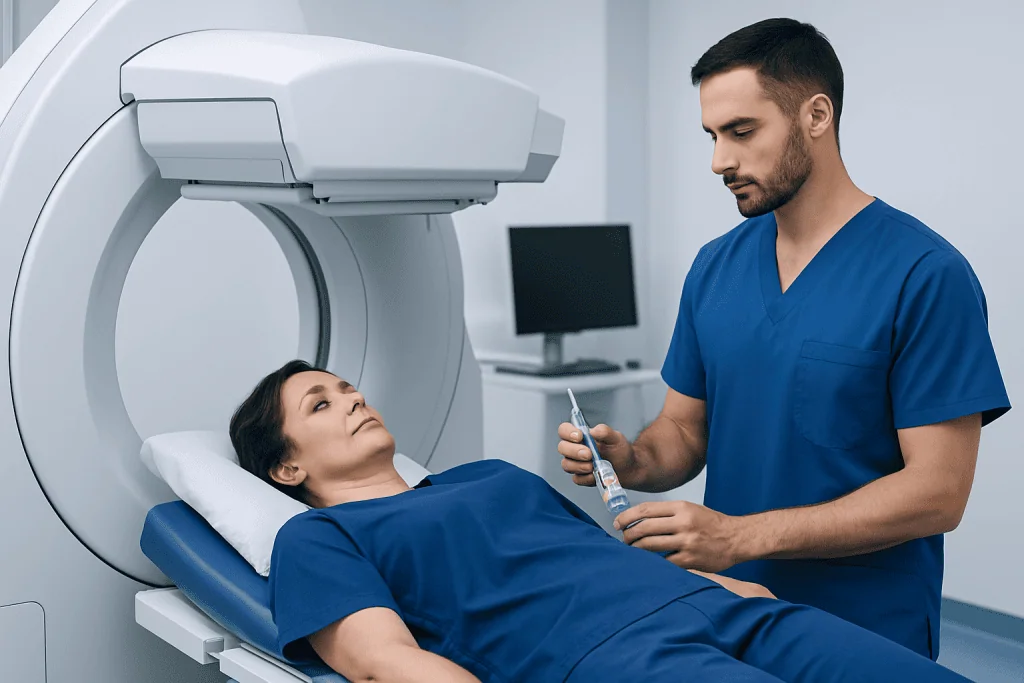
Radiopharmaceutical therapy, also called molecular radiotherapy or radionuclide therapy, uses a radioactive drug rather than a radiation machine. The drug generally has two parts: a molecule that recognizes a biological target and a radionuclide that emits radiation. After the medicine attaches to its target, the emitted radiation damages cancer-cell DNA and can reduce the cells’ ability to divide and survive.
Before treatment, doctors may use a related imaging scan to confirm that the tumor takes up the targeting molecule. This approach, sometimes called theranostics, connects diagnosis and therapy: imaging helps identify patients whose tumors are likely to receive the therapeutic medicine. Not every radiopharmaceutical requires the same preparation, imaging method or treatment setting.
Radiopharmaceutical therapy may be used alone in selected circumstances, but it is more often one part of a broader cancer plan. Medical treatments such as hormone therapy, chemotherapy, immunotherapy or targeted medicines, as well as surgery and external radiation, may be considered before, alongside or after it. The treatment plan should reflect the cancer’s biology, location, extent and prior therapies.
Who may be a candidate for targeted delivery radiopharmaceuticals?

Candidacy begins with the cancer type and the presence of a suitable target. For example, some prostate cancers show prostate-specific membrane antigen (PSMA) on imaging, while some neuroendocrine tumors show somatostatin receptors. Thyroid tissue often takes up iodine, making radioiodine a useful option for certain differentiated thyroid cancers. A positive target scan does not automatically mean treatment is suitable, but it provides important information.
Clinicians also consider the extent and pace of cancer, symptoms, prior treatments, expected benefit, bone marrow reserve, kidney and liver function, blood test results, and a person’s daily functioning. Pregnancy and breastfeeding require special consideration because radiation may harm a developing baby or pass into breast milk. People should tell their team about all medicines, supplements and relevant medical conditions.
Care is commonly coordinated by nuclear medicine physicians, medical oncologists, radiation oncologists, radiologists, pathologists, pharmacists and nursing teams. For patients with advanced prostate cancer, assessment may occur alongside planning for prostate cancer care. A multidisciplinary discussion helps clarify whether a radiopharmaceutical is appropriate now or whether another treatment should come first.
Step by step: what happens during the procedure?
The process usually starts with consultation, review of pathology and scans, and blood tests. The team explains the purpose of treatment, potential side effects, radiation-safety instructions and follow-up plan. Depending on the medicine, patients may need specific preparation, such as pausing selected medications, following dietary guidance, receiving medicines to protect certain organs, or maintaining good hydration.
On treatment day, the radiopharmaceutical is commonly given through a vein, although some forms are taken by mouth. The administration itself is often brief, but the overall visit can take longer because of preparation, monitoring and safety procedures. Some therapies are delivered as an outpatient service, while others require a short hospital stay in a radiation-protected room, based on the isotope used and local regulations.
After administration, the team provides individualized instructions to reduce unnecessary radiation exposure to others. These can include careful hand hygiene, flushing the toilet more than once, managing bodily fluids safely, drinking fluids if advised, and temporarily limiting close or prolonged contact with pregnant people and young children. Instructions vary substantially by treatment and should be followed exactly.
For eligible patients, radiopharmaceutical therapy is planned as a course of care rather than a single isolated event. Additional cycles may be scheduled weeks apart, and response is monitored using symptoms, physical examinations, blood markers, imaging and laboratory tests.
How do you feel after targeted radiation?
Many people feel well enough to return home the same day after outpatient treatment, although tiredness is common for several days. Some patients experience nausea, reduced appetite, a mild temporary increase in pain from affected areas, dry mouth, altered taste, or bowel changes. The exact effects depend on the radiopharmaceutical, the organs that take up the medicine and the person’s health before treatment.
Some side effects develop gradually rather than immediately. Radiation exposure to bone marrow can lower red cells, white cells or platelets, which is why regular blood tests are important. Certain treatments can affect the kidneys, salivary glands, thyroid-related tissues or other organs, depending on how the medicine is distributed in the body. The treating team may adjust timing, provide supportive care or reconsider future cycles if side effects occur.
Most patients can resume light daily activities according to how they feel and the radiation-safety guidance they receive. Rest, fluid intake when permitted, balanced meals and timely reporting of symptoms can support recovery. Patients should not assume that new or worsening symptoms are expected; the oncology team should be contacted for individualized advice.
Benefits, risks and how successful targeted therapy can be
The potential benefit of targeted radiopharmaceutical treatment is its ability to deliver radiation preferentially to tumor cells carrying the relevant target while limiting radiation to much of the surrounding healthy tissue. It can reach cancer deposits in different parts of the body and may provide symptom relief or disease control when local treatments alone are not enough. However, it is still systemic treatment and can affect normal tissues that take up the medicine or are exposed to circulating radiation.
Risks can include temporary or longer-lasting low blood counts, fatigue, nausea, kidney effects, dry mouth, and effects specific to the medicine being used. Rare but serious complications can occur, particularly in people with limited bone marrow reserve or significant organ impairment. The team weighs these risks against expected benefit and discusses alternatives before treatment.
How successful is targeted therapy for cancer? Targeted therapy is a broad term that includes many different medicines, so there is no single answer. With radiopharmaceutical therapy, outcomes depend on the cancer type, its target expression, the amount and location of disease, previous treatments, overall health and the treatment goal. Some people have measurable tumor shrinkage, while others have stable disease or symptom improvement; some cancers do not respond.
What is the success rate of targeted radiation therapy? A single success rate would be misleading because different radiopharmaceuticals are studied in different cancers and used at different points in care. Doctors assess benefit using the most relevant measures for the individual, such as scan results, tumor markers, pain control, time without disease progression, quality of life and survival outcomes. The oncology team can explain evidence for a specific medicine and provide a more personal estimate based on clinical details.
Recovery, follow-up and when to seek medical care
Recovery timelines vary. Short-term effects may improve over days to a few weeks, while blood count changes can appear later and may take weeks to recover. Follow-up appointments are essential because they allow the team to review symptoms, check blood and organ function, interpret imaging, and determine whether further treatment cycles are safe and useful.
Patients should contact their cancer team promptly if they develop fever, chills, unusual bruising or bleeding, severe or persistent vomiting, inability to drink fluids, worsening shortness of breath, chest pain, confusion, severe weakness, markedly reduced urination, or new symptoms that feel urgent. These symptoms can have many causes and should be assessed rather than managed alone.
Acibadem International’s multidisciplinary specialists and JCI-accredited hospitals provide evaluation and treatment planning for international patients who may be considered for radiopharmaceutical therapy. Individual recommendations should always be made by a qualified oncology and nuclear medicine team after a full clinical assessment.
Frequently asked questions
Is radiopharmaceutical therapy the same as chemotherapy?
No. Chemotherapy uses drugs that affect rapidly dividing cells, while radiopharmaceutical therapy uses a radioactive medicine designed to deliver radiation near cancer cells with a specific target. Both are systemic treatments and may sometimes be included in the same overall cancer-care plan.
Does targeted radiopharmaceutical treatment make a person radioactive?
For a limited period, some radiation may leave the body through urine, sweat, saliva or stool, depending on the treatment. The care team provides practical safety instructions to protect household members and the public. These instructions are temporary and differ by radiopharmaceutical.
How long does a radiopharmaceutical treatment appointment take?
The injection or oral dose may take only a short time, but preparation, observation and radiation-safety education can make the visit several hours long. Some treatments require an overnight or longer stay in a protected hospital room. The expected schedule should be discussed before the appointment.
Can radiopharmaceutical therapy cure cancer?
In some settings, such as selected thyroid cancers treated with radioiodine, radiopharmaceutical therapy may be used with curative intent. In many advanced cancers, the purpose is more often disease control, tumor reduction or symptom relief. The likely aim depends on the specific cancer and stage.
Will side effects happen immediately after treatment?
Some effects, such as tiredness or nausea, may occur on the day of treatment or in the following days. Others, including changes in blood counts, may develop later and are identified through scheduled testing. Reporting symptoms early helps the clinical team provide appropriate support.
Can family members stay near a patient after treatment?
Usually yes, but temporary distance and hygiene precautions may be needed, particularly around pregnant people and young children. The required precautions depend on the radioactive isotope, dose and local safety regulations. Patients should follow the written instructions provided by their treatment center.
References
- International Atomic Energy Agency
- National Cancer Institute
- European Society for Medical Oncology
- Society of Nuclear Medicine and Molecular Imaging
- American Cancer Society
This article is for general information only and is not a substitute for professional medical advice. Please consult a qualified doctor about your individual situation.
Oncology care in Turkey — second opinion and treatment plan
JCI-accredited · board-certified surgeons · reply within 24h
Add us as a Preferred Source to see more of our trusted health content across Google Search, AI Overviews and Discover.

More from the Health Library



Related Specialists

Funda Özdemir
Physical Medicine & Rehabilitation
Dr. Elif Külahçı Aslan
Gynecology & Obstetrics
Dr. Emre Şentürk
Anesthesiology
Dr. Ahmet Körceğiz
Pediatrics