Tay Sachs Disease: Diagnosis, Outlook, and Modern Treatment Approaches

Tay Sachs disease is caused by inherited changes in the HEXA gene. It leads to a lack of the hexosaminidase A enzyme, causing harmful buildup in nerve cells.
Key Takeaways
- Tay Sachs disease is caused by inherited changes in the HEXA gene.
- It leads to a lack of the hexosaminidase A enzyme, causing harmful buildup in nerve cells.
- Infantile Tay Sachs is the most severe form, but juvenile and adult-onset forms also exist.
- Diagnosis typically combines clinical assessment, enzyme testing, and genetic testing.
- There is no cure yet, but supportive treatment can improve comfort, safety, and quality of life.
- Genetic counseling helps families understand carrier status and future pregnancy options.
Tay Sachs disease is a rare inherited disorder that damages nerve cells because the body cannot properly break down certain fatty substances in the brain and spinal cord. Diagnosis usually involves enzyme testing and genetic testing, while treatment focuses on supportive care, symptom management, and family-centered planning.
Overview: what Tay Sachs disease is
Tay Sachs disease is a rare inherited neurological condition. It happens when the body does not make enough of an enzyme called hexosaminidase A, which is needed to break down a fatty substance known as GM2 ganglioside. When this substance builds up, it gradually damages nerve cells in the brain and spinal cord.
The condition is passed down in an autosomal recessive pattern. This means a child usually develops the disease only if both parents carry a changed copy of the HEXA gene and both pass that changed copy on. Parents who are carriers often have no symptoms themselves.
There are different forms of tay sachs disease. The infantile form begins in early infancy and is the most severe. Less common juvenile and adult-onset forms may appear later and often progress more slowly, but they can still significantly affect movement, speech, coordination, and daily function.
Symptoms and how the condition may progress
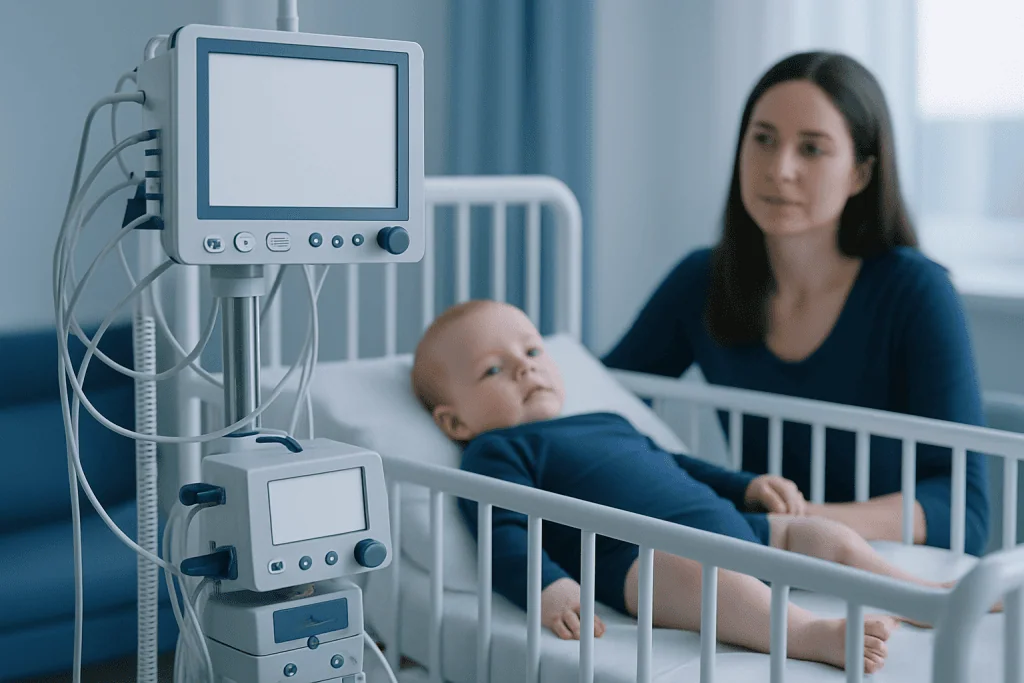
Symptoms depend on the age of onset. In infantile Tay Sachs disease, early development may seem typical for the first few months of life. Over time, families may notice loss of previously learned skills, increasing sensitivity to sound, reduced eye contact, muscle weakness, and delayed movement.
As the disorder progresses, children may develop feeding difficulties, seizures, vision loss, stiffness, swallowing problems, and breathing complications. A doctor examining the eyes may sometimes see a characteristic “cherry-red spot” in the retina, which can support the diagnosis in the right clinical setting.
Juvenile and adult-onset forms can look different. Symptoms may include clumsiness, tremor, muscle weakness, balance problems, slurred speech, mood or behavioral changes, and gradual loss of coordination. Because these later forms are uncommon and may resemble other neurological conditions, diagnosis can be delayed.
- Infantile form: developmental slowing, loss of skills, startle response, seizures
- Juvenile form: learning or movement difficulties, speech changes, coordination problems
- Adult-onset form: gait changes, weakness, tremor, psychiatric or cognitive symptoms in some people
Causes, inheritance, and risk factors

The direct cause of tay sachs disease is a disease-causing variant in the HEXA gene. This gene gives instructions for making one part of the hexosaminidase A enzyme. Without enough working enzyme, GM2 ganglioside accumulates in nerve cells and causes progressive injury.
The main risk factor is family history or carrier status. If both parents are carriers, each pregnancy has a chance of resulting in an affected child, a carrier child, or a child who inherits no altered copies. Genetic counseling is important for understanding these possibilities clearly and accurately.
Tay Sachs disease can occur in any population, but carrier screening is especially important in groups known to have higher carrier frequencies. Even so, a person without a known family history can still be a carrier. For that reason, some people learn about risk only after a child develops symptoms or after expanded reproductive screening.
How Tay Sachs disease is diagnosed
Diagnosis usually begins with a careful medical history, neurological examination, and review of developmental changes. In an infant, doctors may investigate if there is regression of milestones, unusual startle responses, or concerns about vision, tone, or feeding. In older children or adults, symptoms such as coordination problems or progressive weakness may prompt a neurological work-up.
The key laboratory test is enzyme analysis showing reduced or absent hexosaminidase A activity. Genetic testing can then confirm changes in the HEXA gene. Together, these tests help establish the diagnosis and may also clarify whether a person is affected or is a symptom-free carrier.
Additional tests may help assess complications and rule out other disorders. These can include eye examination, brain imaging, swallowing evaluation, and seizure assessment if needed. In some families, prenatal testing or preconception carrier screening may be discussed after diagnosis in an affected relative.
Because tay sachs disease affects the nervous system, families may be referred to specialists in neurology care or pediatric neurology for coordinated assessment. Related inherited neurological conditions may also be considered during evaluation, depending on age and symptom pattern.
Modern treatment approaches and supportive care
There is currently no established cure that reverses nerve cell damage in Tay Sachs disease. Treatment focuses on supportive care, symptom control, and maintaining comfort, nutrition, mobility, and safety for as long as possible. The care plan is usually tailored to the person’s age, symptoms, and rate of progression.
Supportive treatment may involve seizure management, nutrition support, respiratory care, physical therapy, occupational therapy, speech and swallowing assessment, and equipment to improve positioning and comfort. Families often benefit from coordinated input from neurologists, rehabilitation specialists, nutrition experts, respiratory teams, and palliative care professionals.
Research into new approaches such as gene-based therapies, substrate reduction strategies, and other targeted methods is ongoing. These treatments remain an active area of study, and eligibility for clinical trials depends on many factors. Families should discuss emerging options with a qualified specialist to understand what is available, what remains investigational, and what may be appropriate.
Some children and adults may also need physical therapy and rehabilitation to preserve movement and reduce complications related to stiffness or weakness. If swallowing becomes difficult, doctors may evaluate nutritional support needs and recommend a safer feeding plan.
Living with Tay Sachs disease: daily care and family planning
Daily management often centers on preserving quality of life. Families may need guidance on feeding techniques, safe positioning, airway clearance, sleep comfort, communication support, and adapting the home environment. Regular follow-up helps anticipate changes rather than only reacting to urgent problems.
Emotional support is also important. Caring for a child or adult with a progressive neurological condition can be physically and emotionally demanding. Social workers, psychologists, palliative care teams, and patient support organizations may help families navigate practical decisions and long-term care planning.
Genetic counseling is a key part of care after diagnosis. Counselors can explain inheritance, discuss carrier testing for relatives, and review reproductive options such as preconception testing, prenatal diagnosis, or assisted reproductive approaches when appropriate. If doctors are considering other inherited neurodegenerative conditions, they may compare findings with disorders such as Huntington’s disease, although Tay Sachs has a distinct genetic cause and usually presents differently.
Near the end of the diagnostic and care journey, some international families seek multidisciplinary evaluation at centers experienced in neurological and genetic conditions. Acibadem International’s multidisciplinary specialists and JCI-accredited hospitals diagnose and treat complex neurological disorders for international patients when advanced assessment is needed.
When to seek medical care
Medical review is important if an infant loses previously learned skills, becomes unusually stiff or floppy, has feeding problems, shows decreased visual attention, or develops seizures. These signs do not always mean tay sachs disease, but they do need prompt assessment by a qualified doctor.
Older children or adults should seek care for steadily worsening balance, tremor, speech changes, weakness, or unexplained decline in coordination. Progressive neurological symptoms should not be ignored, especially when there is a family history of inherited disease.
Urgent medical attention is needed for breathing difficulty, prolonged seizures, choking episodes, severe dehydration, or sudden changes in alertness. Early evaluation can help identify the cause, improve symptom control, and connect the person with the right specialists and support services.
Frequently asked questions
What is Tay Sachs disease?
Tay Sachs disease is a rare inherited disorder that affects the brain and spinal cord. It happens when the body lacks enough of the hexosaminidase A enzyme, leading to harmful buildup of fatty material inside nerve cells.
Is there a cure for Tay Sachs disease?
At present, there is no proven cure that can reverse the underlying nerve damage. Treatment focuses on supportive care, symptom relief, and improving comfort, safety, and daily functioning.
How is Tay Sachs disease diagnosed?
Doctors usually diagnose it with enzyme testing and genetic testing, along with a neurological evaluation and review of symptoms. In some cases, eye examinations or other tests are also used to assess complications and rule out similar conditions.
Can adults have Tay Sachs disease?
Yes. Although the infantile form is the best known, there are juvenile and adult-onset forms. Adult-onset Tay Sachs disease may cause weakness, coordination problems, tremor, speech changes, or psychiatric symptoms in some people.
Who should consider carrier screening for Tay Sachs disease?
People with a family history of Tay Sachs disease or known carrier status in the family should discuss screening with a doctor or genetic counselor. Screening may also be considered before pregnancy or when expanded carrier testing is being planned.
What support do families usually need after diagnosis?
Families often need coordinated care from neurologists, therapists, nutrition specialists, and sometimes respiratory or palliative care teams. Emotional support, practical home-care guidance, and genetic counseling are also important parts of long-term management.
References
- National Institute of Neurological Disorders and Stroke
- MedlinePlus
- National Organization for Rare Disorders
- Genetics Home Reference / MedlinePlus Genetics
- GeneReviews
This article is for general information only and is not a substitute for professional medical advice. Please consult a qualified doctor about your individual situation.
Joint and spine care in Turkey — expert assessment & treatment
JCI-accredited · board-certified surgeons · reply within 24h
Add us as a Preferred Source to see more of our trusted health content across Google Search, AI Overviews and Discover.