Technology in Turkey vs Home Country: What International Patients Should Compare

The best technology is not always the newest machine, but the one used appropriately by experienced teams. Patients should compare imaging, surgical systems, laboratory support, digital records, and infection-control standards.
Key Takeaways
- The best technology is not always the newest machine, but the one used appropriately by experienced teams.
- Patients should compare imaging, surgical systems, laboratory support, digital records, and infection-control standards.
- Hospital accreditation, multidisciplinary care, and clear communication are as important as the equipment itself.
- A useful comparison includes pre-travel evaluation, recovery planning, and follow-up after returning home.
- Patients should ask practical questions about who performs the treatment, how often it is done, and what support is available if plans change.
When comparing medical technology in Turkey with a home country, international patients should look beyond brand names and focus on how technology is used in diagnosis, treatment planning, safety, and follow-up care. The most helpful comparison balances equipment, specialist experience, accreditation, communication, and continuity of care.
Overview: What “Technology” Really Means in Healthcare
For international patients, comparing healthcare technology can feel overwhelming. Hospital websites often highlight advanced scanners, robotic systems, or minimally invasive techniques, but these features alone do not show the full picture. In practice, technology includes not only the machine or platform itself, but also the clinical team using it, the hospital systems supporting it, and the safety processes built around patient care.
A meaningful comparison between Turkey and a home country should therefore focus on value in the clinical sense: whether the technology helps doctors diagnose accurately, plan treatment carefully, reduce avoidable risks, and support recovery. In many cases, a well-coordinated team using proven tools effectively may matter more than having the latest device on paper.
It also helps to remember that not every condition needs the most complex technology. Some health concerns are managed best with standard imaging, established surgical methods, or careful monitoring rather than highly specialized interventions. Patients benefit most when the chosen hospital explains why a specific technology is recommended for their needs, what alternatives exist, and how that choice may affect comfort, recovery time, and expected follow-up.
What International Patients Should Compare First
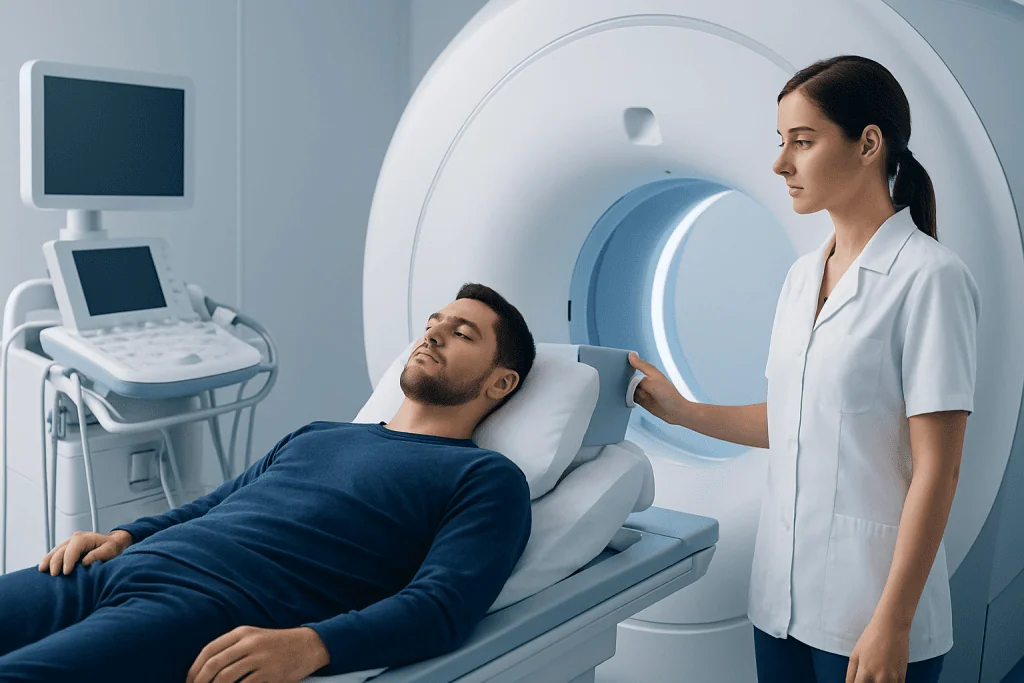
A good starting point is to compare technology across the whole patient journey rather than a single procedure. This includes diagnostic tools, treatment planning systems, operating room capabilities, anesthesia support, intensive care if needed, rehabilitation services, and digital communication after discharge. Looking at one impressive machine without considering these connected services can lead to an incomplete decision.
Patients may find it useful to compare the following areas:
- Imaging quality, such as MRI, CT, ultrasound, mammography, or PET-CT where relevant
- Laboratory and pathology support for fast, reliable test results
- Surgical technology, including minimally invasive, endoscopic, navigation-guided, or robotic systems when appropriate
- Radiation therapy planning and delivery for cancer care, where relevant
- Electronic medical records, image sharing, and telemedicine options
- Infection prevention, sterilization standards, and critical care backup
It is also wise to compare how consistently these services are available. A hospital may own advanced equipment, but patients should ask whether it is routinely used for their condition, whether trained specialists are available every day, and whether the technology is integrated into standard care pathways. Reliability and coordination often matter just as much as novelty.
Diagnostic Technology: Accuracy Before Treatment
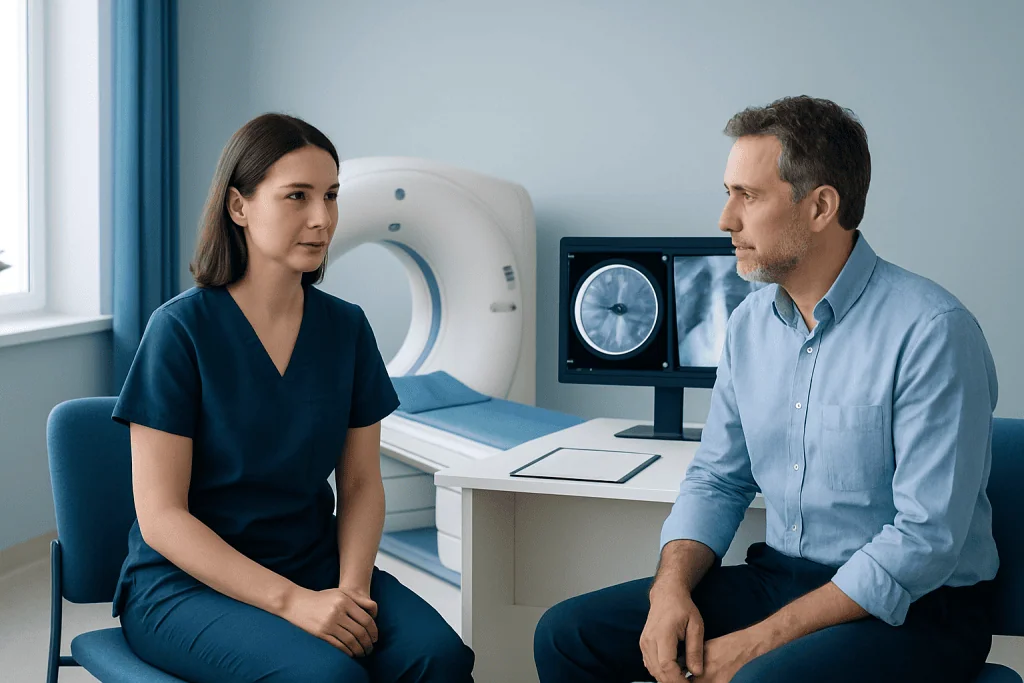
Accurate diagnosis is one of the most important reasons patients compare healthcare systems. Advanced imaging and laboratory technology can help doctors identify a condition earlier, define its stage or severity, and avoid unnecessary procedures. For many international patients, the quality and speed of diagnosis can strongly influence whether travel for care is worthwhile.
When comparing diagnostic technology in Turkey with a home country, patients should look at more than scanner names. They should ask who interprets the results, whether subspecialist radiologists or pathologists are involved, and how findings are discussed in a multidisciplinary setting. A high-quality scan is most useful when the report is detailed, timely, and clinically relevant.
For some conditions, advanced imaging may support treatment planning directly. Examples include precise evaluation before an MRI scan, complex cross-sectional imaging before a CT scan-guided workup, or metabolic and anatomical assessment using PET-CT imaging when indicated. The key question is whether these tools are used thoughtfully to answer a clear clinical question, rather than simply being offered because they are available.
Procedure and Surgical Technology: Expertise Matters Most
Many patients specifically compare procedural and surgical technology, such as robotic systems, laparoscopy, endoscopy, image-guided interventions, or navigation platforms. These tools can support smaller incisions, greater precision, shorter hospital stays, or improved visualization in selected cases. However, they are not automatically better for every patient or every diagnosis.
The most important factor is whether the clinical team has strong experience with the method being proposed. Patients should ask how often the surgeon or specialist performs the procedure, how cases are selected, what alternatives are available, and how complications are handled if they occur. A technology-enabled procedure tends to work best in centers where the full team—surgeons, anesthesiologists, nurses, radiologists, and rehabilitation staff—uses that approach regularly.
It may also help to compare how treatment decisions are made. In a well-organized hospital, technology supports individualized planning rather than replacing clinical judgment. Some patients may need minimally invasive treatment, while others benefit from a more traditional approach based on anatomy, previous surgeries, overall health, or recovery goals. Clear explanations are a sign that the technology is being used appropriately.
Safety, Accreditation, and Quality Systems
Advanced equipment is only one part of high-quality care. International patients should also compare the systems that make treatment safe: infection control, sterilization protocols, anesthesia safety, blood bank support, emergency response, medication management, and postoperative monitoring. These systems are often less visible than scanners or robots, but they are central to good outcomes.
Hospital accreditation can be a useful sign that safety and quality processes are evaluated against recognized standards. Patients may wish to ask whether the hospital is internationally accredited, how departments monitor quality, and whether there are protocols for surgical checklists, imaging review, and multidisciplinary case discussion. No accreditation can guarantee a result, but it can help patients understand how care is organized and overseen.
Another practical point is backup capability. If a patient needs an unplanned overnight stay, intensive observation, or specialist input from another department, the hospital should be able to provide it promptly. This is especially important for people traveling abroad for surgery, cancer care, heart procedures, or treatment of complex conditions such as cancer or coronary artery disease.
Digital Health, Communication, and Continuity of Care
Modern healthcare technology is not limited to treatment rooms. Digital systems can improve the patient experience before travel, during admission, and after returning home. International patients often benefit from secure sharing of scans and reports, online second opinions, video consultations, electronic prescriptions where appropriate, and coordinated communication with their local doctor.
When comparing providers, patients should ask how medical records are shared, whether imaging can be transferred digitally, and how follow-up questions are handled after discharge. Clear communication is especially important when patients have language differences, complex medication lists, or multiple specialists involved in their care. A technologically advanced hospital should also be able to organize information in a way that feels understandable and practical.
Continuity of care matters because recovery usually continues after the flight home. The hospital should explain what symptoms are expected, what warning signs require urgent attention, and how the patient can obtain advice if needed. Near the end of the decision process, some international patients choose centers such as Acibadem International because its multidisciplinary specialists and JCI-accredited hospitals combine advanced diagnostics and treatment planning with structured support for patients traveling from abroad.
Cost, Access, and the Right Questions to Ask
Patients often begin by comparing technology and cost side by side. While cost is understandably important, it should be considered alongside expertise, safety, logistics, and follow-up arrangements. Lower cost does not help if extra tests, longer recovery, or additional unplanned care create more stress later. At the same time, higher cost does not automatically mean better technology or better outcomes.
A more balanced comparison includes waiting times, availability of the recommended treatment, travel demands, interpreter services, and the number of visits required before and after the procedure. For some people, quicker access to imaging or specialist treatment abroad can be a meaningful advantage, especially if the home system involves long delays. For others, being close to family and local follow-up may outweigh the benefits of travel.
Helpful questions include:
- Why is this technology recommended for this condition?
- Who will perform or interpret the procedure, and how experienced are they?
- What are the main benefits, limitations, and alternatives?
- What support is available if the hospital stay needs to be extended?
- How will records and follow-up plans be shared with the doctor at home?
- What costs are included, and what might lead to extra charges?
These questions can reveal whether a hospital uses technology as part of well-organized patient care, rather than as a marketing feature alone.
How to Make a Balanced Decision
The best comparison is rarely about deciding whether one country is universally “better” than another. Instead, it is about finding the right match between the patient’s condition, the recommended treatment, the hospital’s capabilities, and the practical realities of travel. Some patients need highly specialized technology available in major international centers. Others may be equally well served closer to home.
A balanced decision usually includes a review of diagnosis, urgency, treatment options, specialist experience, accreditation, expected recovery, and long-term follow-up. If possible, patients should gather written opinions, copies of scans and reports, and a clear proposed treatment plan before booking travel. This can reduce uncertainty and make it easier to compare providers fairly.
If the condition is complex, a second opinion can be especially helpful. It may confirm the original plan, suggest a less invasive option, or clarify whether travel would truly add value. Patients should feel comfortable choosing a provider that explains the role of technology in plain language and supports informed, confident decision-making.
Frequently asked questions
Is newer medical technology always better?
Not necessarily. The best technology is the one that is appropriate for the patient’s condition and used by an experienced clinical team. Safety systems, accurate diagnosis, and good follow-up are just as important as having the newest equipment.
What should patients compare besides machines and devices?
They should compare specialist expertise, hospital accreditation, infection-control standards, anesthesia and intensive care support, and communication systems. It is also important to look at how records are shared and what follow-up is available after returning home.
How can a patient tell if a hospital really uses advanced technology well?
A helpful sign is when the hospital explains clearly why a technology is recommended, what alternatives exist, and who will use it. Patients can also ask how often the team performs the procedure and whether care is discussed by multiple specialists when needed.
Is it safe to travel abroad for treatment if advanced technology is needed?
For many patients, treatment abroad can be safe when it is carefully planned with a qualified team and an accredited hospital. The decision should include medical suitability for travel, expected recovery time, and a clear plan for follow-up after discharge.
Should cost be a major part of the technology comparison?
Yes, but not the only part. Cost should be weighed alongside quality, safety, experience, waiting time, and aftercare. A lower upfront price may not represent better value if important services are missing.
Why is digital record-sharing important for international patients?
Digital systems make it easier to transfer scans, reports, and discharge summaries between countries. This supports continuity of care, helps local doctors understand what treatment was done, and can make follow-up safer and more efficient.
References
- World Health Organization
- Joint Commission International
- International Society for Quality in Health Care
- Organisation for Economic Co-operation and Development
- American College of Radiology
This article is for general information only and is not a substitute for professional medical advice. Please consult a qualified doctor about your individual situation.
Explore treatments in Turkey — costs, top hospitals & a free quote
JCI-accredited · board-certified surgeons · reply within 24h
Add us as a Preferred Source to see more of our trusted health content across Google Search, AI Overviews and Discover.