

Teeth: A Complete Medical Overview

Teeth help with chewing, speech, and maintaining facial shape. Adult teeth are permanent, so daily care and regular dental visits are important.
Key Takeaways
- Teeth help with chewing, speech, and maintaining facial shape.
- Adult teeth are permanent, so daily care and regular dental visits are important.
- Common problems include cavities, gum disease, sensitivity, cracks, and tooth loss.
- A balanced diet, fluoride, and good oral hygiene help protect teeth.
- Early treatment can often prevent small dental issues from becoming more complex.
Teeth are essential for chewing, clear speech, and everyday comfort, and they also play an important role in facial structure and overall oral health. Understanding how teeth develop, what can damage them, and how to care for them can help prevent common dental problems and support long-term well-being.
Overview: what teeth are and why they matter
Teeth are hard, mineralized structures in the mouth that help a person bite, tear, and grind food. They also support speech by helping shape certain sounds, and they contribute to the appearance and structure of the face. Although teeth seem simple from the outside, they are living structures connected to blood vessels, nerves, and surrounding tissues.
Humans usually develop two sets of teeth over time. Primary teeth, often called baby teeth, begin to appear in early childhood and guide the development of the jaws and speech. Permanent teeth gradually replace them, and these adult teeth are meant to last for life with proper care.
Teeth do not work alone. They function together with the gums, jawbone, tongue, saliva, and chewing muscles. When one part of this system is affected, overall oral health can change. For this reason, taking care of teeth is not only about appearance; it is an important part of general health.
Tooth anatomy and the different types of teeth
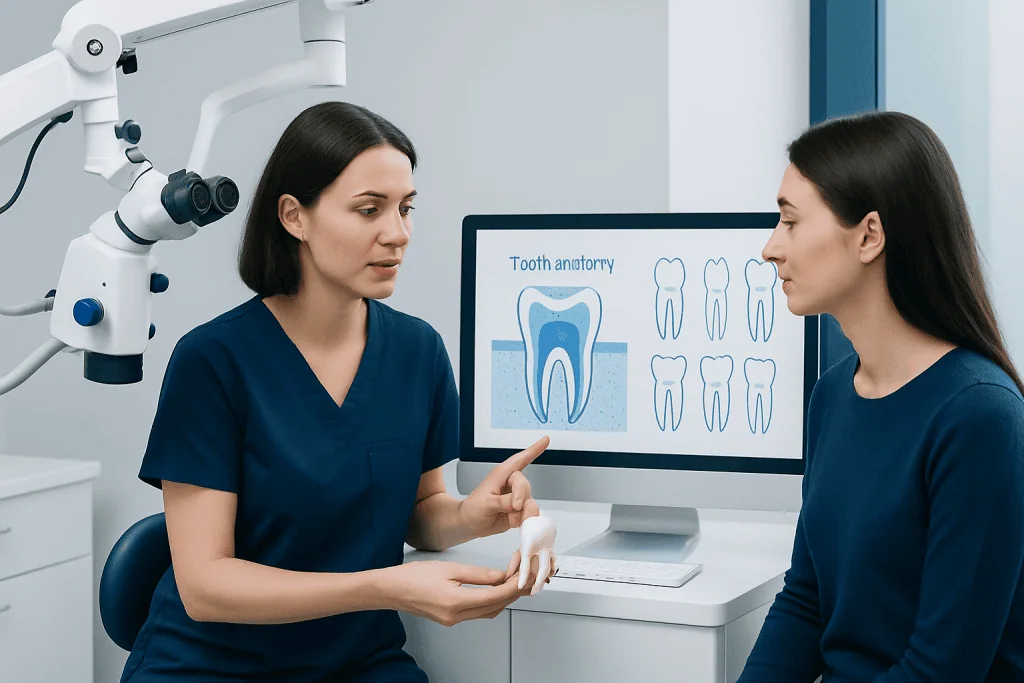
Each tooth has several layers. The outer layer is enamel, which is the hardest substance in the human body and helps protect the tooth from daily wear. Under the enamel is dentin, a slightly softer layer that can transmit sensations such as temperature. At the center is the pulp, which contains nerves and blood vessels. The root anchors the tooth into the jaw through supporting tissues.
The visible part above the gumline is called the crown, while the part below the gums is the root. Around the root are the periodontal ligament, cementum, and surrounding bone. These structures hold the tooth in place and absorb pressure during biting and chewing.
There are four main types of teeth, and each has a different function:
- Incisors: the front teeth used for cutting food.
- Canines: pointed teeth used for tearing food.
- Premolars: teeth that help crush and grind.
- Molars: larger back teeth that do most of the grinding.
Most adults have 32 permanent teeth, including wisdom teeth, although not everyone develops all wisdom teeth or has enough room for them to erupt normally. Changes in tooth number, shape, or position can affect bite, cleaning, and long-term dental health.
How teeth develop and change over a lifetime
Tooth development begins before birth, even though teeth are not visible at that stage. Primary teeth usually start emerging around 6 months of age, though the exact timing can vary. These early teeth are important for chewing, speech development, and holding space for permanent teeth.
As children grow, primary teeth loosen and fall out, usually beginning around age 6. Permanent teeth then erupt in a gradual pattern through late childhood and adolescence. The final teeth to appear are often the wisdom teeth, generally in the late teen years or early adulthood, though some never erupt fully.
Throughout life, teeth are exposed to constant forces from chewing, grinding, acidic foods, and temperature changes. With age, enamel can wear down, gums may recede, and dental restorations may need replacement. These changes are common, but regular dental care can help preserve function and comfort for many years.
Saliva also plays an important protective role at every age. It helps wash away food particles, neutralize acids, and support remineralization of tooth enamel. Conditions or medicines that reduce saliva can increase the risk of cavities and discomfort.
Common teeth problems and warning signs
Many dental conditions develop slowly at first and may not cause obvious symptoms right away. One of the most common problems is tooth decay, also called cavities. This happens when bacteria in dental plaque produce acids that weaken enamel. Over time, untreated decay can reach deeper layers of the tooth and lead to pain or infection.
Gum disease is another major concern because the gums and supporting bone are essential for keeping teeth stable. Early gum disease may cause redness, swelling, or bleeding with brushing. More advanced disease can lead to gum recession, loose teeth, and eventual tooth loss. In some cases, a dentist may evaluate related conditions such as tooth loss and options to replace missing teeth when support structures are no longer healthy enough to retain a tooth.
Other common tooth problems include sensitivity to hot, cold, or sweet foods; worn enamel from grinding; cracked or chipped teeth; impacted wisdom teeth; bite problems; and infection inside the pulp. A severe infection may require procedures such as root canal treatment to remove damaged pulp and preserve the tooth when possible.
Warning signs that deserve attention include persistent toothache, pain when chewing, bleeding gums, bad breath that does not improve, swelling, pus near the gums, loose teeth, and changes in bite. Even mild symptoms can be a sign of a problem that is easier to treat early.
What causes tooth damage and who is at higher risk
Tooth damage usually develops from a combination of factors rather than one single cause. Dental plaque, a sticky film of bacteria, is central to both tooth decay and gum disease. When plaque is not removed regularly, bacteria feed on sugars from food and drinks and produce acids that attack enamel.
Diet also matters. Frequent snacks, sugary drinks, acidic beverages, and highly processed foods can increase the risk of enamel erosion and cavities. Tobacco use, heavy alcohol use, and poor oral hygiene can further raise the risk. Teeth grinding, also called bruxism, may wear down enamel, strain the jaw, and cause cracks over time.
Some people are more vulnerable because of dry mouth, diabetes, certain medicines, reflux, eating disorders, immune system conditions, or orthodontic crowding that makes cleaning difficult. Pregnancy and hormonal shifts can also affect gum health. Children, older adults, and people with limited access to dental care may face added challenges in keeping teeth healthy.
Injury can also damage teeth suddenly. Falls, sports injuries, and accidents may chip, loosen, or displace a tooth. Wearing a protective mouthguard during contact sports can lower this risk.
How dentists assess teeth and oral health
Dental evaluation starts with a clinical examination. A dentist looks at the teeth, gums, bite, tongue, and other oral tissues, and asks about symptoms, habits, diet, medicines, and overall health. This broad approach is important because oral symptoms can be related to medical conditions as well as dental ones.
Dental X-rays are often used to detect cavities between teeth, bone loss, impacted teeth, infections around roots, and other problems not visible on the surface. In some cases, additional imaging or specialized tests may be needed to understand jaw alignment, wisdom teeth position, or damage after trauma.
The dentist may also check for plaque buildup, gum pocket depth, loose teeth, tooth wear, and signs of oral cancer screening needs. If a tooth is painful, tests for temperature response or biting pressure may help identify whether the problem is in the enamel, dentin, pulp, or surrounding tissues.
Diagnosis guides treatment. Some people may need only preventive care, while others need fillings, gum treatment, orthodontic correction, or restoration of damaged teeth with options such as a dental crown or a dental implant depending on the condition of the tooth and bone.
Treatment options for damaged or missing teeth
Treatment depends on the problem, its severity, and the person’s overall oral health. Early tooth decay may sometimes be managed with fluoride and improved hygiene if the enamel damage is still limited. Once a cavity creates a permanent defect, the tooth generally needs a filling to restore shape and function.
If decay or trauma affects the inner pulp, treatment may require root canal treatment followed by a protective restoration. Cracked, worn, or weakened teeth may be repaired with bonding, inlays, onlays, or a dental crown to help preserve strength. Teeth that cannot be saved may need extraction.
Missing teeth can affect chewing, speech, and alignment of nearby teeth. Replacement options may include bridges, removable dentures, or dental implant treatment when appropriate. For some people, jaw or bite concerns may also be reviewed alongside broader oral conditions such as tooth alignment problems if tooth position is contributing to wear or difficulty cleaning.
Gum disease treatment may include professional cleaning, scaling and root planing, improved home care, and ongoing maintenance. At the end of the treatment pathway, multidisciplinary dental and maxillofacial teams, including those at Acibadem International’s JCI-accredited hospitals, may help diagnose and treat complex dental conditions for international patients.
Daily care, prevention, and when to seek medical care
Daily prevention is the most effective way to protect teeth. Brushing twice a day with fluoride toothpaste, cleaning between the teeth with floss or interdental tools, limiting sugary foods and drinks, and attending regular dental checkups all support long-term oral health. Drinking water, especially fluoridated water where available, can also help reduce decay risk.
It is also helpful to avoid tobacco, manage teeth grinding if present, and use a mouthguard during sports. People with dry mouth may benefit from discussing saliva-supporting strategies with a dentist or physician. For children, age-appropriate brushing support and regular dental visits help build healthy habits early.
Medical or dental care should be sought promptly for severe tooth pain, swelling of the face or gums, fever with dental symptoms, a knocked-out or broken tooth, uncontrolled bleeding, difficulty opening the mouth, or signs of infection such as pus or spreading redness. Urgent assessment is especially important if pain is worsening or if swallowing or breathing becomes difficult.
Routine dental review is also important even without pain, because early cavities, gum disease, and bite problems may not cause symptoms at first. Regular care offers the best chance to keep teeth healthy, comfortable, and functional over time.
Frequently asked questions
What are teeth made of?
Teeth are made of several layers. The outer layer is enamel, beneath it is dentin, and the center contains pulp with nerves and blood vessels. The root is covered by cementum and supported by surrounding tissues in the jaw.
How many teeth do adults usually have?
Most adults have 32 permanent teeth, including four wisdom teeth. However, some people have fewer because wisdom teeth do not develop, do not erupt, or have been removed.
Why are teeth important beyond chewing?
Teeth help break down food, but they also support clear speech and help maintain facial shape. Healthy teeth also contribute to comfort, confidence, and overall oral function.
What causes cavities in teeth?
Cavities develop when plaque bacteria use sugars from food and drinks to produce acids that damage enamel. Frequent snacking, poor brushing habits, and low fluoride exposure can increase the risk.
Can damaged teeth be repaired?
Many damaged teeth can be repaired, depending on the cause and how much structure remains. Treatments may include fillings, crowns, root canal treatment, or replacement options if a tooth cannot be saved.
How can a person keep teeth healthy?
Good habits include brushing twice daily with fluoride toothpaste, cleaning between the teeth, limiting sugary foods and drinks, and seeing a dentist regularly. Avoiding tobacco and addressing grinding or dry mouth can also help protect teeth.
References
- American Dental Association
- National Institute of Dental and Craniofacial Research
- Centers for Disease Control and Prevention
- World Health Organization
- Mayo Clinic
This article is for general information only and is not a substitute for professional medical advice. Please consult a qualified doctor about your individual situation.
Explore treatments in Turkey — costs, top hospitals & a free quote
JCI-accredited · board-certified surgeons · reply within 24h
Add us as a Preferred Source to see more of our trusted health content across Google Search, AI Overviews and Discover.

More from the Health Library



Related Specialists

Prof. Dr. Neslihan Kurtulmuş
Endocrinology
Dr. Bülent Bolat
Cardiovascular Surgery
Dr. Zehra Filiz Gündoğan Turan
Anesthesiology
Dr. Fatma Erbay Apaydın
Infectious Diseases & Clinical Microbiology