Teeth Whitening: Safety, Sensitivity, and Expected Results

Teeth whitening works best on natural tooth enamel stained by food, drinks, tobacco, or aging, but it does not change the color of fillings, crowns, veneers, or implants. Professional dental assessment is important before whitening because cavities, gum disease, cracks, or exposed roots can increase sensitivity or irritation.
Key Takeaways
- Teeth whitening works best on natural tooth enamel stained by food, drinks, tobacco, or aging, but it does not change the color of fillings, crowns, veneers, or implants.
- Professional dental assessment is important before whitening because cavities, gum disease, cracks, or exposed roots can increase sensitivity or irritation.
- Temporary tooth sensitivity and mild gum irritation are the most common side effects and usually improve after whitening is paused or completed.
- Results vary depending on the original tooth shade, stain type, whitening method, oral habits, and aftercare.
- Whitening should be done with approved products and correct instructions; overuse can irritate gums and may damage enamel or dentin.
Teeth whitening can lighten many common stains and improve smile brightness when it is planned and supervised appropriately. Understanding safety, possible sensitivity, and realistic results helps patients choose the right whitening method with confidence.
Overview
Teeth whitening, also called tooth bleaching, is a cosmetic dental procedure designed to lighten the shade of natural teeth. It can help reduce discoloration caused by coffee, tea, red wine, tobacco, certain foods, and normal aging. Whitening may be performed in a dental clinic, at home with dentist-prescribed trays, or with over-the-counter products such as whitening strips or gels.
The active ingredients used in most whitening products are hydrogen peroxide or carbamide peroxide. These compounds break down into oxygen molecules that penetrate the enamel and dentin, helping to break apart color-causing compounds within the tooth structure. This process can make teeth appear brighter while preserving the natural tooth surface when used correctly.
Whitening is not the same as a professional dental cleaning. Cleaning removes plaque, tartar, and surface stains, while whitening changes the internal shade of natural teeth. For many people, the best first step is a dental examination and cleaning, followed by a discussion about whether whitening is appropriate and which method is likely to provide safe, predictable results.
Who Is a Good Candidate?
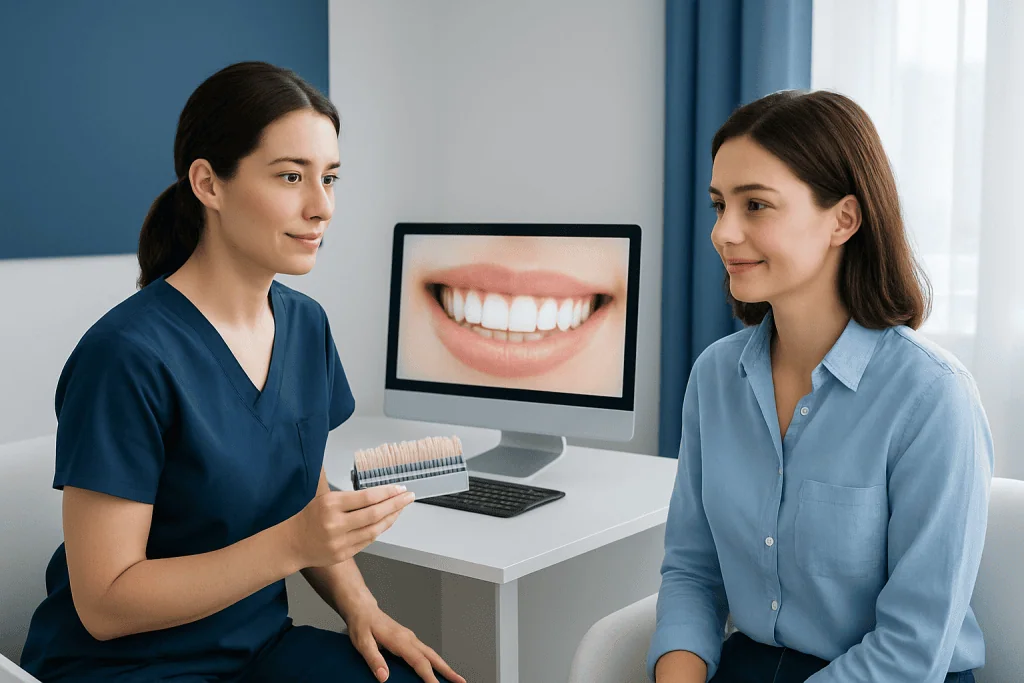
Good candidates for teeth whitening are generally adults with healthy teeth and gums who have mild to moderate discoloration of natural teeth. Whitening tends to work well for yellow or brownish stains from diet, tobacco, or age-related changes. It may be less effective for gray discoloration, deep developmental stains, trauma-related darkening, or discoloration caused by certain medications used during tooth development.
A dental check-up is important because whitening agents can irritate untreated cavities, cracked teeth, gum inflammation, or areas where the root surface is exposed. Patients with significant sensitivity, active gum disease, worn enamel, or recent dental work may need treatment or a modified whitening plan before starting. Pregnant or breastfeeding patients are often advised to postpone elective whitening and discuss timing with their dentist.
Whitening only affects natural tooth structure. Dental restorations such as crowns, veneers, bonding, fillings, bridges, and implants will not bleach. If visible restorations are present, a dentist may recommend whitening first and then replacing or adjusting restorations if a shade mismatch remains after the color has stabilized.
Types of Teeth Whitening
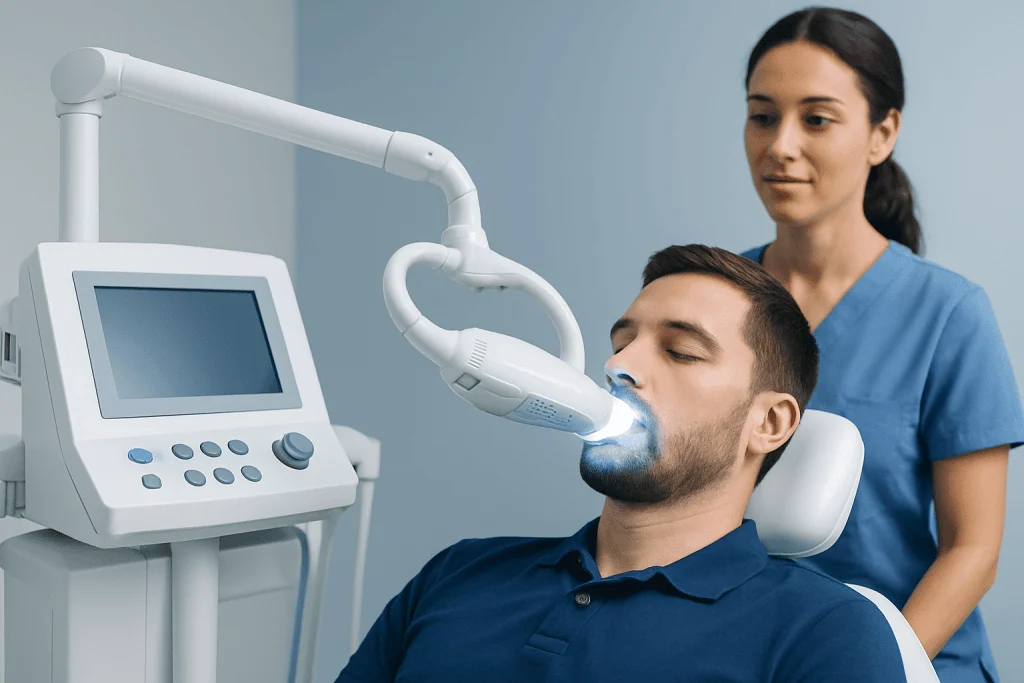
In-office professional whitening is performed under dental supervision and usually uses a higher-concentration whitening gel than home products. The dentist protects the gums and soft tissues before applying the whitening material. Some systems use a light or laser as an additional step, although the whitening gel itself is the main active component. In-office treatment is often chosen by patients who want faster visible results and close monitoring.
Dentist-supervised at-home whitening typically uses custom-fitted trays and a prescribed whitening gel. The trays help keep the gel in contact with the teeth while reducing overflow onto the gums. This approach may take longer than an in-office visit, but it can offer gradual, controlled whitening and may be useful for patients who prefer to whiten at home with professional guidance.
Over-the-counter products include whitening strips, paint-on gels, rinses, and whitening toothpastes. These products can help with surface stains or modest shade improvement, but results are usually more limited and less personalized. Whitening toothpastes mainly polish surface stains and do not change the deeper color of teeth in the same way peroxide-based bleaching products do.
Not every product is appropriate for every patient. A dentist can help patients compare expected results, comfort, convenience, cost, and the risk of sensitivity before choosing a whitening method.
Safety and Possible Side Effects
Teeth whitening is considered safe for many patients when suitable products are used as directed and when oral health problems are addressed first. The main safety concerns are tooth sensitivity, gum irritation, and overuse. Problems are more likely when whitening products are applied too often, left on for too long, used with poorly fitting trays, or placed on teeth with untreated disease.
Temporary tooth sensitivity is the most common side effect. It may feel like a brief sharp sensation when teeth are exposed to cold air, cold drinks, sweets, or brushing. This happens because peroxide can temporarily affect fluid movement within microscopic channels in the tooth. Sensitivity usually improves after treatment is completed or paused, especially with dentist guidance.
Gum irritation can occur if whitening gel contacts the soft tissues. It may cause mild redness, tenderness, or a temporary white appearance of the gums. This usually resolves, but persistent irritation should be evaluated. Products not intended for dental whitening, unverified online kits, or abrasive home remedies can be harmful and should be avoided.
- Do not use whitening products more often than instructed.
- Do not apply whitening gels to painful, decayed, or broken teeth without dental advice.
- Avoid lemon juice, baking soda overuse, charcoal powders, and other abrasive or acidic home remedies.
- Stop whitening and contact a dentist if pain, swelling, gum burns, or prolonged sensitivity occurs.
Sensitivity: Why It Happens and How to Manage It
Sensitivity after whitening does not mean the treatment has necessarily harmed the teeth. In many cases, it is a short-term response to the whitening process. However, the level of sensitivity varies from person to person. People with gum recession, enamel wear, cracked teeth, large restorations, or a history of sensitive teeth may be more likely to notice discomfort.
Several strategies can reduce sensitivity. A dentist may recommend using a desensitizing toothpaste before and after whitening, spacing out whitening sessions, shortening application time, or choosing a lower-concentration gel. Custom trays can also help by limiting excess gel contact with the gums. Fluoride treatments or other desensitizing agents may be suggested in some cases.
Patients can also support comfort at home by brushing gently with a soft-bristled toothbrush, avoiding very cold drinks for a short time, and not combining multiple whitening products at once. If sensitivity is increasing rather than improving, whitening should be paused. A dental examination can check for cavities, exposed roots, defective fillings, or other causes of pain that may need attention.
Expected Results and How Long They Last
Teeth whitening results vary. Some patients notice a clear change after one in-office treatment, while others need a longer course of at-home whitening to reach the desired shade. The final outcome depends on the starting tooth color, the depth and type of stain, the whitening system used, and how the teeth respond biologically. A naturally bright but realistic shade is usually the healthiest goal.
Whitening does not make teeth permanently white. Over time, teeth can stain again from coffee, tea, wine, colored sauces, tobacco, and normal aging. Good oral hygiene, regular dental cleanings, and periodic dentist-approved touch-ups can help maintain results. The timing of touch-ups should be individualized rather than based on a fixed schedule.
Patients should also understand that teeth may look slightly lighter immediately after whitening because of temporary dehydration. The shade can settle over the following days. For this reason, dentists often wait before matching new fillings, crowns, or veneers to whitened teeth. This helps ensure the restoration color blends naturally with the stable tooth shade.
Preparation, Aftercare, and Daily Self-Care
Before whitening, a dental visit can identify cavities, gum inflammation, tartar buildup, enamel wear, or restorations that may affect results. A professional cleaning may be recommended because removing plaque and surface deposits allows the whitening process to work more evenly. The dentist can also take a baseline shade and discuss what level of change is realistic.
After whitening, patients are often advised to avoid strong staining substances for a short period, especially if the teeth feel sensitive. This may include coffee, tea, red wine, dark berries, curry, tomato-based sauces, and tobacco. Drinking water after staining foods and maintaining regular brushing can help reduce new surface stains.
Long-term self-care is simple but important. Brush twice daily with fluoride toothpaste, clean between the teeth daily, and attend routine dental check-ups. Whitening should not replace treatment for oral health problems. A healthy foundation makes cosmetic dental care safer, more comfortable, and more predictable.
- Use whitening products only as instructed.
- Store gels safely away from children.
- Tell the dentist about sensitivity, pregnancy, breastfeeding, allergies, or recent dental treatment.
- Ask before whitening if there are crowns, veneers, bonding, or implants in the smile zone.
When to See a Dentist
A dentist should evaluate the mouth before whitening if the patient has cavities, gum bleeding, tooth pain, exposed roots, cracked teeth, loose fillings, or a history of significant sensitivity. It is also wise to seek advice if a single tooth is darker than the others, because this may be related to previous trauma, root canal treatment, or internal tooth changes that require a different approach.
Patients should stop whitening and contact a dental professional if they develop persistent pain, swelling, gum burns, mouth ulcers, or sensitivity that lasts beyond the expected short-term period. These symptoms do not always indicate a serious problem, but they should be assessed so the cause can be identified and treated appropriately.
For international patients seeking evaluation or treatment, Acibadem International’s multidisciplinary dental specialists and JCI-accredited hospitals can diagnose oral health issues and provide appropriate whitening or restorative options when suitable. The safest plan is always individualized after a qualified dental examination.
Frequently asked questions
Is teeth whitening safe for enamel?
Teeth whitening is generally considered safe for enamel when approved peroxide-based products are used correctly and under appropriate guidance. Problems are more likely with overuse, poor technique, unverified products, or whitening teeth that have untreated decay or cracks. A dental check-up helps reduce these risks.
How long does tooth sensitivity last after whitening?
Sensitivity is usually temporary and often improves within a few days after treatment is paused or completed. Some patients feel little or no sensitivity, while others need a gentler whitening schedule. If sensitivity is severe, worsening, or persistent, a dentist should check for other causes.
Will whitening work on crowns, veneers, or fillings?
No. Whitening products lighten natural tooth enamel and dentin, but they do not change the color of crowns, veneers, bonding, fillings, bridges, or implants. If restorations are visible, a dentist can help plan the whitening sequence and discuss whether any restoration replacement is needed for color matching.
How white can teeth become after whitening?
The result depends on the original tooth shade, stain type, whitening method, and individual tooth response. Many patients achieve a noticeable but natural-looking improvement. A dentist can help set realistic expectations and avoid over-whitening.
Are whitening toothpastes enough to whiten teeth?
Whitening toothpastes can help remove or reduce surface stains through mild polishing ingredients. They usually do not change the deeper internal color of teeth like peroxide-based bleaching gels can. They may be useful for maintenance after professional whitening.
Can people with sensitive teeth whiten their teeth?
Many people with sensitive teeth can still whiten, but they may need a modified plan. A dentist may recommend desensitizing toothpaste, lower-concentration gel, shorter application times, or treating exposed roots or cavities first. Whitening should be paused if discomfort becomes significant.
How can whitening results last longer?
Results last longer with good oral hygiene, regular dental cleanings, and reduced exposure to staining substances such as tobacco, coffee, tea, and red wine. Rinsing with water after staining foods or drinks may also help. Touch-up whitening should be done only as recommended by a dentist.
References
- American Dental Association
- FDI World Dental Federation
- European Federation of Periodontology
- National Health Service
- Cochrane Oral Health
This article is for general information only and is not a substitute for professional medical advice. Please consult a qualified doctor about your individual situation.
Teeth Whitening in Turkey — costs, top hospitals & a free quote
JCI-accredited · board-certified surgeons · reply within 24h