Cosmetic Dentistry
Cosmetic dentistry improves the appearance of teeth and smile through options such as whitening, bonding, veneers, crowns, and smile design tailored to facial aesthetics.
Quick answer
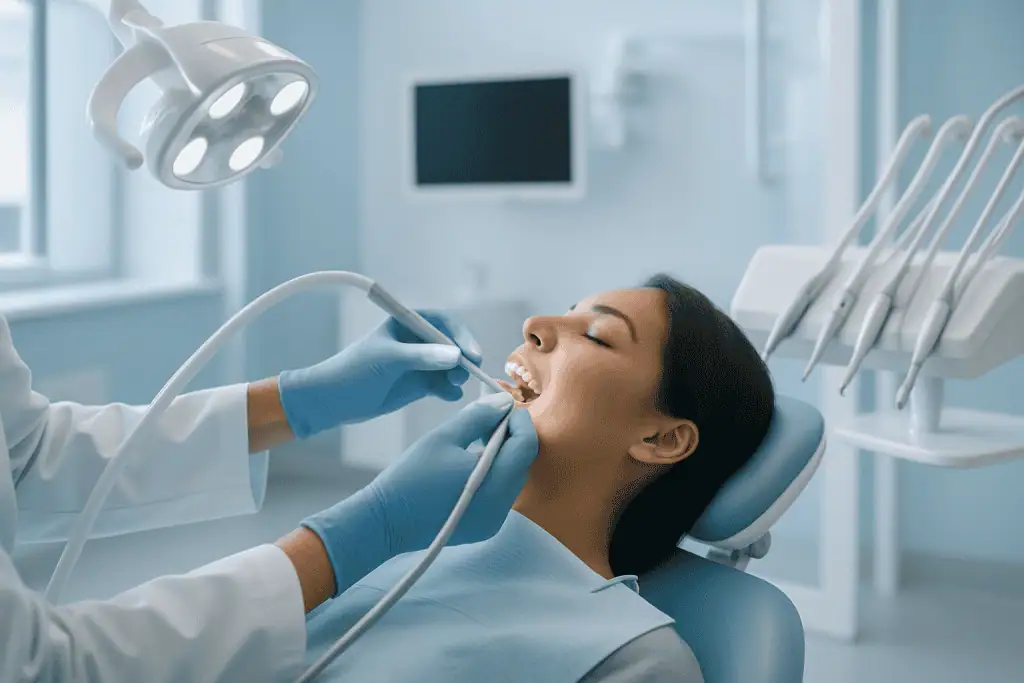
Cosmetic dentistry improves the appearance of your teeth, gums and smile while preserving or restoring function. It ranges from teeth whitening and tooth-coloured bonding to porcelain veneers, crowns, gum contouring and full smile design. Treatment starts with a full dental examination, followed by digital planning, preparation, laboratory work where needed, and final placement with follow-up adjustments.
What Is Cosmetic Dentistry?
Cosmetic dentistry is the field of dentistry that improves how your teeth, gums and smile look while preserving — or restoring — how they work. It covers simple treatments such as professional teeth whitening and tooth-coloured bonding, and more complex work such as porcelain veneers, crowns, gum contouring, implant-supported restorations and full smile design. It is intended for people whose teeth and gums are healthy enough to support elective treatment, and who want a specific, realistic improvement rather than a one-size-fits-all result.
A smile is often one of the first things people notice, and for many patients it is also the first thing they try to hide. Stained teeth, worn edges, gaps, uneven shapes, old restorations, visible cracks, or teeth that look too small or too prominent can undermine confidence in photographs, at work and in everyday conversation. Some people have lived with these concerns for years. Others notice changes after ageing, pregnancy, illness, orthodontic relapse, trauma, or previous dental work that no longer looks natural. Whatever the starting point, the concern is rarely trivial to the person carrying it.
The word “cosmetic” can make treatment sound superficial. Well-planned cosmetic dentistry is not. A chipped or worn tooth may need reshaping and bonding to prevent further damage. A discoloured front tooth may need evaluation to rule out previous trauma or nerve changes. An uneven smile may reflect bite problems, tooth wear, gum recession or old restorations that have quietly failed. In this sense, cosmetic dentistry is usually both aesthetic and functional, and it overlaps heavily with restorative dentistry whenever damaged or missing tooth structure is part of the picture.
Cosmetic dentistry is also not about making every smile identical. The best results are based on facial proportions, gum display, lip movement, tooth colour, bite function and your own expectations. A smile that looks attractive on one person may not suit another. Modern practice is therefore a careful blend of dental science, facial aesthetics, materials engineering, digital planning and clinical artistry — with restraint counting for as much as technique.
If you are researching cosmetic dentistry in Turkey, you probably have practical questions as well as aesthetic ones: whether the result will look natural, whether teeth need to be filed down, how long results last, whether veneers or crowns are the right tool, and how many visits are realistic when you are travelling from another country. Those questions are reasonable, and this page addresses each of them directly.
At Acibadem, cosmetic dentistry begins with a comprehensive evaluation rather than a single procedure offered to every patient. The aim is to understand not only how your teeth look, but how they function, how your gums and lips frame the smile, and how any proposed treatment will support long-term oral health. For international patients this planning matters twice over, because treatment has to be organised efficiently around travel dates while still leaving enough time for accurate diagnostics, laboratory work, healing and final adjustments.
Is cosmetic dentistry the same as aesthetic dentistry?
Aesthetic dentistry and cosmetic dentistry describe broadly the same field, and most clinics use the terms interchangeably. Where a distinction is drawn, “aesthetic” tends to emphasise designing restorations that blend invisibly with natural teeth and facial features, while “cosmetic” is the more common search term for the same set of treatments. In practice, the planning process, the materials and the clinical skills involved are identical. You can read more about how appearance-led treatment is planned on our aesthetic dentistry page; the principles described there apply throughout this one.
What does a cosmetic dentist actually do?
A cosmetic dentist plans and performs treatments that change how teeth look while protecting how they function. That includes analysing your smile against your face, diagnosing the cause of a cosmetic concern rather than just covering it, selecting materials, communicating precise shape and shade information to a dental laboratory, and carrying out the clinical work itself. Cosmetic dentistry is not a separate registered speciality in most countries; it is an area of focused practice. Depending on the case, a cosmetic dentist may work alongside prosthodontists, periodontists, orthodontists, endodontists or oral surgeons — for example when veneers are planned for a patient who also has gum inflammation, tooth wear or a missing tooth. Good cosmetic dentists are also willing to say no: to recommend orthodontics instead of heavy tooth reduction, or gum treatment before any ceramics are made.
Who May Benefit from Cosmetic Dental Treatment?
Cosmetic dental treatment may suit adults who are unhappy with the appearance of their smile and whose teeth and gums are healthy enough — or can be made healthy enough — to support elective work. It can also be appropriate for younger patients in selected situations, such as repairing a chipped front tooth or treating discolouration after trauma, although planning is deliberately more conservative while teeth and jaws are still developing.
People commonly seek a cosmetic consultation because of tooth discolouration, visible staining, irregular tooth size, gaps between teeth, chipped or worn edges, asymmetry, crowding, old crowns or fillings that no longer match, or a smile that appears “gummy” or uneven. Some describe their teeth as looking aged, dull, too short, too long, too yellow, or simply out of harmony with their face. None of these descriptions is a diagnosis; each has several possible causes, and the cause determines the treatment.
The diagnostic process begins with a detailed conversation. The dentist asks what you want to change, what you like and dislike about your current smile, whether you have had previous dental work, and whether there are symptoms such as pain, sensitivity, bleeding gums, jaw discomfort, grinding or difficulty chewing. These details matter because cosmetic treatment should never cover untreated disease or an unstable bite.
A complete examination usually assesses tooth structure, enamel quality, gum health, bite relationship, jaw movement, smile line, lip position, facial proportions and the condition of any existing fillings, veneers, crowns, implants or bridges. Digital photographs, X-rays, intraoral scanning, periodontal measurements and sometimes three-dimensional imaging help the team understand both the visible and the hidden aspects of your teeth. In more complex cases, the plan is reviewed with the relevant specialists before anything irreversible is proposed.
Cosmetic dentistry is worth considering when you are medically and dentally stable, understand both the benefits and the limits of treatment, and hold realistic expectations. It is generally not advisable to proceed with elective cosmetic work while there is untreated decay, active gum disease, uncontrolled grinding, dental infection or unresolved bite instability. In those situations, the first step is to restore health and create a stable foundation — often through general dentistry care before any aesthetic work begins.
Smile Concerns Cosmetic Dentistry Can Address
Cosmetic dentistry can address a wide range of appearance-related concerns, from subtle refinement of a single tooth to full smile rehabilitation. The appropriate treatment depends on the cause of the concern, the condition of the teeth and the amount of change you actually want — which is often less than clinics assume.
- Tooth discolouration and staining: surface stains from coffee, tea, red wine, tobacco or ageing may respond well to professional whitening. Deeper discolouration may need veneers, crowns or internal treatment, depending on the cause.
- Chipped or fractured teeth: minor chips can often be repaired with bonding or gentle contouring, while larger fractures may need veneers or crowns for strength as well as appearance.
- Gaps between teeth: small spaces may be closed with bonding or veneers. Larger spacing, or spacing linked to the bite, is often better handled with orthodontic treatment before any cosmetic restoration.
- Uneven tooth shape or size: teeth that look too small, narrow, pointed or irregular can often be visually reshaped with bonding, veneers or crowns.
- Worn or shortened teeth: wear may be caused by grinding, acid erosion or bite problems. Treatment usually involves restoring tooth length and protecting the bite so the same wear does not simply recur.
- Old dental restorations: discoloured fillings, opaque crowns, dark margins or mismatched work can frequently be replaced with more natural-looking materials.
- Gummy or uneven smile: excess gum display or irregular gum contours may be treated with periodontal procedures, orthodontics, restorative work or a combination.
- Mild misalignment: slight rotations or irregularities can sometimes be visually improved with veneers or bonding, though orthodontics is usually the better answer when position is the real problem.
- Missing teeth affecting the smile: implants, bridges or implant-supported restorations may be included when tooth loss affects both appearance and chewing.
Because several problems look similar at first glance, accurate diagnosis is essential. A dark front tooth may be stained from inside after old trauma, affected by a previous root canal, or shadowed by a failing restoration — three different problems with three different treatments. A worn smile may reflect night-time grinding or acid reflux rather than simple ageing. Choosing the correct procedure always begins with identifying the underlying cause, not with choosing a product.
Cosmetic Dentistry Procedures: What Each One Involves
Cosmetic dentistry procedures range from a single-visit polish of one tooth edge to a coordinated plan across the whole smile. The main options are described below, roughly in order of how conservative they are — an order worth keeping in mind, because the least invasive treatment that honestly achieves your goal is usually the right one.
Teeth whitening
Professional whitening lightens natural enamel using controlled bleaching agents, either in a supervised clinic session, through dentist-made home trays, or both. It works on natural tooth structure only: existing crowns, veneers and fillings do not change colour, which is why whitening is usually done first when other treatments are planned, so final restorations can be matched to the new shade. Temporary sensitivity is common and usually settles with desensitising products and short-term dietary adjustments.
Dental bonding
Bonding uses tooth-coloured composite resin to repair chips, close small gaps and refine minor shape irregularities, usually in a single visit. The dentist conditions the tooth surface, layers the resin, hardens it with a curing light and polishes it to blend with the surrounding enamel. Bonding is conservative and reversible in spirit — very little or no tooth structure is removed — but composite can stain or chip more readily than porcelain over time, so it suits smaller corrections and patients who accept periodic maintenance.
Porcelain veneers
Porcelain veneers are thin ceramic coverings bonded to the front surfaces of teeth to change colour, shape, length and symmetry. Depending on the case, a very thin layer of enamel may be reduced to create space for the ceramic; some cases allow minimal-preparation or no-preparation approaches. Veneers require careful design, precise laboratory work and disciplined adhesive technique. Done well, they preserve most of the tooth. Done carelessly — with heavy grinding of healthy teeth — they trade a cosmetic problem for a structural one, which is why the planning stage deserves as much scrutiny as the price list.
How do you choose a cosmetic dentist for veneers?
Choose a cosmetic dentist for veneers based on how they plan, not just what they show. Reasonable markers include: a full examination before any quote, willingness to show you a mock-up or trial version of the proposed shape before teeth are prepared, a clear explanation of how much enamel will be removed and why, honest discussion of alternatives such as orthodontics or bonding, and a stated plan for follow-up and maintenance. Be cautious of anyone who proposes the same number of veneers to every patient, promises a specific outcome before examining you, or treats crowns and veneers as interchangeable. They are not: a crown removes considerably more tooth structure than a veneer.
Dental crowns
Crowns cover a tooth more completely and are used when it needs more protection or structural reinforcement than a veneer can provide — typically after large fillings, fractures, root canal treatment or heavy wear. The tooth is shaped, an impression or digital scan is taken, and a temporary crown protects it while the laboratory makes the final restoration. Modern ceramic crowns can look convincingly natural, but because they involve more tooth reduction, a responsible plan reserves them for teeth that genuinely need them.
Gum contouring and the gummy smile
When the gum line is uneven, or excess gum tissue makes teeth look short, periodontal procedures such as gum contouring or crown lengthening can rebalance the frame around the teeth. These procedures need careful planning because gum shape, tooth proportion and the underlying bone are closely related, and healing time may be needed before final veneers or crowns are placed. In selected cases, laser dentistry techniques are used for soft-tissue contouring.
Smile design
Smile design is the coordinated version of everything above: whitening on some teeth, veneers on others, crowns where strength is needed, gum reshaping where the frame is uneven, and sometimes implant-supported restorations where teeth are missing. The value lies in sequencing. Each step affects the next, and the final result depends on planning, laboratory communication, clinical execution and follow-up adjustment all pointing at the same design.
How Cosmetic Dentistry Is Performed: From Smile Analysis to Final Result
Cosmetic dentistry follows a planned sequence: evaluation, design, preparation, treatment and follow-up. The exact steps vary with the procedure, but the order rarely does. International patients often begin with remote communication and image review; an in-person examination remains necessary before any final treatment decision, because photographs cannot show decay, bite forces or gum health reliably.
Initial consultation and smile assessment
The first stage is a detailed consultation. The dentist examines your teeth and gums, listens to your goals, and discusses colour, shape, symmetry, tooth length, gum visibility and how natural you want the result to look. You may be asked to describe the smile you prefer — brighter but subtle, youthful and symmetrical, soft and natural, or more visibly enhanced. Reference photographs help communication, but the final design should be adapted to your own face, not copied from someone else’s.
Clinical records are then collected: high-resolution photographs, digital scans of the mouth, bite registration, X-rays and periodontal assessment. Photographs allow the smile to be analysed from the front and side, at rest and in motion. Digital scans create accurate models, often without traditional impression materials. X-rays reveal cavities, bone levels, root anatomy, infection and the condition of previous work — the things no smile photograph can show.
Digital smile design and treatment planning
Digital planning tools are now standard in serious cosmetic work. Digital smile design assesses tooth width-to-length ratios, midline position, gum levels, smile arc, lip support and how the teeth relate to the face. It does not replace clinical judgement, but it lets dentist and patient agree on a design before anything irreversible happens. Many clinics, including Acibadem, use the broader workflows described on our digital dentistry page for scanning, design and laboratory communication.
In many veneer and crown cases, a wax-up or mock-up is created — a temporary version of the proposed changes that you can see directly in your own mouth before any tooth preparation. Small changes in tooth length or shape make a large difference to the overall look, and it is far better to discover that on a mock-up than on finished ceramics.
Planning also includes material selection. Composite resin suits conservative bonding and small repairs. Ceramics are usually preferred for veneers and crowns when durability, translucency and long-term colour stability matter. The choice depends on remaining tooth structure, bite forces, the appearance you want and the space available for the restoration.
Preparing the teeth and gums
Before any cosmetic procedure, active dental disease is treated. That may mean professional cleaning, gum therapy, cavity treatment, replacement of defective fillings, root canal treatment where clinically indicated, or bite stabilisation. Cosmetic work performed on inflamed gums or unhealthy teeth is less predictable and can compromise the final appearance within months.
Preparation then depends on the procedure. For whitening: cleaning plus a check for sensitivity, cavities, exposed roots and restorations that will not change colour. For bonding: gentle conditioning of the tooth surface so composite adheres. For veneers: minimal enamel reduction where needed, in line with the principles of minimally invasive dentistry. For crowns: more reshaping, because the restoration covers the tooth completely and must provide strength as well as looks. Where gum contouring is planned, healing time is built in before final restorations are placed.
What happens during the procedure itself?
What happens on the day depends on the treatment, but the veneer pathway — the most commonly asked about — runs like this:
- The agreed design is confirmed, often against a mock-up you have already seen and approved.
- The teeth are prepared, usually under local anaesthesia, removing only the enamel the design requires.
- Digital or conventional impressions are taken and sent to the dental laboratory with detailed shade and shape instructions.
- Temporary veneers protect the teeth and let you preview the shape while the ceramics are made.
- At the placement visit, the dentist checks fit, shade, length and bite — and asks for your approval — before bonding the final veneers with adhesive techniques.
- Bite refinement and polishing follow, sometimes at a separate short visit.
Whitening is simpler: protective barriers over the gums, whitening gel applied under controlled conditions, sometimes combined with supervised home trays. Bonding is usually a single visit of layering, shaping, curing and polishing. Crowns follow a similar rhythm to veneers, with a temporary crown between visits. Patients with significant dental anxiety sometimes combine treatment with sedation dentistry options, which the team will discuss during planning if relevant.
Technology used in cosmetic dentistry
Technology makes cosmetic dentistry more accurate and more predictable when it is used with judgement rather than as a selling point. Digital imaging and photography support smile analysis and design communication. Intraoral scanners capture detailed tooth anatomy without impression trays in many cases. Three-dimensional imaging is used when implants, bone levels, root positions or complex anatomy must be evaluated. Design software supports mock-ups, restoration planning and laboratory communication.
Materials matter as much as machines. Modern ceramics can mimic the translucency, brightness and surface texture of enamel when they are selected and layered correctly. Shade analysis combines photographs, shade guides and evaluation under different lighting. Magnification and careful isolation during bonding improve precision — details invisible in before-and-after photographs but decisive for how long the work lasts.
How long does cosmetic dentistry take?
It varies widely by procedure. Whitening or bonding can often be completed in a single appointment. Veneers and crowns require multiple visits because design, preparation, laboratory fabrication and final placement must be coordinated — typically across several days at minimum, longer for complex cases. Full smile rehabilitation involving gum treatment, orthodontics, implants or bite correction takes longer still and is often staged. Recovery from most non-surgical cosmetic procedures is mild: short-lived sensitivity after whitening, immediate return to routine after bonding, and temporary sensitivity, gum tenderness or bite awareness after veneers or crowns, which usually improves as teeth and soft tissues adapt. For comprehensive cases, a protective night guard is often recommended, especially where there is any history of grinding or clenching.
Why Acting Early Matters
Some cosmetic concerns stay stable for years. Many do not. Stains may be superficial, but cracks, worn enamel, leaking fillings, gum recession, tooth mobility and bite-related wear tend to progress if left untreated. Addressing them early usually allows more conservative treatment and preserves more natural tooth structure — the single most valuable material in any smile.
Delay narrows your options. A small chip that bonding could have fixed may become a fracture requiring a veneer or crown. Mild gum inflammation may progress and change the stability and appearance of the gum line. Grinding can continue until the bite changes, teeth shorten and sensitivity develops. Old restorations hiding decay can compromise a tooth far more extensively than a timely check would have allowed.
There is also a simple planning advantage. If you want cosmetic dentistry before a wedding, a public event, a relocation or a professional milestone, allow real time for diagnosis, design, laboratory work, healing and refinement. Rushed cosmetic treatment limits choices and increases the chance that important details are missed. A calm timeline serves both aesthetics and health.
Benefits of Cosmetic Dentistry
When cosmetic dentistry is planned carefully, its benefits extend beyond appearance to comfort, function and confidence in daily life. The table below summarises what well-executed treatment can offer — noting that every benefit depends on sound diagnosis and honest case selection.
| Benefit | What It Means for You |
|---|---|
| Improved smile appearance | Colour, shape, symmetry and tooth proportions can be refined to create a smile that fits your face and your preferences, not a template. |
| More natural-looking restorations | Old fillings, crowns or veneers that appear dark, opaque or mismatched can often be replaced with materials designed to blend with surrounding teeth. |
| Conservative correction in selected cases | Minor chips, gaps and irregularities may be improved with bonding, whitening or minimal-preparation veneers when the teeth are otherwise healthy. |
| Better function and protection | Restoring worn, cracked or weakened teeth can improve chewing comfort and help protect remaining tooth structure when treatment is properly planned. |
| Personalised smile design | Planning considers facial features, lip movement, gum display, bite and your individual goals rather than applying one standard smile shape. |
| Improved confidence | Many patients feel more comfortable smiling, speaking and being photographed once long-standing dental concerns have been addressed. |
Recovery Timeline After Cosmetic Dentistry
Recovery depends on the type and extent of treatment, but the timeline below reflects what many patients can generally expect after common cosmetic dental procedures. Surgical additions — implants or gum surgery — extend it, and your own plan will state the specifics.
| Time Period | What Patients Can Expect |
|---|---|
| Day 1 | Mild sensitivity, gum tenderness or awareness of changes in tooth shape or bite may occur. Most patients continue routine daily activities after non-surgical cosmetic procedures. |
| First week | Sensitivity usually decreases. Temporary restorations, if present, need gentle handling. Avoid very hard or sticky foods and follow cleaning instructions closely. |
| First month | Final restorations begin to feel more natural. Minor bite adjustments or polishing may be performed if needed. Gum tissues often look healthier as they adapt around new restorations. |
| Longer term | Regular check-ups, professional cleanings, good home care and protective appliances when recommended help maintain the result. Whitening maintenance may be needed for natural teeth over time. |
Factors That Influence Cosmetic Dentistry Outcomes
A good result depends on far more than choosing a bright shade or a popular procedure. The most successful plans are individualised, biologically respectful and technically precise. Several factors determine how natural the result looks, how comfortable it feels and how long it lasts.
Oral health is the foundation. Healthy gums frame the teeth and shape the final appearance. Untreated inflammation causes bleeding, swelling, recession and visible changes at the margins of veneers and crowns. Teeth with active decay, infection or structural weakness need restorative treatment first, not ceramic camouflage.
Bite function comes next. Teeth are not static objects; they meet during chewing, speaking, swallowing and, in many people, grinding. Veneers, bonding and crowns must be designed to survive those forces. Patients who clench or grind may need a night guard, bite adjustment or a more protective restorative approach — and ignoring this is one of the commonest reasons cosmetic work fails early.
Material selection affects both appearance and durability. Composite bonding is an excellent conservative choice for small repairs but needs more maintenance than ceramic. Porcelain veneers offer refined colour stability and translucency but must be planned with adequate enamel support and precise bonding. Crowns provide strength but cost more tooth structure. There is no universally best material — only the right one for a specific tooth doing a specific job.
Tooth colour and translucency demand careful assessment. Natural teeth are not one flat colour; they carry subtle variation, brightness gradients, translucency and texture. A smile that is too opaque or uniformly white looks artificial; a shade chosen too conservatively may disappoint. Clear communication between you, the dentist and the laboratory is what closes that gap.
Facial aesthetics guide the design. Lip position, smile curve, facial midline, age, gender expression, personality and cultural preference all influence what looks right on you. A dental team working with international patients has to listen carefully here rather than impose one generic standard of “perfect” teeth.
Your habits and maintenance matter for years afterwards. Smoking, frequent coffee or tea, poor oral hygiene, nail biting, chewing ice and using teeth as tools all shorten the life of cosmetic work. Patients who keep regular dental visits and follow care instructions place their restorations in a much better position for the long term.
Realistic expectations hold everything together. Cosmetic dentistry can make significant improvements, but every treatment has limits set by existing tooth structure, gum levels, bite, previous work and biology. A responsible consultation explains alternatives, risks and maintenance needs — and the reasons a particular option may not be suitable for you, even if you arrived wanting it.
Cosmetic Dentistry in Turkey: Planning as an International Patient
Turkey has become one of the busiest destinations for cosmetic dental travel, and planning well matters more here than anywhere else, because you will not be a short drive from your dentist once treatment ends. A sensible international pathway typically covers: a preliminary review of photographs, existing X-rays and dental history before travel; an in-person examination and confirmed diagnosis on arrival; a written treatment plan you approve before any irreversible step; the clinical work itself, with laboratory stages built into the schedule; and final checks — bite refinement, polishing, hygiene instructions — before you fly home. Any cosmetic dentistry dental plan made from photographs alone is provisional; the examination on arrival is what turns it into a real one.
Build your travel dates around the treatment, not the other way round. Whitening or bonding may fit a short stay. Veneers and crowns need time for laboratory fabrication and a placement visit, plus a margin for adjustments. Complex plans involving gum treatment, implants or staged work may require more than one trip, with healing between them. Agree in advance how follow-up will work after you return home: who reviews the work, what maintenance is expected, and what happens if a restoration needs attention later.
Is it a good idea to get teeth done in Turkey?
It can be, provided you judge the clinic and the plan rather than the destination. Turkey has experienced dental teams, modern laboratories and hospital-based care available — and, like every country, it also has providers who cut corners. The warning signs are the same anywhere: fixed packages quoted before any examination, plans that put crowns on healthy teeth when veneers or orthodontics would preserve more structure, and schedules too compressed to allow proper laboratory work or adjustment visits. The much-discussed “Turkey teeth” problem is not a Turkish problem; it is what heavy, rushed tooth reduction looks like in any country. A careful plan, adequate time on the ground and a clear follow-up arrangement are what separate a good decision from a regretted one.
How much do fake teeth cost in Turkey?
There is no single honest figure, and any page that gives you one before an examination is guessing. The cost of veneers, crowns or implant-supported teeth depends on how many teeth are treated, the material chosen, the laboratory work involved, whether gum treatment or implants are part of the plan, and how complex your bite is. The reliable approach is to obtain a written, itemised plan after an examination, ask exactly what it includes — temporaries, laboratory fees, follow-up visits, a night guard if needed — and compare plans on scope and quality, not headline numbers.
What country has the best cosmetic dentistry?
No country holds that title, because outcomes are produced by individual clinicians, laboratories and planning processes, not by geography. Excellent and poor cosmetic dentistry exist in every country that offers it. The variables worth comparing are the ones this page has described: diagnostic thoroughness, conservative planning, material quality, laboratory standards and follow-up arrangements. Judge those, wherever you choose to be treated.
What is the best cosmetic dentist in Turkey?
There is no official ranking of cosmetic dentists in Turkey or anywhere else, and “best” lists online are usually marketing. What you can evaluate is verifiable: whether treatment happens within a regulated healthcare institution, whether a full examination precedes any plan, whether the dentist explains conservative alternatives, whether specialist input is available when your case needs it, and whether the clinic documents its work and plans your follow-up. A dentist who tells you what treatment you do not need is usually a better sign than one who agrees with everything you ask for.
Why International Patients Choose Acibadem for Cosmetic Dentistry
For patients travelling abroad, clinical quality and trust matter as much as convenience. The decision involves more than picking a procedure; it means choosing a healthcare environment that can coordinate diagnosis, planning, specialist input, communication and follow-up with clarity. Acibadem’s approach is built for patients who want careful medical standards alongside a personalised international experience.
Cosmetic dentistry at Acibadem is planned around the individual, not sold as a standard package. The dental team evaluates oral health, facial aesthetics, bite function, gum condition, tooth structure and your expectations before recommending anything. Where the case requires it, care draws on multiple dental disciplines — prosthodontics, periodontics, orthodontics, endodontics, implant dentistry, oral surgery — within the broader dental and oral health unit. That multidisciplinary perspective matters most for patients considering veneers or crowns alongside gum issues, missing teeth, bite problems, previous restorations or tooth wear. Patients with medical conditions or complex histories may also benefit from access to wider hospital resources and specialist consultation under one roof.
Technology supports the planning: digital photography, intraoral scanning, radiographic imaging, three-dimensional assessment where indicated, and digital smile design tools that help the team analyse your smile and explain options clearly. These tools serve function as much as appearance — fit, bite, tooth position and restoration design — and digital records can support preliminary discussion before travel, although final decisions always follow an in-person examination.
Acibadem International provides dedicated support for patients travelling from abroad, including assistance with appointment coordination, medical record transfer, interpretation, travel-related planning and communication with clinical teams. For cosmetic dentistry, where timing and sequencing matter, that coordination helps clarify how many visits are needed, whether temporary restorations are involved, and how long a stay in Turkey should realistically be before final checks. Second opinions are also part of normal practice: reviewing a diagnosis, the alternatives, the risks and the expected timeline is a legitimate step before committing to multiple crowns, extensive veneers, implant treatment or replacement of previous cosmetic work.
Questions Worth Asking Before You Decide
Cosmetic dentistry can be a meaningful decision, especially when a smile concern has weighed on your confidence for years. The right treatment may be as simple as whitening or bonding, or as comprehensive as veneers, crowns, gum contouring, implant-supported restorations or full smile design. What matters most is that the plan rests on careful diagnosis, healthy foundations, clear communication and respect for your natural features.
Wherever you choose to be treated, ask detailed questions and expect detailed answers: What are the alternatives to what you are proposing? How much natural tooth structure will be preserved, tooth by tooth? Will the result suit my face rather than a template? How long should I stay for treatment and follow-up? What maintenance will the work need, and who provides it after I go home? A responsible care team welcomes these questions and answers them in language you can understand — and hesitation to answer them is itself an answer.
Take the time the decision deserves. Teeth prepared for veneers or crowns are changed permanently, and the best cosmetic dentistry is the kind planned slowly enough that you never have to think about it again.
Preparation
- A dentist evaluates oral health, bite, tooth color, gum condition, and aesthetic goals before planning treatment. X-rays, digital photographs, or impressions may be taken when needed. Existing cavities, gum disease, or infection should be treated before cosmetic procedures begin.
Aftercare
- Follow the dentist’s instructions on oral hygiene, temporary sensitivity, and eating or drinking restrictions. Avoid staining foods, smoking, and hard foods when advised, especially after whitening, veneers, or bonding. Regular dental check-ups and professional cleaning help maintain long-term results.
Turkey vs UK, Germany & USA
Cosmetic dentistry costs vary according to the chosen technique, materials, dental laboratory work, and the level of smile design planning required. International patients often compare destinations by treatment scope, clinic standards, appointment coordination, and what is included in the care package.
The overall experience can differ by destination because cosmetic dentistry is usually planned privately and may include several clinical and laboratory steps.
| Factor | Turkey | UK | Germany | USA |
|---|---|---|---|---|
| Price drivers | Often package-based for international patients; final cost depends on veneers, crowns, whitening, bonding, and laboratory materials. | Private cosmetic fees are influenced by clinic location, dentist experience, and laboratory choices. | Costs reflect regulated clinical standards, specialist expertise, and high-quality laboratory workflows. | Wide regional variation; fees are often itemised by consultation, imaging, procedure, and lab work. |
| Hospital and dentist factors | Choice of hospital group, cosmetic dentist, prosthodontist, and digital smile design planning can affect cost and timeline. | Experience of the cosmetic dentist and access to advanced imaging or in-house laboratory support may influence planning. | Specialist training, clinic reputation, and laboratory collaboration are important cost factors. | Provider reputation, city, sedation options, and restorative complexity can significantly affect the quote. |
| Accreditation and quality | International patients may choose JCI-accredited hospital settings with coordinated dental and medical support. | Care is delivered through regulated dental practices; hospital-based cosmetic dental care may be limited to selected cases. | Dental care is delivered in a structured regulatory environment with strong emphasis on documentation and laboratory standards. | Quality standards vary by state and provider; accreditation and board credentials should be reviewed carefully. |
| Waiting times | Private international scheduling is often coordinated in advance to fit travel plans, depending on case complexity. | Private appointments may be available sooner than public pathways; cosmetic care is generally arranged privately. | Private scheduling is usually structured, with timing affected by diagnostic and lab stages. | Access depends on provider availability, location, and the need for staged appointments. |
| Travel and language logistics | International patient departments may assist with translation, airport transfers, accommodation coordination, and appointment planning. | Convenient for local English-speaking patients; international travel support varies by clinic. | Language support may be available in larger centres, while smaller practices may require separate coordination. | English-speaking care is standard, but international patients may need to arrange travel, accommodation, and local transport independently. |
| Typical package contents | May include consultation, imaging, treatment planning, selected procedures, temporary restorations when needed, and follow-up coordination. | Often quoted per treatment stage, with separate fees for consultation, scans, whitening, veneers, or crowns. | May be planned in stages with detailed documentation and separate laboratory-related fees. | Commonly itemised, with separate charges for diagnostics, procedures, sedation, lab work, and follow-up visits. |
What affects your final cost
- Type of cosmetic treatment, such as whitening, bonding, veneers, crowns, or combined smile design.
- Number of teeth involved and whether the upper, lower, or full smile line is treated.
- Material choice, including composite, ceramic, porcelain, zirconia, or other restorative options.
- Need for gum treatment, orthodontic alignment, root canal therapy, implants, or replacement of old restorations before cosmetic work.
- Digital smile design, mock-ups, temporary restorations, laboratory customisation, and shade matching.
- Dentist or specialist expertise, hospital setting, accreditation, language support, transfers, accommodation, and follow-up arrangements.
Compare your options
Cosmetic dentistry includes several clinical options, and the best approach depends on oral health, bite, enamel condition, aesthetic goals, and long-term maintenance needs. Suitability is decided by a specialist after examination and treatment planning.
| Option | What it is | Typical use | Key considerations |
|---|---|---|---|
| Professional whitening | Clinician-supervised lightening of natural tooth colour using dental whitening agents. | Surface and internal staining when tooth shape and alignment are already acceptable. | Only works on natural teeth, not fillings or crowns; sensitivity and shade expectations should be discussed. |
| Composite bonding | Tooth-coloured resin is shaped and polished directly on the tooth. | Small chips, gaps, uneven edges, and minor shape improvements. | Usually more conservative than ceramic options, but may stain or wear and can require maintenance. |
| Porcelain or ceramic veneers | Thin custom restorations bonded to the visible surface of teeth. | Smile makeovers involving colour, shape, symmetry, and mild alignment concerns. | Requires careful case selection, enamel assessment, bite evaluation, and high-quality laboratory work. |
| Dental crowns | Custom restorations that cover the full visible part of a tooth. | Teeth with extensive restorations, fractures, discoloration, or structural weakness. | More tooth preparation may be needed; material choice and bite forces affect durability and aesthetics. |
| Gum contouring | Reshaping of the gum line using periodontal or laser techniques when appropriate. | Uneven gum levels or a smile that shows excess gum tissue. | Periodontal health and biological limits must be assessed before changing the gum line. |
| Clear aligners or orthodontic planning | Gradual movement of teeth using removable aligners or other orthodontic methods. | Crowding, spacing, or bite issues that affect smile aesthetics. | May improve the foundation before veneers or bonding; treatment time and compliance influence results. |
| Digital smile design | Planning process using photographs, scans, and facial aesthetic analysis to preview smile proportions. | Comprehensive smile makeovers and cases requiring coordinated treatment steps. | Helps align expectations, but final results depend on oral health, materials, technique, and healing response. |
General information only — not medical or financial advice. Final costs depend on the factors above and your individual case; request a free, personalised quote.
Frequently Asked Questions
What affects the cost of cosmetic dentistry?
The final cost depends on the treatment type, number of teeth involved, material selection, laboratory work, need for preparatory dental care, dentist expertise, hospital setting, and whether travel-related support is included.
How can I get a personalised quote?
A personalised quote usually requires photographs, dental history, recent X-rays or scans if available, and a consultation with a cosmetic dentist. Acibadem International can arrange a free consultation to review your goals and outline suitable options.
Are cosmetic dentistry packages all-inclusive?
Package contents vary. Some may include consultation, imaging, smile design planning, selected procedures, temporary restorations when needed, translation support, transfers, or follow-up coordination. Always confirm what is included and what may be billed separately.
Is whitening cheaper than veneers or crowns?
Whitening is generally a less complex treatment because it does not require custom laboratory restorations. Veneers and crowns involve detailed planning, tooth preparation when appropriate, temporary restorations, and laboratory fabrication, so the cost structure is different.
Will I need more than cosmetic treatment?
Sometimes yes. Gum disease, decay, bite problems, missing teeth, old restorations, or root canal needs may have to be managed before cosmetic work. A specialist decides suitability after examination.
Is cosmetic dentistry abroad safe?
Safety depends on diagnosis, provider qualifications, materials, sterilisation standards, laboratory quality, and follow-up planning. Choosing a regulated hospital or clinic, asking about accreditation such as JCI, and having a clear treatment plan can support safer decision-making.
Medically reviewed by the Acıbadem International Medical Board — August 30, 2026
See our medical review board →
Update history
- PublishedJune 8, 2026
- Medical review approvedAugust 30, 2026
- Last content updateAugust 30, 2026
Trusted care for international patients
Doctors Performing This Treatment

Assoc. Prof. Dr. Ferit Bayram
Oral & Dental Health
Dr. Ezgi Gülüm
Oral Dental & Maxillofacial Surgery
Dr. Emre Çengelli
Oral Dental & Maxillofacial Surgery
Dr. Arzu Morçiçek
Oral & Dental HealthDr. Deniz Turgut
Oral & Dental Health
Dr. Ceyda Sabancı
Oral & Dental Health
Dr. Çağla Su Doğangün Ayduk
Oral & Dental Health
Dr. Begüm Öykü Kesim
Oral & Dental Health
Dr. Eylül Türsen
Oral & Dental Health
Dr. Metin Kınacı
Oral & Dental Health
Dr. Duygu Yavuzer Karadeniz
PeriodontolgyDr. Ali Riza Özdurmuş
Oral & Dental Health
Dr. Bedii Ender Topçu
Oral & Dental Health
Dr. Sebiha Nihal Yılmaz
Oral Dental & Maxillofacial SurgeryDr. Seda Saygılı Özaydın
Oral & Dental Health
Dr. Zeynep Ekin Kılınç
Oral & Dental Health
Dr. Uğur Önder
Oral & Dental Health
Dr. Helin Kuşsever Topçu
Oral & Dental Health
Dr. Pelin Açık
Oral & Dental Health
Dr. İpek Saygılı
Oral & Dental Health
Dr. Halime Bayram
Oral & Dental Health
Dr. Havva Gölalan
Oral & Dental Health
Dr. Merve Ağartıoğlu
Oral & Dental Health
Dr. Mücahit Güner
Oral & Dental HealthMedical Units
Available at These Hospitals