Tens Unit for Pain Treatment: How It Works, Results and What to Expect

TENS is a noninvasive therapy that may offer short-term relief for some types of pain. The device sends low-voltage electrical pulses through electrode pads placed on intact skin.
Key Takeaways
- TENS is a noninvasive therapy that may offer short-term relief for some types of pain.
- The device sends low-voltage electrical pulses through electrode pads placed on intact skin.
- A clinician or physiotherapist can advise whether TENS is appropriate and where to place the pads.
- TENS should not be used over certain body areas or by people with some implanted electronic devices unless cleared by their doctor.
- Persistent, worsening, or unexplained pain still needs medical assessment, even when TENS provides relief.
A TENS unit for pain treatment uses gentle electrical pulses delivered through skin electrodes to help reduce pain signals or encourage the body’s natural pain-relieving responses. It can be a useful non-drug option for selected people, but its effects vary and it does not correct the underlying cause of pain.
Overview: What Is a TENS Unit for Pain Treatment?
A TENS unit for pain treatment is a small, battery-powered device used to deliver transcutaneous electrical nerve stimulation (TENS). Adhesive electrode pads are placed on the skin near a painful area, and the device sends mild electrical pulses through the pads. Most people feel tingling, buzzing, or tapping rather than pain.
TENS is commonly considered as part of a broader pain-management plan for musculoskeletal pain, including some cases of back, neck, joint, or nerve-related pain. Its benefit differs from person to person and may be temporary. It is generally intended to support movement, rehabilitation, sleep, and everyday comfort rather than replace assessment or treatment of the cause of pain.
Before starting home use, a doctor, pain specialist, or physiotherapist can help identify whether the symptoms are suitable for TENS and explain safe pad positioning. Pain that begins after significant trauma, is accompanied by weakness or fever, or is otherwise unexplained should be assessed before self-treatment.
How TENS Therapy Works
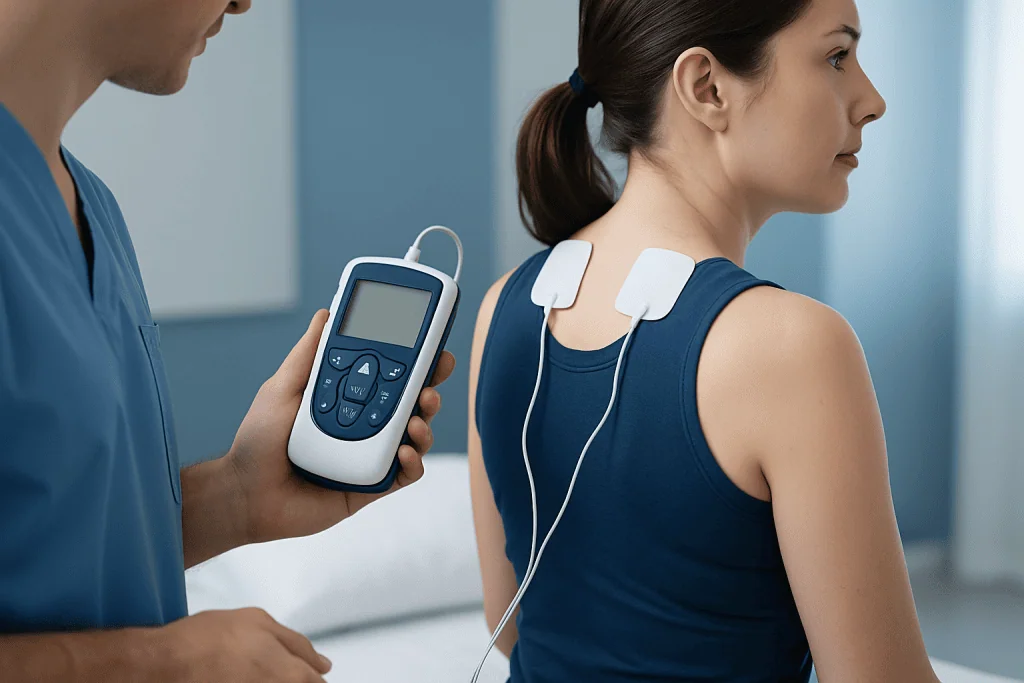
TENS works by stimulating sensory nerves in the skin with controlled electrical pulses. One proposed effect is that this input may reduce how strongly pain signals are perceived by the nervous system. At some settings, stimulation may also encourage the release of the body’s own pain-modulating chemicals, although the exact response depends on the individual and treatment settings.
The clinician may adjust pulse intensity, frequency, and duration according to the pain pattern and the person’s comfort. The intensity is usually increased until a strong but comfortable tingling is felt. TENS should not cause sharp pain, burning, or marked muscle cramping.
Evidence suggests that TENS may help some people with short-term pain relief, but research results are mixed across pain conditions. It is best viewed as one option within a personalized plan that may also include activity modification, physiotherapy, exercise, sleep support, psychological pain-management strategies, and appropriate medicines when prescribed.
Who May Be a Candidate for TENS Therapy?

TENS may be considered for adults with persistent or recurrent pain when a clinician believes a noninvasive approach could complement other care. It may be useful when pain makes it difficult to stay active, carry out rehabilitation exercises, or manage daily activities. The suitability of TENS depends on the diagnosis, location of pain, skin condition, medical history, and treatment goals.
People experiencing chronic back or neck symptoms may benefit from a clinical review to identify the cause and appropriate rehabilitation approach. Pain may arise from several structures, including muscles, joints, nerves, or the spine, and each may require different care. For related information, see back pain and neck pain.
TENS may not be appropriate without specialist advice for people with a pacemaker, implantable cardioverter-defibrillator, implanted neurostimulator, or other electronic medical device. Caution is also needed during pregnancy, in people with reduced skin sensation, epilepsy, active cancer in the treatment area, circulatory problems, or damaged or irritated skin. A healthcare professional can give individualized guidance.
What Happens During a TENS Treatment Session?
A TENS session is straightforward and does not require injections, anesthesia, or a recovery room. A physiotherapist or trained clinician first reviews the pain location, checks the skin, discusses goals, and makes sure there are no contraindications. They then select pad placement away from areas where stimulation could be unsafe.
The skin is cleaned and dried before the electrode pads are applied. The device is turned on at a low setting, then gradually increased until the person notices a comfortable tingling sensation. Settings may be changed during the session based on comfort and response. The person should tell the clinician immediately if there is burning, pain, dizziness, palpitations, or feeling unwell.
At the end of the session, the device is turned off before the pads are removed. The skin is checked for redness or irritation. If home TENS is recommended, the patient should receive clear written or verbal instructions about electrode placement, device settings, session timing, skin care, and situations in which the device should not be used.
How Long Does It Take for TENS Therapy to Work?
Some people notice a change in pain during their first session or shortly afterward, while others do not experience meaningful relief. When TENS helps, the effect may last only while the device is being used or for a period afterward. There is no reliable timeline that applies to everyone.
A clinician may suggest a short trial period to determine whether TENS has a practical benefit, such as making walking, exercise, work tasks, or sleep easier. Keeping a simple record of pain levels, activities, and response can help determine whether it is worthwhile to continue.
If symptoms remain unchanged, worsen, or prevent normal function, the pain should be reassessed rather than repeatedly increasing device use. For some people, a structured rehabilitation program such as physical therapy and rehabilitation may address strength, mobility, posture, and movement patterns that contribute to ongoing pain.
Does a TENS Unit Heal or Just Relieve Pain?
A TENS unit is designed primarily to relieve pain, not to heal injured tissue or cure a medical condition. It does not repair a disc, reverse arthritis, treat an infection, correct a fracture, or remove the cause of nerve compression. However, temporary pain relief can be valuable when it allows a person to move more comfortably, participate in rehabilitation, or reduce reliance on some pain-relief strategies under medical guidance.
For this reason, TENS should be matched to a clear treatment plan. If pain is linked to an injury, arthritis, postoperative recovery, or a neurological condition, treatment may include targeted rehabilitation, medicines, injections, surgery, or other approaches depending on the diagnosis.
People should avoid assuming that symptom relief means the problem has resolved. Continuing activity that causes severe pain, ignoring progressing neurological symptoms, or delaying assessment of persistent pain can allow an underlying condition to go untreated.
Is There a Downside to Using a TENS Machine?
TENS is generally well tolerated when used correctly, but it has limitations and possible side effects. The most common issues are temporary skin redness, itching, or irritation beneath the pads. These may be more likely when pads are worn for too long, reused beyond their recommended life, placed on sensitive skin, or used without cleaning and drying the skin first.
Some people find the sensation uncomfortable or do not obtain useful pain relief. Incorrect pad placement or overly high intensity may cause unpleasant stimulation or muscle twitching. The device should be switched off if it causes pain, burning, rash, worsening symptoms, dizziness, or any concerning reaction.
TENS should never be placed across the chest, over the front or sides of the neck, over the head or eyes, on broken skin, over areas with impaired sensation, or directly over a suspected blood clot, infection, or tumor unless a specialist has instructed otherwise. It should not be used while driving, operating machinery, bathing, swimming, or sleeping.
What Should I Avoid When Using a TENS Unit?
People should use TENS only as instructed and avoid experimenting with pad placement in high-risk areas. The pads should not be positioned so electrical current travels through the chest, and they should not be applied to the carotid sinus area on the neck, the front of the throat, the head, or genitals. Pads should only be placed on clean, intact skin.
It is important to avoid using a TENS device in water or in situations where reduced awareness could create a safety risk, such as while sleeping, driving, or using powered equipment. The device should be turned off before touching, moving, or removing electrodes. Shared pads should not be used because of hygiene and infection concerns.
Individuals with an implanted cardiac device or other electronic implant should not start TENS without approval from the clinician managing that device. Anyone who is pregnant, has epilepsy, has reduced sensation due to neuropathy, or has complex medical conditions should seek professional advice before using TENS.
- Do not use it over broken, inflamed, numb, or infected skin.
- Do not turn the intensity up to a painful level.
- Do not use TENS to mask new, severe, or unexplained pain.
- Do not continue if symptoms or skin reactions worsen.
When to Seek Medical Care
Medical care is important for pain that is severe, sudden, persistent, progressively worsening, or not improving with appropriate self-care. Urgent assessment is needed for pain with chest pressure, shortness of breath, fainting, fever, unexplained weight loss, a new rash, significant injury, or pain that wakes a person consistently from sleep.
For back or neck pain, urgent evaluation is especially important if there is new weakness, numbness in the groin or saddle area, loss of bladder or bowel control, difficulty walking, or symptoms after a major fall or accident. These signs can indicate a condition that needs prompt treatment and should not be managed with a TENS device alone.
Acibadem International’s multidisciplinary specialists and JCI-accredited hospitals assess pain conditions and coordinate care for international patients when evaluation or treatment is needed. A specialist can determine whether TENS is appropriate alongside options such as pain management and rehabilitation.
Frequently asked questions
Can I use a TENS unit every day?
Daily use may be appropriate for some people when it has been recommended by a healthcare professional and the skin remains healthy. The frequency and duration should follow the device instructions and the clinician’s advice. If irritation or worsening pain develops, use should stop until medical guidance is obtained.
Where should TENS pads be placed for pain?
Pads are commonly placed on intact skin around the painful area, following instructions from a physiotherapist, clinician, or the device manufacturer. Exact placement varies according to the source and location of pain. Pads should not be placed across the chest, on the head, over the front of the neck, or on broken skin.
How long does it take for TENS therapy to work?
Some people feel pain relief during the first session, while others do not notice a benefit. If TENS works, relief may be short-lived and can vary from session to session. A supervised trial can help determine whether it improves meaningful activities or rehabilitation participation.
Is there a downside to using a TENS machine?
Possible downsides include skin irritation, discomfort from stimulation, and the possibility that it will not provide useful relief. It can also be unsafe when used in restricted areas or by some people with implanted electronic devices. TENS should not delay assessment of a serious or worsening symptom.
Does a TENS unit heal or just relieve pain?
TENS is intended to help relieve pain rather than heal damaged tissue or cure the condition causing symptoms. Its value may be in making daily movement or rehabilitation more manageable. The underlying cause of pain may still need separate diagnosis and treatment.
What should I avoid when using a TENS unit?
Avoid using TENS in water, while sleeping, driving, or operating machinery. Do not place pads across the chest, on the head, over the front of the neck, or on damaged skin. People with pacemakers or other implanted electronic devices should obtain medical clearance first.
References
- National Institute for Health and Care Excellence
- National Institute of Neurological Disorders and Stroke
- American Physical Therapy Association
- International Association for the Study of Pain
This article is for general information only and is not a substitute for professional medical advice. Please consult a qualified doctor about your individual situation.
Explore treatments in Turkey — costs, top hospitals & a free quote
JCI-accredited · board-certified surgeons · reply within 24h
Add us as a Preferred Source to see more of our trusted health content across Google Search, AI Overviews and Discover.