Testicles: A Complete Medical Overview

Testicles make sperm and testosterone and sit inside the scrotum outside the body to help maintain the right temperature for sperm production. A small difference in size or position between testicles can be normal, but new lumps, swelling, or pain should be assessed by a doctor.
Key Takeaways
- Testicles make sperm and testosterone and sit inside the scrotum outside the body to help maintain the right temperature for sperm production.
- A small difference in size or position between testicles can be normal, but new lumps, swelling, or pain should be assessed by a doctor.
- Common testicular concerns include injury, infection, varicocele, hydrocele, torsion, and tumors.
- Sudden severe testicle pain is an urgent symptom because it can signal testicular torsion.
- Self-awareness and prompt medical evaluation of changes can support early diagnosis and treatment.
Testicles are the male reproductive glands that produce sperm and testosterone, a hormone important for fertility, sexual development, and general health. Understanding how testicles work, what symptoms are normal or abnormal, and when to seek care can help protect reproductive and overall well-being.
Overview: what testicles are and what they do
Testicles, also called testes, are two oval-shaped glands in the male reproductive system. They sit inside the scrotum, the skin sac below the penis, and their main jobs are to produce sperm and make testosterone. Testosterone supports puberty, sex drive, muscle and bone health, body hair growth, and many other normal body functions.
Unlike many other organs, the testicles are located outside the body cavity. This helps keep them slightly cooler than core body temperature, which is important for healthy sperm production. Inside each testicle are tightly coiled tubules where sperm are formed, along with specialized cells that produce hormones.
Although people often expect the testicles to be perfectly matched, a slight difference in size or position is common. One testicle may hang lower than the other, usually without any health problem. What matters more is noticing a new change, such as swelling, a hard lump, persistent discomfort, or a feeling of heaviness.
Because the testicles are central to both fertility and hormone production, changes affecting them can influence reproductive health and general well-being. A basic understanding of testicular structure and function can make symptoms easier to recognize and discuss with a healthcare professional.
Normal anatomy and common variations
Each testicle is connected to the spermatic cord, which contains blood vessels, nerves, lymphatic vessels, and the vas deferens. The vas deferens carries sperm from the epididymis, a coiled tube sitting at the back of each testicle where sperm mature and are stored. This surrounding anatomy helps explain why some problems involve not only the testicle itself, but also the scrotum, epididymis, or spermatic cord.
The surface of a healthy testicle is usually smooth and firm, not rock-hard. The epididymis may feel like a soft cord or ridge behind the testicle, which can be mistaken for an abnormal lump by people unfamiliar with the area. Learning what is normal for one’s own body can make it easier to notice meaningful changes.
Several common variations are not necessarily dangerous. One testicle may be slightly larger, one may sit lower, and the scrotum may look different in warm versus cold conditions because the muscles contract and relax. During puberty and adulthood, the testicles also change in size and function under the influence of hormones.
Even so, some structural changes deserve medical attention. These include a rapidly enlarging scrotum, a firm new mass, an absent or undescended testicle, or veins that seem enlarged and twisted above the testicle. Problems such as varicocele may be benign but can still affect comfort or fertility and should be evaluated when symptoms appear.
Symptoms and signs that may suggest a problem
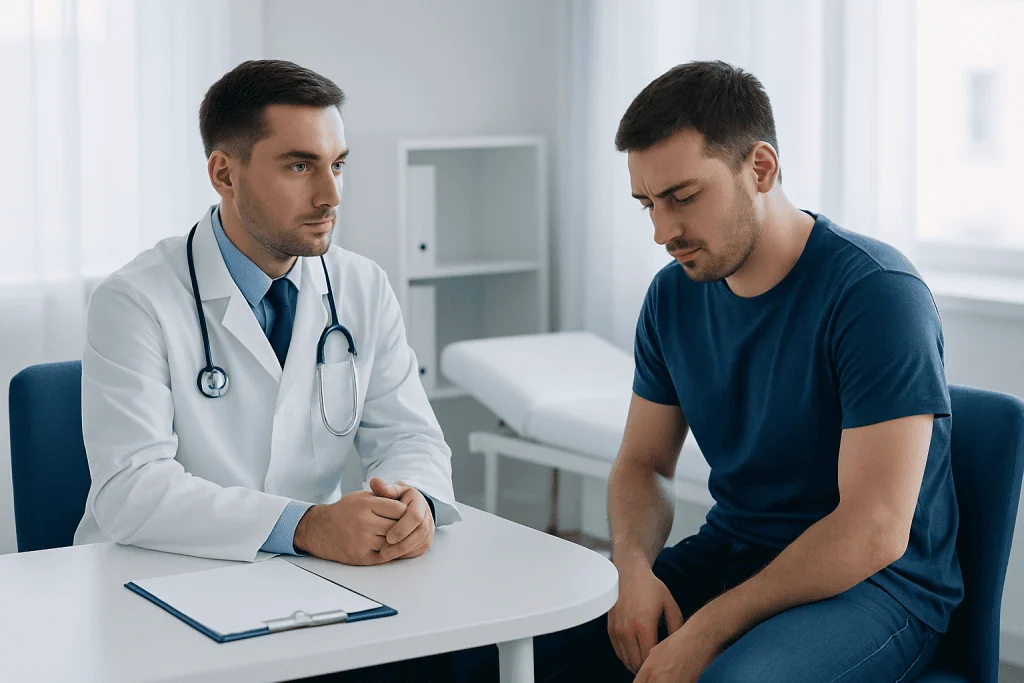
Testicular symptoms can vary widely, from mild discomfort to severe pain. Common warning signs include pain in one or both testicles, swelling, redness of the scrotal skin, a lump, a heavy or dragging sensation, or changes in size. Some people also notice pain in the groin or lower abdomen rather than directly in the testicle.
Not every symptom means a serious condition. Mild temporary discomfort can follow exercise, minor trauma, or prolonged sitting. However, symptoms that persist, return often, or worsen over time should not be ignored. A new lump, especially if it is firm and does not go away, should always be assessed by a doctor.
Infections and inflammation can cause pain, warmth, tenderness, and sometimes fever or urinary symptoms such as burning with urination or discharge. Fluid around the testicle may cause painless swelling, while enlarged veins may create a dull ache that becomes more noticeable after standing. In contrast, some tumors cause little or no pain and may first be noticed as a change in shape or firmness.
One symptom needs urgent attention: sudden, severe pain in the testicle or scrotum. This may happen with testicular torsion, a condition in which the spermatic cord twists and reduces blood flow. Torsion is a medical emergency because fast treatment can help protect the testicle.
Causes and risk factors affecting testicular health
Testicular symptoms may have many causes, including injury, infection, inflammation, structural changes, blood flow problems, and tumors. Minor trauma from sports or daily activities may lead to temporary soreness, while more significant injury can cause bruising, swelling, or internal damage. Wearing protective athletic gear during contact sports can reduce the risk of injury.
Infection is another common cause. Epididymitis and orchitis can result from bacterial or viral infections and may cause pain, swelling, fever, or discomfort with urination. Some infections are associated with sexually transmitted infections, while others may be linked to urinary tract infections or mumps. When infection is suspected, medical evaluation is important to guide treatment and prevent complications.
Several noninfectious conditions can also affect the testicles and scrotum. These include hydrocele, a collection of fluid around the testicle; varicocele, enlarged veins in the scrotum; spermatocele, a usually benign cyst near the epididymis; and inguinal hernia, where tissue protrudes through a weak area in the abdominal wall. Some of these can cause swelling or a heavy sensation without severe pain.
Risk factors vary by condition. Testicular torsion is more common in adolescents but can occur at any age. A history of an undescended testicle increases the risk of testicular cancer, even after correction. Fertility concerns may be related to heat exposure, hormonal issues, prior infection, genetic conditions, or varicocele, and some men may be assessed with sperm analysis when reproductive health is being evaluated.
How doctors diagnose testicular conditions
Diagnosis usually begins with a medical history and physical examination. A doctor may ask when symptoms started, whether the pain was sudden or gradual, whether there has been trauma or fever, and whether urinary or sexual symptoms are present. During the exam, the testicles, epididymis, scrotum, and groin are checked for tenderness, swelling, masses, or hernia.
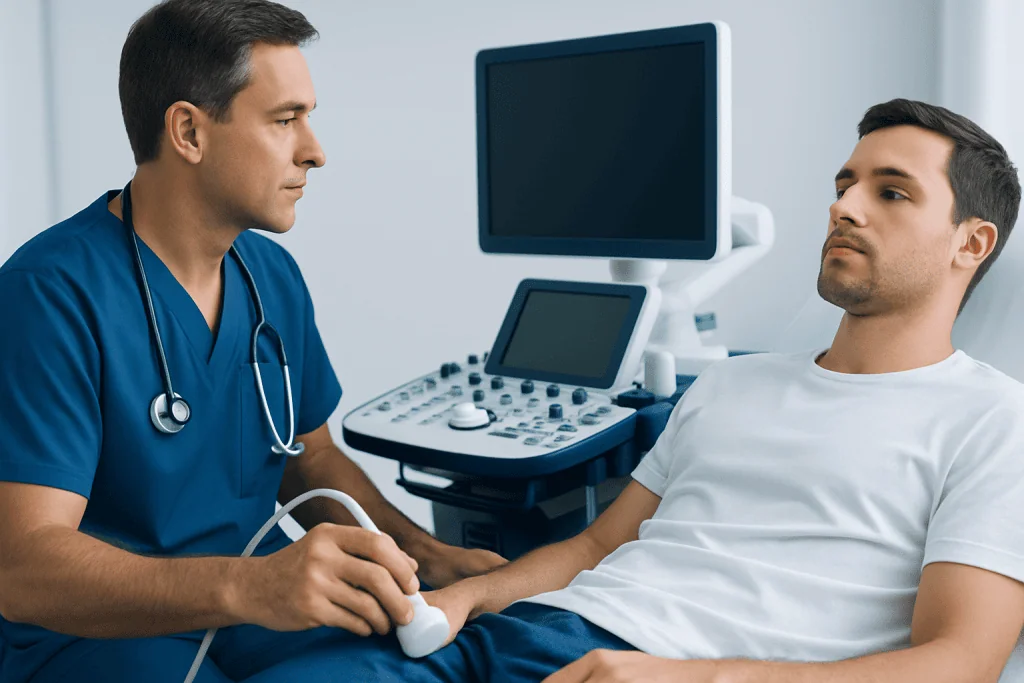
Imaging and laboratory tests may be used depending on the suspected cause. Scrotal ultrasound is one of the most common and useful tests because it can show blood flow, fluid collections, cysts, enlarged veins, or suspicious masses without surgery. Ultrasound is particularly important when doctors need to distinguish torsion from infection or evaluate a lump.
Urine tests and blood tests may help if infection is suspected. In selected cases, blood tumor markers are measured when a testicular mass is found, and additional imaging may be needed. Hormone tests may also be considered if there are concerns about low testosterone, delayed puberty, infertility, or reduced testicular function.
When fertility is part of the concern, doctors may recommend a detailed male reproductive assessment, sometimes including urology evaluation and sperm testing. The goal of diagnosis is not only to identify the immediate problem, but also to understand whether the testicles are functioning normally in terms of hormone production and fertility potential.
Treatment options and what recovery may involve
Treatment depends on the cause. Minor injuries may improve with rest, scrotal support, cold packs wrapped in cloth, and simple pain relief recommended by a doctor. Infections may require antibiotics when bacterial, along with anti-inflammatory measures and symptom control. Viral inflammation is managed supportively, but medical supervision is still important.
Some structural conditions do not need immediate treatment if they are small and symptom-free. Others may need monitoring or intervention if they cause pain, affect fertility, or create uncertainty about the diagnosis. For example, symptomatic enlarged scrotal veins may be treated with varicocele surgery in carefully selected patients, especially when pain or fertility problems are present.
Emergency treatment is essential for testicular torsion. Surgery is needed promptly to untwist the spermatic cord and secure the testicle to reduce the risk of future torsion. Early treatment offers the best chance of preserving testicular function, which is why sudden pain should never be watched at home for long.
If a tumor is suspected, referral to specialists is necessary for further testing and treatment planning. Care may involve surgery and, depending on the diagnosis, other treatments. Near the end of the care pathway, some international patients choose centers such as Acibadem International, where multidisciplinary specialists in JCI-accredited hospitals diagnose and treat testicular and related urologic conditions.
Prevention, self-checks, and everyday self-care
Not every testicular condition can be prevented, but several habits may support testicular health. Wearing protective gear during contact sports helps lower the risk of injury. Safer sexual practices can reduce the risk of sexually transmitted infections that may affect the epididymis or testicles. Seeking treatment promptly for urinary symptoms or infections may also help prevent complications.
Many doctors encourage testicular self-awareness rather than rigid self-testing rules for everyone. This means knowing the usual size, shape, and feel of the testicles and noticing changes over time. Some people prefer to examine themselves after a warm shower, when the scrotal skin is relaxed, gently rolling each testicle between the fingers and thumb to check for a new lump or unusual firmness.
Self-checks should be calm and simple, not a source of anxiety. It is normal to feel the epididymis behind the testicle, and mild differences between sides are common. The aim is not to diagnose a condition at home but to recognize when something is different and bring it to medical attention.
General health also matters. Maintaining a healthy weight, avoiding smoking, and discussing concerns about hormones, fertility, or sexual health with a doctor can all be helpful. If a person has a history of undescended testicle, prior surgery, infertility, or previous testicular problems, regular follow-up may be advised.
When to seek medical care
Medical care should be sought promptly for any new lump, persistent swelling, ongoing pain, or a feeling that one testicle has changed in size, shape, or firmness. Even when the cause turns out to be benign, an examination is the safest way to confirm this. Pain with fever, urinary burning, discharge, or redness also deserves timely assessment because infection may need treatment.
Urgent medical care is needed for sudden severe pain, sudden swelling, nausea with scrotal pain, or a high-riding testicle. These features can occur with testicular torsion, which requires immediate treatment. Delaying care may increase the risk of damage to the testicle.
People should also consult a doctor if they have trouble with fertility, low sex drive, signs of low testosterone, or a history of an undescended testicle. These issues may relate to testicular function even if there is no obvious pain. A healthcare professional can recommend the right next steps, tests, and referrals.
In general, it is better to ask about a testicular symptom early than to wait for it to become more noticeable. Most causes are treatable, and early evaluation is especially important when preserving fertility, hormone function, or testicular tissue is a goal.
Frequently asked questions
Is it normal for one testicle to hang lower than the other?
Yes. It is common for one testicle to sit slightly lower or be a little larger than the other. This is usually a normal anatomical variation unless there is a new change, pain, or swelling.
What does testicle pain usually mean?
Testicle pain can have many causes, including minor injury, infection, inflammation, varicocele, or fluid buildup. Sudden severe pain is more concerning because it can suggest testicular torsion, which needs urgent medical care.
How can someone check their testicles at home?
A simple self-check is best done when the scrotum is relaxed, such as after a warm shower. Each testicle can be gently rolled between the fingers to look for a new hard lump, unusual firmness, or a clear change in size, while remembering that the epididymis normally feels like a soft structure behind the testicle.
Are testicular lumps always cancer?
No. Testicular lumps or scrotal swellings may be caused by harmless or less serious conditions such as cysts, hydrocele, or varicocele. However, any new lump should be examined by a doctor because some testicular cancers are painless at first.
Can testicular problems affect fertility?
Yes. Some conditions, including varicocele, infection, hormonal disorders, prior injury, and certain structural problems, may affect sperm production or sperm transport. When fertility is a concern, a doctor may recommend testing to assess sperm and hormone function.
When is testicle pain an emergency?
Testicle pain is an emergency when it starts suddenly, is severe, or is accompanied by nausea, swelling, or a testicle that seems higher than usual. These signs may indicate torsion, and immediate treatment is important to protect the testicle.
References
- National Institute of Diabetes and Digestive and Kidney Diseases
- Urology Care Foundation
- American Urological Association
- Mayo Clinic
- National Cancer Institute
This article is for general information only and is not a substitute for professional medical advice. Please consult a qualified doctor about your individual situation.
IVF & fertility treatment in Turkey — success rates and costs
JCI-accredited · board-certified surgeons · reply within 24h
Add us as a Preferred Source to see more of our trusted health content across Google Search, AI Overviews and Discover.

More from the Health Library

Neomycin — Explained by Medical Evidence, Not Myths

Cysts — Explained by Medical Evidence, Not Myths

Borax — Explained by Medical Evidence, Not Myths

Normal Blood Sugar — Explained by Medical Evidence, Not Myths
Hole in Heart: An Evidence-Based Guide for Patients