Therapy Dogs for Autism: How It Works, Results and What to Expect
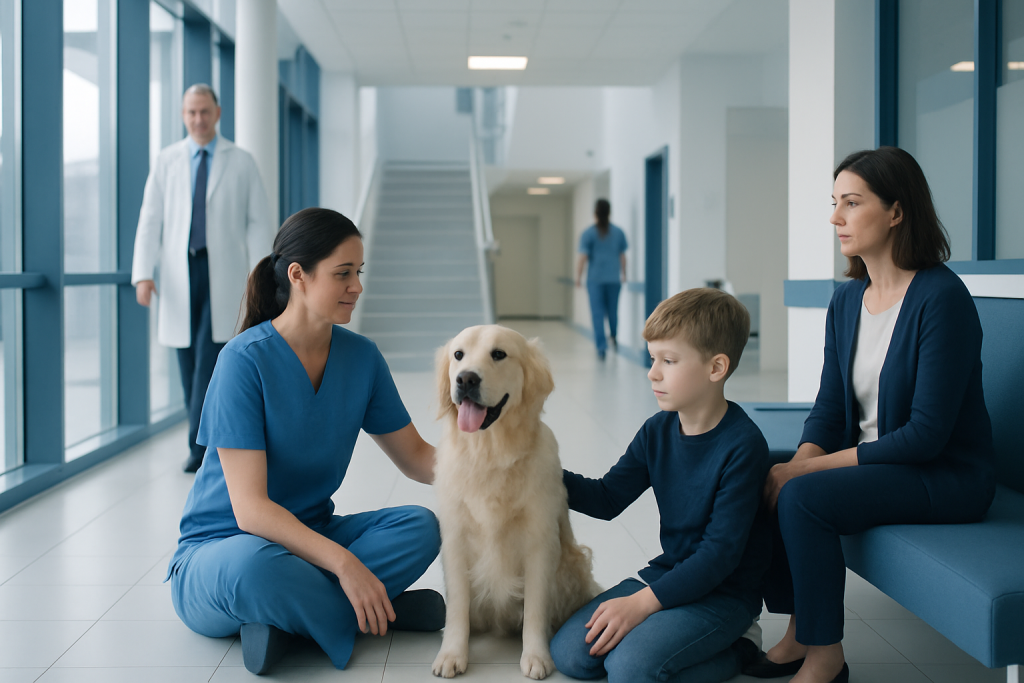
Therapy dogs and autism service dogs are different: therapy dogs work in planned sessions, while service dogs are trained to perform disability-related tasks for one person. Research suggests animal-assisted interventions may support social interaction, stress regulation and participation for some autistic people, but outcomes are individual and evidence is still developing.
Key Takeaways
- Therapy dogs and autism service dogs are different: therapy dogs work in planned sessions, while service dogs are trained to perform disability-related tasks for one person.
- Research suggests animal-assisted interventions may support social interaction, stress regulation and participation for some autistic people, but outcomes are individual and evidence is still developing.
- A qualified clinician and an experienced animal-assisted intervention provider can help decide whether a dog-based program is appropriate.
- Potential concerns include allergies, sensory discomfort, fear of dogs, infection-control needs, falls and the welfare of the animal.
- Dog-based support should complement, not replace, individualized medical, developmental, educational and mental health care.
Therapy dogs for autism can provide structured emotional and social support for some autistic people, often helping with comfort, engagement and regulation during guided interactions. They are not a treatment for autism itself, and the best approach depends on the individual’s needs, preferences, safety and access to qualified professionals.
Overview: How therapy dogs for autism can help
Therapy dogs for autism are trained, temperament-tested dogs that work with their handlers in planned settings such as clinics, schools, rehabilitation programs or community services. In a guided session, interaction with the dog may help an autistic child, teenager or adult feel more settled, communicate in a different way, practise social skills or take part in therapeutic activities.
These programs are often described as animal-assisted interventions. The dog is not expected to “treat” autism or change a person’s identity. Instead, the dog may serve as a calming presence, a shared focus for conversation, or a motivating partner for goals set by the person, family and clinical team.
It is important to distinguish therapy dogs from service dogs. A therapy dog visits or participates in sessions with multiple people under the guidance of a handler or clinician. An autism service dog is trained for an individual person with a disability and may perform specific tasks that reduce the impact of that disability in everyday life.
How it works: the role of the dog in a structured session
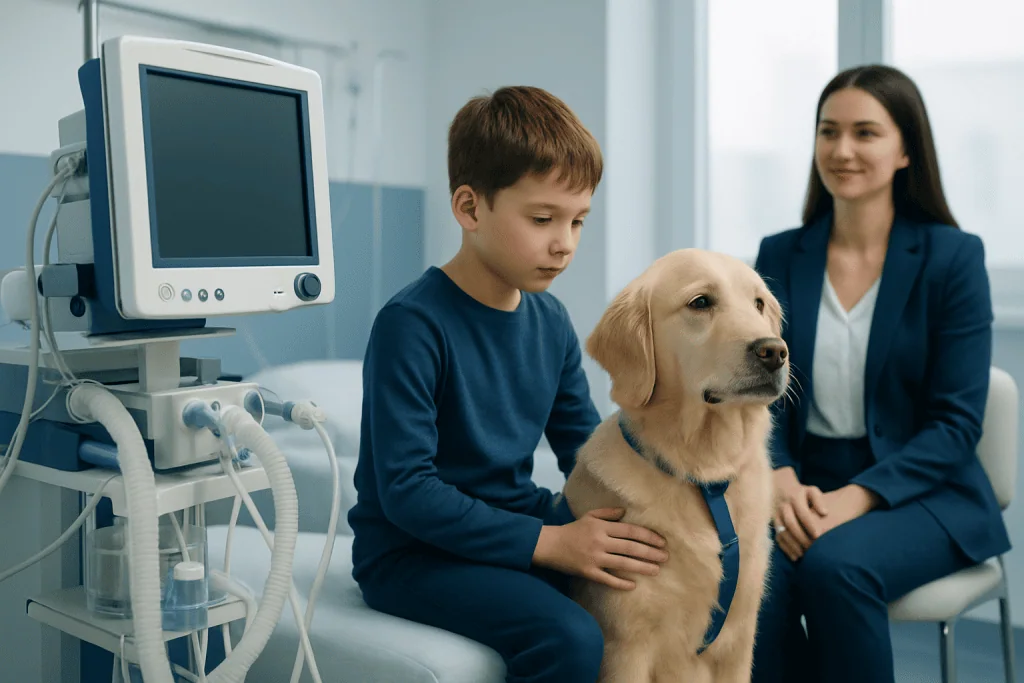
Animal-assisted therapy is most useful when it has clear goals. A psychologist, occupational therapist, speech and language therapist, educator or other qualified professional may use the dog within an existing care plan. Goals might include practising turn-taking, using functional communication, tolerating a new environment, developing routines or learning ways to pause and regulate during distress.
For example, a person may brush the dog while discussing sensory preferences, give the dog a simple cue while practising clear language, or take part in a short walk that supports movement and shared attention. The dog can make activities feel more predictable and less demanding for some people, but the response is not the same for everyone.
The handler is responsible for the dog’s welfare and safe participation. Sessions should allow the dog to rest, have water and step away when needed. Good programs use healthy, well-trained dogs and follow hygiene, supervision and safeguarding procedures.
Therapy dogs may be considered alongside broader developmental and mental health support. Autism assessments and care planning are individualized, and a specialist can discuss whether approaches such as autism spectrum disorder support may fit the person’s needs.
Do therapy dogs really work?
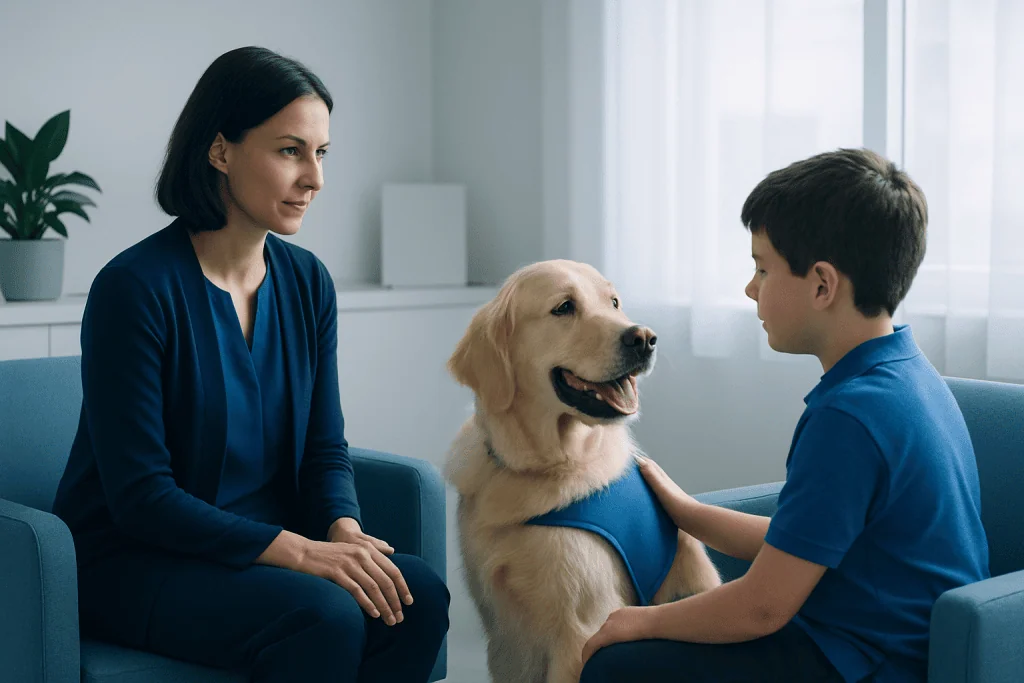
Therapy dogs can be helpful for some autistic people, particularly as part of a structured intervention delivered by trained professionals. Small studies and clinical experience suggest that animal-assisted programs may improve engagement, enjoyment, social interaction or short-term stress regulation for certain participants. However, research methods vary, study groups are often small, and benefits cannot be assumed for every person.
A positive experience with a dog does not necessarily translate into lasting changes in communication, independence or anxiety. The most meaningful outcomes are practical and personal: whether the individual feels safe, chooses to participate, reaches agreed goals and can use helpful skills outside the session.
Families should be cautious about claims that any animal-based approach can cure autism or replace evidence-based developmental, educational or mental health care. A clinician can help set realistic goals and monitor whether the intervention is worthwhile over time.
Progress is best reviewed using observable measures, such as willingness to attend sessions, ability to practise a targeted skill, changes in distress during a routine or feedback from the person themselves. If the dog-related activities are uncomfortable, unhelpful or disruptive, the plan can be changed or stopped.
Candidacy, assessment and the step-by-step process
There is no single profile of a person who will benefit from therapy dogs for autism. Candidacy depends on the individual’s interests, sensory profile, communication style, health needs and goals. Someone does not need to be able to speak, touch the dog or maintain eye contact to take part; meaningful participation can include observing the dog from a comfortable distance or using alternative communication.
Before starting, the provider should ask about dog allergies, asthma, eczema, immune suppression, fear of dogs, previous bites or traumatic experiences, mobility and balance concerns, and cultural or personal preferences. The team should also consider the environment, including whether the setting is quiet, accessible and able to support safe hand hygiene.
A typical process may include:
- Initial discussion: the person and family describe priorities, concerns and desired outcomes.
- Suitability review: the clinician and handler assess practical safety, sensory needs and comfort around dogs.
- Introduction: the first meeting is brief and low-pressure, with the person able to watch, approach or decline contact.
- Goal-focused sessions: activities are tailored to agreed therapeutic or educational goals.
- Review: the team checks benefits, comfort and any problems, then adjusts the plan.
For some people, support from pediatric, mental health, rehabilitation or neurology professionals may be relevant. Occupational therapy can also address sensory regulation, everyday activities and participation goals using approaches that do not depend on interaction with animals.
What tasks do autism service dogs do?
Autism service dogs are different from therapy dogs because they are trained to assist one specific person with disability-related needs. The tasks depend on the individual, local laws and the dog’s training. Not every autistic person needs or wants a service dog, and a service dog should never be used as a substitute for appropriate supervision or clinical care.
Possible trained tasks may include interrupting repetitive or unsafe behavior, providing tactile grounding during escalating distress, guiding a person away from an overwhelming situation, helping locate a caregiver, responding to certain cues or supporting predictable routines. For some children, a service dog may be tethered to a parent or caregiver during supervised outings, but this requires careful professional assessment and ongoing safety planning.
Service dogs need extensive training, consistent handling and lifelong veterinary care. Their ability to work safely depends on the match between the dog, the person, the household and the environments they will enter. Families should seek reputable programs that explain training standards, placement criteria, follow-up support and the responsibilities of ownership.
Benefits, risks and recovery timeline
Potential benefits may include a sense of companionship, increased motivation to participate in therapy, opportunities for shared attention, and support for calming routines. Some people find the predictable presence of an animal easier to manage than complex social demands. Others may enjoy movement-based activities, such as gentle walking or grooming, when these are safe and chosen freely.
There is no medical recovery timeline because therapy dog participation is not a procedure or surgery. After an initial introduction, some people may need several brief sessions to decide whether they are comfortable. If the approach is useful, goals are usually reviewed after a planned period rather than assuming that ongoing sessions are needed indefinitely.
Risks include allergies, asthma symptoms, scratches, bites, falls, distress related to barking or smell, and infection risks from poor hygiene. Although well-managed programs reduce these risks, no interaction with an animal is completely risk-free. Hands should be washed after contact, wounds should be cleaned promptly, and the dog should not have contact with broken skin, food or medical equipment.
The dog’s wellbeing also matters. Signs that the dog is tired, anxious or overstimulated should lead to a break or the end of interaction. Respecting both the person’s boundaries and the dog’s limits is central to safe, ethical animal-assisted work.
What is the 6 second rule in autism?
The “6 second rule” is not a formal medical or autism diagnostic guideline. It is commonly used as an informal communication reminder: after asking a question, giving an instruction or offering a choice, allow several seconds of quiet processing time before repeating, rephrasing or expecting an answer.
Many autistic people benefit from extra time to understand language, organize a response, use an alternative communication method or manage sensory input. Six seconds is not a fixed requirement. Some people need less time, while others may need substantially longer, especially when they are tired, anxious, overwhelmed or faced with an unfamiliar task.
During a therapy dog session, giving time and avoiding pressure may help the person decide whether to watch, approach, touch or communicate with the dog. The individual’s signals, preferences and consent should guide the pace of every interaction.
How expensive are autism service dogs? When to seek medical care
The cost of an autism service dog varies widely by country, organization, training pathway, availability and the type of ongoing support provided. Expenses can include assessment, specialized training, travel, equipment, food, grooming, veterinary care, insurance where available and the time required for handling. Some nonprofit programs may offer fundraising support or subsidized placement, but availability and eligibility differ, so families should request a full written explanation of current and long-term costs.
Therapy dog sessions may also differ in availability and funding depending on whether they are offered through a school, health service, private provider or community organization. Before committing, families can ask who supervises the sessions, what qualifications and infection-control procedures are in place, what goals will be measured, and how the program will respond if the person or dog is uncomfortable.
Medical care should be sought promptly for a dog bite that breaks the skin, a significant scratch, signs of an allergic reaction, worsening asthma symptoms, or a sudden change in behavior that raises safety concerns. A doctor should also assess persistent anxiety, sleep difficulties, loss of skills, self-injury, aggression or distress that is difficult to manage. These concerns may have medical, sensory, emotional or environmental contributors and deserve individualized evaluation.
Acibadem International’s multidisciplinary specialists and JCI-accredited hospitals can assess developmental, behavioral and related health needs for international patients. Families can discuss individualized support plans with qualified clinicians, including child and adolescent psychiatry services when emotional or behavioral symptoms require specialist input.
Frequently asked questions
Are therapy dogs the same as emotional support animals?
No. Therapy dogs work with a handler to support multiple people in organized settings, often as part of a professional program. Emotional support animals provide comfort to their owner but are not necessarily trained to perform disability-related tasks or participate in clinical sessions.
Can a person with autism be afraid of therapy dogs?
Yes. Fear of dogs, sensory sensitivity to noise or smell, and discomfort with unexpected movement are all valid reasons to avoid or modify dog-based activities. Participation should always be voluntary, gradual and based on the person’s comfort.
How long does it take to see benefits from therapy dog sessions?
Some people may appear more engaged or relaxed during an early session, while others need time to become comfortable. Lasting benefit should be judged by agreed individual goals over a period of sessions, not by one interaction.
Can therapy dogs help autistic adults as well as children?
Yes, therapy dog programs may be adapted for autistic adults as well as children and teenagers. The goals may differ and can include stress management, social participation, communication practice or support during rehabilitation activities.
Should a therapy dog be used during an autistic meltdown?
Only if this has been planned and the person is known to find the dog calming. During distress, safety, reduced demands, space and support from trained caregivers are priorities; a dog should never be forced into a situation that may increase distress or place either the person or animal at risk.
What should families ask before choosing an autism service dog program?
Families should ask about the organization’s training standards, assessment process, follow-up support, waiting times, total responsibilities and policies for matching dogs with recipients. It is also important to ask how the program protects the welfare of the dog and handles safety concerns after placement.
References
- American Academy of Pediatrics
- Centers for Disease Control and Prevention
- National Institute of Mental Health
- Assistance Dogs International
- Pet Partners
This article is for general information only and is not a substitute for professional medical advice. Please consult a qualified doctor about your individual situation.
Explore treatments in Turkey — costs, top hospitals & a free quote
JCI-accredited · board-certified surgeons · reply within 24h
Add us as a Preferred Source to see more of our trusted health content across Google Search, AI Overviews and Discover.