Thermometers — Explained by Medical Evidence, Not Myths

Thermometers can give different readings depending on the body site used, such as oral, rectal, ear, forehead, or armpit. Digital thermometers are commonly recommended for home use because they are practical, widely available, and easy to read.
Key Takeaways
- Thermometers can give different readings depending on the body site used, such as oral, rectal, ear, forehead, or armpit.
- Digital thermometers are commonly recommended for home use because they are practical, widely available, and easy to read.
- A thermometer’s accuracy depends not only on the device but also on correct technique, timing, and recent activity such as eating or exercise.
- Fever is a sign, not a disease by itself, and temperature should be interpreted together with symptoms and age.
- Infants, older adults, and people with serious medical conditions may need medical advice sooner when a fever develops.
- Cleaning, proper storage, and following the manufacturer’s instructions help keep thermometers reliable over time.
Thermometers are tools used to measure body temperature, but the most reliable choice depends on a person’s age, symptoms, and how the device is used. Understanding the differences between thermometer types can help people read temperatures more accurately and make calmer, better-informed decisions about fever.
Overview: what thermometers do and why they matter
Thermometers are devices that measure body temperature. In everyday use, they help people check for fever, monitor illness at home, and decide whether symptoms may need medical attention. They do not diagnose the cause of a fever, but they provide one important piece of information that can guide next steps.
Body temperature is not a fixed number. It changes slightly during the day and may vary with age, physical activity, clothing, room temperature, and where the temperature is taken. Because of this, the same person can have somewhat different readings from the mouth, ear, forehead, rectum, or armpit without anything being wrong with the thermometer.
Medical evidence supports using thermometers as a helpful tool rather than treating one number in isolation. A temperature reading is most useful when considered together with symptoms such as chills, cough, pain, dehydration, breathing difficulty, or unusual sleepiness. In children and older adults especially, the overall clinical picture matters as much as the number itself.
Types of thermometers and how they differ
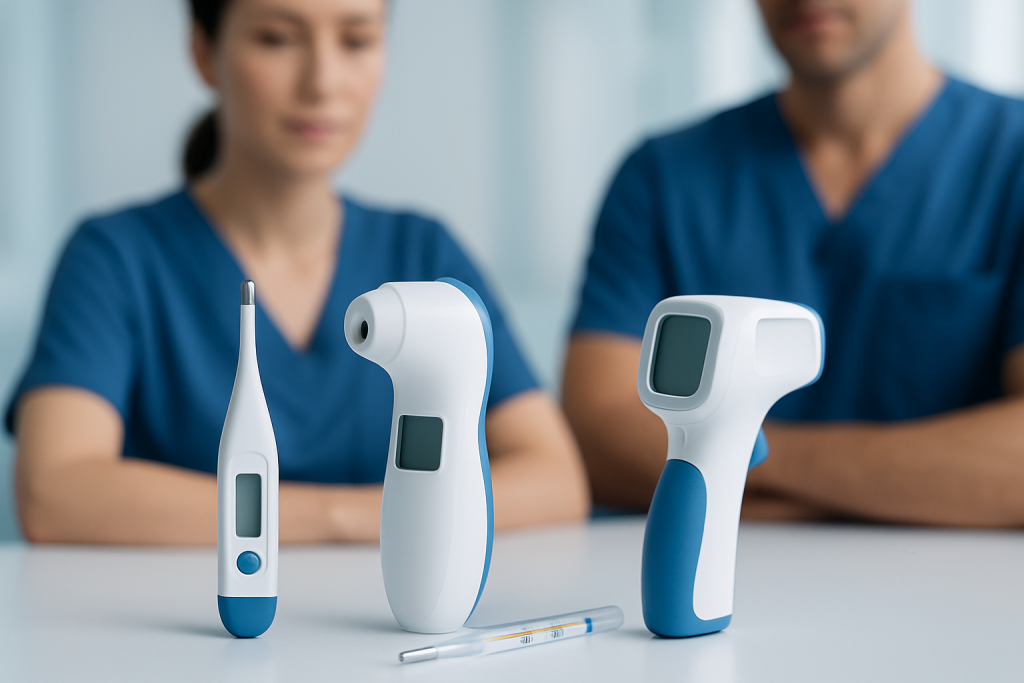
Several types of thermometers are used in homes and healthcare settings. Digital contact thermometers are the most common. They can be used in the mouth, rectum, or armpit, depending on the model and the instructions. These devices are often preferred because they are quick, easy to read, and generally dependable when used correctly.
Infrared ear thermometers measure heat from the eardrum area. They can be convenient, especially for older infants, children, and adults, but they may be less reliable if the probe is not positioned well or if earwax is present. Forehead thermometers, including temporal artery thermometers and some non-contact models, are also fast and comfortable, though their readings can be affected by sweat, room temperature, or technique.
Rectal thermometers are often considered the most accurate option for babies and very young children when an exact core temperature is important. Armpit temperatures are easy to obtain but usually less precise and may be better suited as a screening method rather than the final word on whether fever is present.
Older glass mercury thermometers are no longer recommended in many places because mercury can be toxic if the device breaks. If one is still present in the home, it should not be used routinely. Safer modern alternatives are available and are generally easier to use.
How to use thermometers correctly for the most accurate reading

Technique has a major effect on thermometer accuracy. For oral readings, a person should usually wait after hot or cold drinks, smoking, or exercise before taking the temperature. The thermometer tip should be placed under the tongue and the mouth kept closed until the reading is complete. If the person cannot reliably keep the device in place, another method may be better.
Rectal temperatures require a dedicated thermometer, gentle technique, and careful cleaning afterward. Ear thermometers should be aimed according to the manufacturer’s instructions so the sensor faces the ear canal correctly. Forehead devices need a clean, dry skin surface and proper positioning; sweat or recent exposure to a hot or cold environment can affect results.
Armpit readings should be taken with the thermometer fully in contact with dry skin and the arm held snugly against the body. Even with correct use, armpit temperatures are often lower and less precise than measurements taken at other sites. If the reading seems inconsistent with symptoms, repeating the temperature or using a more reliable method can help.
It is also wise to use the same thermometer and the same body site when tracking temperature over time. This makes trends easier to interpret. A single unexpected reading should be checked again, especially if the person otherwise appears well or the number seems out of step with how they feel.
Understanding temperature readings, fever, and common myths
A normal body temperature can vary from person to person and by measurement site. For this reason, there is no single “perfect” number that applies to everyone at all times. In general, fever means a body temperature that is higher than the usual range, but the exact threshold can differ depending on whether the reading is oral, rectal, ear, forehead, or underarm.
One common myth is that any temperature above the often-quoted average of 98.6°F (37°C) is a fever. In reality, healthy temperatures naturally move above and below that average during the day. Another myth is that higher fever always means more serious illness. Fever can occur with mild viral infections, while some serious conditions may cause only a slight temperature rise or none at all.
It is also a mistake to rely only on touch, such as feeling a forehead with a hand. Skin warmth can suggest a fever, but it is not a dependable substitute for a thermometer. Another misunderstanding is that all thermometers should give the same number. Different body sites measure slightly different temperatures, so a small difference between methods can be expected.
What matters most is the pattern and context. A rising temperature, a persistent fever, or fever combined with symptoms like dehydration, confusion, severe pain, or breathing problems deserves more attention than a single isolated reading.
When thermometer readings may point to illness
Thermometers are commonly used when a person has symptoms of infection, such as cough, sore throat, body aches, vomiting, diarrhea, or fatigue. Fever can occur with many causes, including viral illnesses, bacterial infections, inflammatory conditions, heat-related illness, and reactions to some medicines. In some cases, there may be no fever even when a person is unwell.
In children, fever often comes from common infections and can be monitored at home if the child is drinking fluids, breathing comfortably, and staying reasonably alert. In adults, fever may accompany colds, flu, stomach infections, or urinary symptoms. Thermometers help track whether the temperature is improving, staying the same, or worsening.
Persistent fever or repeated high readings may lead a doctor to look for underlying conditions such as influenza, pneumonia, or urinary tract infection, depending on the symptoms and examination findings. However, a thermometer reading alone cannot determine which illness is present.
For some people, temperature monitoring is especially important. This includes newborns, older adults, people receiving cancer treatment, those with weakened immune systems, and anyone recovering from surgery or a serious infection. In these groups, even modest temperature changes can be clinically important.
Care at home, cleaning, and choosing the right thermometer
For many households, a digital thermometer is a practical first choice. Families with infants may also keep a rectal thermometer intended only for that purpose, while some adults prefer ear or forehead models for convenience. The best thermometer is usually the one that is appropriate for the person’s age, easy to use correctly, and reliable enough to repeat when needed.
Cleaning matters because thermometers come into direct contact with skin or body fluids. They should be cleaned according to the manufacturer’s instructions, often with soap and water or alcohol-based wipes depending on the device. Oral and rectal thermometers should never be interchanged unless the product is specifically designed and clearly labeled for different uses, with proper hygiene maintained.
Batteries, storage conditions, and calibration can affect performance over time. If readings seem inconsistent, replacing the battery or checking the manual may help. A damaged probe, cracked display, or repeated unusual measurements may mean the device should be replaced rather than trusted.
At home, fever care usually focuses on fluids, rest, and watching for worsening symptoms. Over-the-counter fever-reducing medicines may be appropriate for some people, but they should be used according to age, medical history, and a clinician’s advice when needed. If symptoms suggest a more serious infection, doctors may recommend further evaluation and tests, and sometimes targeted treatment such as antibiotic treatment or hospital-based support including IV therapy.
When to seek medical care
Medical care should be sought sooner for certain groups and situations. A fever in a very young infant, especially a newborn, needs prompt medical assessment. Urgent advice is also important if fever occurs with difficulty breathing, chest pain, seizures, severe headache, stiff neck, confusion, a new rash, signs of dehydration, or if the person is hard to wake.
People with chronic illness, weakened immunity, recent surgery, or cancer treatment should contact a doctor early if a fever develops. The same is true for older adults, who may not always show typical signs of infection even when they are significantly unwell. A persistent fever, a repeated high temperature, or symptoms that continue to worsen should not be managed at home for too long without guidance.
If a doctor suspects the cause of fever is more than a simple self-limited illness, further evaluation may include blood tests, urine tests, or imaging. In selected cases, treatment may involve medical assessment and check-up and symptom-directed care. Near the end of the care pathway, patients seeking coordinated international care may wish to know that Acibadem International’s multidisciplinary specialists and JCI-accredited hospitals diagnose and treat fever-related conditions for international patients.
Frequently asked questions
Which thermometers are most accurate for home use?
Digital thermometers are widely recommended for home use because they are easy to read and generally reliable when used properly. For babies and very young children, rectal measurement is often considered the most accurate when an exact temperature is important. Ear and forehead devices can be useful, but technique matters more with these types.
Is forehead temperature as accurate as oral temperature?
Forehead thermometers can be convenient and comfortable, but they may be affected by sweat, room temperature, or incorrect positioning. Oral temperatures are often more consistent in older children and adults who can use the device correctly. If a forehead reading seems unusual, repeating it or confirming with another method can help.
What is considered a fever?
A fever means body temperature is above the normal range, but the exact number depends on where the temperature is taken. Rectal, oral, ear, forehead, and underarm readings do not all use the same thresholds. It is best to interpret the result using the thermometer instructions and the person’s symptoms.
Can a person have an infection without a fever?
Yes. Not every infection causes fever, and some people, especially older adults or those with weakened immune systems, may have mild or no fever even when they are ill. Symptoms such as cough, pain, shortness of breath, weakness, or confusion can still need medical attention.
How often should temperature be checked during illness?
There is usually no need to check temperature too frequently unless a doctor has advised closer monitoring. Many people check every few hours or when symptoms clearly change. Repeated measurements should ideally be taken with the same thermometer and method so trends are easier to compare.
Should armpit temperatures be trusted?
Armpit temperatures can be useful as a quick screening tool, especially in children, but they are usually less accurate than rectal, oral, ear, or forehead readings. If the result does not match how the person looks or feels, another method may be needed. This is especially important in infants or anyone who seems significantly unwell.
This article is for general information only and is not a substitute for professional medical advice. Please consult a qualified doctor about your individual situation.
Explore treatments in Turkey — costs, top hospitals & a free quote
JCI-accredited · board-certified surgeons · reply within 24h
Add us as a Preferred Source to see more of our trusted health content across Google Search, AI Overviews and Discover.

More from the Health Library

Matcha Tea – Matcha Tea: What Patients Need to Know
Dermatome Map — Explained by Medical Evidence, Not Myths

Fecal Elastase: A Complete Medical Overview

Herniated Disc: An Evidence-Based Guide for Patients

Buttermilk Substitute — Explained by Medical Evidence, Not Myths