Thick Thighs: An Evidence-Based Guide for Patients

Thick thighs are commonly due to normal genetics, body fat distribution, and muscle development. The health meaning depends on whether thigh size is stable and symmetrical or new, painful, swollen, or changing quickly.
Key Takeaways
- Thick thighs are commonly due to normal genetics, body fat distribution, and muscle development.
- The health meaning depends on whether thigh size is stable and symmetrical or new, painful, swollen, or changing quickly.
- Lifestyle factors, hormones, aging, exercise patterns, and certain medical conditions can all affect thigh size.
- Medical evaluation may be helpful if thick thighs are associated with pain, easy bruising, heaviness, skin changes, or one-sided swelling.
- Treatment is not always necessary; care depends on the underlying cause and may include exercise, nutrition, compression, or specialist treatment.
Thick thighs are usually a normal body-shape variation caused by genetics, muscle mass, and how the body stores fat. In some people, however, a noticeable increase in thigh size may be linked to swelling, hormonal changes, weight gain, or conditions such as lipedema, so the overall pattern and symptoms matter.
Overview: What thick thighs usually mean
Thick thighs are most often a normal physical trait rather than a disease. Many people naturally carry more fat or muscle in the upper legs because of genetics, sex hormones, body structure, and daily activity. For some, this shape is simply part of normal body diversity and does not indicate any health problem.
From a medical perspective, the important question is not only whether the thighs are thick, but why they are thick and whether this has changed over time. A person with lifelong, symmetrical thigh fullness and no pain may simply have a genetically determined body shape. In contrast, new enlargement, discomfort, heaviness, bruising, or swelling may suggest a need for closer evaluation.
Thigh size can reflect different tissues. In some people, larger thighs come mainly from muscle, especially with sports, resistance training, or an active lifestyle. In others, thigh fullness is related more to subcutaneous fat, fluid retention, or less commonly an underlying condition affecting fat distribution or the lymphatic system.
This distinction matters because the next steps are different. Normal body composition changes are usually managed with general healthy habits if a person wishes to change shape, while symptoms such as pain, leg swelling, or mobility issues may warrant assessment for conditions including lipedema or other circulatory and soft-tissue concerns.
Common reasons for thick thighs
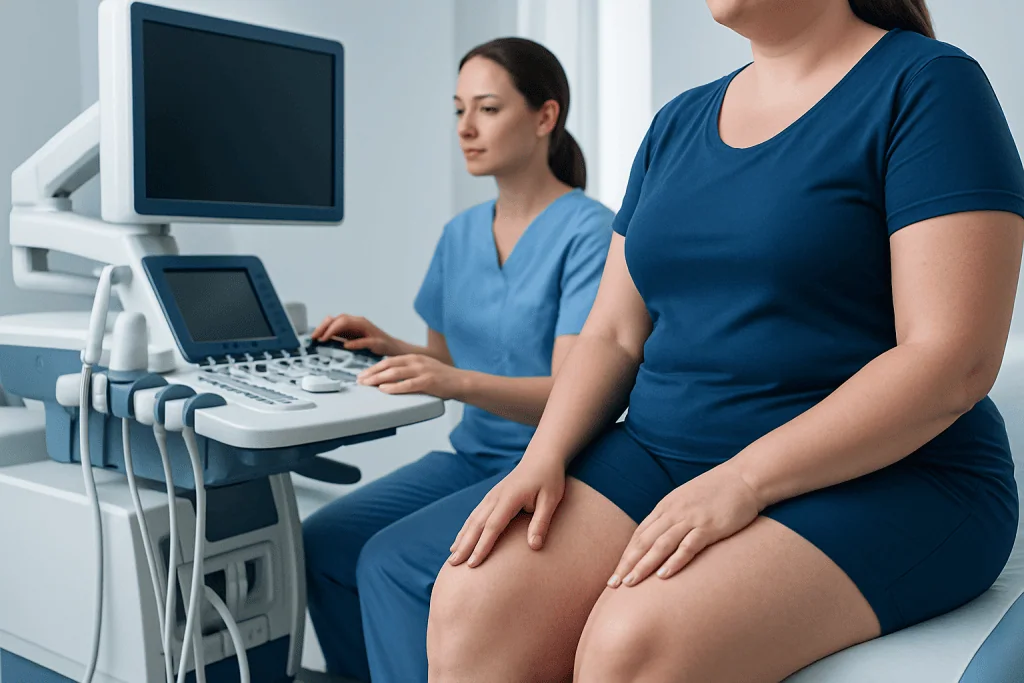
Genetics is one of the strongest influences on thigh size. Family traits often determine where the body tends to store fat, whether in the thighs, hips, abdomen, or arms. Many women in particular store more fat in the lower body due to hormonal patterns, especially during puberty, reproductive years, pregnancy, and menopause transitions.
Muscle development is another common reason. People who walk frequently, climb stairs, cycle, dance, run, or perform strength training often build larger quadriceps, hamstrings, and gluteal muscles. In these cases, thick thighs can be a sign of strength and conditioning rather than excess fat.
Weight gain can also increase thigh size, but body fat does not distribute the same way in every person. Some people gain more in the lower body, while others notice more abdominal fat. Hormonal conditions, reduced physical activity, aging-related changes in metabolism, and some medications may influence this pattern.
Less commonly, thick thighs may be related to medical issues such as fluid buildup, venous problems, lymphatic dysfunction, or disorders of fat tissue. These possibilities become more relevant when the thighs feel tender, look disproportionately enlarged compared with the feet, bruise easily, or seem to grow despite usual diet and exercise efforts.
When thick thighs may point to a medical condition

Although thick thighs are often normal, certain symptoms can suggest that something more than usual fat or muscle is involved. One example is lipedema, a chronic condition in which abnormal fat accumulates, usually in the legs and sometimes the arms, often symmetrically. People may describe heaviness, tenderness, easy bruising, and legs that seem disproportionately larger than the rest of the body.
Swelling is another clue. If thigh enlargement is caused by fluid retention rather than fat or muscle, the legs may feel tight, heavy, or puffy. When swelling affects one leg more than the other, appears suddenly, or is associated with redness or shortness of breath, prompt medical evaluation is important because vascular causes need to be ruled out.
Skin and soft-tissue changes can also matter. Recurrent rubbing, chafing, rashes in skin folds, or reduced mobility may arise when the thighs are very large, regardless of the underlying cause. In some cases, persistent irritation may need dermatologic care or practical measures to reduce friction and moisture.
Other medical concerns can include obesity-related metabolic risk, endocrine disorders, or orthopedic strain. Thick thighs themselves are not the diagnosis; rather, the thigh shape is one feature that must be interpreted alongside symptoms, weight history, menstrual and hormonal history, swelling, and overall health. When needed, doctors may also assess for obesity as part of a broader metabolic and musculoskeletal evaluation.
Symptoms and signs worth noticing
The most useful way to think about thick thighs is to look for patterns. Stable thigh size that has been present for years and does not cause pain is usually less concerning. Symptoms become more important when there is a noticeable recent change, difficulty with walking, tenderness to touch, or a sense of pressure or heaviness in the legs.
Signs that may deserve closer attention include:
- Rapid or unexplained increase in thigh size
- Pain, tenderness, or aching in the thighs
- Easy bruising without clear injury
- Swelling that worsens during the day
- One thigh or leg becoming larger than the other
- Skin irritation, recurrent rashes, or chafing
- Numbness, weakness, or reduced mobility
It may also help to note whether the feet are involved. In lipedema, for example, fat enlargement often affects the legs while sparing the feet, creating a distinct change at the ankles. By contrast, generalized fluid retention or lymphedema may involve the lower legs and feet more clearly.
People who are trying to understand body changes may benefit from tracking related symptoms over time. A simple record of leg circumference, pain, bruising, swelling, exercise habits, menstrual or hormonal changes, and weight fluctuations can help a clinician identify the likely cause more accurately.
How doctors evaluate thick thighs
Evaluation begins with a medical history and physical examination. A clinician will usually ask when the thigh enlargement started, whether it has changed gradually or suddenly, and whether there are associated symptoms such as pain, swelling, bruising, numbness, or exercise intolerance. Family history, pregnancy history, hormonal changes, and weight patterns can also be relevant.
The physical exam helps distinguish between muscle, fat, and fluid. The doctor may assess symmetry, skin texture, tenderness, ankle and foot involvement, signs of venous disease, and overall body composition. If one-sided swelling or vascular symptoms are present, urgent causes may need to be excluded.
Additional tests are not always needed, but they may be useful depending on the findings. Blood tests can help evaluate metabolic or hormonal concerns. Imaging such as ultrasound may be used if there is concern about a soft-tissue mass, venous problems, or other structural issues. In selected cases, body-composition assessment or specialist review can be helpful.
If symptoms suggest a specific underlying problem, referral may be made to endocrinology, vascular medicine, dermatology, rehabilitation, nutrition, or plastic and reconstructive specialists. The goal is not to label normal body variation as a disease, but to identify when thigh enlargement reflects a treatable condition or is affecting quality of life.
Treatment options and practical management
Treatment depends on the cause. If thick thighs reflect normal genetics or muscle development, medical treatment is not required. Some people may still wish to change body composition for comfort, fitness, or personal goals, but spot reduction is not usually possible. Instead, gradual whole-body approaches such as balanced nutrition, regular exercise, and strength training remain the standard, sustainable strategies.
When excess body fat is part of the picture, doctors may recommend individualized weight-management support, especially if there are related health risks such as insulin resistance, joint pain, or sleep issues. This may include structured lifestyle care and, for selected patients, specialist obesity surgery evaluation as part of a comprehensive program rather than a cosmetic decision alone.
If lipedema or another fat-distribution disorder is diagnosed, management may include compression garments, exercise tailored to tolerance, skin care, symptom relief, and weight-support strategies when appropriate. In selected patients with functional symptoms, clinicians may discuss procedures such as liposuction for carefully chosen indications, though this is not suitable for every cause of large thighs.
Where mobility, joint strain, or deconditioning are important concerns, a rehabilitation-based plan can help. Guided exercise, gait support, and strengthening may improve comfort and function, and some patients benefit from physical therapy and rehabilitation to reduce pain, improve movement, and support long-term self-care.
Self-care, prevention, and reducing discomfort
Not all thick thighs can or should be prevented, because much of body shape is genetically influenced. Still, healthy habits can support overall body composition, leg comfort, and mobility. These include regular movement, resistance exercise, a nutrient-dense eating pattern, good sleep, and avoiding long periods of inactivity when possible.
For those troubled by friction or skin irritation, practical skin care can make a real difference. Keeping skin folds clean and dry, choosing breathable fabrics, and using anti-chafing products may help reduce rubbing and rashes. Supportive clothing can also improve comfort during walking or exercise.
If legs feel heavy or mildly swollen by the end of the day, elevating the legs briefly, walking regularly, and discussing compression garments with a clinician may be useful. However, compression is not appropriate for everyone, especially if there are certain arterial or skin problems, so professional advice is best before starting routine use.
People who want to change thigh size should be cautious about quick fixes or highly restrictive plans. Sustainable changes usually come from long-term habits rather than targeted devices or supplements. If thigh appearance is causing significant distress, a clinician can help distinguish between cosmetic concerns, body-composition goals, and medical issues that deserve treatment.
When to seek medical care
Medical review is a good idea if thick thighs are new, changing quickly, painful, or affecting daily life. A clinician can help determine whether the cause is normal fat distribution, muscle gain, fluid retention, or a condition such as lipedema, vascular disease, or another soft-tissue problem.
Prompt medical attention is especially important if one leg is much larger than the other, if swelling appears suddenly, or if there is redness, warmth, severe pain, chest pain, or shortness of breath. These symptoms are not typical of simple body-shape variation and need urgent assessment.
It is also reasonable to seek care for recurrent rashes, bruising, heaviness, difficulty exercising, or frustration that leg size seems disproportionate and unresponsive to usual lifestyle changes. In these situations, a structured evaluation may prevent unnecessary worry and help guide realistic treatment options.
Near the end of the care pathway, some patients may benefit from multidisciplinary review. Acibadem International’s multidisciplinary specialists in JCI-accredited hospitals evaluate and treat conditions affecting leg size and body composition for international patients when further assessment or treatment planning is needed.
Frequently asked questions
Are thick thighs unhealthy?
Not usually. Thick thighs are often a normal result of genetics, body fat distribution, or muscle development. They become a medical concern mainly when they are associated with pain, swelling, bruising, sudden change, or reduced mobility.
Why are my thighs thick even though I exercise?
Exercise can build thigh muscles, especially with walking, cycling, stairs, or strength training. Some people also naturally store more fat in the thighs because of genetics or hormones, so leg size may remain greater even with good fitness. If the thighs are painful or seem disproportionately enlarged, a doctor can check for other causes.
Can thick thighs be caused by lipedema?
Yes, in some people. Lipedema often causes symmetrical enlargement of the legs with tenderness, heaviness, and easy bruising, and the feet may be less affected than the legs. It is different from simple weight gain, so a medical evaluation is helpful if these features are present.
Can spot reduction make thighs smaller?
Spot reduction is generally not considered effective. The body loses fat in a whole-body pattern influenced by genetics, hormones, nutrition, and activity rather than from one area alone. Exercise can still improve muscle tone, mobility, and overall body composition.
When should someone worry about one thigh being larger than the other?
A noticeable difference between thighs should be assessed if it is new, increasing, painful, or associated with swelling, redness, or warmth. One-sided enlargement is less likely to be explained by normal fat distribution alone. A doctor may need to rule out fluid buildup, vascular problems, injury, or a soft-tissue abnormality.
What kind of doctor should evaluate thick thighs?
A primary care doctor is often the best first step. Depending on the symptoms, they may refer to endocrinology, vascular medicine, dermatology, rehabilitation, or a body-contouring or obesity specialist. The right specialist depends on whether the issue is mainly fat distribution, swelling, skin symptoms, or mobility problems.
References
- World Health Organization
- National Institutes of Health
- American Academy of Dermatology
- National Heart, Lung, and Blood Institute
- International Society of Lymphology
This article is for general information only and is not a substitute for professional medical advice. Please consult a qualified doctor about your individual situation.
Medical weight-loss options in Turkey — costs & eligibility
JCI-accredited · board-certified surgeons · reply within 24h
Add us as a Preferred Source to see more of our trusted health content across Google Search, AI Overviews and Discover.
Check your numbers in seconds
BMI, calories, due date, blood pressure and 30+ more clinical calculators — free, instant, doctor-reviewed ranges.

More from the Health Library

Superman Exercise: An Evidence-Based Guide for Patients

Pinworm Medicine: An Evidence-Based Guide for Patients

Flea Control: A Complete Medical Overview

Bubble guts: Symptoms, Causes, and Treatment — Complete Patient Guide

Peyer’s Patches: A Complete Medical Overview