Thymoma: Symptoms, Causes, and Treatment Options

Thymoma is a rare tumor of the thymus gland located behind the breastbone. Some people have no symptoms, while others develop cough, chest discomfort, shortness of breath, or signs linked to autoimmune conditions such as myasthenia gravis.
Key Takeaways
- Thymoma is a rare tumor of the thymus gland located behind the breastbone.
- Some people have no symptoms, while others develop cough, chest discomfort, shortness of breath, or signs linked to autoimmune conditions such as myasthenia gravis.
- Diagnosis usually involves imaging tests and often a biopsy, although some tumors are removed directly based on imaging and surgical planning.
- Surgery is the main treatment for many thymomas, with radiation therapy or chemotherapy used in selected cases.
- Early evaluation is important if symptoms persist or imaging shows a mass in the front part of the chest.
Thymoma is a tumor that starts in the thymus gland in the chest. It is often slow-growing, may cause no symptoms at first, and is commonly treated with surgery, with other treatments added when needed based on the tumor’s stage and behavior.
Overview: what thymoma is
Thymoma is a tumor that arises from the epithelial cells of the thymus, a small gland located in the front of the chest behind the breastbone. The thymus plays a role in the development of the immune system, especially earlier in life. In adults, it becomes smaller and less active, but tumors can still develop there.
Many thymomas grow slowly and may remain confined to the thymus for a long time. Some are discovered by chance during a chest scan done for another reason. Others are found because they cause pressure-related symptoms in the chest or are linked to autoimmune conditions, most commonly myasthenia gravis, which affects communication between nerves and muscles.
Thymoma is different from thymic carcinoma, which is generally more aggressive. Even though thymoma is considered a tumor of the thymus, its behavior can vary from very localized to more invasive forms that spread into nearby tissues such as the lining of the lungs or the sac around the heart. This is why proper staging and specialist evaluation are important.
Symptoms and how thymoma may present
Some people with thymoma have no symptoms at all. In those cases, the tumor may be found incidentally on a chest X-ray or CT scan. When symptoms do occur, they often relate either to the size and location of the tumor or to an associated immune-related disorder.
Chest-related symptoms may include a persistent cough, shortness of breath, chest pain or pressure, hoarseness, or trouble swallowing. These symptoms happen when the mass presses on nearby structures in the chest. Rarely, a large tumor can contribute to swelling of the face or neck if it affects blood flow in major chest veins.
Thymoma can also be associated with autoimmune conditions. The best-known example is myasthenia gravis, which can cause drooping eyelids, double vision, difficulty chewing or swallowing, weakness in the arms or legs, and easy fatigue. Some people may also develop low blood cell counts or other immune-related problems, so the overall clinical picture can be broader than chest symptoms alone.
- Persistent cough or chest discomfort
- Shortness of breath
- Hoarseness or difficulty swallowing
- Muscle weakness, drooping eyelids, or double vision
- Symptoms found during evaluation of an incidental chest mass
Causes and risk factors

The exact cause of thymoma is not fully understood. In most cases, there is no clear trigger that a person could have prevented. Unlike some other tumors, thymoma is not strongly linked to common lifestyle factors such as smoking, diet, or routine environmental exposures.
Researchers understand that thymoma begins when cells in the thymus start growing abnormally, but why that happens in one person and not another is still being studied. It is generally diagnosed in adults, often in middle age or later, though it can occur at different ages.
One important feature is its relationship with autoimmune disease. Thymoma does not simply occur alongside these conditions by chance; the thymus is involved in immune regulation, and disruption in this system may help explain why disorders such as myasthenia gravis, pure red cell aplasia, and low immunoglobulin states are sometimes seen in the same patient. Having these conditions does not mean a person definitely has thymoma, but they may prompt doctors to investigate the thymus more closely.
How thymoma is diagnosed
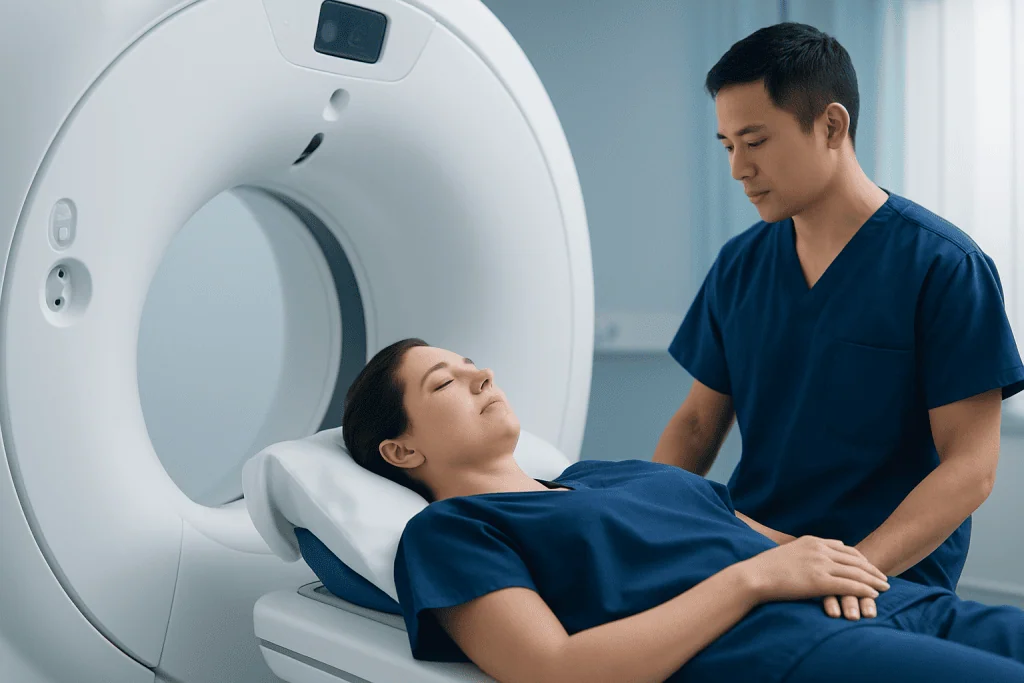
Diagnosis usually begins with imaging. A chest X-ray may suggest a mass in the front part of the chest, but a CT scan is commonly the main test used to define the size of the tumor, its exact location, and whether it appears to involve nearby tissues. In some cases, MRI or PET imaging may be used to clarify findings or assist with treatment planning.
Doctors also look for signs of associated autoimmune disease. Blood tests may be ordered to evaluate general health, blood cell counts, and antibodies linked to myasthenia gravis. Lung function tests or heart-related assessments may be needed before treatment, especially if surgery is being considered.
A biopsy is sometimes performed to confirm the diagnosis, particularly when imaging raises questions or when non-surgical treatment may be needed first. However, in selected patients with a well-defined mass that appears removable, the care team may recommend proceeding directly to surgery and confirming the diagnosis after removal. Because thymoma is uncommon and can resemble other mediastinal masses, evaluation by experienced radiology, pathology, thoracic surgery, and oncology teams is valuable. When a chest mass is being assessed, advanced diagnostic imaging helps guide the next steps safely and accurately.
Treatment options and what influences the plan
Treatment depends on the tumor’s stage, whether it has spread beyond the thymus, the patient’s overall health, and whether there are related conditions such as myasthenia gravis. For many people, surgery is the main treatment. The goal is complete removal of the thymus and tumor, often along with nearby fatty tissue, because this offers the best chance of long-term control when the disease is localized.
If the tumor has grown into nearby structures, surgery may still be possible, but planning becomes more complex. In some cases, doctors recommend treatment before surgery to shrink the tumor or make removal safer. This may include chemotherapy or, less commonly, other systemic therapies depending on the exact diagnosis and extent of disease.
Radiation therapy may be advised after surgery if the tumor has features suggesting a higher risk of recurrence, or it may be used when surgery is not possible. Some patients benefit from combined treatment approaches involving radiation oncology and medical oncology. If thymoma is advanced or recurrent, treatment may focus on controlling disease, reducing symptoms, and preserving quality of life.
Because thymoma may coexist with myasthenia gravis, treatment planning often involves both cancer specialists and neurologists. Managing muscle weakness, breathing risk, and swallowing problems before and after surgery is an important part of care. In centers with multidisciplinary thoracic oncology teams, options such as thoracic surgery can be tailored to the individual patient’s anatomy and disease stage.
Outlook, follow-up, and living with thymoma
The outlook for thymoma is often favorable when the tumor is found early and can be completely removed. However, prognosis varies because thymomas behave differently from one person to another. Important factors include stage, whether the tumor was fully removed, and the microscopic subtype reported by pathology.
Follow-up matters because thymoma can recur even after successful treatment, sometimes years later. For this reason, doctors usually recommend scheduled imaging for long-term surveillance. The exact timeline depends on the original stage and treatment, but regular check-ins help detect recurrence early and monitor any effects of treatment.
Living with thymoma may also involve managing associated autoimmune problems. Some patients continue to need care for symptoms related to myasthenia gravis or other immune conditions even after the tumor is treated. Good communication between thoracic surgeons, oncologists, neurologists, and primary care doctors supports safer recovery and better long-term health. Near the end of the treatment journey, some international patients may seek coordinated evaluation at centers such as Acibadem International, where multidisciplinary specialists in JCI-accredited hospitals diagnose and treat thymoma and related conditions.
Prevention and self-care
There is no proven way to prevent thymoma because its exact cause is not known and it is not strongly tied to modifiable lifestyle risks. Still, general health habits remain valuable before, during, and after treatment. These include not smoking, staying physically active as tolerated, eating a balanced diet, sleeping well, and keeping up with routine medical care.
Self-care also means paying attention to symptoms and reporting changes promptly. Worsening shortness of breath, new chest pressure, increasing fatigue, difficulty swallowing, or eye and muscle symptoms should be discussed with a doctor. People with known myasthenia gravis should follow their treatment plan carefully and tell their care team if symptoms change before any surgery or new medication.
After treatment, it helps to attend all follow-up appointments and imaging studies. Patients should also ask their doctors when it is safe to return to work, exercise, travel, or driving, especially if surgery or muscle weakness has affected stamina. Support from family, rehabilitation teams, or counseling services can be useful if recovery is physically or emotionally demanding.
When to seek medical care
Medical care should be sought if a person has a persistent cough, unexplained chest pain or pressure, increasing shortness of breath, hoarseness, or trouble swallowing that does not improve. These symptoms are not specific to thymoma, but they deserve evaluation, especially if they continue or worsen.
Prompt assessment is also important for symptoms that may suggest myasthenia gravis, such as drooping eyelids, double vision, slurred speech, weakness that worsens with activity, or difficulty chewing and swallowing. If breathing becomes difficult or weakness suddenly affects the ability to speak or swallow, urgent medical attention is needed.
Anyone told they have a mediastinal or thymic mass on imaging should follow up with a qualified specialist. An accurate diagnosis helps distinguish thymoma from other conditions and guides whether observation, surgery, biopsy, or additional treatment is the safest next step.
Frequently asked questions
Is thymoma cancer?
Thymoma is a tumor of the thymus gland and is generally considered a neoplasm with malignant potential, even though many cases grow slowly. Some remain localized for years, while others can invade nearby tissues or recur, which is why specialist evaluation and follow-up are important.
What is the difference between thymoma and thymic carcinoma?
Thymoma usually grows more slowly and often has a better outlook than thymic carcinoma. Thymic carcinoma tends to behave more aggressively and is more likely to spread, so treatment planning and prognosis can differ significantly.
Can thymoma cause no symptoms?
Yes. Many thymomas are found incidentally during imaging done for another reason. Even without symptoms, the tumor still needs careful assessment to understand its size, stage, and whether treatment is recommended.
Is surgery always needed for thymoma?
Surgery is the main treatment for many patients, especially when the tumor appears localized and removable. However, not every case is the same, and some people may need chemotherapy, radiation therapy, or a combination approach depending on stage and overall health.
Is thymoma linked to myasthenia gravis?
Yes, thymoma is well known for its association with myasthenia gravis. Not everyone with thymoma has myasthenia gravis, and not everyone with myasthenia gravis has thymoma, but the connection is strong enough that doctors often evaluate for both.
Can thymoma come back after treatment?
Yes, recurrence is possible even after successful treatment, particularly in more advanced or invasive cases. That is why long-term follow-up with imaging is commonly recommended.
References
- National Cancer Institute
- American Cancer Society
- National Organization for Rare Disorders
- National Comprehensive Cancer Network
- World Health Organization
This article is for general information only and is not a substitute for professional medical advice. Please consult a qualified doctor about your individual situation.
Oncology care in Turkey — second opinion and treatment plan
JCI-accredited · board-certified surgeons · reply within 24h
Add us as a Preferred Source to see more of our trusted health content across Google Search, AI Overviews and Discover.