Tiny Hard Lump on Labia Majora — Explained by Medical Evidence, Not Myths

Most small hard lumps on the labia majora are benign and related to skin, hair follicles, or blocked glands. Common causes include epidermoid cysts, ingrown hairs, folliculitis, and less often Bartholin gland problems.
Key Takeaways
- Most small hard lumps on the labia majora are benign and related to skin, hair follicles, or blocked glands.
- Common causes include epidermoid cysts, ingrown hairs, folliculitis, and less often Bartholin gland problems.
- Medical evaluation is important if the lump lasts more than a few weeks, changes in size, bleeds, or causes significant pain.
- Diagnosis is usually based on a physical examination, with testing or biopsy only when needed.
- Treatment depends on the cause and may range from warm compresses and observation to drainage, antibiotics, or removal.
A tiny hard lump on labia majora is commonly caused by a blocked gland, ingrown hair, skin cyst, or local irritation rather than a serious disease. Even so, a new lump that persists, grows, becomes painful, or is associated with skin changes should be assessed by a qualified clinician.
What a Tiny Hard Lump on the Labia Majora Usually Means
A tiny hard lump on labia majora is often explained by a local skin or gland issue, not by myths or assumptions. In many cases, the lump is a small cyst, an ingrown hair, a blocked oil gland, or mild inflammation around a hair follicle. These are common in an area where skin experiences friction, sweat, shaving, and hormonal changes.
The labia majora are the outer, hair-bearing folds of the vulva, so they can develop many of the same minor skin problems seen elsewhere on the body. A lump may feel pea-sized, firm, smooth, tender, or completely painless. Some lumps stay the same for months, while others appear after hair removal, exercise, or irritation from tight clothing.
Although most causes are benign, the key question is not only what the lump feels like, but whether it is changing. A lump that is increasing in size, becoming painful, ulcerated, draining, or associated with a change in skin color should not be ignored. Careful examination helps distinguish a harmless skin lesion from infection, a gland problem, or a less common vulvar condition.
Common Causes Doctors Consider
One of the most common explanations is an epidermoid cyst, sometimes called a sebaceous cyst in everyday language. This forms when skin cells become trapped under the surface, creating a small, firm, movable lump. These cysts are usually slow-growing and painless unless they become inflamed or infected.
Ingrown hairs and folliculitis are also frequent causes, especially after shaving, waxing, or friction. An ingrown hair can create a tiny raised bump that feels hard at first, while folliculitis may cause a tender red bump around a hair follicle. If bacteria enter the area, the bump may resemble a small boil.
Blocked sweat or oil glands can produce tiny nodules as well. In some people, recurrent painful lumps in the groin or vulvar area may point to a chronic inflammatory skin condition such as hidradenitis suppurativa. Small skin tags, benign vulvar cysts, and localized scar tissue after minor trauma are other possibilities.
Bartholin gland cysts are often mentioned in online searches, but these usually occur lower and more toward the back of the vaginal opening rather than on the outer labia majora itself. They may feel like a swelling on one side and can become painful if infected. Related vulvar swelling can overlap with findings seen in Bartholin cyst conditions, but location and examination matter.
Symptoms and Clues That Help Identify the Cause

The features of the lump often give useful clues. A small, round, firm, skin-colored lump that moves slightly under the skin and causes little discomfort may fit with a benign cyst. A bump that appears soon after shaving and has redness, a visible hair, or mild tenderness may suggest an ingrown hair or folliculitis.
If the area feels warm, throbs, becomes increasingly painful, or drains pus, infection is more likely. Some people notice itching, burning, or irritation from pads, soaps, detergents, or friction from exercise clothing. In those cases, a lump can be part of a broader pattern of vulvar skin inflammation rather than a single isolated problem.
Doctors also pay attention to warning signs. These include a persistent lump that does not resolve, a hard fixed lesion, surface ulceration, bleeding, darkening or whitening of the skin, or enlarged nearby lymph nodes. While uncommon, these features may require assessment for a wider range of vulvar disorders, including precancerous or cancerous changes.
- Painless and stable: often benign cyst or blocked gland
- Tender after hair removal: often ingrown hair or folliculitis
- Red, warm, draining: possible infection or abscess
- Growing, irregular, bleeding, or fixed: needs prompt medical review
How Diagnosis Is Made
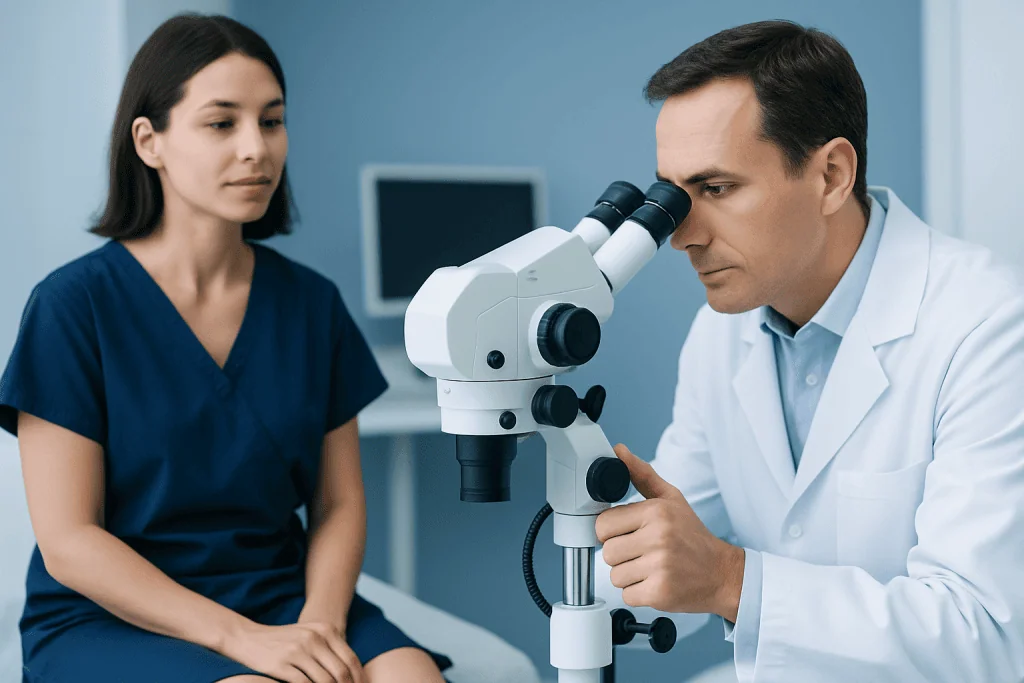
Diagnosis usually begins with a medical history and a physical examination. A clinician will ask how long the lump has been present, whether it changes with the menstrual cycle, whether there is pain or drainage, and whether hair removal, new products, or sexual activity seem to trigger symptoms. These details often narrow the possibilities considerably.
The examination focuses on the exact location, size, texture, skin appearance, and whether there are multiple bumps or just one. Because many vulvar lumps are diagnosed by appearance and feel, tests are not always necessary. If infection is suspected, a sample of drainage may be collected in selected cases.
When a lesion is unusual, persistent, or suspicious, further evaluation may be recommended. This can include referral to dermatology or gynecology, imaging in uncommon situations, or a small tissue sample for biopsy. If there are concerns about a deeper collection of fluid or an abscess, clinicians may discuss drainage procedures such as abscess drainage when appropriate.
Treatment Options Based on the Cause
Treatment depends on the diagnosis rather than the presence of a lump alone. Many small cysts that are painless and stable do not need urgent treatment and may simply be monitored. Warm compresses can sometimes ease discomfort from minor blockage or inflammation, but squeezing or picking the area is best avoided because this may worsen swelling or introduce infection.
If the cause is an ingrown hair or mild folliculitis, gentle skin care, avoiding shaving for a period, and reducing friction may allow the area to heal. When bacterial infection is suspected, a doctor may recommend topical or oral antibiotics depending on the severity. A larger painful boil or abscess may need professional drainage rather than home remedies.
Persistent or bothersome cysts can sometimes be removed if they repeatedly inflame, enlarge, or cause ongoing discomfort. In selected cases, minor surgical management may be discussed, especially if the diagnosis is uncertain. Broader vulvar symptoms linked to skin disease may lead to treatment through specialties such as dermatology or gynecologic care, tailored to the underlying condition.
Self-treatment with harsh antiseptics, strong steroid creams, or repeated attempts to drain the lump at home is not recommended. The vulvar skin is delicate, and irritation can make both symptoms and diagnosis more difficult. A clinician can help decide whether observation is enough or whether a procedure or medication is the safer choice.
Prevention and Self-Care Without Myths
There is no single way to prevent every vulvar lump, because the causes are different. Still, gentle habits can reduce irritation and lower the chance of blocked follicles or inflamed skin. Breathable underwear, prompt changing after exercise, and avoiding prolonged moisture may be helpful for some people.
Hair removal deserves special attention because shaving and waxing commonly contribute to ingrown hairs and folliculitis. If a person chooses to remove hair, using a clean sharp razor, shaving in the direction of hair growth, and avoiding repeated passes over the same area may reduce irritation. Some people do better by trimming rather than removing hair completely.
Fragranced washes, douches, and strong cleansing products are often unnecessary and can irritate vulvar skin. Plain water or a mild unscented cleanser is usually enough for external hygiene. If recurrent lumps are part of a wider skin pattern, review by a clinician can help identify conditions such as chronic folliculitis, contact dermatitis, or hidradenitis rather than blaming hygiene.
When to Seek Medical Care
A short period of watchful waiting may be reasonable for a very small lump that is painless, clearly linked to shaving, and improving on its own. However, medical care is advisable if the lump lasts more than two to four weeks, keeps returning, or does not match a simple ingrown hair. Clinical review is also appropriate if there is uncertainty about what the lump is.
Prompt assessment is important if the lump becomes very painful, rapidly enlarges, feels hot, drains pus, or is accompanied by fever. Medical review is also recommended for bleeding, ulceration, new pigmentation changes, or a lesion that feels fixed to underlying tissue. These features do not automatically mean something serious, but they do warrant professional evaluation.
People with diabetes, weakened immunity, recurrent skin infections, or a history of vulvar disease should seek care sooner. For persistent or complex symptoms, evaluation may involve gynecology, dermatology, or minor procedures. Near the end of the care pathway, it may be helpful to know that Acibadem International’s multidisciplinary specialists and JCI-accredited hospitals evaluate and treat vulvar and skin conditions for international patients, including support through services such as gynecology.
Frequently asked questions
Is a tiny hard lump on labia majora usually serious?
Most are not serious and are commonly caused by benign skin cysts, ingrown hairs, or blocked glands. The main concern is whether the lump persists, grows, becomes painful, or changes the overlying skin.
Can shaving cause a hard bump on the labia majora?
Yes. Shaving can lead to ingrown hairs, folliculitis, and local irritation, all of which may create a small firm bump. If the area becomes red, warm, or filled with pus, a clinician should assess it.
How long should someone wait before seeing a doctor?
If the lump is tiny, improving, and clearly related to irritation, brief observation may be reasonable. A lump that lasts more than two to four weeks, recurs, or causes concern should be checked by a doctor.
Should a lump on the labia majora be squeezed or popped?
No. Squeezing can increase inflammation, push material deeper, and raise the risk of infection or scarring. It can also make examination harder if medical care becomes necessary.
Could it be a sexually transmitted infection?
Some sexually transmitted infections can cause vulvar bumps, sores, or gland swelling, but many hard lumps are unrelated to STIs. Testing may be advised if there are ulcers, blisters, discharge, exposure concerns, or other symptoms.
What kind of doctor evaluates a labial lump?
A primary care doctor, gynecologist, or dermatologist can often evaluate this problem. Referral depends on the appearance of the lump, whether infection is present, and whether a procedure or biopsy is needed.
References
- American College of Obstetricians and Gynecologists
- American Academy of Dermatology
- Mayo Clinic
- National Health Service
- Merck Manual Consumer Version
This article is for general information only and is not a substitute for professional medical advice. Please consult a qualified doctor about your individual situation.
Hair transplant in Turkey — costs, graft counts & a free assessment
JCI-accredited · board-certified surgeons · reply within 24h
Add us as a Preferred Source to see more of our trusted health content across Google Search, AI Overviews and Discover.

More from the Health Library

Scratchy Throat — Explained by Medical Evidence, Not Myths

2 Year Old Sleep Regression: A Complete Medical Overview

Shiitake: An Evidence-Based Guide for Patients

Define Antisocial: A Complete Medical Overview

Lightning Crotch — Explained by Medical Evidence, Not Myths