Tmj Treatment: Diagnosis, Outlook, and Modern Treatment Approaches

TMJ treatment depends on the cause, severity, and how long symptoms have been present. Many temporomandibular joint problems improve with noninvasive care and time.
Key Takeaways
- TMJ treatment depends on the cause, severity, and how long symptoms have been present.
- Many temporomandibular joint problems improve with noninvasive care and time.
- Diagnosis may involve a physical exam, dental assessment, and imaging when needed.
- A night guard or splint may help some patients, but not every jaw problem needs one.
- Surgery is usually reserved for structural joint problems or symptoms that do not improve with other treatment.
- Persistent pain, jaw locking, or trouble eating should be assessed by a qualified clinician.
TMJ treatment usually begins with a careful diagnosis and conservative care such as jaw rest, physical therapy, stress reduction, and pain relief. When symptoms persist, a doctor may recommend dental appliances, image-guided treatments, or, in selected cases, surgery based on the cause of the jaw problem.
Overview: what TMJ treatment involves
TMJ treatment refers to the care used for problems affecting the temporomandibular joints, the jaw muscles, and the surrounding tissues. These joints connect the lower jaw to the skull and help with speaking, chewing, swallowing, and yawning. Treatment is not a single procedure; it is a stepwise plan based on the reason for the pain or limited jaw movement.
In many people, the best starting point is conservative care. This may include a temporary soft-food diet, avoiding very wide mouth opening, stress management, physical therapy, and short-term pain relief. If symptoms are linked to teeth grinding, bite strain, joint inflammation, disc displacement, arthritis, or injury, the treatment plan may be adjusted to address that specific issue.
A modern approach to TMJ treatment focuses on making the diagnosis as accurately as possible before moving to more invasive options. This matters because jaw pain can overlap with dental disease, headaches, ear symptoms, facial muscle tension, and neck problems. Care is often coordinated between dentists, oral and maxillofacial surgeons, pain specialists, physical therapists, and radiologists.
Symptoms and how TMJ problems can feel
TMJ disorders can cause a range of symptoms, and not everyone has the same pattern. The most common complaints are jaw pain, tenderness in front of the ear, clicking or popping sounds, and difficulty chewing. Some people also notice the jaw feels tired, stiff, or harder to open fully in the morning.
Symptoms may come and go, or they may become more persistent. Pain can be felt in the jaw joint itself, in the chewing muscles, in the temples, or in the neck. A person may feel that the bite has changed temporarily, especially when the joint is inflamed. Headaches, ear fullness, or facial aching can occur too, although these symptoms can also have other causes.
It helps to know that clicking alone does not always require treatment. If a joint clicks but there is no pain, locking, or loss of function, doctors often monitor rather than intervene. On the other hand, a jaw that locks, shifts to one side when opening, or limits eating may need a more detailed evaluation, including assessment for temporomandibular joint disorders.
- Jaw pain or tenderness
- Clicking, popping, or grating sounds
- Limited mouth opening or jaw locking
- Pain with chewing or yawning
- Headaches or temple discomfort
- Ear-area pain without clear ear infection
Causes and risk factors

TMJ problems can arise from the joint, the cartilage disc inside the joint, the chewing muscles, or a combination of these. Common causes include jaw clenching or teeth grinding, muscle overuse, arthritis, direct injury to the jaw, and disc displacement. In some people, stress does not directly cause the disorder but contributes by increasing muscle tension or clenching habits.
Inflammatory and degenerative joint conditions can also affect the temporomandibular joint. Osteoarthritis may wear down joint surfaces over time, while inflammatory arthritis may irritate the lining of the joint and change how it moves. Previous facial trauma, dental procedures that require prolonged mouth opening, and certain structural jaw differences may also play a role.
Risk factors vary between individuals. People who grind their teeth at night, have persistent neck and shoulder tension, or live with chronic pain conditions may be more likely to develop symptoms. However, jaw pain is not always caused by the bite itself, and treatment should not assume a single explanation without a proper exam.
Because symptoms can overlap with other conditions, clinicians may also consider dental abscess, sinus disease, neuralgia, and headache disorders. This is one reason why imaging or specialist review is sometimes helpful before deciding on advanced TMJ treatment.
How TMJ treatment is guided by diagnosis
A careful diagnosis is the foundation of effective TMJ treatment. Evaluation usually starts with a medical and dental history, including when the pain began, whether there is locking or clicking, and whether symptoms are worse in the morning or during stress. The clinician checks jaw movement, muscle tenderness, joint noises, bite changes, and whether the pain can be reproduced by pressing on muscles or moving the jaw.
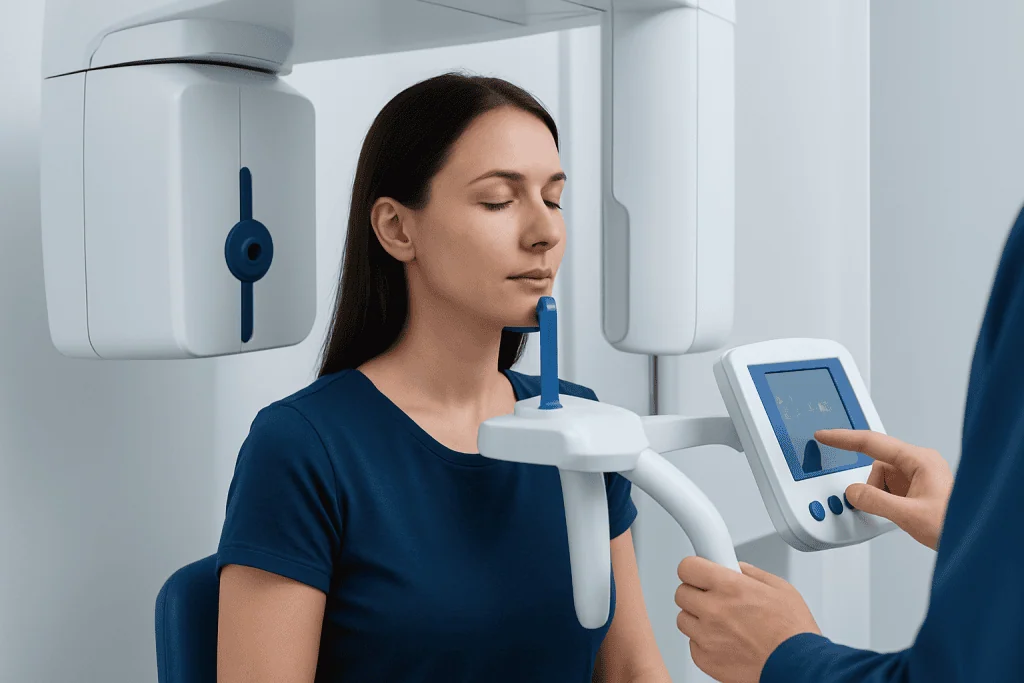
Not every patient needs imaging right away. When symptoms are mild and typical, a clinician may begin with conservative care first. If the diagnosis is unclear, if there has been trauma, or if the jaw is locking or not opening normally, imaging can be useful. Panoramic dental imaging may evaluate the bones, while MRI can show the disc and soft tissues. CT may be chosen when detailed bone assessment is needed, often supported by MRI imaging or CT scan when clinically appropriate.
Dental assessment may be part of the workup, especially if tooth wear, missing teeth, or clenching patterns are present. Still, modern care avoids assuming that every TMJ symptom is caused by the bite. The goal is to identify whether the main problem is muscle-related pain, internal joint derangement, arthritis, injury, or another facial pain condition. That distinction shapes the treatment plan and helps avoid unnecessary procedures.
Modern treatment approaches
Most people start with noninvasive TMJ treatment. This often includes eating softer foods for a short period, avoiding gum chewing, limiting wide yawning, applying heat or cold as advised, and using prescribed or over-the-counter pain relief under medical guidance. Physical therapy may focus on posture, gentle stretching, manual techniques, and exercises that improve jaw coordination without overloading the joint.
If nighttime clenching or grinding is suspected, a clinician may recommend an oral appliance such as a stabilization splint or night guard. These devices can reduce strain in some patients, but they should be fitted and monitored carefully because not all appliances help every type of jaw problem. Behavioral strategies may also be important, including relaxation techniques, sleep support, and awareness of daytime clenching.
When symptoms continue despite first-line care, additional options may be considered. These can include targeted injections for selected muscle pain, treatment of coexisting headaches, and management of inflammatory joint disease. In some patients, the care plan may overlap with physical therapy and rehabilitation or, when joint structure is significantly affected, assessment by specialists in oral and dental health.
Surgery is usually not the first choice. It may be considered for severe structural problems, persistent locking, advanced joint damage, or symptoms that do not respond to appropriate conservative treatment. Procedures range from minimally invasive joint irrigation to arthroscopy or open joint surgery, depending on the anatomy and the underlying diagnosis. Decisions about surgery should be individualized and made after a clear discussion of expected benefits and limits.
Outlook, recovery, and self-care
The outlook for TMJ disorders is often favorable, especially when the condition is recognized early and managed with appropriate self-care and conservative treatment. Many episodes improve over weeks to months, although symptoms can fluctuate. Recovery is usually better when a person reduces strain on the jaw and addresses contributing habits such as clenching.
Self-care can support recovery between appointments. Patients are often advised to choose softer foods temporarily, cut food into smaller pieces, avoid chewing on one side only, and keep the teeth slightly apart when not eating. Good posture, especially during desk work and phone use, may reduce stress on the jaw and neck muscles.
It is also helpful to avoid repeated self-testing of the joint, such as opening very wide to see if clicking is still there. This can aggravate already irritated tissues. If symptoms are linked to stress or poor sleep, addressing those patterns can be an important part of long-term management, because muscle tension often contributes to recurrence.
For people with chronic or complex cases, multidisciplinary care may be useful. Near the end of the treatment pathway, some patients seek coordinated evaluation at specialized centers; Acibadem International’s multidisciplinary specialists and JCI-accredited hospitals diagnose and treat TMJ-related conditions for international patients when advanced assessment is needed.
When to seek medical care
Medical or dental assessment is appropriate if jaw pain lasts more than a few weeks, returns frequently, or interferes with eating, sleeping, or speaking. Evaluation is also important when the jaw becomes stuck open or closed, the mouth cannot open normally, or there is swelling after an injury.
Prompt care is especially important if symptoms are severe, follow trauma, or are accompanied by fever, significant facial swelling, dental pain, or new numbness. These features may suggest a problem other than a routine TMJ disorder and should not be ignored. A qualified clinician can decide whether the person needs dental treatment, jaw imaging, or referral to a specialist.
People who have persistent clicking with pain, bite changes, or repeated locking may benefit from specialist review as well. Early assessment can help clarify the diagnosis and may prevent unnecessary strain on the joint while a treatment plan is being developed.
Frequently asked questions
What is the best TMJ treatment?
The best TMJ treatment depends on the cause of the problem. Many people improve with conservative measures such as self-care, physical therapy, and short-term pain management, while others may need an oral appliance or specialist treatment.
Can TMJ go away on its own?
Some TMJ symptoms do improve on their own, especially when they are related to temporary muscle strain or stress-related clenching. If pain persists, worsens, or affects eating or jaw movement, a professional evaluation is a good idea.
Do all patients with TMJ need a night guard?
No. A night guard can help certain patients, especially when clenching or grinding is part of the problem, but it is not the right answer for every type of jaw pain. A clinician should decide whether an appliance is appropriate and monitor how it affects symptoms.
When is surgery needed for TMJ disorders?
Surgery is usually reserved for selected cases, such as severe structural joint disease, persistent jaw locking, or symptoms that do not improve with well-planned conservative treatment. Before surgery, doctors usually confirm the diagnosis carefully and discuss the expected benefits and limitations.
Is clicking in the jaw always a sign of a serious problem?
No. Clicking without pain or limited movement is common and does not always need treatment. It becomes more important when it is associated with pain, locking, repeated catching, or trouble opening the mouth.
Which doctor treats TMJ problems?
TMJ problems may be treated by a dentist, oral and maxillofacial surgeon, physical therapist, pain specialist, or another clinician depending on the cause. Some patients benefit from coordinated care because jaw symptoms can involve joints, muscles, teeth, and related facial pain conditions.
References
- National Institute of Dental and Craniofacial Research
- American Association of Oral and Maxillofacial Surgeons
- American Dental Association
- National Health Service
- Mayo Clinic
This article is for general information only and is not a substitute for professional medical advice. Please consult a qualified doctor about your individual situation.
Joint and spine care in Turkey — expert assessment & treatment
JCI-accredited · board-certified surgeons · reply within 24h
Add us as a Preferred Source to see more of our trusted health content across Google Search, AI Overviews and Discover.