

Toothpaste on Pimple: An Evidence-Based Guide for Patients
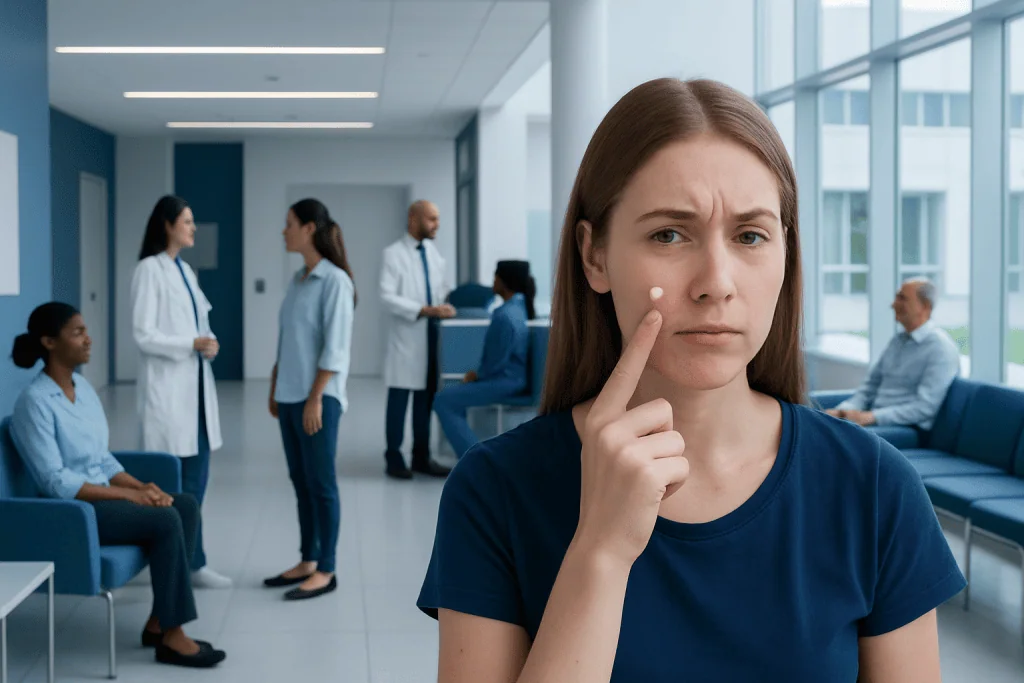
Toothpaste on a pimple is not an evidence-based acne treatment. Many toothpaste ingredients can irritate facial skin and worsen inflammation.
Key Takeaways
- Toothpaste on a pimple is not an evidence-based acne treatment.
- Many toothpaste ingredients can irritate facial skin and worsen inflammation.
- Safer spot treatments include products with benzoyl peroxide, salicylic acid, or adapalene when appropriate.
- Gentle skin care and avoiding picking usually help pimples heal with less risk of marks or scarring.
- Medical advice is important for severe, painful, recurrent, or scarring acne.
Using toothpaste on a pimple is generally not advised. Although it may seem to dry the spot, toothpaste often irritates the skin, disrupts the skin barrier, and can leave redness, burning, or dark marks that last longer than the pimple itself.
Overview: Should toothpaste be used on a pimple?
In most cases, toothpaste should not be used on a pimple. While some people notice temporary drying, toothpaste is designed for teeth, not facial skin, and its ingredients can trigger irritation, burning, peeling, or more noticeable redness.
The idea became popular because older toothpastes sometimes contained drying agents such as baking soda, hydrogen peroxide, triclosan, or alcohol-based compounds. However, products made for the mouth are not balanced for acne-prone skin, and modern formulas often include flavorings, detergents, and whitening agents that can be harsh on the face.
A more useful question is not whether toothpaste can dry a pimple, but whether it helps the skin heal safely. In many patients, the answer is no. Evidence-based acne products target clogged pores and inflammation more predictably and with less risk of irritation.
If a person has frequent breakouts, painful spots, or marks left after acne, it is usually better to follow a simple acne-care routine or seek guidance for acne treatment rather than rely on toothpaste as a quick fix.
Why toothpaste can irritate the skin
Facial skin is thinner and more sensitive than the skin inside the mouth. Toothpaste may contain abrasives, detergents, preservatives, menthol, cinnamon flavoring, fluoride compounds, and whitening agents. These ingredients can sting or inflame already irritated skin.
Some people develop what doctors call irritant contact dermatitis. This can look like a pimple at first, but then the area becomes red, dry, scaly, itchy, or sore. In darker skin tones, irritation can also be followed by temporary post-inflammatory hyperpigmentation, meaning a lingering dark mark after the pimple calms down.
Toothpaste also does not treat the main causes of acne. Pimples form because pores become clogged with oil and dead skin cells, and inflammation develops around the clogged follicle. Toothpaste may sit on the surface, but it does not reliably clear the pore or reduce acne-causing bacteria in a controlled way.
If toothpaste has already been applied and the skin feels uncomfortable, the safest next step is usually to wash it off gently with lukewarm water and a mild cleanser, then apply a simple fragrance-free moisturizer. Strong scrubs, alcohol toners, or repeated spot applications can make the area worse.
What to use instead: Safer spot-treatment options

For an occasional pimple, over-the-counter spot treatments are usually a better choice than toothpaste. Ingredients with the best support include benzoyl peroxide and salicylic acid. Benzoyl peroxide helps reduce acne-causing bacteria and inflammation, while salicylic acid helps unclog pores by dissolving oil and dead skin cells.
Adapalene, a retinoid available in some countries without prescription, can also help prevent new breakouts by normalizing skin cell turnover. It is not just a quick spot treatment, but part of a broader acne routine for people with recurring pimples. These products can still cause dryness, so they are best introduced gradually and used as directed on the label or by a clinician.
Hydrocolloid pimple patches may help some patients, especially if the lesion has been picked or has a visible surface head. These patches do not cure acne, but they can protect the area, reduce friction, and discourage touching.
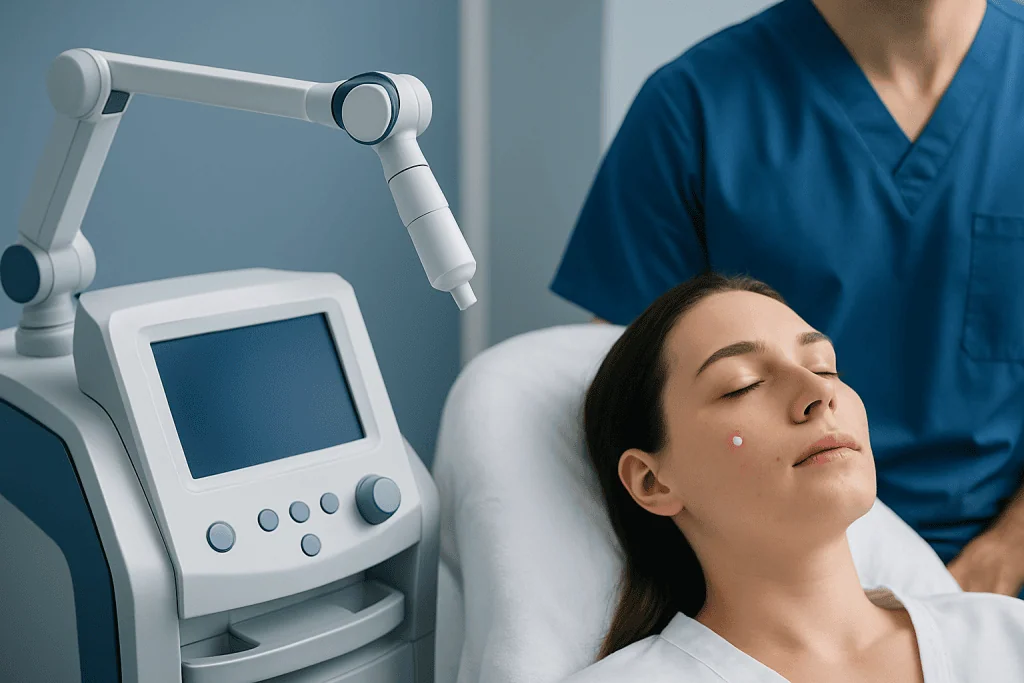
People with frequent or persistent breakouts may benefit from a structured plan that can include prescription creams, oral medicines, or professional care. Depending on the skin findings, a clinician may discuss options related to dermatology care or in selected cases laser treatment for residual marks.
How to care for a pimple at home without making it worse
A simple approach is often best. The skin should be washed gently twice daily and after sweating, using a mild cleanser and lukewarm water. Scrubbing, picking, or applying multiple harsh products at once can increase inflammation and slow healing.
A helpful home routine may include:
- Applying a proven acne treatment such as salicylic acid or benzoyl peroxide in a thin layer
- Using a non-comedogenic moisturizer to protect the skin barrier
- Wearing broad-spectrum sunscreen during the day, especially if using acne medications
- Avoiding heavy cosmetics or oily products on active breakouts
- Keeping hands away from the face as much as possible
Warm compresses are sometimes useful for a tender, inflamed pimple, but they should be gentle and brief. Ice wrapped in a clean cloth may reduce swelling for short periods in some people. Direct application of ice, toothpaste, lemon juice, vinegar, or undiluted essential oils is not recommended.
If a pimple is repeatedly squeezed, the chance of scarring or dark marks increases. Patients who are struggling with ongoing breakouts often do better with consistent, gentle care than with trying many internet remedies in quick succession.
When a pimple may be something else
Not every bump on the face is a simple pimple. Ingrown hairs, folliculitis, cold sores, perioral dermatitis, rosacea, allergic reactions, and small cysts can all resemble acne. Using toothpaste on these conditions may irritate the area and delay correct treatment.
Large, deep, painful lumps under the skin may be nodules or cysts rather than surface pimples. These lesions are more likely to scar and often need medical treatment instead of spot remedies. Repeated acne around the jawline may also suggest hormonal influence, which can change the best treatment plan.
If a skin lesion is persistent, unusual in shape, bleeds easily, crusts repeatedly, or does not improve over time, it should be assessed by a qualified doctor. This is especially important for people with sensitive skin, eczema, rosacea, or a history of allergic reactions to skin products.
Dermatologists can help distinguish acne from related skin problems and recommend appropriate care. In some cases, patients may be evaluated for broader skin diseases when a spot does not behave like typical acne.
Evidence-based treatment for recurring acne
If pimples are frequent rather than occasional, a long-term treatment plan is usually more effective than spot treatment alone. Doctors often base treatment on acne severity, lesion type, skin sensitivity, and whether there is a risk of scarring or pigmentation. A routine may include topical retinoids, benzoyl peroxide, topical antibiotics combined appropriately, or prescription oral medicines when needed.
Hormonal treatment may be considered in selected patients, especially when acne is linked to menstrual cycles or appears mainly on the lower face. More severe inflammatory acne sometimes requires stronger therapies under medical supervision. The goal is not only to clear current lesions but also to prevent new ones and reduce long-term marks.
Professional procedures may support medical treatment in some cases. These can include comedone extraction, chemical peels, or selected light and laser-based approaches for acne or post-acne changes. Such treatments should be chosen carefully because not every option suits every skin type.
Near the end of the care pathway, some patients benefit from multidisciplinary support. Acibadem International’s specialists in JCI-accredited hospitals evaluate and treat skin concerns for international patients, including assessment through specialist dermatology services when acne is persistent or causing scarring concerns.
When to seek medical care
Medical advice should be sought if a pimple is very painful, large, deep, or leaving scars. Care is also important when acne is widespread, repeatedly flares despite over-the-counter treatment, or causes emotional distress. Early treatment can reduce the chance of long-lasting marks.
A doctor should also be consulted if the skin reacts badly after toothpaste or another home remedy. Warning signs include severe burning, blistering, swelling, crusting, pus that spreads, or a rash around the treated area. These symptoms may suggest significant irritation, allergy, or infection.
Urgent assessment is needed for facial swelling with breathing difficulty, rapidly spreading redness, fever, or infection near the eye. Although uncommon, these symptoms are not typical of a routine pimple and should not be ignored.
For many patients, the safest message is simple: toothpaste on pimple is not the best option. If breakouts are persistent, bothersome, or unusual, an evidence-based evaluation by a qualified clinician is the better path.
Frequently asked questions
Can toothpaste make a pimple go away overnight?
It may dry the surface temporarily, but it does not reliably treat the clogged pore and inflammation that cause acne. In many people, it causes irritation that can make the spot look redder or feel more painful by the next day.
Why do some people say toothpaste worked for their pimple?
Some toothpaste ingredients can reduce surface moisture, so a bump may look flatter for a short time. That does not mean the underlying acne process is treated, and the risk of skin irritation often outweighs any temporary benefit.
What should someone do if toothpaste was already put on a pimple?
The area should be rinsed off gently with lukewarm water and a mild cleanser. If the skin feels dry or sore, a fragrance-free moisturizer can help support the skin barrier; if burning, swelling, or rash develops, medical advice is sensible.
What is the best over-the-counter alternative to toothpaste for a pimple?
Products containing benzoyl peroxide or salicylic acid are common evidence-based choices for mild acne. The best option depends on skin sensitivity and the type of breakout, so label directions should be followed and a doctor asked if acne is frequent or severe.
Can toothpaste cause acne scars or dark marks?
It can contribute indirectly by irritating the skin and increasing inflammation. In some people, especially those prone to pigmentation changes, that irritation may leave a lingering dark mark even after the pimple heals.
Is it ever okay to use toothpaste on a pimple in an emergency?
It is generally better to avoid it, even as a one-time shortcut. A gentler approach, such as a proper acne spot treatment, a hydrocolloid patch, or simply leaving the area alone, is usually safer for the skin.
References
- American Academy of Dermatology
- National Institute for Health and Care Excellence
- Mayo Clinic
- National Health Service
- Cochrane
This article is for general information only and is not a substitute for professional medical advice. Please consult a qualified doctor about your individual situation.
Explore treatments in Turkey — costs, top hospitals & a free quote
JCI-accredited · board-certified surgeons · reply within 24h
Add us as a Preferred Source to see more of our trusted health content across Google Search, AI Overviews and Discover.

More from the Health Library

Ibsrela — Explained by Medical Evidence, Not Myths

Bleeding After Pap Smear: A Complete Medical Overview

Kernicterus: An Evidence-Based Guide for Patients

Antispasmodic — Explained by Medical Evidence, Not Myths
Lungs — Explained by Medical Evidence, Not Myths

Oxalic Acid — Explained by Medical Evidence, Not Myths
Oral & Dental Health Specialists at Acibadem

Dt. Akif Aydın Şen
Oral & Dental Health
Dt. Alara Güler
Oral & Dental Health
Dt. Alara Naz Kenir Çelik
Oral & Dental Health
Dr. Alen Palancıoğlu
Oral Dental & Maxillofacial Surgery