

Total Shoulder Replacement Rehabilitation Protocol: Procedure, Recovery and Results
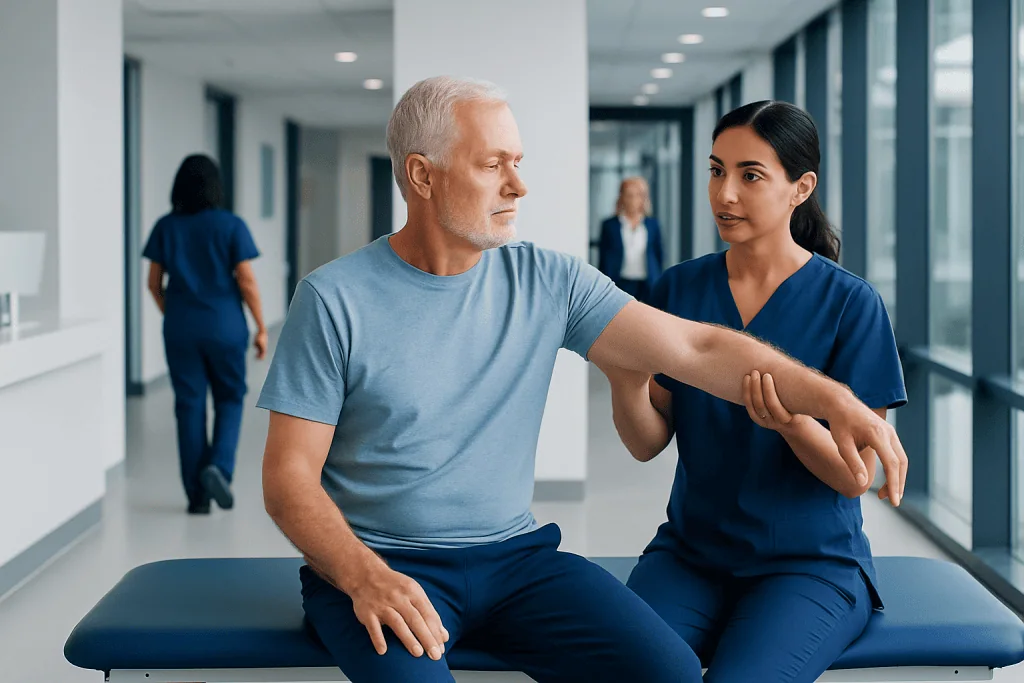
Most people use a sling and follow protected movement restrictions during the early healing phase after surgery. Rehabilitation progresses from pain control and gentle assisted motion to active movement, strengthening and functional activities.
Key Takeaways
- Most people use a sling and follow protected movement restrictions during the early healing phase after surgery.
- Rehabilitation progresses from pain control and gentle assisted motion to active movement, strengthening and functional activities.
- Full recovery commonly takes several months, while strength and confidence may continue improving for up to a year.
- The 40-50-60 rule is a practical movement milestone used by some clinicians, not a universal replacement for an individual rehabilitation plan.
- Sudden worsening pain, wound concerns, fever, breathing symptoms or loss of shoulder function need prompt medical advice.
A total shoulder replacement rehabilitation protocol helps protect the repaired joint while gradually restoring comfort, movement, strength and everyday function. Recovery is individualized: the surgeon and physiotherapist adjust activity restrictions and exercises according to the type of replacement, tissue healing and the person’s progress.
Overview: how total shoulder replacement rehabilitation works
A total shoulder replacement rehabilitation protocol is a staged plan used after shoulder arthroplasty to support healing and help a person return safely to daily activities. It combines protection of the surgical repair, pain management, gradual movement exercises, strengthening and regular clinical review. The exact plan differs depending on whether the person has an anatomic total shoulder replacement or a reverse shoulder replacement, as well as the condition of the rotator cuff, bone quality and the reason for surgery.
During a standard anatomic total shoulder replacement, the damaged ball of the upper arm bone is replaced with a metal component and the socket is resurfaced with a durable component. It is generally considered when shoulder arthritis causes persistent pain and loss of function and the rotator cuff is working sufficiently. In reverse shoulder replacement, the ball-and-socket arrangement is reversed, allowing the deltoid muscle to play a larger role when the rotator cuff is severely damaged or absent.
Rehabilitation is not a race. Progressing too quickly can strain healing tissues, while remaining inactive for too long may contribute to stiffness and weakness. The surgical and physiotherapy teams provide the safest schedule for movement, lifting, driving, work and sport based on the individual operation and recovery.
People considering or recovering from surgery can discuss shoulder replacement surgery with an orthopedic surgeon to understand the appropriate procedure and aftercare plan.
Candidacy and preparation for surgery
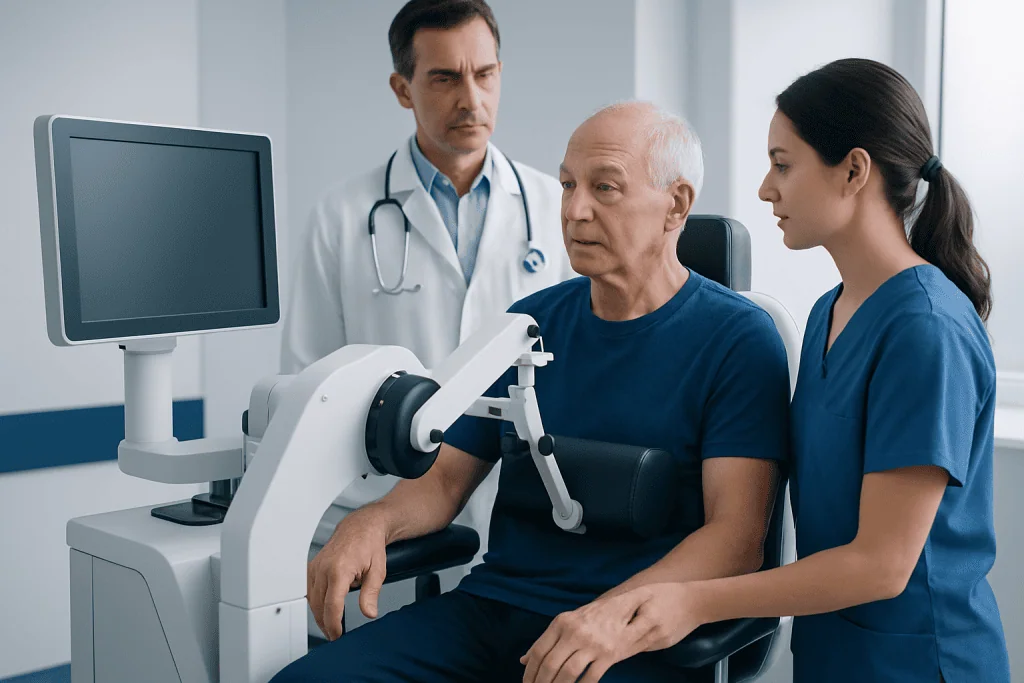
Total shoulder replacement may be considered for people with advanced shoulder joint damage that continues to affect sleep, self-care, work or enjoyable activities despite appropriate non-surgical treatment. Common reasons include osteoarthritis, inflammatory arthritis, fracture-related joint damage and certain complex shoulder problems. The decision is based on symptoms, examination findings, X-rays or other imaging, overall health and personal goals.
Before surgery, the orthopedic team reviews medical history, medicines, allergies and previous operations. Imaging helps assess the joint surfaces, bone shape and rotator cuff. Some people need medical optimization before surgery, such as support for diabetes management, heart or lung conditions, anemia, smoking cessation or medication adjustments. These steps can reduce avoidable risks and support recovery.
Preparing the home can make the first weeks more manageable. Useful arrangements may include help with meals, dressing, bathing, transport and household tasks, as the operated arm cannot be used normally at first. Loose front-opening clothing, frequently used items at waist level and a clear walking route can also be helpful.
Preoperative education should clarify the type of replacement, sling instructions, expected therapy schedule and warning signs. A person should tell the surgical team about any new illness, skin infection, dental infection or medication change before the procedure.
Step by step: what happens during the procedure
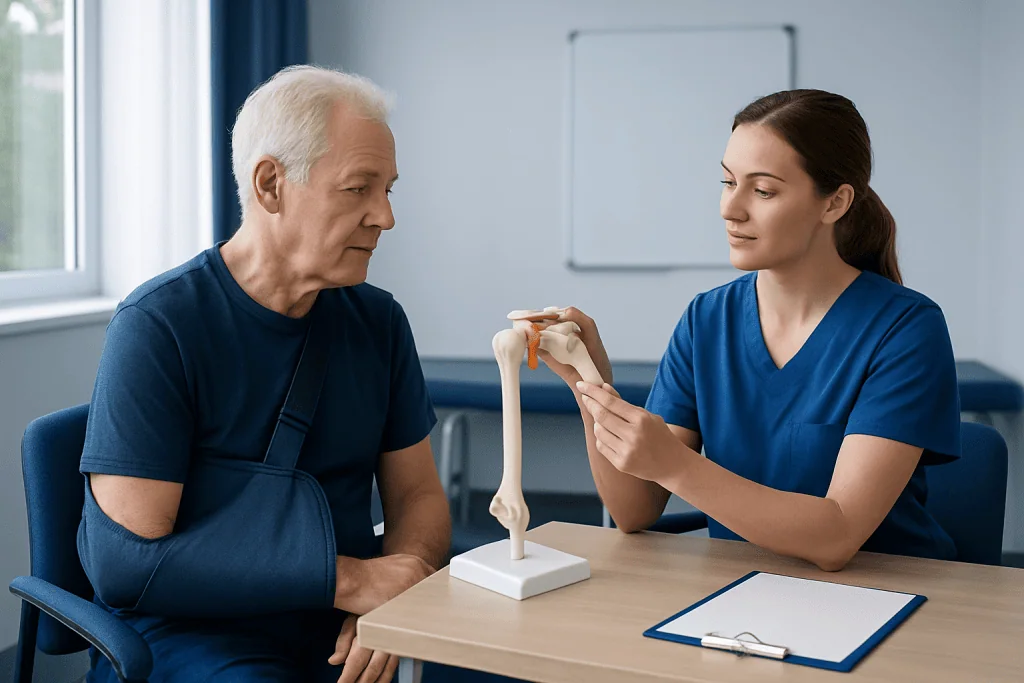
Shoulder replacement is performed in an operating room under anesthesia. The surgeon makes an incision at the front of the shoulder, carefully reaches the joint and removes the damaged surfaces. In an anatomic replacement, the upper-arm ball is replaced and a new socket surface is inserted. In a reverse replacement, the components are positioned in the opposite configuration to improve stability and function when the rotator cuff cannot support the joint adequately.
The surgical team checks the fit, alignment and stability of the components before repairing the surrounding tissues and closing the incision. In particular, healing of the subscapularis tendon may affect early precautions after an anatomic replacement. The operation type and the structures repaired are important reasons why rehabilitation instructions should not be copied from another patient’s plan.
After surgery, the arm is placed in a sling, sometimes with an abduction pillow that holds the arm slightly away from the body. Pain control may include several approaches selected by the anesthetic and surgical teams. Staff monitor circulation, sensation, comfort and the surgical wound while the person begins safe mobilization.
Many patients go home after a short hospital stay, although the timing depends on health needs, pain control, mobility and available support. Before discharge, the team explains wound care, medicines, prescribed exercises, sleeping positions and follow-up appointments.
Recovery timeline and the total shoulder replacement rehabilitation protocol
How long is recovery after a total shoulder replacement? Initial recovery generally takes several weeks, but meaningful recovery of shoulder function usually takes several months. Many people resume lighter daily activities gradually during the first 6 to 12 weeks, while strengthening and more demanding tasks are often introduced later. Improvement can continue for 6 to 12 months, and the pace varies with the procedure type, pre-surgery function, tissue healing and adherence to the individualized plan.
In the first days and weeks, priorities are protecting the shoulder, controlling swelling and discomfort, caring for the incision and maintaining movement in the hand, wrist and elbow as directed. The sling is typically worn most of the time, including while sleeping, for a period determined by the surgeon. Gentle passive or assisted shoulder movement may begin at a specified time; passive movement means the shoulder is moved with support rather than by actively using the operated shoulder muscles.
During the next phase, the clinician may allow a gradual transition toward active-assisted and active movement. Physical therapy focuses on restoring controlled motion without forcing painful ranges. When healing and movement are satisfactory, strengthening of the shoulder blade, deltoid and other supporting muscles can begin. Heavy lifting, pushing, pulling and sudden movements are usually delayed until the surgeon confirms they are safe.
Later rehabilitation emphasizes coordination, endurance and return to practical tasks such as grooming, reaching cupboards, desk work and hobbies. Return to manual work, recreational exercise and sport requires individual clearance. The team may use physical therapy and rehabilitation to tailor exercises and functional goals throughout this process.
The 40-50-60 rule and activity restrictions
What is the 40-50-60 rule for shoulder arthroplasty? The 40-50-60 rule is an informal rehabilitation reference that some clinicians use to describe early range-of-motion goals: around 40 degrees of external rotation, 50 degrees of internal rotation and 60 degrees of forward elevation or abduction. However, the meaning can vary between programs, and it is not a universal scientific rule or a substitute for the surgeon’s protocol. Certain repairs, especially after anatomic replacement, may require stricter limits on external rotation or other motions.
Rather than pursuing a number independently, patients should perform only the exercises and ranges prescribed for their specific operation. A physiotherapist may measure progress during appointments and modify the plan if pain, stiffness, weakness or healing concerns arise. Pain that is sharp, increasing or persists well after exercise should be discussed with the care team.
What can you never do again after shoulder replacement? Most people can return to many low-impact daily activities, including personal care, walking, swimming when fully healed and selected recreational pursuits. However, surgeons commonly advise avoiding repetitive heavy lifting, forceful pushing or pulling, contact sports and activities with a high risk of falling or impact on the shoulder. These activities can increase stress on the implant and surrounding tissues.
Long-term advice differs by implant type, bone condition, occupation and athletic goals. Heavy overhead lifting and high-impact activities may be discouraged permanently for some people, whereas others may be cleared for carefully modified activity. Regular follow-up and a discussion with the orthopedic surgeon are the best way to define safe long-term limits.
Benefits, expected results and possible risks
The main aims of shoulder replacement are to reduce joint pain, improve sleep and make everyday movement easier. Many people gain better ability to perform self-care, reach, dress and use the arm at a comfortable level. The degree of movement regained depends on the underlying diagnosis, the condition of muscles and tendons, the type of replacement and rehabilitation participation.
As with any major operation, shoulder replacement carries possible risks. These include infection, bleeding, blood clots, nerve or blood vessel injury, stiffness, instability or dislocation, fracture, implant loosening or wear, persistent pain and the possible need for further surgery. Reverse shoulder replacement also has procedure-specific mechanical considerations, and anatomic replacement may be affected by later rotator cuff failure.
Risk is reduced through careful surgical planning, sterile technique, appropriate medication management, early safe movement and adherence to postoperative restrictions. Attending scheduled reviews allows the team to assess wound healing, shoulder movement and implant position when imaging is required.
What are the worst days after shoulder replacement surgery? Many people find the first few days after surgery, particularly as anesthesia-related pain relief wears off, the most uncomfortable. Sleep disruption, swelling, fatigue, dependence on the sling and difficulty with dressing or washing can also feel challenging during the first one to two weeks. Pain should gradually become more manageable; severe, rapidly worsening or unexpected symptoms should not be managed alone.
Self-care, prevention and when to seek medical care
During recovery, people should use medicines only as prescribed, keep the incision clean and dry according to their discharge instructions, and attend therapy and follow-up appointments. Supported sleeping, often partly upright with pillows, may improve comfort early on. Ice or cold therapy may be recommended to ease swelling, but it should be used with a protective barrier and according to the clinical team’s advice.
Preventing complications includes avoiding smoking or nicotine products, following nutrition and hydration advice, and not driving until the surgeon says it is safe. Driving too early can be unsafe because the sling, reduced strength, pain medicines and limited motion may impair control. Falls prevention is also important: clear loose rugs and clutter, use supportive footwear and ask for help with tasks that require balance or both arms.
When to seek medical care The surgical team should be contacted promptly for increasing redness, warmth, swelling, drainage or opening of the wound; fever or feeling unwell; uncontrolled or worsening pain; new numbness, weakness, or a cold or pale hand; or a sudden change in shoulder shape or ability to move the arm. Urgent medical assessment is also needed for chest pain, shortness of breath, coughing blood or one-sided leg swelling, which can be signs of a serious complication.
Acibadem International’s multidisciplinary specialists and JCI-accredited hospitals diagnose and treat shoulder conditions for international patients, with rehabilitation plans coordinated around the individual procedure and recovery needs.
Frequently asked questions
How long do I need to wear a sling after total shoulder replacement?
Sling duration depends on the replacement type and the tissues repaired during surgery. Many patients wear one for several weeks, often including at night in the early phase. The surgeon should decide when it can be reduced or stopped, because removing it too soon may place stress on healing tissues.
When can I start physical therapy after shoulder replacement?
The timing and type of therapy are individualized. Some gentle hand, wrist, elbow and supported shoulder exercises may start very early, while active shoulder use and strengthening are delayed until the surgical team considers healing adequate. The prescribed protocol should take priority over generic online exercise plans.
Can I sleep on my operated side after shoulder replacement?
Sleeping on the operated side is usually uncomfortable and often discouraged in the early recovery period. Many people sleep on their back or the opposite side with pillows supporting the operated arm. The care team can advise when side sleeping is appropriate based on comfort and healing.
When can I drive after total shoulder replacement?
Driving should wait until the person is no longer using a sling, is not taking medicines that impair alertness, and can safely control the vehicle in an emergency. This often takes several weeks, but there is no single timeline for everyone. Clearance from the surgeon is recommended before returning to driving.
Will airport security affect a shoulder replacement implant?
A shoulder implant may be detected by airport security equipment, although this does not harm the implant. Travelers can inform security staff that they have an orthopedic implant and follow local screening procedures. A medical card is not always required, but travel advice can be discussed at a follow-up appointment.
Can a shoulder replacement wear out?
Shoulder implants are designed for long-term use, but their components can loosen, wear or develop other problems over time. Avoiding activities that place repeated high force on the joint may help protect the replacement. Regular review is useful if new pain, weakness, clicking or reduced function develops.
References
- American Academy of Orthopaedic Surgeons
- American Shoulder and Elbow Surgeons
- National Institute of Arthritis and Musculoskeletal and Skin Diseases
- NHS
This article is for general information only and is not a substitute for professional medical advice. Please consult a qualified doctor about your individual situation.
Shoulder Replacement in Turkey — costs, top hospitals & a free quote
JCI-accredited · board-certified surgeons · reply within 24h

More from the Health Library



Related Specialists
Assoc. Prof. Dr. Fatih Şimşek
Anesthesiology
Assoc. Prof. Dr. Zerrin Boyacı
Otorhinolaryngology
Psk. Elvan Memiç
Psychology
Dr. Ceyhun Başıoğlu
Physical Medicine & Rehabilitation