Tracheostomy: An Evidence-Based Guide for Patients

A tracheostomy creates a direct airway through the neck into the trachea when breathing through the nose or mouth is not safe or effective. It may be needed for airway blockage, prolonged ventilation, severe illness, or certain neurological and head and neck conditions.
Key Takeaways
- A tracheostomy creates a direct airway through the neck into the trachea when breathing through the nose or mouth is not safe or effective.
- It may be needed for airway blockage, prolonged ventilation, severe illness, or certain neurological and head and neck conditions.
- Good tracheostomy care includes cleaning, humidification, suctioning when needed, and watching for signs of infection or blockage.
- Many people can speak, eat, and return to daily activities with proper assessment, rehabilitation, and follow-up care.
- Urgent medical attention is needed for breathing difficulty, tube blockage, heavy bleeding, or sudden tube displacement.
A tracheostomy is a surgically created opening in the front of the neck into the windpipe to help a person breathe. It may be temporary or long term, and understanding why it is used, how it is cared for, and what recovery involves can make the process less overwhelming.
What Is a Tracheostomy?
A tracheostomy is a surgical procedure that creates an opening, called a stoma, in the front of the neck and into the trachea, or windpipe. A tracheostomy tube is then placed into that opening to allow air to reach the lungs more directly. In many cases, this helps when the upper airway is blocked or when a person needs breathing support for longer than expected.
For some people, a tracheostomy is temporary and is removed once the underlying problem improves. For others, it may be needed for a longer period because of a lasting condition that affects breathing, swallowing, or airway protection. The decision depends on the person’s overall health, the reason for the procedure, and how recovery progresses over time.
A tracheostomy is different from emergency airway maneuvers used in acute situations. It is usually planned and performed in an operating room or intensive care setting by experienced specialists. The goal is not only to support breathing, but also to improve comfort, safety, and care when prolonged airway support is necessary.
Why a Tracheostomy May Be Needed
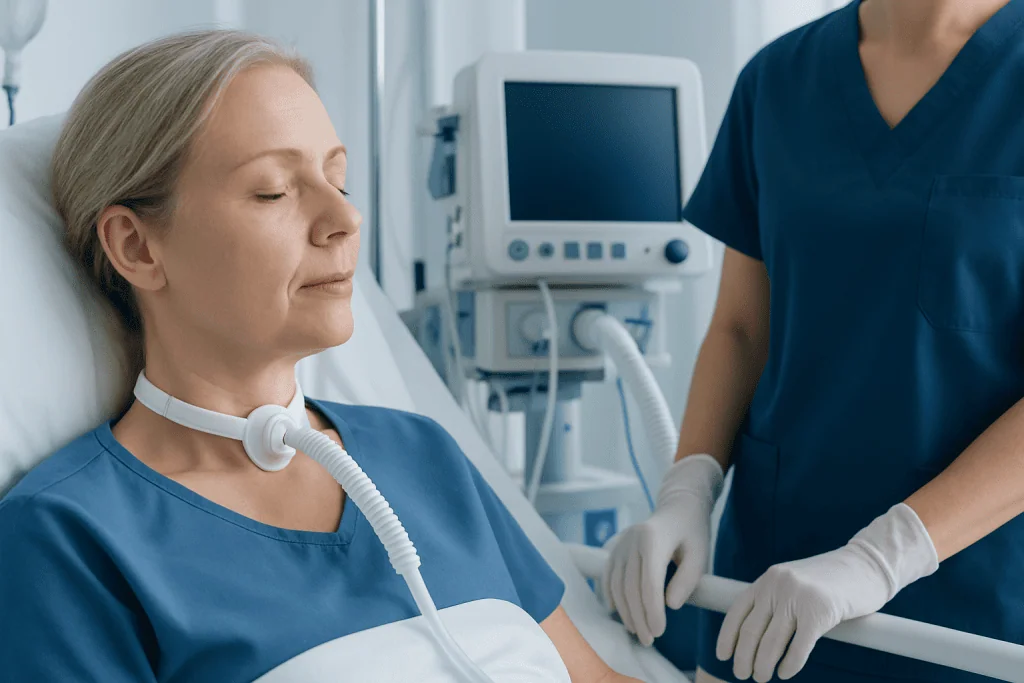
Doctors recommend a tracheostomy when breathing through the nose and mouth is unsafe, difficult, or not effective enough. One common reason is the need for prolonged use of a breathing machine. In such cases, a tracheostomy may be more comfortable than a tube that passes through the mouth and can make airway care easier.
Another reason is narrowing or blockage of the upper airway. This can happen because of swelling, injury, infection, paralysis of the vocal cords, tumors, or structural problems. Some patients with lung cancer or head and neck disease may need a tracheostomy as part of a broader treatment plan, although the exact reason varies from person to person.
Neurological and muscular conditions can also affect the ability to clear secretions or protect the airway. In these cases, a tracheostomy may help reduce the risk of aspiration and make respiratory care more manageable. The procedure is tailored to the person’s needs, and the healthcare team explains whether the aim is short-term support, long-term airway access, or both.
How the Procedure Is Performed and What to Expect Afterward

A tracheostomy is usually performed under sterile conditions, often with anesthesia or sedation depending on the clinical situation. The surgeon makes a small opening in the neck, enters the trachea, and places the tube securely. In emergency or critical care settings, technique may vary, but the principle remains the same: to create a safe airway.
After the procedure, the person is monitored closely. The care team checks breathing, oxygen levels, tube position, and the condition of the stoma. Mucus can build up more easily because air no longer passes through the nose, which normally humidifies and filters it, so humidification and suctioning are often part of routine care.
Speaking right away may not be possible, especially if a cuffed tube is in place or the person remains on mechanical ventilation. Over time, some patients may use speaking valves or specialized tube adjustments after assessment by their doctors and speech-language professionals. Recovery often involves a team approach that includes ENT, chest specialists, critical care teams, nurses, and rehabilitation experts.
Symptoms, Daily Challenges, and Possible Complications
A tracheostomy itself is not a disease, but it changes how breathing and airway care are managed. In the early period, patients may notice throat discomfort, coughing, mucus production, and changes in voice. Family members often need guidance as well, because day-to-day care can seem unfamiliar at first.
Potential complications can occur soon after placement or later during ongoing use. These may include blockage of the tube by secretions, accidental tube displacement, local infection, skin irritation, bleeding, or the development of scar tissue. Less commonly, swallowing difficulties or aspiration can occur, especially in people who already have neurological or structural problems.
Warning signs that deserve prompt attention include increasing work of breathing, noisy breathing through the tube, fever, foul-smelling secretions, worsening redness around the stoma, or a sudden drop in oxygen levels if monitoring is used. A tracheostomy care plan usually teaches patients and caregivers what is expected and what suggests the need for urgent help.
- Difficulty breathing or visible distress
- Thick secretions that cannot be cleared
- Bleeding that is more than a small trace
- Tube loosening, dislodgement, or blockage
- Redness, swelling, pain, or discharge around the stoma
Diagnosis, Assessment, and Follow-Up
Before a tracheostomy is recommended, doctors assess the reason it may be needed and whether alternatives are appropriate. This may involve physical examination, imaging, endoscopy of the airway, blood oxygen assessment, and review of the person’s need for ventilator support. The exact evaluation depends on the underlying illness.
After placement, follow-up focuses on airway safety, healing, and the possibility of reducing support over time. The tracheostomy tube type, size, and cuff status may be adjusted as the person’s condition changes. If the original problem improves, the team may begin a structured process to determine whether the tube can be downsized, capped, or removed.
Swallowing and communication assessments are often important parts of follow-up. Some patients benefit from speech and swallowing therapy, particularly after stroke, neurological disease, or surgery involving the upper airway. If there is a related condition such as sleep apnea or a structural airway disorder, long-term management may involve additional evaluation and treatment.
Treatment, Tracheostomy Care, and Living With the Tube
Care of a tracheostomy centers on keeping the airway open, clean, and comfortable. Common elements include humidification, suctioning when needed, cleaning around the stoma, changing or checking inner cannulas if the tube design includes one, and replacing ties or dressings safely. Patients and caregivers are usually taught step-by-step care before discharge.
Living with a tracheostomy may also involve decisions about nutrition, speech, bathing, exercise, sleep, and travel. Many people can return to daily routines with planning and support. The team may advise precautions such as avoiding water entering the tube, staying away from smoke or airborne irritants, and carrying emergency supplies at all times.
Additional treatment depends on the condition that led to the tracheostomy. Some patients may need bronchoscopy to evaluate the airway, robotic surgery or other operations for head and neck conditions, or lung cancer treatment when a tumor affects breathing. If long-term ventilation is no longer needed and the airway is stable, doctors may begin decannulation, which is the supervised removal of the tracheostomy tube.
Near the later stages of recovery, some patients benefit from multidisciplinary follow-up to coordinate respiratory care, speech and swallowing rehabilitation, and management of the underlying disease. Acibadem International’s multidisciplinary specialists and JCI-accredited hospitals diagnose and treat patients who need tracheostomy-related care, including international patients.
Prevention, Self-Care, and When to Seek Medical Care
A tracheostomy cannot always be prevented because it is often needed as part of lifesaving or medically necessary care. Still, careful treatment of airway disease, prompt attention to severe infections or injuries, and good management of chronic neurological or respiratory conditions may reduce some situations that lead to prolonged airway support. Following medical advice for related conditions is an important part of prevention.
Self-care after a tracheostomy focuses on consistency and preparation. Patients should follow the cleaning schedule provided by their care team, use humidification if recommended, drink enough fluids if medically appropriate, and keep backup supplies nearby. Caregivers should know how to recognize mucus plugging, accidental tube displacement, and signs of infection.
Medical care should be sought right away if the tube comes out unexpectedly, breathing becomes difficult, there is heavy bleeding, secretions suddenly increase and cannot be cleared, or the person becomes blue, confused, or unusually sleepy. A non-urgent medical review is also important for worsening pain, skin breakdown, trouble swallowing, or concerns about speaking, nutrition, or equipment. Any change that makes airway care less safe should be discussed with a qualified doctor.
Frequently asked questions
Is a tracheostomy permanent?
Not always. Some tracheostomies are temporary and are removed when breathing improves or ventilator support is no longer needed. Others may be long term if the underlying condition continues to affect the airway or breathing.
Can a person talk with a tracheostomy?
Many people can speak after a tracheostomy, but it depends on the type of tube, whether the cuff is inflated, and the person's overall condition. Some patients use a speaking valve after assessment by their healthcare team.
Can a person eat normally after a tracheostomy?
Some people can eat and drink normally, while others need a swallowing evaluation first. Safety depends on the reason for the tracheostomy and whether swallowing muscles or airway protection are affected.
Does a tracheostomy mean a person is on a ventilator forever?
No. A tracheostomy may be used during ventilator support, but it does not automatically mean permanent ventilation. In many cases, it helps during recovery and may later be removed if breathing improves.
What are the most important parts of tracheostomy care at home?
The essentials are keeping the tube clear, cleaning the skin around the stoma, using humidification as advised, and knowing what to do in an emergency. Patients and caregivers should also keep supplies available and attend regular follow-up appointments.
When should someone with a tracheostomy go to the emergency department?
Emergency care is needed for severe breathing trouble, suspected tube blockage, accidental tube removal, heavy bleeding, or signs that oxygen is dangerously low. If there is any doubt about airway safety, urgent medical evaluation is the safest choice.
References
- American Academy of Otolaryngology–Head and Neck Surgery
- National Institutes of Health
- American Thoracic Society
- MedlinePlus
- National Health Service
This article is for general information only and is not a substitute for professional medical advice. Please consult a qualified doctor about your individual situation.
Explore treatments in Turkey — costs, top hospitals & a free quote
JCI-accredited · board-certified surgeons · reply within 24h
Add us as a Preferred Source to see more of our trusted health content across Google Search, AI Overviews and Discover.