Trapezium Bone: What Patients Need to Know

The trapezium bone sits at the base of the thumb and helps the thumb move in multiple directions. Pain near the thumb base may come from trapezium arthritis, a fracture, ligament injury, or tendon irritation.
Key Takeaways
- The trapezium bone sits at the base of the thumb and helps the thumb move in multiple directions.
- Pain near the thumb base may come from trapezium arthritis, a fracture, ligament injury, or tendon irritation.
- Diagnosis usually combines a physical exam with X-rays, and sometimes CT or MRI for more detail.
- Treatment depends on the cause and may include rest, splinting, hand therapy, medicines, injections, or surgery.
- Early evaluation is important if pain follows a fall, there is visible swelling, or grip and thumb motion become difficult.
The trapezium bone is a small carpal bone on the thumb side of the wrist that plays a major role in thumb movement, grip, and pinch strength. Patients most often hear about it when they have pain at the base of the thumb due to arthritis, overuse, or a fracture after a fall.
Overview: what the trapezium bone does
The trapezium bone is one of the eight small carpal bones in the wrist. It sits on the thumb side of the wrist and forms an important joint with the first metacarpal, the long bone of the thumb. This joint allows the thumb to move in several directions, including pinching, gripping, and opposition, which is the motion used to touch the thumb to the fingertips.
Although it is small, the trapezium bone has a large job. Everyday actions such as turning a key, opening a jar, writing, texting, and buttoning clothes all depend on smooth movement at the thumb base. Because this area is used so often, it can become painful from wear and tear, injury, or strain.
Patients may hear the term trapezium bone when discussing thumb-base arthritis, a wrist injury, or imaging results after a fall. Understanding where the bone is and how it works can make symptoms easier to recognize and can help patients know when medical assessment is useful.
Where it is located and why it matters
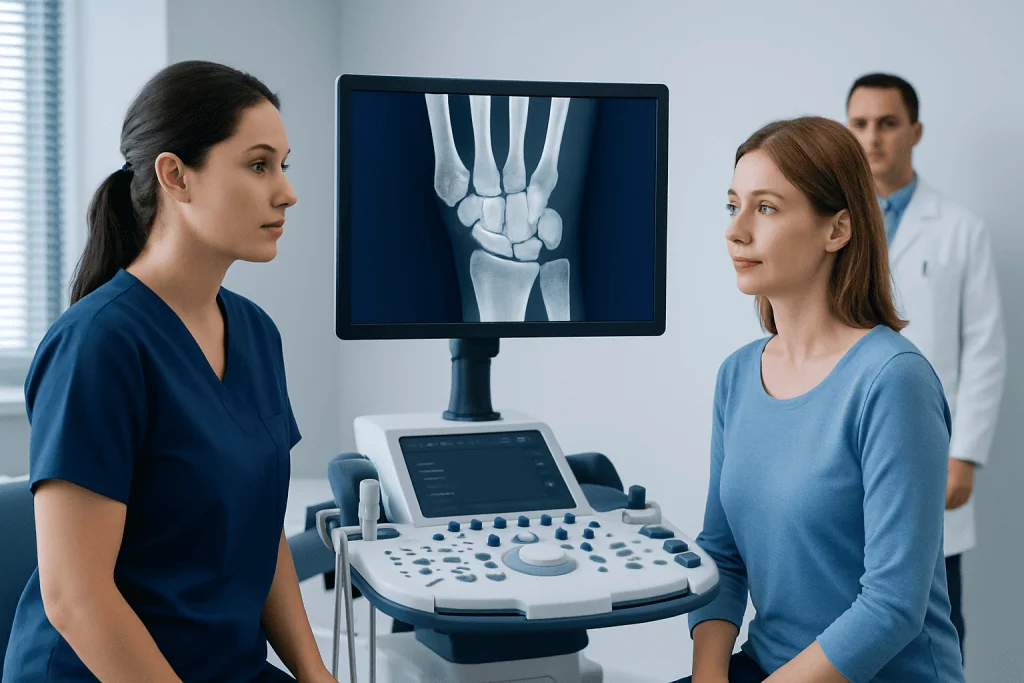
The trapezium lies in the distal row of carpal bones, close to the base of the thumb. It connects with the first metacarpal and also touches nearby wrist bones. This shape and position give the thumb both stability and a wide range of motion, which is unusual compared with the other fingers.
The joint between the trapezium and the first metacarpal is often called the carpometacarpal, or CMC, joint of the thumb. This is the joint most commonly affected in thumb-base osteoarthritis, especially with age or repeated hand use. When the surfaces of this joint wear down, patients may notice pain while pinching, opening lids, or carrying objects.
Because the trapezium is close to tendons, ligaments, and nerves, symptoms around this area are not always caused by the bone itself. A clinician may also consider related conditions such as tendon inflammation, sprains, or carpal tunnel syndrome if numbness or tingling is also present.
Common symptoms linked to the trapezium bone

Symptoms depend on the underlying problem. The most common complaint is pain at the base of the thumb, especially during gripping or pinching. Some people notice aching after activity, while others feel sharp pain with twisting movements or when pressing on the area.
Other symptoms may include swelling, tenderness, stiffness, reduced thumb motion, weakness, or a clicking sensation. In arthritis, symptoms often build gradually and may be worse after hand use. In a fracture or sprain, the pain usually starts suddenly after trauma, such as a fall onto an outstretched hand.
Patients should pay attention to how symptoms affect daily function. Difficulty opening jars, turning door handles, lifting a pan, or fastening buttons may suggest a problem involving the trapezium or the thumb-base joint.
- Pain at the base of the thumb or along the radial side of the wrist
- Swelling or bruising after an injury
- Weak pinch or grip strength
- Stiffness or reduced thumb range of motion
- Tenderness when pressing over the thumb base
- Grinding, clicking, or catching with movement
Causes and risk factors
The trapezium bone can be involved in several conditions. One of the most frequent is osteoarthritis of the thumb CMC joint, which happens when cartilage gradually wears away. This is more common with aging, repetitive thumb use, previous injury, or joint laxity. The condition may be discussed alongside broader osteoarthritis affecting other joints.
Another cause is a trapezium fracture. This is less common than some other wrist fractures, but it can occur after a direct blow, sports injury, or a fall onto the hand. Because symptoms can resemble a sprain, some fractures are not obvious at first and may need careful imaging to identify.
Ligament injuries, tendon irritation, and overuse can also cause pain near the trapezium. Repetitive tasks involving pinching, gripping, handheld tools, racquet sports, or prolonged phone use may strain the thumb base. Risk may be higher in people with physically demanding hand work, previous wrist injuries, or conditions that affect joint health.
How doctors diagnose trapezium bone problems
Diagnosis begins with a medical history and physical examination. A doctor will ask where the pain is located, how it started, what movements make it worse, and whether there has been a recent injury. The hand and wrist are then examined for swelling, tenderness, deformity, range of motion, strength, and joint stability.
X-rays are usually the first imaging test. They can show many fractures, changes from arthritis, and alignment problems in the thumb-base joint. If a fracture is suspected but not clearly seen, or if more detail is needed before treatment, a CT scan may be helpful. MRI may be considered when soft tissues such as ligaments or tendons are also involved.
In some cases, specialists in hand surgery, orthopedics, or rehabilitation may work together to confirm the cause of pain and plan care. Imaging tests such as MRI or CT scan can help clarify difficult cases, particularly after trauma or when symptoms do not improve as expected.
Treatment options and recovery
Treatment depends on whether the problem is arthritis, a fracture, a ligament injury, or overuse. Many patients improve with conservative care. This may include activity modification, a thumb splint or brace, ice, short-term pain relief medicines recommended by a doctor, and targeted hand therapy to improve strength and reduce strain on the joint.
For thumb-base arthritis, treatment may also include exercises, ergonomic changes, and sometimes an injection to reduce inflammation and pain. Hand therapy can teach safer movement patterns for daily tasks. If symptoms are ongoing and function is limited, a specialist may discuss surgical options. In selected cases, evaluation by hand surgery may be appropriate.
For a trapezium fracture, treatment can range from immobilization in a cast or splint to surgery if the bone is displaced, unstable, or involves the joint surface. Recovery time varies based on the severity of the injury and the treatment used. Rehabilitation after immobilization or surgery is often important for restoring movement and grip.
Patients should follow the treatment plan closely and avoid returning to heavy hand use too early. Ongoing pain, stiffness, or weakness after an injury may need reassessment to check healing and to reduce the risk of chronic thumb dysfunction.
Self-care and prevention in daily life
Not all trapezium bone problems can be prevented, but practical steps may lower strain on the thumb base. Using larger-handled tools, opening jars with an assist device, alternating tasks, and taking regular breaks during repetitive work can all reduce pressure on the joint. A supportive brace may help during flare-ups if a clinician recommends it.
General hand conditioning also matters. Gentle thumb and wrist exercises, guided by a qualified professional when needed, can help maintain movement and support. Warming up before sports or repetitive manual tasks may reduce stress on the tendons and joint surfaces around the trapezium.
Preventing falls is also important, especially in older adults. Good footwear, a safe home environment, vision checks, and balance-focused exercise may reduce wrist and hand injuries. If a person has known arthritis or recurring hand pain, early evaluation can help manage symptoms before they interfere more with daily life.
When to seek medical care
Medical assessment is recommended if pain at the base of the thumb starts after a fall, sports injury, or direct impact. Sudden swelling, bruising, visible deformity, inability to grip, or marked pain with thumb movement can suggest a fracture or significant soft tissue injury.
Patients should also seek care if thumb-base pain persists for more than a short time, keeps returning, or begins to limit routine activities such as writing, lifting, opening containers, or dressing. Numbness, tingling, fever, or worsening swelling are also reasons to be checked by a healthcare professional.
Many causes of trapezium-area pain respond well to timely treatment, especially before stiffness and weakness become more established. For international patients who need assessment and treatment, Acibadem International’s multidisciplinary specialists and JCI-accredited hospitals provide diagnosis and care for hand, wrist, and thumb conditions.
Frequently asked questions
What is the trapezium bone?
The trapezium bone is a small wrist bone located at the base of the thumb. It helps form the thumb carpometacarpal joint, which allows gripping, pinching, and the thumb’s wide range of motion.
Where is trapezium bone pain usually felt?
Pain is usually felt at the base of the thumb on the thumb side of the wrist. It may worsen when opening jars, turning keys, lifting objects, or doing repeated pinching movements.
Can the trapezium bone break?
Yes, the trapezium bone can fracture, usually after a fall or a direct blow to the hand. Because symptoms can resemble a sprain, medical evaluation and imaging are often needed to confirm the diagnosis.
Is trapezium bone pain always arthritis?
No. While thumb-base arthritis is a common cause, pain in this area can also come from a fracture, ligament injury, tendon irritation, or overuse. A proper examination helps identify the actual cause.
How is a trapezium bone problem treated?
Treatment depends on the diagnosis. It may include rest, splinting, medicines, hand therapy, injections, or surgery if symptoms are severe or if there is an unstable fracture or advanced joint damage.
When should someone see a doctor for trapezium bone symptoms?
A doctor should be seen after a fall or injury if there is swelling, bruising, severe pain, or difficulty moving the thumb. Medical advice is also important if pain is persistent, recurrent, or interfering with daily activities.
References
- American Academy of Orthopaedic Surgeons
- American Society for Surgery of the Hand
- National Institute of Arthritis and Musculoskeletal and Skin Diseases
- MedlinePlus
- Mayo Clinic
This article is for general information only and is not a substitute for professional medical advice. Please consult a qualified doctor about your individual situation.
Joint and spine care in Turkey — expert assessment & treatment
JCI-accredited · board-certified surgeons · reply within 24h
Add us as a Preferred Source to see more of our trusted health content across Google Search, AI Overviews and Discover.

More from the Health Library

Uses of Liquorice Root: A Complete Medical Overview

Large Intestinal Polyp — Explained by Medical Evidence, Not Myths

Cystolitholapaxy: An Evidence-Based Guide for Patients

Cardio Before or After Weights: A Complete Medical Overview

Paracetamol — Explained by Medical Evidence, Not Myths

Philophobia: What Patients Need to Know
Orthopedic Surgery & Traumatology Specialists at Acibadem

Dr. Betül Toygar
Physical Medicine & Rehabilitation
Fzt. Beyza Nur Gündüz
Physical Medicine & Rehabilitation
Dr. Buğra Alpan
Orthopedic Surgery & Traumatology
Dr. Bülent Özmen
Orthopedic Surgery & Traumatology