Treatment for a Torn Achilles: Symptoms, Causes, and Treatment Options
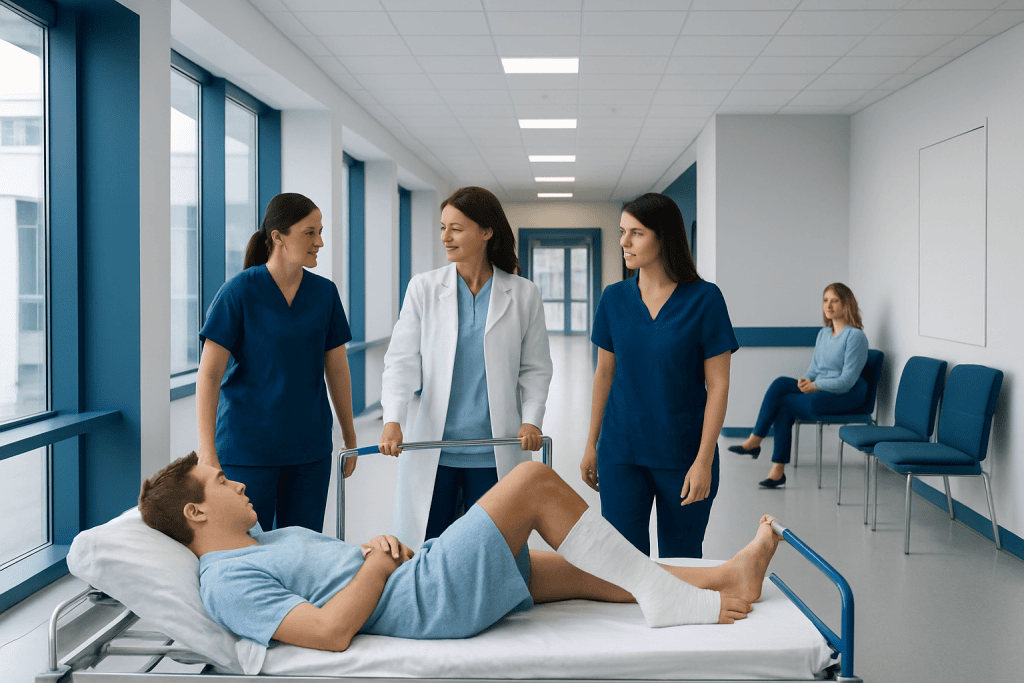
A torn Achilles often causes sudden pain, weakness, swelling, and difficulty pushing off the foot. Treatment may be nonsurgical or surgical, and both approaches usually require a period of immobilization and rehabilitation.
Key Takeaways
- A torn Achilles often causes sudden pain, weakness, swelling, and difficulty pushing off the foot.
- Treatment may be nonsurgical or surgical, and both approaches usually require a period of immobilization and rehabilitation.
- Early medical assessment helps confirm the diagnosis and can improve treatment planning.
- Recovery takes time, and physical therapy is important for regaining calf strength and ankle function.
- People should seek prompt care if they hear a pop, cannot rise onto the toes, or have trouble walking after an ankle or calf injury.
Treatment for a torn Achilles depends on how severe the tear is, when it happened, and the person's activity needs. Many people recover well with either nonsurgical care or surgery, followed by structured rehabilitation to restore strength, balance, and walking function.
Overview: What treatment for a torn Achilles involves
Treatment for a torn Achilles usually includes protecting the tendon, helping the torn ends heal in the correct position, and restoring strength and movement over time. Depending on the person and the injury, care may involve a walking boot with the foot pointed downward, physical therapy, and in some cases surgery to repair the torn tendon.
The Achilles tendon connects the calf muscles to the heel bone. It helps with walking, climbing stairs, running, and pushing off the ground. When it tears, these movements can become painful, weak, or suddenly difficult. Some tears are complete ruptures, while others are partial tears.
A treatment plan is not the same for everyone. Doctors consider the location and extent of the tear, how long ago it happened, the person’s age and overall health, and whether they hope to return to high-demand sports or physically demanding work. Early diagnosis can make treatment choices clearer and may support smoother recovery.
Symptoms and what a torn Achilles can feel like
A torn Achilles often happens suddenly. Many people describe a sharp pain in the back of the ankle or lower calf, sometimes with the feeling of being kicked or struck from behind. A popping or snapping sensation may also be noticed at the time of injury.
After the injury, walking may become difficult, especially when trying to push off the foot. Standing on tiptoe on the affected side may be weak or impossible. Swelling, bruising, tenderness, and a visible change in the contour of the tendon can appear over the next hours or days.
Symptoms vary. A complete rupture often causes more dramatic weakness, while a partial tear may still allow some walking. Because ankle sprains and calf strains can feel similar at first, it is helpful to have a clinician assess sudden pain in the back of the ankle. A torn Achilles may sometimes overlap with or be confused with an ankle sprain, especially right after the injury.
Why Achilles tears happen and who is at higher risk
Most Achilles tears occur when the tendon is suddenly overloaded. This can happen during jumping, sprinting, abrupt changes of direction, or pushing off forcefully after a period of rest. Recreational sports such as basketball, tennis, football, and running are common settings for this injury.
Several factors can raise risk. These include tight calf muscles, reduced tendon flexibility, prior tendon pain, poor conditioning, and returning too quickly to intense activity. Middle-aged adults who play sports occasionally are often affected because the tendon may be less conditioned for explosive movement.
Some medical and lifestyle factors may also contribute, including obesity, smoking, and certain medications such as corticosteroids or some antibiotics in the fluoroquinolone group. Age-related tendon degeneration can weaken the tissue over time. In some cases, the tendon has been irritated for weeks or months before it ruptures completely.
- Sudden increase in training intensity or duration
- Insufficient warm-up or poor flexibility
- Previous Achilles tendinopathy or calf injury
- Sports with rapid starts, stops, and jumps
- Biomechanical strain in the foot or ankle
How doctors diagnose a torn Achilles
Diagnosis starts with a medical history and physical examination. A doctor asks how the injury happened, what was felt or heard at the time, and whether the person can still walk or stand on their toes. During the exam, the back of the ankle and calf are checked for tenderness, swelling, a gap in the tendon, and loss of strength.
One commonly used clinical test is the calf-squeeze, or Thompson, test. With the person lying face down, the calf is gently squeezed to see whether the foot moves normally. Reduced movement can suggest a rupture. Range of motion, balance, and function on the injured side are also assessed.
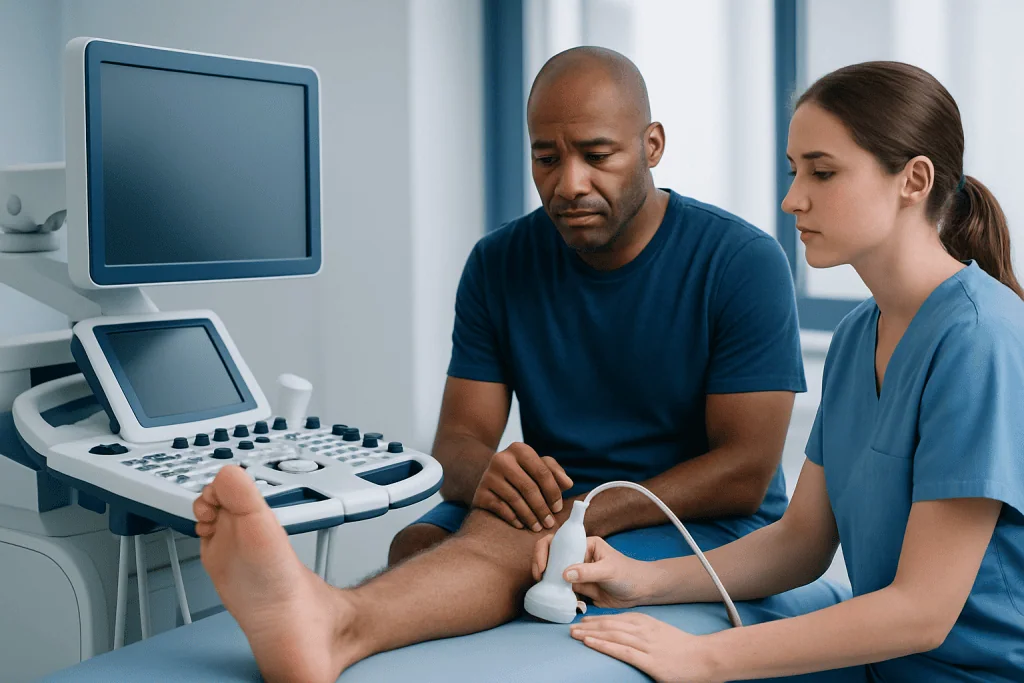
Imaging may be used when the diagnosis is uncertain, to assess whether the tear is partial or complete, or to help with treatment planning. Ultrasound can show tendon fibers and is often useful for dynamic assessment. MRI may be considered in more complex situations or when associated injuries are suspected. In some patients, orthopedic evaluation and orthopedic rehabilitation planning begin soon after diagnosis.
Treatment options: nonsurgical care and surgery
Nonsurgical treatment for a torn Achilles typically involves immobilizing the ankle in a pointed-down position so the tendon ends can heal closer together. This is commonly done with a cast or a walking boot, often with heel wedges. Over time, the ankle position is gradually adjusted, and weight-bearing may be increased according to the doctor’s plan.
Many patients are candidates for this approach, especially when treatment starts early and the torn tendon ends are well aligned. Nonsurgical care avoids an operation and the risks that come with surgery, but careful follow-up is important. Structured rehabilitation is essential to rebuild calf strength and reduce stiffness.
Surgery may be recommended for complete ruptures in active individuals, for tears with a larger gap, for delayed diagnosis, or when the person’s goals make a stronger push-off particularly important. Achilles repair aims to reconnect the torn tendon. Different techniques may be used, including open or minimally invasive methods, and rehabilitation still remains a key part of recovery afterward. Depending on the injury pattern, the care team may involve orthopedics and traumatology specialists and, when needed, advanced imaging through MRI to guide planning.
There is no single best option for every patient. The decision between surgical and nonsurgical care is individualized and should be discussed with a qualified clinician who can explain expected benefits, possible complications, and recovery timelines.
Recovery, rehabilitation, and return to activity
Healing from a torn Achilles takes patience. In the early phase, the focus is protecting the tendon while controlling swelling and pain. As healing progresses, treatment shifts toward improving ankle motion, restoring walking pattern, strengthening the calf, and gradually rebuilding balance and endurance.
Physical therapy plays a central role in recovery after both surgical and nonsurgical treatment. Exercises are introduced step by step. These may include gentle range-of-motion work, seated or supported calf activation, balance exercises, and later more demanding strengthening and functional drills. The pace depends on the person’s healing, symptoms, and exam findings.
Return to daily activities happens before return to sport. Walking normally, climbing stairs, and standing on the toes comfortably are important milestones. Higher-level activities such as running, jumping, and rapid direction changes usually come later. Returning too soon can increase the risk of re-injury or ongoing weakness.
Even after the tendon has healed, calf strength and confidence may take months to fully return. Some people notice lingering stiffness or reduced explosiveness for a period. A supervised plan, often including physical therapy and rehabilitation, can help support a safer return to normal routines and athletics.
Self-care, prevention, and reducing future strain
Self-care after a suspected Achilles injury should begin with stopping the activity and limiting weight-bearing until a doctor gives guidance. Keeping the leg elevated and applying ice wrapped in a cloth for short periods may help with discomfort and swelling. Pain medicines may be suggested by a clinician, but self-treatment should not replace evaluation when a rupture is possible.
Once recovery is underway, prevention focuses on gradual conditioning rather than sudden intensity. Calf flexibility, ankle mobility, and strength are important. Warm-up before exercise and progression in training load can reduce stress on the tendon. Proper footwear and attention to running or jumping mechanics may also help.
People with previous Achilles pain should not ignore persistent stiffness or soreness. Early treatment of tendon irritation may lower the chance of a more serious tear later. Conditions such as chronic tendon degeneration can overlap with or progress from Achilles tendinitis, which is why ongoing symptoms deserve medical advice.
For international patients who need assessment or follow-up, Acibadem International’s multidisciplinary specialists in JCI-accredited hospitals diagnose and treat tendon injuries with coordinated orthopedic and rehabilitation care.
When to seek medical care
Medical care should be sought promptly if there is a sudden pop in the back of the ankle, severe pain in the lower calf, rapid swelling, or trouble walking after a sports or exercise injury. The same is true if the person cannot push off the foot, cannot stand on tiptoe, or feels marked weakness compared with the other side.
Urgent assessment is also important if the injury is followed by significant bruising, a visible gap above the heel, numbness, or a fall that caused additional trauma. Quick evaluation helps confirm whether the injury is a rupture, a partial tear, or another condition that may need different treatment.
People should also arrange medical review if symptoms are milder but not improving, if repeated episodes of Achilles pain occur, or if there is concern about returning safely to work or sport. A qualified doctor can recommend the right imaging, treatment pathway, and rehabilitation plan.
Frequently asked questions
Can a torn Achilles heal without surgery?
Yes, some torn Achilles tendons can heal without surgery, especially when treatment begins early and the tendon is positioned properly in a boot or cast. Nonsurgical care is usually combined with a structured rehabilitation program. A doctor can help decide whether this approach is suitable for the specific tear.
How long does recovery from a torn Achilles usually take?
Recovery often takes several months, although exact timing varies by the severity of the tear, the treatment used, and the person's health and activity goals. Daily walking usually improves before sports performance does. Full strength and confidence may continue to improve well after the tendon has healed.
Is it possible to walk with a torn Achilles?
Some people can still walk after a torn Achilles, especially with a partial tear, but walking is often painful, weak, or unstable. The ability to walk does not rule out a serious injury. Prompt medical evaluation is still important if the tendon rupture is suspected.
What happens if a torn Achilles is not treated?
Without appropriate treatment, the tendon may heal in a lengthened or weakened position, which can reduce push-off strength and affect walking or sports activity. Ongoing pain, imbalance, and difficulty with stairs or running can occur. Delayed treatment can also make management more complex.
When is surgery more likely to be recommended?
Surgery may be more likely for complete ruptures, larger tendon gaps, delayed diagnosis, or people who want to return to high-demand sports or heavy physical work. It may also be considered if tendon alignment is less favorable for nonsurgical healing. The decision is individualized after clinical assessment.
Can a torn Achilles be mistaken for another injury?
Yes, it can sometimes be mistaken for a calf strain or ankle sprain, particularly in the first hours after injury. Swelling and pain can overlap with other soft tissue injuries. A physical exam and, when needed, imaging help confirm the diagnosis.
References
- American Academy of Orthopaedic Surgeons
- National Institute for Health and Care Excellence
- American Orthopaedic Foot & Ankle Society
- Mayo Clinic
- National Health Service
This article is for general information only and is not a substitute for professional medical advice. Please consult a qualified doctor about your individual situation.
Joint and spine care in Turkey — expert assessment & treatment
JCI-accredited · board-certified surgeons · reply within 24h
Add us as a Preferred Source to see more of our trusted health content across Google Search, AI Overviews and Discover.