Treatment of Avulsion Fracture: How It Works, Results and What to Expect
An avulsion fracture occurs when a tendon or ligament pulls a small piece of bone away from its attachment site. Many avulsion fractures can be treated with a brace, boot, cast or activity modification followed by rehabilitation.
Key Takeaways
- An avulsion fracture occurs when a tendon or ligament pulls a small piece of bone away from its attachment site.
- Many avulsion fractures can be treated with a brace, boot, cast or activity modification followed by rehabilitation.
- Surgery may be considered when the fragment is substantially displaced, affects joint stability or does not heal appropriately.
- Early assessment is important because treatment and safe return to sport depend on the location of the fracture.
- Following weight-bearing and rehabilitation guidance helps protect healing bone and reduce the risk of reinjury.
Treatment of avulsion fracture is tailored to the injured bone, the size and position of the fragment, and whether the nearby joint or tendon remains stable. Most injuries heal with non-surgical care, while a smaller number require a procedure to restore alignment and function.
Treatment of Avulsion Fracture: How It Works
Treatment of avulsion fracture focuses on helping the separated piece of bone heal in the correct position while protecting the tendon or ligament that caused the injury. An avulsion fracture happens when a sudden forceful pull tears a small fragment of bone from where a tendon or ligament attaches. It can occur around the ankle, foot, hip, pelvis, knee, elbow, finger or shoulder.
For many people, treatment is non-surgical. The affected area may be protected with a splint, cast, walking boot, brace or supportive footwear, depending on its location. Pain control, temporary activity changes and a gradual rehabilitation plan are then used to restore movement, strength and confidence with everyday activities.
Some fractures need specialist treatment because the fragment has moved away from its usual position, the injury involves a joint surface, or the tendon or ligament is no longer able to work normally. In these cases, an orthopedic surgeon may recommend orthopedic surgery to reposition and stabilize the bone fragment. The aim is to support healing, preserve joint function and lower the chance of long-term instability.
Who May Need Non-Surgical Care or Surgery?
Clinicians decide on treatment after considering the exact bone involved, the size of the fragment, how far it has moved, the stability of the nearby joint, and a person’s age, activity level and overall health. A small, well-aligned avulsion fracture commonly heals without an operation. Protection from further pulling forces is especially important in the early phase of healing.
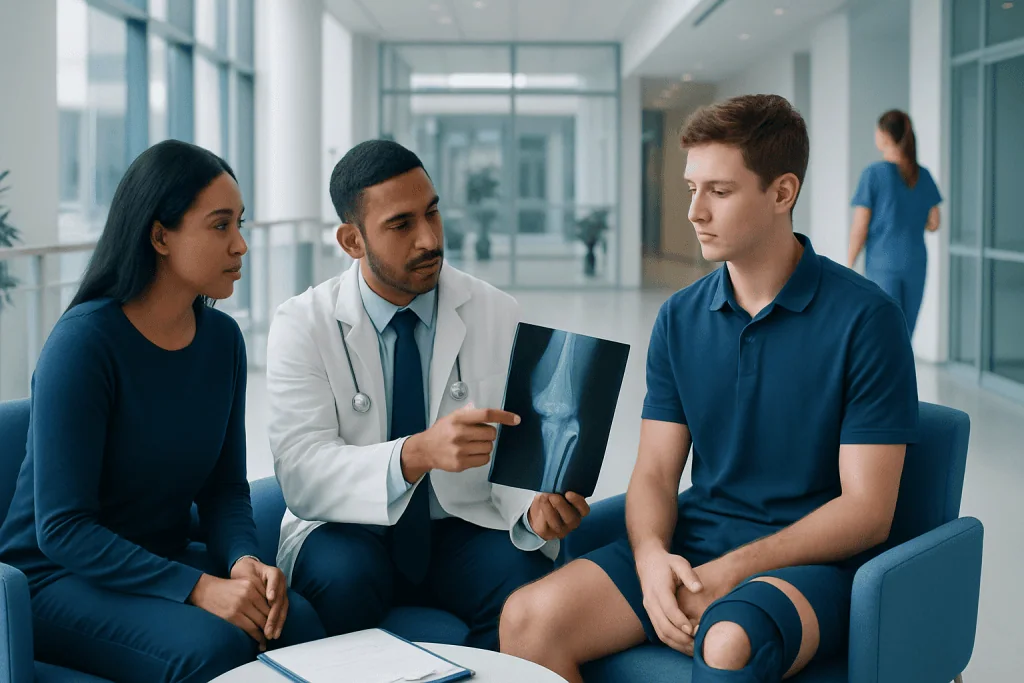
Surgery may be discussed if imaging shows significant displacement, a large fragment within or near a joint, joint incongruity, an associated tendon injury, or persistent symptoms despite appropriate conservative care. In children and adolescents, fractures involving growth areas need careful assessment because these structures are still developing.
Avulsion injuries can look similar to a severe sprain or muscle strain. For example, pain and swelling at the outer ankle may involve either a ligament injury or a small bone fragment. An accurate diagnosis helps distinguish an avulsion fracture from related injuries such as ankle sprain and guides safe recovery.
Diagnosis and Step-by-Step Treatment
An assessment usually begins with a discussion of how the injury happened, the location of pain and any difficulty using the limb. A clinician examines swelling, bruising, tenderness, range of motion, circulation, sensation and joint stability. They will also check for symptoms that could suggest a more serious injury.
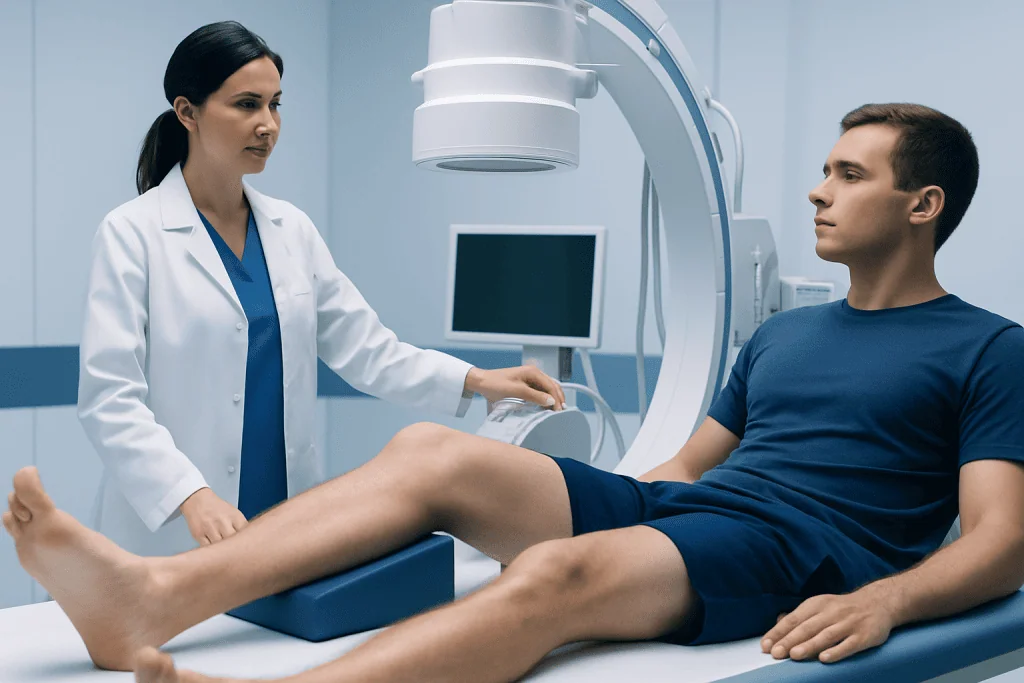
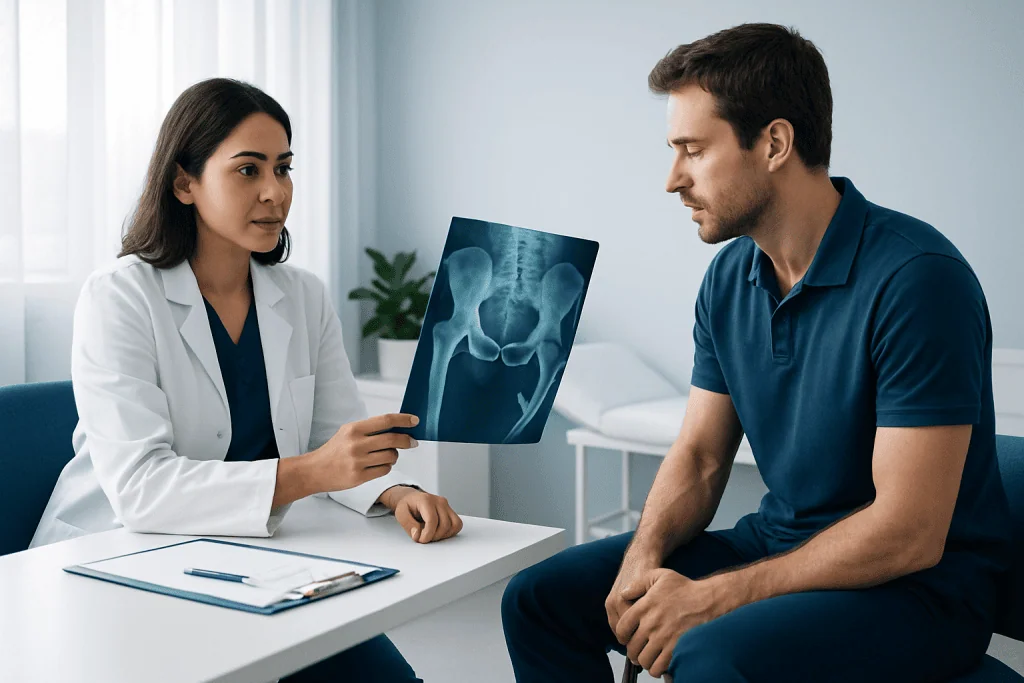
X-rays are commonly used to confirm an avulsion fracture and assess alignment. Further imaging, such as ultrasound, CT or MRI, may be considered when the fracture is difficult to see, the joint needs closer evaluation, or tendon, ligament or cartilage injury is suspected.
Non-surgical treatment typically follows several practical steps: protection of the area, instructions about whether and how much weight can be placed through the limb, measures to manage pain and swelling, and scheduled review. Once the clinician confirms that healing is progressing, gentle movement and targeted exercises are introduced. A physiotherapist may help restore flexibility, muscle control, balance and sport-specific function.
If surgery is required, it is planned after reviewing imaging and the person’s individual goals. Under anesthesia, the surgeon aligns the fragment and may secure it with small screws, pins, sutures or another fixation method appropriate to the location. A period of immobilization or bracing is often followed by a structured rehabilitation program.
Recovery Timeline, Benefits and Possible Risks
Recovery varies widely. The location and severity of the fracture, whether surgery was needed, and how closely rehabilitation guidance is followed all influence healing. Many uncomplicated avulsion fractures show meaningful improvement over several weeks, but return to running, jumping, contact sports or heavy work may take longer because the bone, tendon or ligament and surrounding muscles all need time to recover.
The main benefit of appropriate treatment is stable healing with the best possible return of comfort, movement and function. Protective devices can reduce stress on the injury, while rehabilitation addresses stiffness, weakness and altered balance that may remain after immobilization. Follow-up appointments may include repeat X-rays or clinical examinations to confirm that recovery is on track.
Possible complications include persistent pain, stiffness, reduced strength, delayed union or nonunion, reinjury, and joint instability. Surgery also carries general procedural risks, including infection, bleeding, nerve or blood-vessel injury, reactions to anesthesia and irritation from fixation hardware. These risks are not expected for every patient, but they should be discussed with the treating team before a procedure.
Trying to return to demanding activity before medical clearance may increase the chance of prolonged symptoms or another injury. New or worsening pain during recovery should be reported rather than pushed through.
Do Avulsion Fractures Ever Fully Heal?
Yes, many avulsion fractures fully heal, particularly when the fragment is small, well aligned and protected early. Bone healing is only one part of recovery: nearby tendons, ligaments, muscles and joint movement may also need rehabilitation before the area feels normal again.
Some people continue to notice mild stiffness, tenderness or weakness for a period after the bone has healed. Outcomes may be less predictable when a fracture is significantly displaced, involves a joint surface, affects a growth area in a child, or is repeatedly stressed before healing is complete. Follow-up with a clinician helps identify whether healing is progressing as expected.
Completing prescribed rehabilitation and returning to activity gradually can improve the likelihood of regaining normal function. If pain remains significant or function does not improve, a doctor may reassess the injury and consider further imaging or treatment.
What Is the Fastest Way to Heal an Avulsion Fracture?
The fastest safe way to heal an avulsion fracture is to obtain an accurate diagnosis and follow the protection and activity plan given by a qualified clinician. There is no safe shortcut that can force bone to heal faster. Continuing to run, jump, lift heavily or stretch forcefully through pain can disrupt the healing area and delay recovery.
Resting from the activity that caused the injury, using a prescribed boot, brace, cast or splint, and following weight-bearing instructions are key early steps. Elevation and cold packs may help relieve swelling in the first days when appropriate; cold should be wrapped in cloth and applied for short periods to avoid skin injury. Pain medicines should be used only as advised by a healthcare professional.
Good nutrition, adequate protein, avoiding tobacco and nicotine, and attending follow-up appointments support general bone health. When a clinician permits it, guided mobility, strengthening and balance exercises are important because they help the body return to activity safely rather than simply quickly.
What Not to Do With an Avulsion Fracture
Do not assume that a painful injury is “only a sprain,” particularly if there is marked swelling, bruising, point tenderness over a bone, or trouble using the limb. Avoid testing the injury repeatedly, forceful stretching, massage directly over the painful bony area, and returning to sport before a clinician says it is safe.
People should not remove a prescribed cast, boot or brace early, change weight-bearing restrictions on their own, or drive if the injury or immobilization device prevents safe control of the vehicle. A gradual return plan is important even when pain begins to settle, because reduced pain does not always mean the bone is ready for full load.
Smoking and nicotine products can interfere with bone healing and are best avoided. It is also sensible to discuss supplements with a clinician rather than relying on unproven products or high doses of vitamins and minerals.
How Long Until You Can Walk on an Avulsion Fracture?
How soon a person can walk on an avulsion fracture depends on where it is located and how stable it is. Some minor foot or ankle avulsion fractures allow protected weight-bearing in a walking boot or supportive shoe soon after assessment. Others require a period of no weight-bearing or only limited weight-bearing, especially when the injury affects a major joint, the hip or pelvis, or a fracture is displaced.
A doctor or orthopedic specialist should give individualized instructions about crutches, a walker, a boot or a cast. Walking should be increased only as pain, examination findings and, when needed, imaging indicate that it is safe. Limping through substantial pain is not a reliable way to rebuild strength and may place stress on other joints.
When rehabilitation begins, the care team may progress from short, supported walks to normal walking, then to stairs, balance activities and higher-impact movements. Athletes generally need additional sport-specific testing before returning to training or competition.
When to Seek Medical Care
Medical assessment is recommended after a sudden injury that causes focal bone tenderness, swelling, bruising, a popping sensation, inability to use the limb normally, or pain that does not improve with basic rest. Prompt assessment is particularly important for injuries near a joint, in children and adolescents, and in people with osteoporosis or other conditions that affect bone strength.
Urgent medical care is needed if there is a visible deformity, an open wound near the injury, numbness, pale or cool skin beyond the injury, severe or rapidly increasing swelling, uncontrolled pain, or inability to bear weight after an injury. These signs may indicate a more significant fracture or circulation and nerve concerns.
Acibadem International’s multidisciplinary specialists and JCI-accredited hospitals assess and treat bone and joint injuries for international patients, including coordinated imaging, orthopedic care and rehabilitation when needed.
Frequently asked questions
Is an avulsion fracture the same as a sprain?
No. A sprain is an injury to a ligament, while an avulsion fracture involves a piece of bone being pulled away by a ligament or tendon. The two can cause similar pain and swelling, so imaging and clinical assessment may be needed to tell them apart.
Do all avulsion fractures need a cast?
No. The type of protection depends on the fracture location and stability. Some people need a cast, while others may use a splint, brace, walking boot or supportive shoe with activity modification.
Can an avulsion fracture heal without surgery?
Yes. Many avulsion fractures heal without surgery when the bone fragment is small and remains in an acceptable position. Surgery is more likely to be considered if the fragment is displaced, joint stability is affected, or healing is not progressing appropriately.
Can an avulsion fracture get worse if untreated?
It can. Continuing strenuous activity without diagnosis or protection may cause ongoing pain, delayed healing, movement of the fragment or joint problems in some cases. A suspected fracture should be assessed by a qualified healthcare professional.
When can someone return to sports after an avulsion fracture?
Return to sport should be based on medical clearance rather than a fixed date. The person should usually have minimal or no pain, restored movement and strength, and be able to complete relevant sport movements safely. Higher-impact sports may require a longer recovery than ordinary walking.
Is physiotherapy needed after an avulsion fracture?
Physiotherapy is often helpful, especially after immobilization, surgery, or injuries affecting the ankle, knee, hip, shoulder or elbow. A therapist can guide progressive movement, strengthening, balance and return-to-activity exercises. Not every minor injury requires formal therapy, but clinicians can advise what is appropriate.
References
- American Academy of Orthopaedic Surgeons
- National Institute of Arthritis and Musculoskeletal and Skin Diseases
- OrthoInfo
- NHS
This article is for general information only and is not a substitute for professional medical advice. Please consult a qualified doctor about your individual situation.
Joint and spine care in Turkey — expert assessment & treatment
JCI-accredited · board-certified surgeons · reply within 24h
Add us as a Preferred Source to see more of our trusted health content across Google Search, AI Overviews and Discover.