Treatment of Torsion Testis: Procedure, Recovery and Results

Testicular torsion is an emergency because twisting can block blood flow to the testicle. The usual treatment is urgent surgery to untwist the spermatic cord and secure both testicles.
Key Takeaways
- Testicular torsion is an emergency because twisting can block blood flow to the testicle.
- The usual treatment is urgent surgery to untwist the spermatic cord and secure both testicles.
- Ultrasound can support diagnosis, but it should not delay surgery when torsion is strongly suspected.
- Most people go home the same day or after brief observation and resume usual activities gradually.
- Sudden testicular pain, swelling, nausea, or a high-riding testicle needs immediate emergency assessment.
Treatment of torsion testis requires emergency assessment and usually urgent surgery to untwist and secure the testicle. Fast treatment offers the best chance of preserving testicular blood flow, so home remedies should not be used for sudden testicular pain.
Treatment of Torsion Testis: Why Speed Matters
Treatment of torsion testis is emergency care, usually an operation performed as soon as possible to untwist the spermatic cord and restore blood flow. Anyone with sudden testicular pain should go to an emergency department immediately rather than attempting treatment of testicular torsion at home, because delay may affect whether the testicle can be preserved.
Testicular torsion occurs when the spermatic cord twists and reduces or stops blood supply to a testicle. It often causes sudden pain on one side of the scrotum, swelling, nausea, vomiting, lower abdominal pain, or a testicle that appears higher than usual. Although it is most common during adolescence, it can occur at any age, including infancy and adulthood.
Some people have an anatomical tendency that allows the testicle to rotate more freely. Torsion may happen during sleep, after physical activity, or without an obvious trigger, and it is not caused by something a person did wrong. Previous brief episodes of testicular pain that resolve on their own can sometimes reflect intermittent twisting and should be assessed promptly by a urologist.
Assessment, Diagnosis, and Appendix Testis Torsion
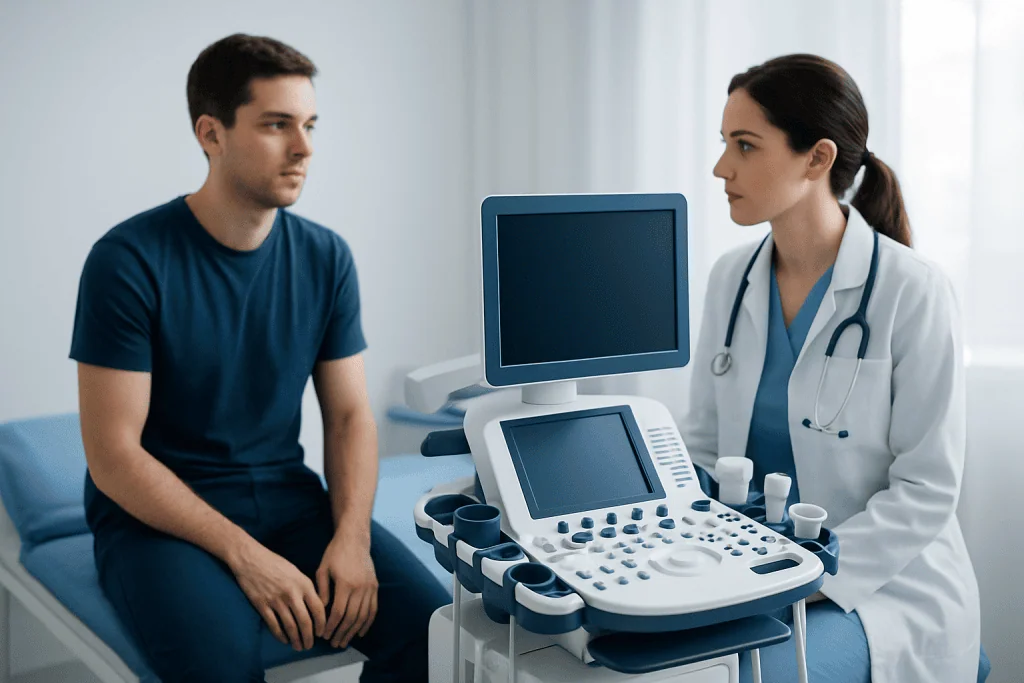
Doctors assess symptoms, medical history, and the scrotum without delay. They may check the position and tenderness of the testicle, swelling, and reflexes in the area. A Doppler ultrasound can show blood flow and help distinguish torsion from other causes of pain, but a strongly suspected torsion should not wait for imaging if this could delay surgery.
Other conditions can cause similar symptoms, including infection of the epididymis, injury, an incarcerated hernia, kidney stones, and torsion of the appendix testis. The appendix testis is a small, harmless tissue remnant near the upper part of the testicle. Its twisting can be painful but does not usually cut off blood supply to the testicle itself.
Treatment of torsion of appendix testis is generally non-surgical after true testicular torsion has been safely excluded. Rest, scrotal support, cold packs wrapped in cloth, and pain relief recommended by a clinician may be used. It is not safe to decide at home that pain is due to appendix testis torsion, as the symptoms can overlap with the more urgent condition.
What Happens During Testicular Torsion Surgery?
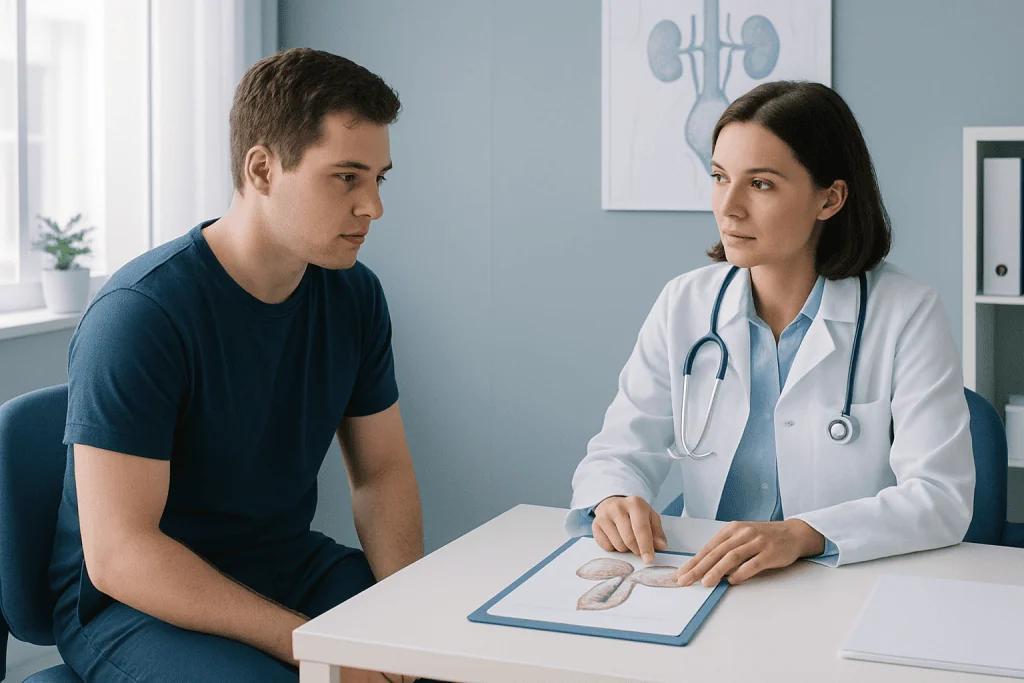
The usual testicular torsion treatment surgery is called scrotal exploration. Under anesthesia, the surgeon makes a small incision in the scrotum, untwists the spermatic cord, and assesses whether blood flow and tissue appearance improve. When the testicle is viable, it is secured inside the scrotum in a procedure called orchiopexy.
The other testicle is usually secured during the same operation. This preventive step is important because the anatomical feature that allows torsion can often be present on both sides. Even if a clinician is able to temporarily untwist a testicle manually before surgery, orchiopexy is still generally needed to help prevent another episode.
If the testicle has lost blood supply for too long and cannot recover, removal of the nonviable testicle, called orchiectomy, may be necessary. This decision is made during surgery based on the tissue’s condition. The results of surgery depend mainly on how quickly treatment begins and whether blood flow can be restored.
What Is Recovery Like After Testicular Torsion Surgery?
Testicular torsion treatment recovery commonly begins with a period of rest at home after same-day discharge or short hospital observation. Mild to moderate scrotal pain, swelling, bruising, and tiredness are expected during the first days after surgery. These symptoms should gradually improve rather than become more severe.
The surgical team provides individualized instructions for wound care, bathing, prescribed or recommended pain relief, and supportive underwear. A person may be advised to use a wrapped cold pack for short periods, avoid pressure on the area, and keep the incision clean and dry as directed. Heavy lifting, running, cycling, contact sports, and sexual activity should be avoided until the surgeon confirms that healing is adequate.
A follow-up appointment allows the surgeon to check the wound, swelling, and position of the testicles. It is important to contact the care team for increasing redness, warmth, pus-like drainage, fever, worsening pain, persistent vomiting, or swelling that is rapidly increasing. Emotional support can also be helpful, especially if removal of a testicle was needed.
How Painful Is Testicular Torsion on a Scale of 1-10?
Pain is personal and cannot be assigned one exact score for everyone. However, testicular torsion often causes sudden, severe pain that many people may describe as 8 to 10 out of 10, sometimes with nausea or vomiting. Severe pain is a warning sign, but a lower pain score does not rule torsion out.
In some cases, pain may come and go if the testicle twists and then partially untwists. Pain may also be felt in the groin or lower abdomen rather than only in the scrotum. Any new, unexplained one-sided testicular pain should be treated as urgent, regardless of the number a person would give it on a pain scale.
How Long Does It Take to Recover From a Twisted Testicle Operation?
Many people can return to quiet daily activities, school, or desk-based work within several days to one or two weeks, depending on pain, swelling, and the type of work involved. Incision healing and comfort usually continue to improve over the following weeks. Recovery can differ if surgery was more complex, if the testicle was severely affected, or if there are other health conditions.
More strenuous exercise, heavy lifting, cycling, swimming, and contact sports often require a longer pause, commonly a few weeks, because they may increase discomfort or strain the healing scrotum. The surgeon’s advice should guide the return to activity. Attending follow-up visits is the safest way to confirm that recovery after a twisted testicle operation is progressing as expected.
Is Testicular Torsion a Serious Surgery?
Testicular torsion surgery is serious because it is performed urgently to protect blood flow to an organ. The operation itself is a well-established emergency urological procedure, and many people recover well after prompt treatment. As with any surgery and anesthesia, possible risks include bleeding, infection, wound problems, ongoing pain, or reactions to anesthesia.
The greatest concern is not usually the incision but the effect of the torsion before surgery. If the testicle cannot be saved, one healthy testicle is often enough to support normal testosterone production, puberty, sexual function, and fertility, although individual circumstances vary. A urologist can discuss fertility assessment or options such as a testicular prosthesis when appropriate.
Prompt evaluation remains the most important step for protecting health and future function. For international patients, Acibadem International can coordinate assessment and treatment through multidisciplinary specialists in JCI-accredited hospitals.
When to Seek Medical Care
Emergency medical care is needed immediately for sudden pain in one testicle, scrotal swelling, a high-riding or unusually positioned testicle, groin pain with nausea or vomiting, or severe lower abdominal pain with no clear cause. A person should not eat or drink in case anesthesia is needed, and should arrange emergency transport if they cannot travel safely.
Urgent review is also appropriate for recurring episodes of testicular pain, even when they settle without treatment. After surgery, the treating team should be contacted promptly for worsening pain, fever, spreading redness, significant drainage from the incision, or concerns about healing. These symptoms do not always indicate a serious problem, but they should be assessed without delay.
Frequently asked questions
Can testicular torsion be treated at home?
No. Home remedies, rest, ice, or pain medicine cannot reliably untwist the spermatic cord or restore blood flow. Sudden testicular pain requires immediate emergency assessment, even if the pain begins to improve.
Is an ultrasound always needed before surgery?
No. Doppler ultrasound is often useful when the diagnosis is uncertain, but it should not delay surgery when examination findings and symptoms strongly suggest torsion. Doctors balance the value of imaging against the need to restore blood flow quickly.
Why does the surgeon secure both testicles?
The anatomical feature that allows a testicle to twist may be present on both sides. Securing the unaffected testicle during the same operation helps reduce the risk of torsion occurring there later.
Can testicular torsion go away on its own?
Pain may occasionally improve if the testicle partially or fully untwists, but this does not make the situation safe. Intermittent torsion can recur suddenly and still needs urgent urological assessment.
What happens if the testicle cannot be saved?
If a testicle is nonviable, the surgeon may need to remove it to prevent complications. Most people with one healthy testicle maintain normal hormone production and can remain fertile, but individual fertility concerns should be discussed with a urologist.
Can adults get testicular torsion?
Yes. Although it is commonly associated with adolescents, testicular torsion can occur in adults and in newborns. Sudden scrotal or groin pain at any age should be assessed urgently.
This article is for general information only and is not a substitute for professional medical advice. Please consult a qualified doctor about your individual situation.
Explore treatments in Turkey — costs, top hospitals & a free quote
JCI-accredited · board-certified surgeons · reply within 24h
Add us as a Preferred Source to see more of our trusted health content across Google Search, AI Overviews and Discover.

More from the Health Library

Rice Substitute — Explained by Medical Evidence, Not Myths

Rapid Cycling Bipolar: What Patients Need to Know
Throwing Up Yellow Bile — Explained by Medical Evidence, Not Myths
Stone Ground Grits — Explained by Medical Evidence, Not Myths

Karmic — Explained by Medical Evidence, Not Myths